
Airlines
Khajuraho named India’s top airport despite no flights
Khajuraho Airport has been named India’s top airport despite having no flights for two months.

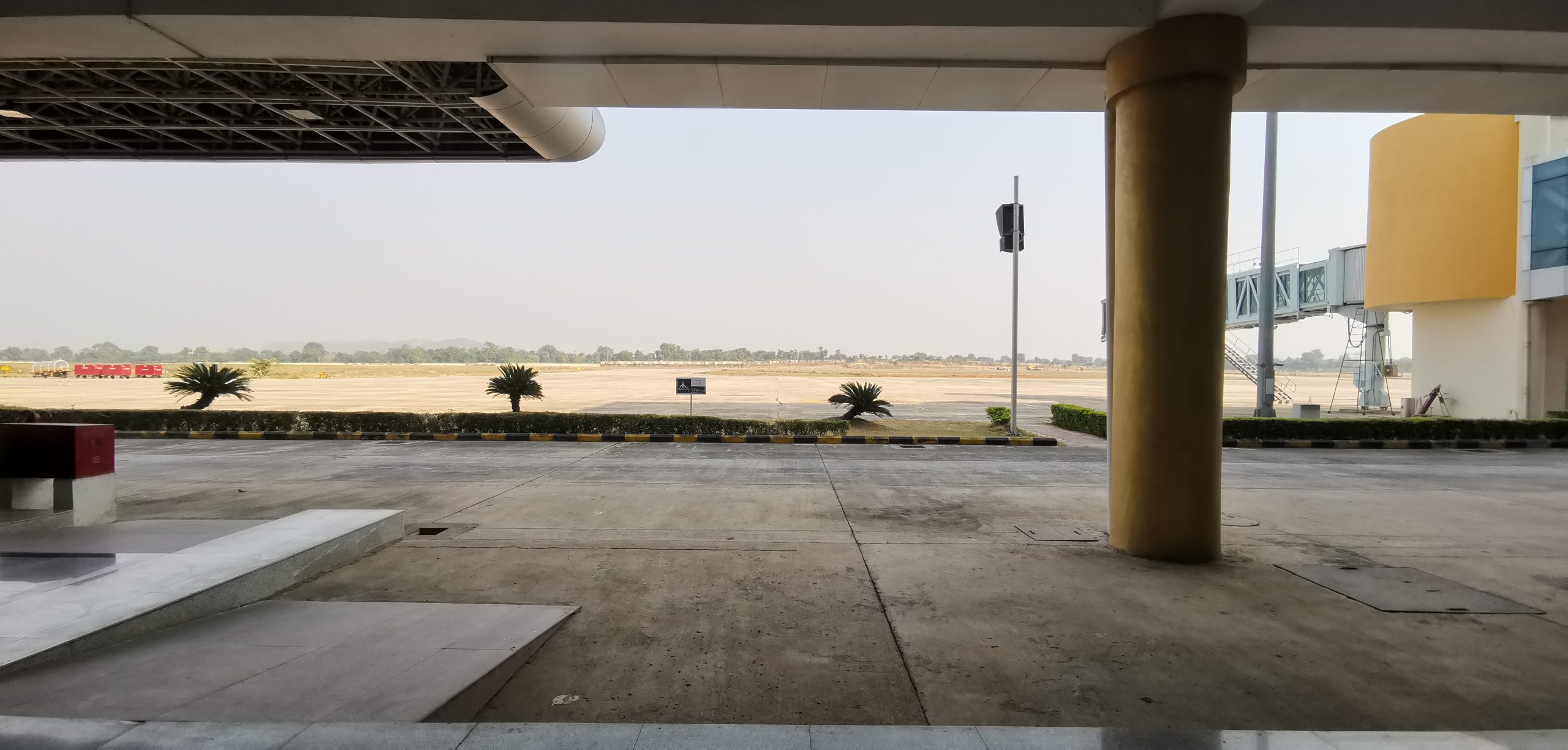
Khajuraho Airport has been named India’s top airport despite having no commercial flights for two months.
The ranking comes from the 2026 National Service and Customer Satisfaction Index survey conducted by the Airports Authority of India, which judged airports on passenger facilities, cleanliness, security and service quality rather than flight volume.
Flights at Khajuraho have been suspended through July and August for runway and other technical works, with services set to resume around October.
Before the suspension, the airport ran only two scheduled flights, to Delhi and Varanasi.
Airport director Santosh Singh said the ranking “reflected the hard work of the entire airport staff and the trust of passengers,” noting that the survey was carried out while flights were still active.
He added that commercial services would resume once the runway work was complete.
Bhopal’s Raja Bhoj Airport placed third nationally in the same survey, and Khajuraho had also topped the AAI’s customer satisfaction survey in December 2025.
Local residents have questioned the mismatch between the airport’s top ranking and the complete lack of flights this July and August.
Khajuraho Airport’s runway is 2,286 metres long and 45 metres wide, and its terminal building, inaugurated in January 2016, was constructed at a cost of roughly Rs 90 crore.
Most travellers using the airport are headed to the nearby Khajuraho Group of Monuments, a UNESCO World Heritage Site known for its intricately carved medieval temples.
The Airports Authority of India conducts its National Service and Customer Satisfaction Index survey periodically to benchmark airports on the quality of the passenger experience they offer, independent of how much traffic they handle.
Khajuraho is best known internationally for its UNESCO World Heritage-listed group of temples, and the airport primarily serves tourists visiting the site as well as pilgrims and business travellers to the region.
(Image: Photo by Z thomas, Wikimedia Commons, CC BY-SA 4.0)
Airlines
Flights delayed up to 14 hours as disruption continues today
Multiple domestic flights faced delays of up to 14 hours today, including SpiceJet services from Jaipur and Kochi and Air India Express flights from Amritsar and Kochi.

Flight disruption continued today, with several services delayed by as much as 14 hours.
A SpiceJet flight from Kochi faced the longest wait, with its departure pushed to the next day, while a SpiceJet flight from Jaipur was delayed by nearly 12 hours.
Air India Express flights from Amritsar and Kochi were delayed by close to 12 hours and over two hours respectively.
An Air India flight from New Delhi saw a delay of around 1.5 hours.
The disruption follows a wider wave of delays across Asian airports on September 11 and 12, which saw 4,804 flights delayed and 206 cancelled, including 475 delayed departures at Delhi’s IGI Airport.
Air India Express operates a significant share of India’s Gulf-bound routes, including services to Muscat, Salalah and Kuwait, making its schedule reliability closely watched by frequent flyers on those corridors.
Extended delays of this length typically trigger compensation or rebooking obligations for airlines under India’s civil aviation passenger charter, depending on the specific circumstances of each flight.
The Bengaluru–Vijayawada Air India route has also seen recent delay reports, adding to a pattern of disruption across the carrier’s domestic network this month.
Ground handling and crew scheduling pressures have been cited in some recent Indian aviation disruptions, though airlines have not confirmed this as a specific cause for Saturday’s delays.
Passengers travelling on affected routes were advised to check their flight status directly with airlines given the scale and unpredictability of the ongoing disruptions.
The delays come days after a separate wave of disruption swept Asian aviation hubs on September 11 and 12, when 4,804 flights were delayed and 206 cancelled across the region.
Delhi’s Indira Gandhi International Airport was among the worst-hit in that broader regional disruption, logging 475 delayed departures over the two-day period.
Passengers on the affected Amritsar and Jaipur flights faced waits of nearly 12 hours before departure, with some SpiceJet passengers from Kochi seeing their flight pushed to the following day.
SpiceJet aircraft landing in New Delhi, Wikimedia Commons, CC BY-SA 3.0
Airlines
Adani Airports raises $1 billion, joined by Temasek and BlackRock
Adani Airport Holdings has raised $1 billion in primary equity from Alpha Wave Global, Premji Invest, Temasek and BlackRock-managed funds, valuing the airport business at $18 billion.
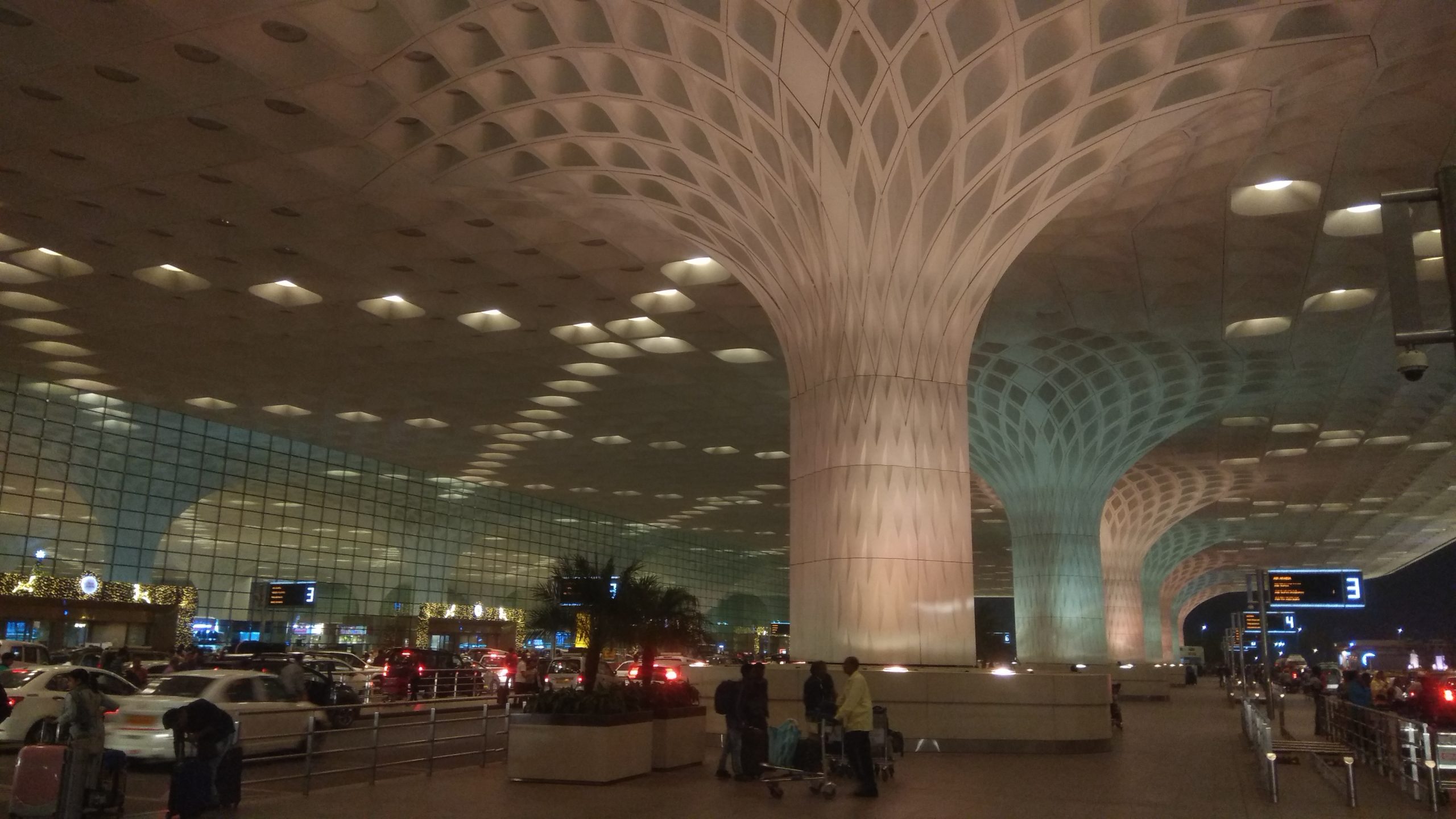
Adani Airport Holdings has raised $1 billion in primary equity funding, bringing in Temasek and BlackRock-managed funds among its new investors.
The investor consortium, which also includes Alpha Wave Global and Premji Invest, will collectively own about 5.54 percent of the company.
The deal values Adani’s airport business at roughly $18 billion on a pre-money basis.
Funds raised will go toward modernising airport infrastructure, building Adani Airport City ecosystems, and expanding passenger and cargo-related businesses.
AAHL operates eight airports in India, including Mumbai’s Chhatrapati Shivaji International Airport, accounting for about 25 percent of the country’s passenger traffic.
The capital infusion is expected to support development of integrated ‘Adani Airport City’ ecosystems, combining aeronautical and non-aeronautical commercial infrastructure around its airport sites.
Alpha Wave Global, Premji Invest, Temasek and BlackRock-managed funds are among the world’s largest institutional and sovereign-linked investors, giving the deal significant credibility in global infrastructure markets.
The deal comes as India debates whether to cap the number of airports a single private operator can control, a policy question that has drawn scrutiny of Adani’s expanding airport portfolio.
Part of the funding is earmarked for expanding capacity to handle nearly 200 million passengers annually across the group’s airport network.
This transaction ranks among the largest primary equity investments by financial institutions into India’s airport infrastructure sector to date.
Adani Airport Holdings Limited manages eight airports across India, including Mumbai’s Chhatrapati Shivaji International Airport, and accounts for about 25 percent of India’s passenger traffic.
AAHL also handles roughly 33 percent of India’s air cargo volumes, making it the largest private airport operator in the country by traffic share.
The new investors will subscribe to shares in three tranches, with the final tranche expected to complete by July 2027.
The $18 billion pre-money valuation places Adani Airports among the most highly valued airport infrastructure businesses in Asia.
Chhatrapati Shivaji International Airport, Mumbai, Wikimedia Commons, CC BY-SA 3.0
Airlines
Air India hit by UK air traffic chaos as 1,000+ flights cancelled
A technical failure at UK air traffic control provider NATS disrupted Air India flights on Tuesday, part of over 1,000 UK flight cancellations affecting Heathrow and other major airports.
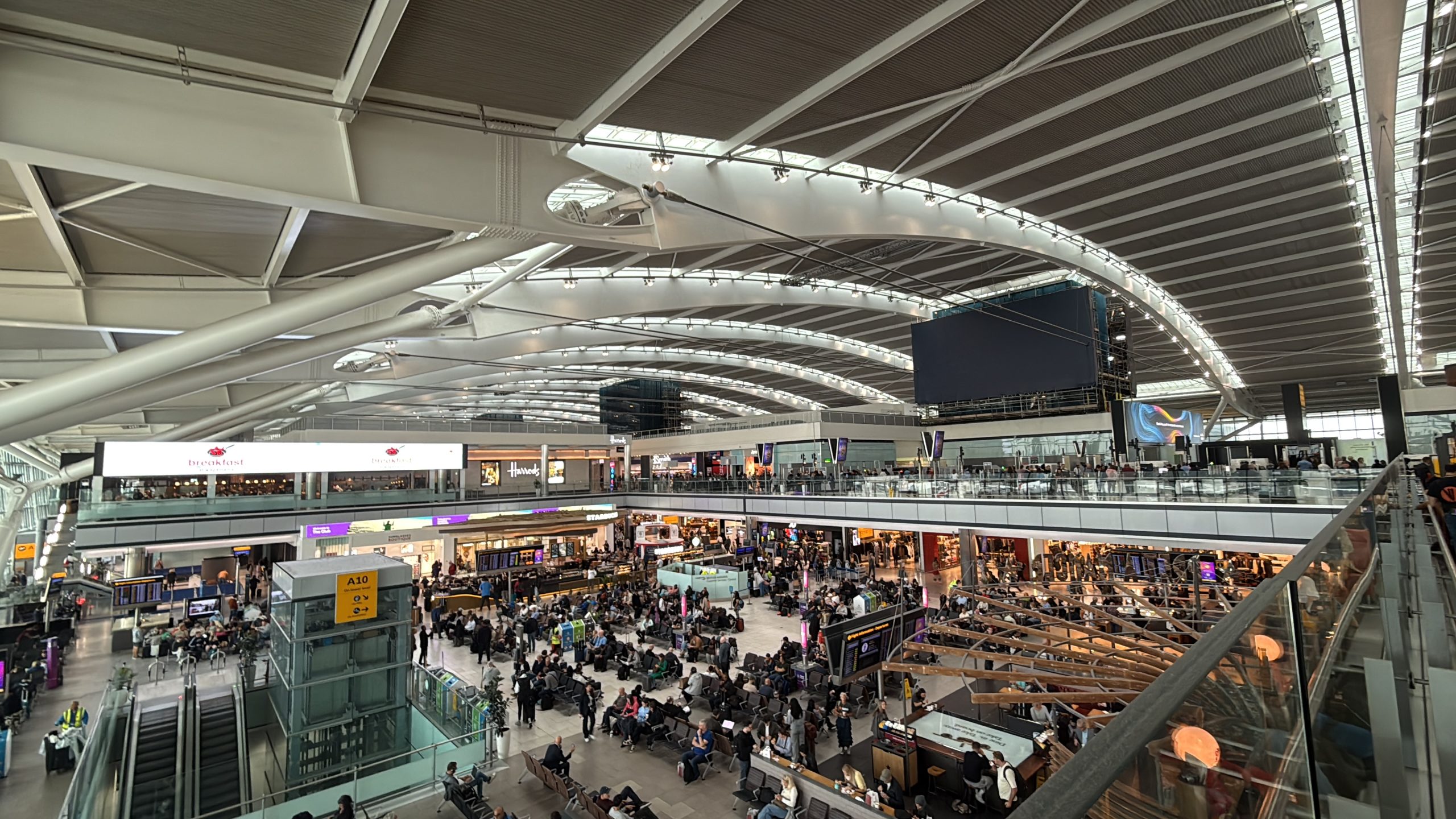
Air India was caught up in UK air traffic chaos on Tuesday after a technical failure at NATS disrupted flight operations across the country.
The outage triggered more than 1,000 flight cancellations in the UK on Tuesday, with 177 more flights cancelled for Wednesday.
Heathrow, a key hub for India-UK travel, was among the hardest-hit airports, alongside Gatwick, London City, Luton, Edinburgh and Bristol.
Air India confirmed the technical problem forced it to divert, delay or cancel multiple flights scheduled to and from UK airports.
NATS said its systems were operating normally again, but warned that recovery from the backlog across the aviation network would take time.
Heathrow, Gatwick, London City, Luton, Edinburgh and Bristol airports all reported disrupted flight operations during the outage, with Heathrow the most severely affected.
NATS said recovery from the backlog across the aviation network would take time even after the underlying technical issue was resolved.
This is not the first time a NATS technical failure has caused mass disruption to UK air travel, with similar system outages having grounded flights in the past.
Air India was among several international carriers, alongside UK domestic airlines, affected by the disruption at Heathrow and other British airports.
Passengers travelling to and from the UK were advised to check their flight status directly with airlines given the scale and unpredictability of the disruption.
NATS, formerly known as National Air Traffic Services, is the primary air traffic control provider for UK airspace, handling flight data processing for arrivals and departures across the country’s busiest airports.
September is a peak month for Indian student travel to the UK, meaning the timing of the outage was particularly disruptive for passengers flying to British universities for the new academic term.
NATS chief executive Martin Rolfe said the exact cause of the technical failure was still being investigated, though the system was confirmed to be operating normally again after the fix.
London Heathrow Airport Terminal 5, Wikimedia Commons, CC0


The Chew Is Changing: How FIVE Wellness Is Building a New Category Around Functional Gum

BRICS Summit closes with New Delhi Declaration adoption

Flights delayed up to 14 hours as disruption continues today

Redfox Overseas: Customize Your Own Energy Drink and Stand Out in the Market

Zamzam Company CEO Chhote Bhai-Bade Bhai gave a grand welcome to Indian writer Devhari Sirvi in Dubai

Shikha Sharma: The Fashion Journalist, Blogger, and Plus-Size Model Taking the Industry by Storm
-
 Brandpost2 years ago
Redfox Overseas: Customize Your Own Energy Drink and Stand Out in the Market
-
 Brandpost2 years ago
Zamzam Company CEO Chhote Bhai-Bade Bhai gave a grand welcome to Indian writer Devhari Sirvi in Dubai
-
 Fashion2 years ago
Shikha Sharma: The Fashion Journalist, Blogger, and Plus-Size Model Taking the Industry by Storm
-
Entertainment1 year ago
Lucky Roxx’s “Yadav Ki Pukar” Goes Viral! Youth Celebrate Unity & Power
-

 Entertainment9 years ago
New Season 8 Walking Dead trailer flashes forward in time
-
Entertainment9 years ago
Meet Superman’s grandfather in new trailer for Krypton
-

 Brandpost2 years ago
From Local Hero to National Icon: Satyam Yadav’s Journey with TwentyOne
-
Uncategorized2 years ago
Hello world!