Connect with us

Brandpost

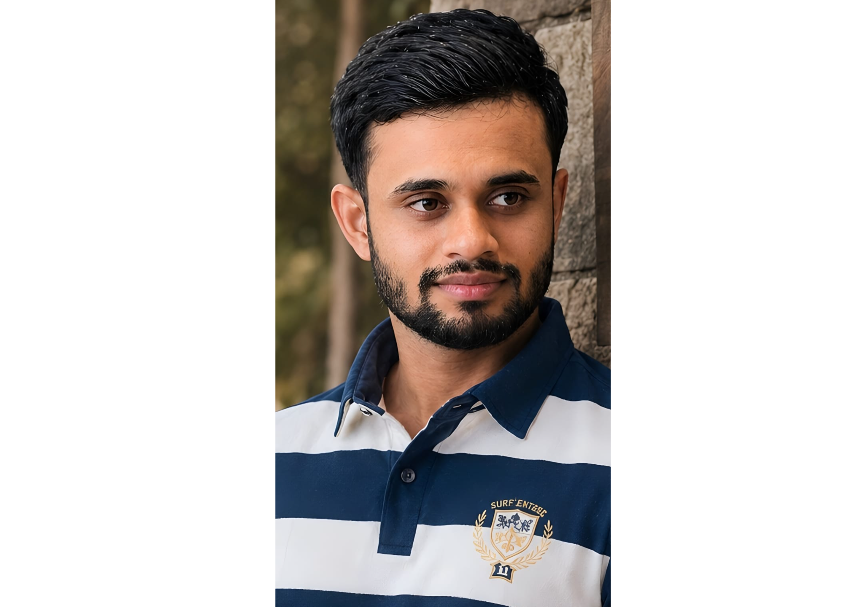
Saikat Sharma (Rajdeep S. Sharma): Durgapur Journalist and Digital Media Entrepreneur Bridging Editorial Leadership with Newsroom Technology
Published

on

Editor-in-Chief of Front Times of Bengal and Assistant Editor at Republican Mirror recognised with the Bengal Icon Awards 2024 for contribution to digital media and journalism

Durgapur, West Bengal — Saikat Sharma, who also works professionally under the name Rajdeep S. Sharma, has built a career that sits at the intersection of journalism, digital publishing and newsroom technology. Born on 10 November in Durgapur, Paschim Bardhaman district, West Bengal, Sharma today holds multiple editorial and technical leadership roles across the eastern Indian media landscape, and is recognised as one of the region’s emerging digital-media entrepreneurs.

He currently serves as Owner and Editor-in-Chief of Front Times of Bengal, Assistant Editor at Republican Mirror, and Editor-in-Chief of the Republican Mirror Digital Platform. Alongside these responsibilities, he continues to offer freelance video-editing and technical support services to media houses, organisations and individual clients.

Early Life and the Roots of a Technical-Journalistic Career

Sharma’s professional identity has been shaped by an unusual combination of interests. From an early age, he developed a strong curiosity about technology and computers, an inclination that gradually expanded into an interest in communication, journalism and digital media. Rather than choosing a single professional lane, he built knowledge across several complementary disciplines — a decision that would later define his career as both an editorial leader and a technical operator within digital news platforms.

His parents, S. Sharma and M. R. Sharma, are frequently credited by him as steady sources of support, encouragement and guidance throughout his personal and professional development.

Education and Continuous Learning

Sharma completed a course in Fundamentals of Journalism at NBCU Academy, which strengthened his grounding in professional news practices. However, his learning has not stopped at a single qualification. He has pursued additional courses and training programmes across disciplines including digital media, video production and technical operations — reflecting a broader philosophy that treats professional education as an ongoing process rather than a one-time milestone.

Building a Journalism Career From the Ground Up

Sharma’s journalism career began with editorial and reporting responsibilities at Mahila Unnayan Newspaper, an experience that introduced him to the practical realities of newsroom operations. He went on to work as a freelance journalist with Din Darpan Daily Newspaper, gradually expanding his experience across news reporting, editorial work, digital publishing, news content management, media production, social media distribution and technical news-platform operations.

As the media industry shifted increasingly toward digital platforms, Sharma’s early technical interests became a professional advantage. He went on to be involved in the development, establishment or management of several news and information platforms, including Ishan Alert Newspaper, Bharoter Khabar, Street Alert English Newspaper, Inform Durgapur and Inforly Nation — experience that gave him exposure to editorial leadership, content management, digital publishing and the technical side of running a news operation.

Front Times of Bengal and Republican Mirror

One of the most defining chapters of Sharma’s career is his role as Owner and Editor-in-Chief of Front Times of Bengal, where his responsibilities extend well beyond conventional editorial decision-making to include digital publishing, content production, editorial workflows and overall platform operations. This role marks his transition from working within existing media structures to building and managing a media outlet of his own.

He is also professionally associated with Republican Mirror, where he holds the position of Assistant Editor, and separately leads the outlet’s digital arm as Editor-in-Chief of the Republican Mirror Digital Platform — a dual role that reflects his ability to operate across both traditional editorial structures and digital-first media environments.

Technical Media Expertise and Video Production

Technology remains one of Sharma’s core professional strengths. His skill set spans video editing, digital media management, social media content creation and management, digital marketing, technical operations, news editorial workflows, digital newsroom setup, content and video production, publishing systems, and digital news platform management. This range allows him to work with a news story not just as editorial content, but through the lens of video production, publishing and distribution.

Media Entrepreneurship and Professional Associations

Sharma’s work developing and operating multiple digital news platforms has established him as a media entrepreneur in his own right — a role that requires building systems capable of consistently producing, managing and distributing content while adapting to constant technological change. He is also a member of the Lead India Publishers Association and is associated with Delhi Crime Press, connecting his editorial work to wider publishing and media networks.

Social Service and Humanitarian Involvement

Beyond media, Sharma is active in social-service and humanitarian work. He currently serves as General Secretary of the Humanity Press Organisation in Durgapur, West Bengal, and is a National-Level Member of the International Human Rights and Crime Control Council. Through these roles, he has connected his communication skills to a broader interest in human rights and social responsibility.

Bengal Icon Awards 2024

In 2024, Sharma received the Bengal Icon Awards 2024, presented in recognition of his outstanding contribution and achievements in the field of digital media and journalism. For Sharma, the honour reflects a professional journey built across reporting, digital publishing, technology and editorial leadership.

Professional Philosophy and Career Goals

A recurring theme in Sharma’s career is continuous learning. He often notes that the digital-media ecosystem changes rapidly — platforms evolve, audience habits shift, and video continues to take a more central role in communication. His professional philosophy centres on integrity, responsible journalism, technical adaptability, creative communication and the positive use of media and technology for social impact.

Despite already holding senior editorial and leadership positions, Sharma’s long-term career goal is to further establish himself as a Professional Video Editor or Technical Advisor — an objective rooted in his original fascination with technology and years of hands-on experience understanding how it functions within modern media organisations.

Personal Life

Sharma considers his family, particularly his parents S. Sharma and M. R. Sharma, a central foundation of his journey, crediting their guidance and encouragement for shaping his personal values and professional ambitions. Outside of his professional commitments, he lists travelling as a personal interest, an activity he connects to the curiosity that also drives his work in journalism and communication.

Connect With Saikat Sharma (Rajdeep S. Sharma)

Those interested in following Sharma’s work across journalism, digital media and video production can find him on the following platforms:

Facebook: https://www.facebook.com/rajdeeps.sharma

Instagram: https://www.instagram.com/rajdeeps.sharma

Full Profile: https://wikiprofiles.in/article.php?slug=saikat-sharma-rajdeep-s-sharma-journalists-media-durgapur-west-bengal-india

About Saikat Sharma (Rajdeep S. Sharma)

Saikat Sharma, professionally known as Rajdeep S. Sharma, is an Indian journalist, digital media professional, editor-in-chief, media entrepreneur and social activist based in Durgapur, West Bengal. He currently serves as Owner and Editor-in-Chief of Front Times of Bengal, Assistant Editor at Republican Mirror and Editor-in-Chief of the Republican Mirror Digital Platform. A recipient of the Bengal Icon Awards 2024, his career combines editorial leadership with expertise in video editing, digital publishing, social media management and newsroom technology, alongside active involvement in humanitarian and human-rights organisations.

Continue Reading
Click to comment

Leave a Reply

Your email address will not be published. Required fields are marked *

Brandpost

KrishiScan Launches AI-Powered Agri-Finance App to Help Indian Farmers Diagnose Crop Disease, Track Mandi Prices and Access Government Schemes

Published

on

By

Built by Abir Majumder for ELLOTH, the platform combines AI crop scanning, live mandi price data and a government scheme copilot in 10 Indian languages

India — A new agri-tech platform, KrishiScan, is positioning itself as one of the country’s first combined agriculture-and-finance digital assistants, aiming to tackle three problems that have long troubled Indian farmers: crop disease detection, fair market pricing and access to government subsidies. Developed by Abir Majumder for ELLOTH, the app describes itself as India’s first AI agri-finance copilot, built to work in ten Indian languages and available directly from a farmer’s phone without any mandatory sign-up for a limited number of free scans.

KrishiScan’s core pitch is speed and accessibility: the platform claims it can diagnose a crop disease from a photograph in around five seconds, while also offering a 14-day mandi price trend and real-time matching against bank loans and subsidy schemes — all designed for farmers who may not have reliable access to English-language digital tools or up-to-date market information.

The Problem KrishiScan Says It Is Solving

According to the platform, Indian farmers lose significant income every season to three recurring issues. Crop diseases often go unnoticed until they have already spread across a field, by which time local dealers or agronomists may be too late to help. Market prices quoted by traders are frequently outdated, with farmers reportedly losing anywhere between ₹200 and ₹500 per quintal due to a lack of live pricing data. And a large number of government welfare schemes — KrishiScan cites more than 800 central and state yojanas — go unclaimed each year simply because farmers are unaware which ones apply to them.

Three AI Tools in One App

KrishiScan is structured around three main tools, each aimed at closing a specific information gap between farmers and the wider agricultural market.

  • AI-Powered Crop Scanner — Farmers can photograph a leaf and receive a diagnosis of disease, pest infestation or nutrient deficiency in under five seconds, along with both organic and chemical treatment suggestions delivered in the farmer’s own language. The tool claims to work across more than 40 crop types with over 90 percent accuracy.
  • Live Mandi Prices & Profit AI — The app pulls real market rates from more than 3,000 mandis and offers district-level filtering, updated daily. Its Profit AI feature compares a farmer’s current crop against two or three alternative crops using local weather, soil and buyer data to suggest more profitable options.
  • YojanaAI Scheme Copilot — By answering six short questions, farmers are matched against more than 800 central and state government schemes covering loans, insurance and grants, with eligibility details, required documents, deadlines and direct application links.

Signature Features: From City Retail Prices to Satellite Field Health

Beyond its three core tools, KrishiScan lists a set of additional features aimed at giving farmers a fuller picture of both their fields and the markets they sell into.

  • City Retail Insights — cross-verifies prices from multiple online retail sources to show farmers the direct-to-consumer rate for their crop, helping them identify the gap between mandi and retail pricing.
  • Hyper-Local Location Sync — a single GPS ping syncs the entire app to a farmer’s exact district, updating mandi rates, forecasts, retail benchmarks and weather advisories together.
  • National Mandi Database — covers over 600 districts across 36 states, allowing farmers to compare crop rates across different markets in one tap.
  • Kisan Didi Voice — a female voice assistant that farmers can speak to in Hindi, Marathi or English, offering spoken diagnosis and step-by-step remedy guidance suited to use in the field.
  • Satellite Field Health — uses NDVI (vegetation index) colour mapping to flag stressed patches of a field before they become visible to the naked eye, available on the platform’s Pro tier.

Pricing: Free Tier, Standard and Pro Plans

KrishiScan follows a freemium model designed to let farmers try the platform before committing to a paid subscription. The free Basic tier includes five crop diagnoses per month, a text-based Kisan Didi assistant, basic weather and daily mandi prices, and access to the national mandi database across English, Hindi and Marathi.

The Standard plan, priced at ₹299 per month and described as the platform’s most popular tier, unlocks unlimited crop diagnoses, an AR live crop scanner, city retail price insights, a 14-day price forecast, hyper-local GPS sync, the YojanaAI eligibility wizard, voice support in ten Indian languages, and a document assistant that generates farmer-ready PDFs.

A Pro plan at ₹799 per month is aimed at farmer-producer organisations (FPOs), agri-dealers and consultants, adding direct handoff to loan officers at KCC, NABARD and MUDRA, regional pest and disease outbreak maps, real-time bank-loan matching with document automation, multi-farm dashboards, satellite field-health monitoring, white-label tools and a dedicated account manager.

Early Adoption Among Farmers and FPOs

KrishiScan reports that it has already run more than 10,000 crop diagnoses, maintains an average user rating of 4.8 out of 5, and has users spread across more than 12 Indian states, including participation from over 240 FPO members. The platform has shared accounts from farmers describing how the app helped identify diseases such as early blight in tomato crops, verify mandi prices against trader offers, and match members of farmer collectives to schemes such as PM Kisan and PMFBY that they were previously unaware of.

One FPO president cited in the platform’s materials described using KrishiScan’s YojanaAI tool to match 63 member-farmers to relevant government schemes, while another highlighted how the app’s document assistant reduced the time needed to process farmer paperwork from roughly two hours to around eight minutes per farmer.

Positioning Against Generic AI Chatbots

KrishiScan draws a clear distinction between itself and general-purpose AI chatbots, arguing that while a generic chatbot might help draft an email, it is not built to handle the specific, localised needs of Indian agriculture. The platform highlights differences such as photo-based crop diagnosis versus generic text advice, native voice support in Hindi and Marathi rather than English only, live mandi price data instead of static or outdated information, and a dedicated government scheme copilot that general AI tools do not offer.

Availability and Access

KrishiScan is accessible directly through a web browser at krishiscan.com, with sign-up available via phone number and OTP or email, and no credit card required to start. The platform offers three free scans without requiring an account, positioning itself as an easy entry point for farmers who want to test the crop-scanning feature before signing up for a subscription.

Website: https://krishiscan.com

Sign Up: https://krishiscan.com/signup

Pricing: https://krishiscan.com/pricing

About: https://krishiscan.com/about

About KrishiScan

KrishiScan is an agri-finance technology platform developed by Abir Majumder for ELLOTH, offering AI-based crop disease diagnosis, live mandi price tracking, profit-comparison tools and a government scheme matching copilot for Indian farmers. Built to work across ten Indian languages and covering more than 600 districts nationwide, KrishiScan is designed as a mobile-first, voice-enabled digital assistant aimed at helping farmers protect their harvests and improve their income through better access to information.

Continue Reading

Brandpost

Inside the Claims: What “Hygienically Packed” Actually Means at Dakloni Masala

Published

on

By

Phrases like “100% pure,” “hygienically packed” and “free from artificial preservatives” run throughout the marketing of Dakloni Masala, the Odisha-based spice and dry-fruits brand — language common across India’s packaged-food sector but rarely accompanied by the specific evidence needed to independently verify it.

The company, which operates under Green Chocy Private Limited and holds FSSAI license number 12026999000110, points to that registration as its primary regulatory credential. FSSAI licensing confirms that a food business meets baseline safety and labeling requirements set by India’s Food Safety and Standards Authority, but it does not certify a product as “organic,” “chemical-free” or superior in quality to competitors — distinctions food-policy researchers say are frequently blurred in consumer marketing across the industry, not specific to any one brand.

Unpacking the Language

“Hygienically packed” typically refers to packaging-line sanitation and handling practices rather than a specific, auditable standard with a public certification mark, unless a company separately holds a recognized hygiene or quality certification such as ISO or HACCP, neither of which Dakloni has indicated it holds on its consumer-facing materials. Similarly, “minimal processing” and “free from artificial preservatives” are claims that, absent ingredient-level lab testing made public, rely on consumer trust in the brand’s own description.

Dakloni’s website states that its Dakloni Masala spices and dry fruits are “carefully sourced from trusted farmers and suppliers,” though the company has not published supplier names, farm locations or third-party audit results to substantiate that sourcing claim.

A Sector-Wide Pattern

Consumer-rights advocates in India have periodically called for stricter regulation of purity and quality language in food marketing, arguing that terms like “pure” and “premium” are used loosely across the packaged-goods sector without regulatory definition, making it difficult for consumers to distinguish substantiated claims from marketing language. This pattern is not unique to Dakloni and applies broadly across small and mid-sized Indian food brands operating primarily through direct-to-consumer channels.

What This Means for Consumers

For consumers, the practical takeaway is that FSSAI registration confirms a baseline level of regulatory compliance, while purity, hygiene and health-related claims beyond that baseline generally reflect a company’s own representations unless independently certified — a distinction worth understanding when evaluating any spice or food brand’s marketing, Dakloni included.

Frequently Asked Questions

Does FSSAI registration mean a product is certified organic?

No. FSSAI registration confirms basic food-safety and labeling compliance; it is separate from organic certification, which requires a distinct certifying body and mark.

Has Dakloni published independent lab results for its purity claims?

The company has not published third-party lab-test results on its consumer-facing materials; its stated quality assurance relies on internal checks and FSSAI registration.

Visit- dakloni.in

Visit- dakloni.com

Facebook- Dakloni Masala

Instagram- @daklonimasala

Continue Reading

Brandpost

Odyssey Elevators Faces Questions Over “First Electric Lift” Claims and Drum-Winding Technology

Published

on

By

Questions Grow Over Technology Representation, Pricing and Accountability as Customers Seek Clarity on What They Are Actually Buying

Technology Representation Is at the Centre of the Debate

For homeowners investing ₹10 lakh or more in a premium home elevator, the technology installed inside the shaft is not a minor technical detail. It can influence expectations around performance, engineering, maintenance, safety, serviceability and price. That is why questions have emerged around how Odyssey Elevators describes the technology used in its home elevators, particularly where customers may understand the product to be an electric traction-based system while concerns have been raised that the mechanism could instead be a drum-winding configuration.

The central issue is not simply terminology. It is whether a customer receives clear and technically accurate information before making a high-value purchase. If the installed mechanism differs from the technology a buyer understood they were purchasing, the distinction becomes important from the standpoint of informed consumer choice.

What Does “Electric Lift” Actually Mean?

The fact that a home lift operates using electricity does not, by itself, define the lifting technology. Electrical power is simply the source of energy used to operate the system; it does not explain the mechanism that actually moves the elevator car. The relevant technical question is how the car is lifted and controlled—for example, through a traction arrangement or through a drum-winding mechanism. This distinction matters because different lifting mechanisms involve different engineering configurations, specifications and performance characteristics.  The source material reviewed for this article notes that Odyssey publicly positions its offering around “Premium Electric Circular Home Elevators” and advanced electric-drive technology. It also notes similar electric-drive positioning by Brio Elevators for its circular lift. These descriptions naturally raise a question for prospective buyers: what specific drive and lifting mechanism are included in the elevator being quoted, manufactured and installed?  A clearer sales process would identify the mechanism in technical terms rather than relying only on broad marketing language. Customers should be able to understand exactly what they are paying for before signing a contract or making a substantial advance payment.

Pricing Questions Add to the Concern

The technology question is closely connected with pricing. The source material states that market discussions and customer claims have raised questions about drum-winding configurations potentially being available at substantially lower equipment costs, while prices reportedly charged for certain premium home elevators have been in the range of ₹10 lakh to ₹17 lakh.

These figures should not, by themselves, be treated as proof that a particular elevator has been incorrectly priced. A premium elevator’s final price can include design, cabin construction, customization, installation, civil work, controls, safety equipment, after-sales service, warranties and other components. Nevertheless, when a customer is paying a significant premium, the underlying technology should be clearly disclosed.

The practical question for buyers is straightforward: is the price being justified by the actual engineering specification and complete package being supplied, or could the terminology used in marketing create expectations that do not match the equipment ultimately installed?

Drum-Winding Technology Is Not the Problem by Itself

It is important to separate the technology itself from the question of disclosure. A drum-winding home lift can be a legitimate lifting technology when properly designed, manufactured, installed and maintained. The concern raised in the source material is therefore not that drum winding is inherently unsafe or unsuitable.

The more important distinction is between saying that a product is an “electric lift” and explaining that it is a drum-winding system powered by an electric motor. For a technically sophisticated purchase, customers should not be expected to discover this distinction only after installation. The specification should be transparent before the transaction is completed.

Corporate Connections Raise an Accountability Question

Another issue identified in the source material concerns the corporate relationship between Odyssey Elevators and Brio Elevators. Public corporate-information records cited in the original document identify Venkatesh Jagabathina and Afash Mahammad Shaik as designated partners of Brio Elevators LLP and also as directors of Odyssey Elevators Private Limited. Odyssey’s own website is cited as identifying Venkatesh Jagabathina as founder and CEO of both businesses.

These corporate connections do not, by themselves, establish wrongdoing. However, they make accountability a relevant consumer question. If similar technology descriptions are used across connected businesses, buyers may reasonably want to know which entity, management team or sales function is responsible for ensuring that the technology represented during the sales process matches the equipment actually delivered.

What Customers Should Demand Before Buying

For a high-value home elevator, buyers should request a written technical specification before making payment. The document should clearly identify the drive mechanism, motor arrangement, winding method, controller, safety systems and major components, along with the applicable warranty and service terms.

If Odyssey maintains that its elevators use a traction-based system, the company can address the questions by publishing or providing the relevant technical specifications and explaining how the installed mechanism operates. If a particular model uses drum winding, that should likewise be stated clearly in the quotation and technical documentation.

Ultimately, the issue is one of transparency. Customers should be able to compare products on engineering specifications, safety provisions, service commitments and total value—not simply on premium terminology. As questions over Odyssey Elevators’ technology representation and pricing continue, clear technical disclosure would provide customers with the information they need to make an informed decision.

Backlinks

Odyssey Elevators

Brio Elevators

Editorial note: This article is based on the supplied source document. Allegations and customer claims are presented as questions or reported concerns and are not stated as independently established facts.

Continue Reading

Trending