
Exams
SSC JHT Paper-I exam date arrives, admit card was out September 6
The SSC Junior Hindi Translator Paper-I examination was conducted today, September 8, with admit cards released on September 6 via the SSC website.

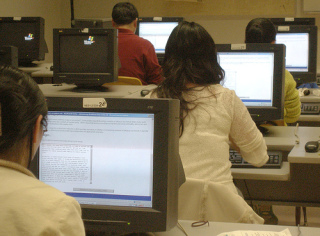
The long-awaited SSC Junior Hindi Translator Paper-I exam date arrived on Tuesday, September 8, with candidates sitting for the test at centres nationwide.
The Staff Selection Commission had made admit cards available on September 6, two days before the exam.
Hall tickets were downloaded from the official SSC website using registration or roll number along with password or date of birth.
Candidates were told to bring a printed admit card, valid photo identification, and two recent passport-size photographs to their exam centre.
The JHT exam is conducted to fill translator posts across the Central Translation Bureau and other government departments.
Paper-I of the SSC JHT exam is conducted as a computer-based test, with candidates required to reach their allotted centre well ahead of the reporting time specified on the admit card.
The Staff Selection Commission conducts the JHT exam periodically to recruit translators for the Central Translation Bureau and various other government departments.
No physical admit cards are sent by post for SSC exams; candidates are required to download and print their own hall tickets from the commission’s website.
Exam city intimation slips, which tell candidates which city their centre will be in, are typically released before the admit card itself as a separate notification.
SSC has separately been processing other recruitment exams this admission cycle, including notifications for various technical and non-technical posts across central government offices.
The Staff Selection Commission released the SSC JHT 2026 admit card on September 6, two days ahead of the Paper-I exam, giving candidates time to verify their exam centre and details.
Candidates were required to download their admit card from the official SSC website using their registration or roll number along with their password or date of birth.
SSC instructed candidates to carry a printed copy of the admit card along with a valid photo ID and two recent passport-size photographs to the exam centre.
Representative image of a competitive exam hall, Wikimedia Commons, CC BY-SA 3.0







Exams
Jaipur NEET PG candidates to reappear today after power failure
NBEMS has scheduled a NEET PG 2026 re-exam for September 5 for 2,445 candidates whose test was disrupted by repeated computer shutdowns at two Jaipur centres on August 30.

Jaipur candidates affected by a NEET PG 2026 disruption are set to reappear for the exam today, September 5.
The re-exam, scheduled for 3 PM, covers 2,445 candidates from two iON Digital Zone Sitapura centres, TC 41682 and 41683.
The original session was disrupted after computers at the centre shut down repeatedly, as many as 10 times over two hours.
NBEMS attributed the disruption to TCS Ltd., the agency conducting the computer-based test, and apologised to affected candidates.
Revised admit cards and venue details for the re-exam were issued separately ahead of today’s sitting.
NEET PG 2026 was originally held on August 30 across the country, with the Jaipur disruption affecting only a subset of candidates at the two named centres.
The National Board of Examinations for Medical Sciences, which conducts NEET PG, has previously faced scrutiny over technical glitches at computer-based test centres in past exam cycles.
NEET PG results for candidates who were not affected by the Jaipur disruption remain on schedule, with NBEMS having indicated the overall result is expected around September 30.
The scale of the disruption, affecting thousands of candidates at a single location, has renewed scrutiny of the reliability of third-party vendors used for large-scale computer-based examinations in India.
NEET PG determines admission to postgraduate medical courses across India, making the fairness and reliability of each testing centre a significant concern for candidates nationwide.
At the iON Digital Zone centre in Sitapura, Jaipur, computers reportedly shut down repeatedly, up to 10 times over a two-hour window, disrupting the exam for affected candidates.
NBEMS attributed the technical failure to TCS Ltd., the agency responsible for conducting the computer-based test, and issued an apology to the candidates affected.
The re-exam covers candidates from test centre numbers 41682 and 41683 at the Sitapura facility, the two centres where the disruption occurred.
Photo via Unsplash, Wikimedia Commons, CC0 (representative exam-writing image)
Exams
UPSC Civil Services Mains exam 2026 nears conclusion today
The UPSC Civil Services Mains Examination 2026, running August 21 to 30, entered its penultimate day on August 29 with candidates competing for 933 vacancies.

The UPSC Civil Services Mains Examination 2026 neared its conclusion on August 29, the penultimate day of the nine-day exam window.
Candidates are competing for 933 vacancies this year across the IAS, IPS, IFS and other central services, with the final day of the exam scheduled for August 30.
The exam runs in two sessions daily, forenoon from 9:00 AM to 12:00 Noon and afternoon from 2:30 PM to 5:30 PM, covering the Essay, four General Studies papers and two optional papers.
Of the 933 vacancies, 33 posts are reserved for Persons with Benchmark Disabilities under UPSC’s standard reservation policy.
The Civil Services Examination draws around 10 lakh applicants annually, with only about 900 to 1,000 candidates ultimately selected after all three stages.
The 933 vacancies for this year’s cycle include 33 posts reserved for Persons with Benchmark Disabilities, part of UPSC’s broader reservation framework for the exam.
Candidates who clear the Mains stage will proceed to the Personality Test, commonly known as the interview round, the final stage of the three-tier Civil Services Examination process.
The Civil Services Examination remains one of the most competitive recruitment processes in India, with a selection ratio of roughly one in a thousand applicants in a typical year.
UPSC typically releases the Mains result, along with the list of candidates called for the interview stage, several months after the written exam concludes.
Aspirants have flagged the exam’s demanding nine-day format, spanning nearly two full weeks including a mid-exam gap, as one of the toughest stretches of the entire selection process.
The Mains exam covers the Essay paper, four General Studies papers, two qualifying language papers and two optional subject papers spread across the nine-day window.
Each exam day runs in two sessions, a forenoon slot from 9:00 AM to 12:00 Noon and an afternoon slot from 2:30 PM to 5:30 PM, except the opening day, which was reserved solely for the Essay paper.
Photo via Unsplash, Wikimedia Commons, CC0 (representative exam-writing image)


Chumbak premieres today: Neena Gupta leads new Netflix family comedy

Apple’s iPhone 18 Pro launch skips the foldable iPhone

Pandit Naviin Gandharv: The Fifth-Generation Musician Keeping the Rare Belabaharr Alive

Redfox Overseas: Customize Your Own Energy Drink and Stand Out in the Market

Zamzam Company CEO Chhote Bhai-Bade Bhai gave a grand welcome to Indian writer Devhari Sirvi in Dubai

Shikha Sharma: The Fashion Journalist, Blogger, and Plus-Size Model Taking the Industry by Storm
-
 Brandpost2 years ago
Redfox Overseas: Customize Your Own Energy Drink and Stand Out in the Market
-
 Brandpost2 years ago
Zamzam Company CEO Chhote Bhai-Bade Bhai gave a grand welcome to Indian writer Devhari Sirvi in Dubai
-
 Fashion2 years ago
Shikha Sharma: The Fashion Journalist, Blogger, and Plus-Size Model Taking the Industry by Storm
-
Entertainment1 year ago
Lucky Roxx’s “Yadav Ki Pukar” Goes Viral! Youth Celebrate Unity & Power
-

 Entertainment9 years ago
New Season 8 Walking Dead trailer flashes forward in time
-
Entertainment9 years ago
Meet Superman’s grandfather in new trailer for Krypton
-

 Brandpost2 years ago
From Local Hero to National Icon: Satyam Yadav’s Journey with TwentyOne
-
Uncategorized2 years ago
Hello world!