
Technology
SEMICON India 2026: How the fifth edition unfolded
The government unveiled the Semicon 2.0 roadmap at SEMICON India 2026, with a Rs 1.27 lakh crore outlay across six pillars aimed at creating close to one lakh jobs and supporting at least 200 chip-design start-ups.

SEMICON India 2026, the fifth edition of the event, was inaugurated by PM Modi on September 17.
The three-day conference at Yashobhoomi, New Delhi, brought together more than 600 companies from 52 countries.
It was themed ‘Silicon to Systems: Building the Ecosystem’.
The event saw the unveiling of the Semicon 2.0 roadmap, with an outlay of Rs 1.275 lakh crore.
The roadmap is structured around six pillars, from chip design to talent development.
It targets training 100,000 technicians for cleanroom and factory-floor roles.
Semicon 2.0 aims to support at least 200 chip-design start-ups and companies.
Investment commitments of about Rs 1 lakh crore, or $11-12 billion, have been received under the programme so far.
SEMICON India 2026 was the fifth edition of the event, inaugurated by Prime Minister Narendra Modi on September 17.
The three-day conference brought together more than 600 companies from 52 countries.
SEMICON India 2026 was themed ‘Silicon to Systems: Building the Ecosystem’.
The event was organised by the India Semiconductor Mission, the Ministry of Electronics and Information Technology, and SEMI.
Semicon 2.0 is described as the next phase of India’s broader semiconductor programme.
India has set a longer-term target of building a $200 billion domestic semiconductor market.
The India Semiconductor Mission was set up to coordinate the country’s chip manufacturing and design push across ministries.
Global semiconductor supply chains have been a focus for many governments in recent years, given their importance to electronics, automotive and defence industries.
India’s earlier semiconductor programme, under the original Semicon India initiative, approved several fabrication and packaging projects before Semicon 2.0 was unveiled.
State governments have also announced incentives to attract semiconductor investment alongside the central government’s programme.
Chip design, fabrication and packaging each require different kinds of infrastructure, talent and capital investment.
The government unveiled the Semicon 2.0 roadmap at SEMICON India 2026, held at Yashobhoomi in New Delhi.
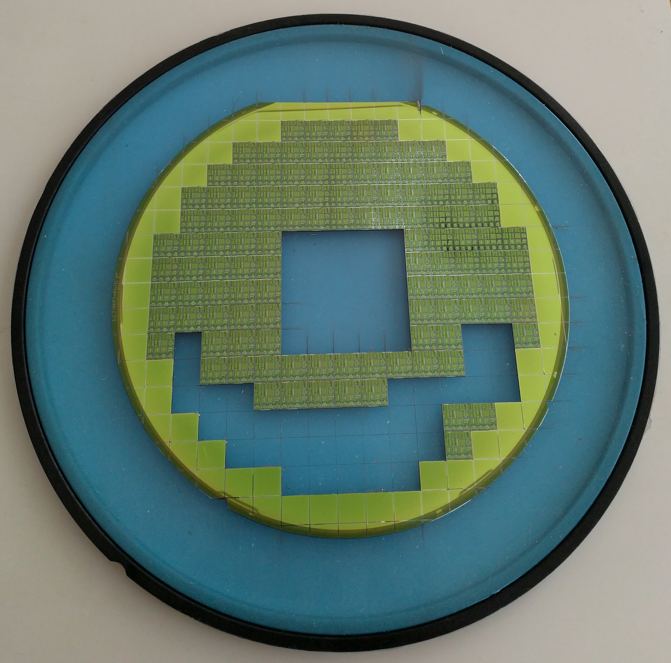
Semiconductor wafer (representative image), Wikimedia Commons, CC BY-SA 4.0



Technology
Starship to fly reused heatshield tiles for the first time
SpaceX has pushed back Starship Flight 14, the rocket’s first attempt at a full orbital mission, from September 22 to September 28, 2026, after moving Super Heavy Booster 21 to the launch pad at Starbase, Texas.
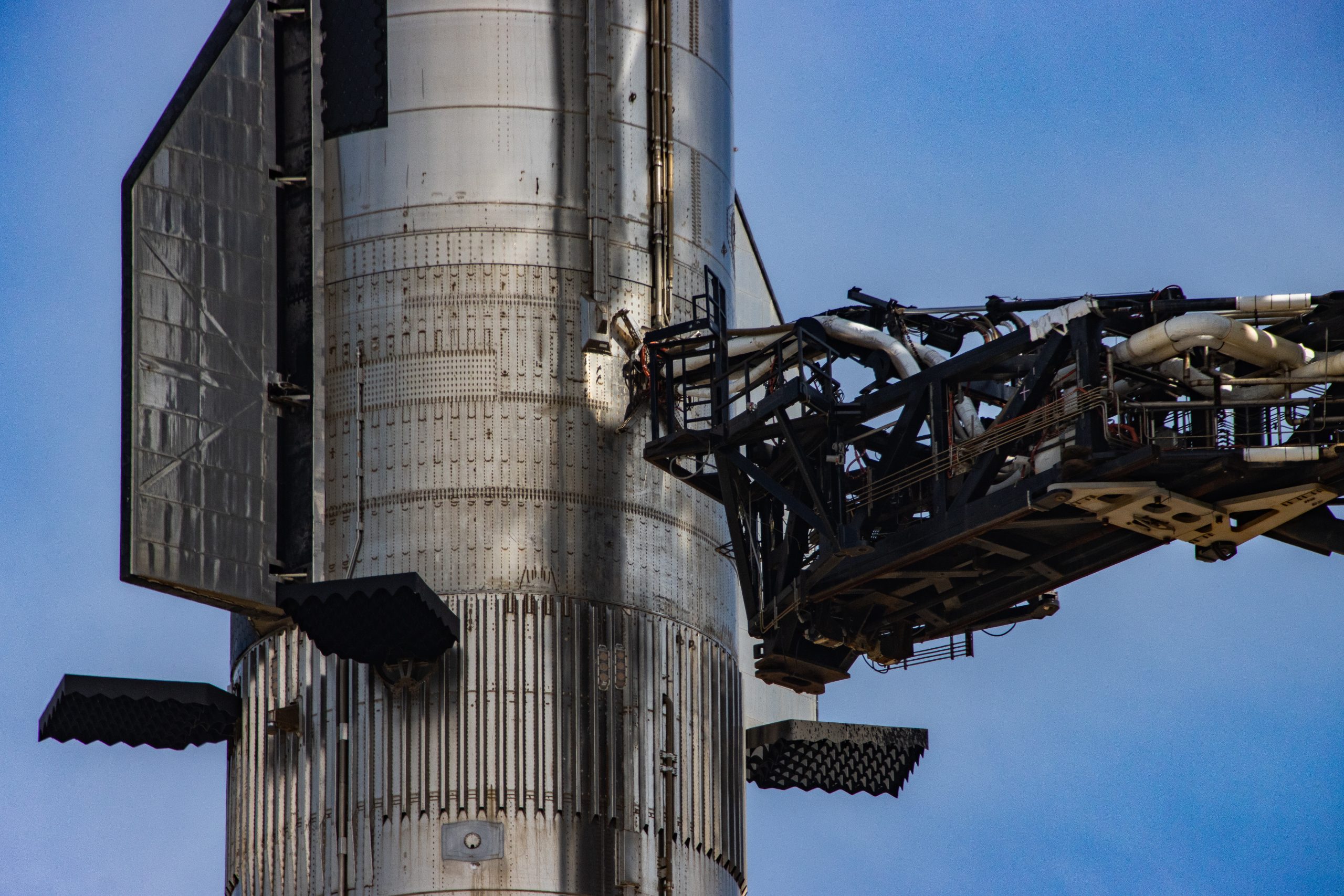
SpaceX plans to fly two previously recovered heatshield tiles on the upcoming Starship Flight 14, a first for the programme.
It marks an initial step toward reusing Starship’s heatshield tiles across missions.
The flight is now targeted for September 28, 2026, after a delay from September 22.
Flight 14 will use Super Heavy Booster 21 and Ship 41.
The mission aims to be Starship’s first full orbital flight.
Booster 21 completed a 33-engine static fire test, and Ship 41 completed a 6-engine static fire test ahead of launch.
Flight 14 is intended to be Starship’s first true orbital mission; earlier flights had only flown ‘passively safe’ suborbital trajectories that avoided a full orbit.
The mission plan calls for deploying 26 Starlink V3 satellites during the flight.
Ship 41 is expected to complete six orbits of Earth before a planned splashdown in the Pacific Ocean, about 10 hours after liftoff.
Unlike some earlier flights, Super Heavy Booster 21 will not attempt a catch at the launch tower; instead it is set to perform a controlled splashdown in the Gulf of Mexico.
SpaceX said it made unspecified ‘modifications to hardware and software’ to address issues seen on the previous Starship flight.
For the first time on a Starship mission, SpaceX plans to fly two previously recovered heatshield tiles, marking an initial step toward heatshield tile reuse.
Starship launches from Starbase, SpaceX’s private launch site near Boca Chica in South Texas.
Starship is designed to be fully reusable and is central to SpaceX’s plans for satellite deployment, Moon missions under NASA’s Artemis programme, and eventual Mars missions.
The vehicle consists of the Super Heavy booster as the first stage and the Starship upper stage, both powered by SpaceX’s Raptor engines.
SpaceX delayed Starship Flight 14 from September 22 to September 28, 2026, without publicly specifying a reason.
SpaceX Starship full stack, Starbase, Texas (representative image), Wikimedia Commons, CC BY-SA 4.0
Technology
Xiaomi’s Redmi Note 17 Pro series launches in India
Xiaomi’s Redmi Note 17 Pro and Pro Max have launched in India today, bringing a large-capacity battery, fast charging and a 120Hz OLED display to the mid-range segment.

Xiaomi’s Redmi Note 17 Pro series has officially launched in India today, following the Pro Max’s global unveiling in late August.
The Pro Max variant carries Xiaomi’s first 10,000mAh battery in a Note-series phone, alongside 100W fast charging support.
The standard Pro model is expected to feature a 6.83-inch flat OLED display at 120Hz, a Snapdragon 6s Gen 4 chipset, and a 9,000mAh battery with 67W charging.
The camera setup is expected to include a 50-megapixel primary rear sensor and a 16-megapixel front camera, along with four years of OS updates and six years of security patches.
The India launch had been anticipated for September 15 for some time, arriving during a particularly active month for smartphone launches.
The rear camera setup on the Redmi Note 17 Pro is expected to include a 50-megapixel primary sensor, paired with a 16-megapixel front camera for selfies.
Xiaomi has committed to four years of Android OS updates and six years of security patches for the Redmi Note 17 Pro series, a notable increase over previous generations.
September has been a particularly active month for smartphone launches in India, with multiple brands including Vivo, Poco, Infinix, Apple and Samsung introducing new devices.
Xiaomi’s Redmi Note series has historically been among the best-selling smartphone lines in India’s competitive mid-range segment.
The phone is expected to be available through both online retailers and Xiaomi’s offline retail network across India from launch day.
Battery capacity has become an increasingly prominent selling point in the Indian mid-range smartphone market, with brands competing to offer longer battery life between charges.
The Redmi Note 17 Pro Max debuted globally in late August with Xiaomi’s first 10,000mAh battery in a Note-series phone, alongside 100W fast charging support.
India’s smartphone launch had been expected for September 15 for some time, with the phone’s India debut confirmed as it went on sale today.
A Redmi Note-series smartphone (representative image), Wikimedia Commons, CC BY-SA 4.0
Technology
Apple’s iPhone 18 Pro launch skips the foldable iPhone
Apple has launched the iPhone 18 Pro starting at $1,199 and Pro Max at $1,299, with a new A20 Pro chip, but did not unveil a foldable iPhone at its September 9 event.

Apple’s iPhone 18 Pro launch skipped the long-rumoured foldable iPhone, focusing instead on the Pro and Pro Max models priced from $1,199 and $1,299.
The new iPhones run on a 2-nanometer A20 Pro chip and carry a 48-megapixel Fusion main camera with variable aperture.
The Pro Max offers up to 30 hours of battery life, and both models now offer a 2TB storage option for the first time.
Despite heavy speculation ahead of the event, no foldable device was announced, even as Apple introduced AirPods 5 alongside the new phones.
Pre-orders for the iPhone 18 Pro and Pro Max open September 12, with shipping beginning September 18 in more than 65 countries.
Alongside the iPhone 18 Pro lineup, Apple also introduced AirPods 5 with upgraded noise cancellation.
Notably, Apple did not unveil a foldable iPhone at the event, despite months of speculation that a folding device would debut alongside the iPhone 18 Pro series.
The standard iPhone 18, without the Pro branding, is not expected to launch until spring 2027, following a staggered release pattern Apple introduced with recent iPhone generations.
The iPhone 18 Pro Max’s 30-hour battery life claim represents an improvement Apple attributes partly to the new 2-nanometer manufacturing process behind the A20 Pro chip.
Indian pricing for the iPhone 18 Pro has not been officially confirmed by Apple as of this report, though early estimates put it in the range of the iPhone 17 Pro’s current price of Rs 1,34,900.
The iPhone 18 Pro and Pro Max also come in new colour options, including black, light blue, glacier and burgundy.
A smaller Dynamic Island on the new models can now display up to three Live Activities simultaneously, according to Apple.
Apple’s new Reference Image feature is designed to authenticate photos as unedited and free of AI generation, addressing growing concerns about image manipulation.
A person using an iPhone, Wikimedia Commons, CC0


Asian Games weightlifting: Full results from the women’s 49kg final

CBIC, Power Ministry among departments joining Special Campaign 6.0

SEMICON India 2026: How the fifth edition unfolded

Redfox Overseas: Customize Your Own Energy Drink and Stand Out in the Market

Zamzam Company CEO Chhote Bhai-Bade Bhai gave a grand welcome to Indian writer Devhari Sirvi in Dubai

Shikha Sharma: The Fashion Journalist, Blogger, and Plus-Size Model Taking the Industry by Storm
-
 Brandpost2 years ago
Redfox Overseas: Customize Your Own Energy Drink and Stand Out in the Market
-
 Brandpost2 years ago
Zamzam Company CEO Chhote Bhai-Bade Bhai gave a grand welcome to Indian writer Devhari Sirvi in Dubai
-
 Fashion2 years ago
Shikha Sharma: The Fashion Journalist, Blogger, and Plus-Size Model Taking the Industry by Storm
-
Entertainment1 year ago
Lucky Roxx’s “Yadav Ki Pukar” Goes Viral! Youth Celebrate Unity & Power
-

 Entertainment9 years ago
New Season 8 Walking Dead trailer flashes forward in time
-
Entertainment9 years ago
Meet Superman’s grandfather in new trailer for Krypton
-
Uncategorized2 years ago
Hello world!
-

 Brandpost2 years ago
From Local Hero to National Icon: Satyam Yadav’s Journey with TwentyOne