


EBITDA stands for earnings before interest, taxes, depreciation and amortisation.
It shows how much a business earns from its operations before those items.
Reliance’s consolidated EBITDA rose about 24% to a record Rs 62,409 crore.
The oil-to-chemicals business contributed Rs 25,203 crore of it.
Net profit rose about 34% to about Rs 29,550 crore.
Transportation fuel margins, known as cracks, rose to about 3 to 3.7 times their year-earlier level, according to IIFL.
Jio Platforms reported revenue up 11.3% to Rs 47,485 crore and EBITDA up 16.6% to Rs 21,879 crore, which the report attributes to a larger subscriber base, higher average revenue per user and new digital services.
Retail EBITDA fell about 10% from a year earlier, and one brokerage said it missed estimates by 6% because of investments in quick commerce and inflation, according to TradingView’s summary of brokerage notes.
The profit figure is not uniform across reports: most give about Rs 29,550 crore, while one report cites a record consolidated profit of about Rs 25,548 crore and a JPMorgan note puts profit after tax at about Rs 25,550 crore.
The gap could come from a difference in how profit is defined, but that could not be confirmed from the reports, so the company’s exchange filing is the best check.
Reliance shares rose on Monday, November 2, 2026, and were the top gainer on the Nifty 50, according to the reports.
IIFL’s midday report said the stock was up over 8%, with an intraday high of about Rs 1,260 and market capitalisation above Rs 17 lakh crore, its largest one-day gain in 2026 since April 2020.
A closing-bell headline reported a gain of about 11.6%, and other reports put the move between roughly 7% and 8% earlier in the day, so the size of the move depends on the time of the report.
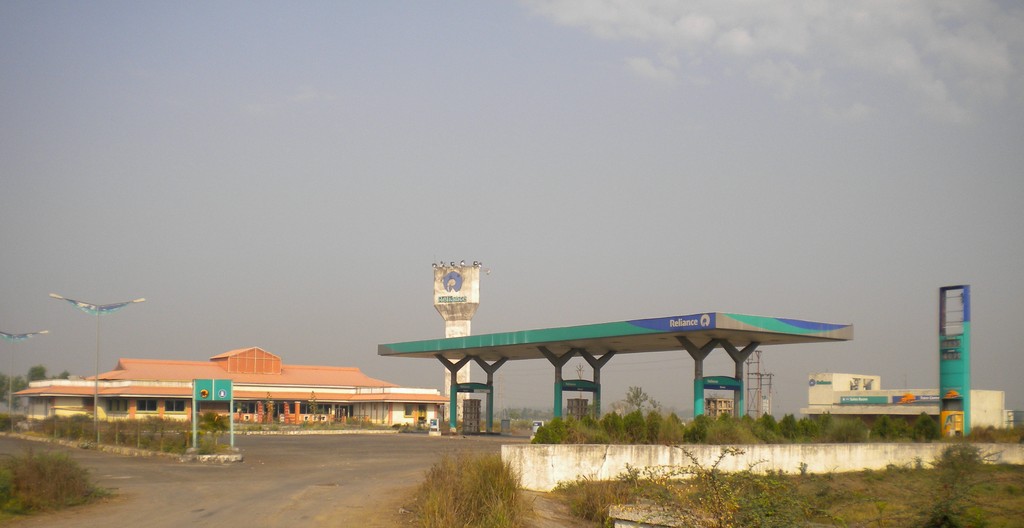
Reliance petrol pump (file image), Wikimedia Commons, CC BY 3.0