


A weaker rupee raises the cost of imports such as crude oil.
Higher costs can add to inflation and squeeze company margins.
On October 12, the Sensex fell 547.65 points even though the rupee opened stronger.
Analysts also cited foreign fund outflows and higher bond yields.
Crude oil was around 106 dollars a barrel at one point.
The decline followed Friday’s rebound, which had ended a prolonged losing streak, according to HDFC Sky.
Market breadth was nearly even, with 2,187 stocks advancing, 2,066 declining and 235 unchanged on the BSE, according to HDFC Sky.
The Nifty Midcap index was flat, while the Nifty Smallcap index rose 1.4%.
Among sectors, Nifty Media rose 4.6%, Realty gained 1%, Auto rose 0.9% and Pharma rose 0.3%, according to HDFC Sky.
IT, metal, private bank, PSU bank and FMCG indices each fell between 0.4% and 1%, according to the same report.
Among Nifty 50 stocks, ITC, Tech Mahindra, L&T, Hindalco and Hindustan Unilever were among the top losers, with falls of about 2% to 3%.
Dr Reddy’s Laboratories, Bajaj Auto, Tata Motors Passenger Vehicles, Bharat Electronics and BSE Ltd were among the top gainers, according to HDFC Sky.
The rupee opened stronger, about 94 to 98 paise higher at around 95.75 to 95.77 per dollar against Friday’s close of 96.73, according to India TV and Analytics Insight.
HDFC Sky said the early recovery in the rupee did not translate into sustained buying in equities, and no closing rupee level was given in the reports reviewed.
Over the weekend, the Reserve Bank of India directed oil companies to source their dollar needs away from the spot market and tightened rules on foreign exchange hedging, according to HDFC Sky.
The RBI had recently raised the repo rate by 25 basis points to 5.5%, according to the same report.
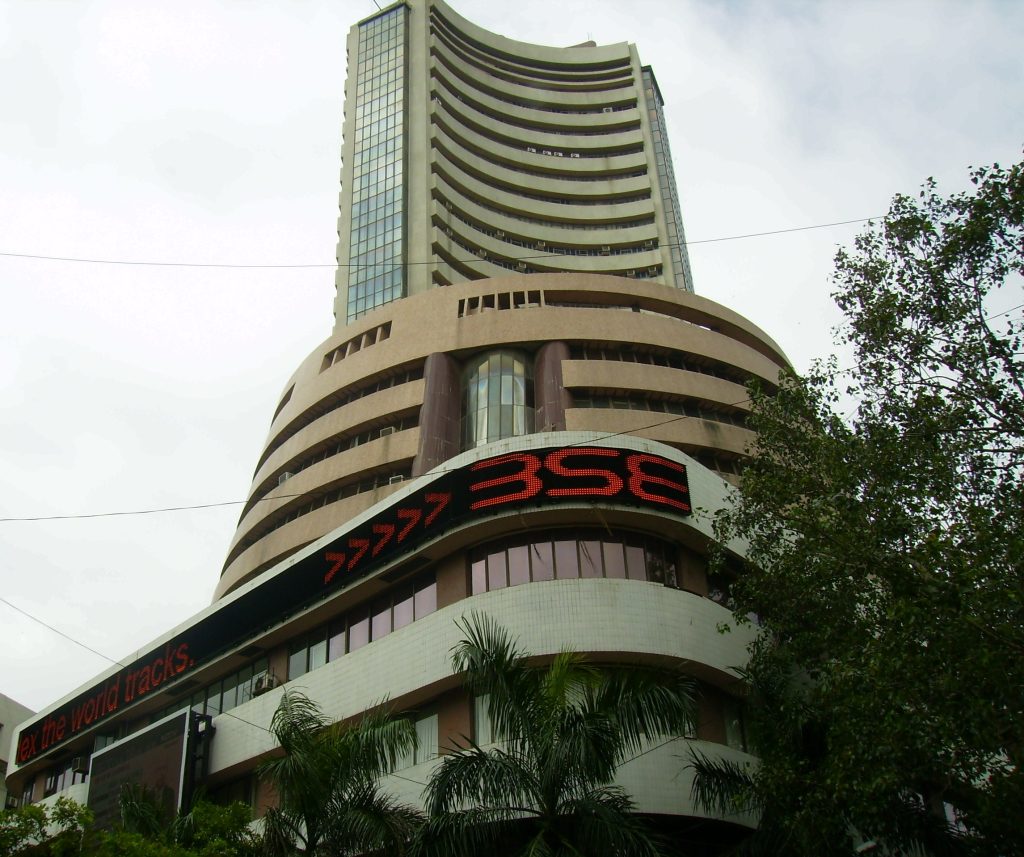
BSE building, Mumbai (file image), Wikimedia Commons, CC BY 2.0