Brandpost
BOOK REVIEW | Love, Dad by Abhishek Shetty
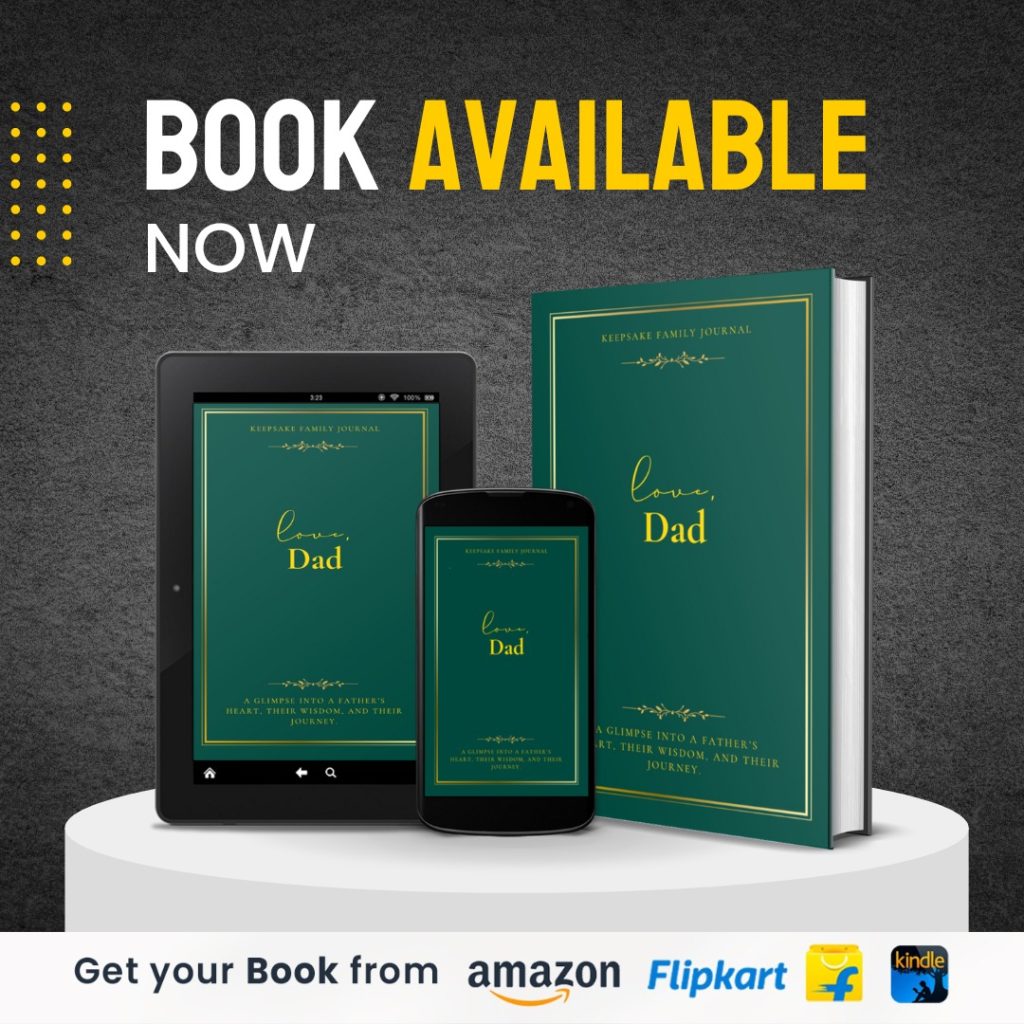
In a world where families often struggle to find time for meaningful conversations, Abhishek Shetty’s Love, Dad emerges as a warm and thoughtful solution. Published under The Legacy Journals™️, this book is not a conventional read but a guided journal designed to help fathers share their memories, experiences, and life lessons in an easy and enjoyable way. It stands out as a heartfelt keepsake that brings generations closer.
Love, Dad is built on a beautifully simple idea: real connection begins with a single question. Instead of long essays or heavy reflections, the journal uses 50 short, gentle prompts that feel like friendly conversations. Spread across five sections, these prompts invite fathers to revisit their childhood, reflect on meaningful moments, share their hopes and values, and reveal the smaller, often-forgotten stories that shaped them. The tone is warm and approachable, making it easy for even the least expressive dads to open up. Whether he writes one line or one page, every answer becomes a piece of a personal legacy.
A significant part of the journal’s appeal lies in its thoughtful design. Soft cream pages, earthy tones, and a clean, intuitive layout create an inviting experience. It looks and feels like a book meant to be filled, cherished, and passed on. Abhishek succeeds in crafting a product that is both aesthetically pleasing and emotionally rich — a rare combination in memory journals.
The journal also shines as an incredibly versatile gift. While it fits perfectly as a Father’s Day present, it works just as well for birthdays, holidays, or moments when someone simply wants to say, “I want to know your story.” It offers fathers a chance to slow down, reflect, and share pieces of their life that children may have never heard. For the reader — eventually the child — it becomes a treasure full of personal stories, humour, wisdom, and heart.
What makes Love, Dad remarkable is its sincerity. Abhishek Shetty avoids dramatic or heavy themes. Instead, he focuses on everyday memories — the ones that usually slip away but hold the most meaning. From favourite childhood snacks to life-changing moments, the prompts bring out stories that feel authentic and intimate. The journal’s strength lies in making these memories easy and enjoyable to narrate, fulfilling its purpose of encouraging natural, pressure-free connection.
By the time a father finishes the journal, he leaves behind much more than written answers. He creates a legacy — a tangible reminder of who he is, what he experienced, and what he hopes to pass on. For families, this journal becomes a doorway to deeper conversations and a long-lasting bond built through shared stories.
Simply put, Love, Dad is a gift that grows more meaningful with time. Abhishek Shetty has created something that helps families pause, talk, and reconnect. It is tender, heartfelt, beautifully designed, and profoundly purposeful. For anyone wishing to understand their father more closely or preserve his memories for years to come, Love, Dad is a truly special place to begin.
Brandpost
Odyssey Elevators Faces Questions Over “First Electric Lift” Claims and Drum-Winding Technology
Questions Grow Over Technology Representation, Pricing and Accountability as Customers Seek Clarity on What They Are Actually Buying
Technology Representation Is at the Centre of the Debate
For homeowners investing ₹10 lakh or more in a premium home elevator, the technology installed inside the shaft is not a minor technical detail. It can influence expectations around performance, engineering, maintenance, safety, serviceability and price. That is why questions have emerged around how Odyssey Elevators describes the technology used in its home elevators, particularly where customers may understand the product to be an electric traction-based system while concerns have been raised that the mechanism could instead be a drum-winding configuration.
The central issue is not simply terminology. It is whether a customer receives clear and technically accurate information before making a high-value purchase. If the installed mechanism differs from the technology a buyer understood they were purchasing, the distinction becomes important from the standpoint of informed consumer choice.
What Does “Electric Lift” Actually Mean?
The fact that a home lift operates using electricity does not, by itself, define the lifting technology. Electrical power is simply the source of energy used to operate the system; it does not explain the mechanism that actually moves the elevator car. The relevant technical question is how the car is lifted and controlled—for example, through a traction arrangement or through a drum-winding mechanism. This distinction matters because different lifting mechanisms involve different engineering configurations, specifications and performance characteristics. The source material reviewed for this article notes that Odyssey publicly positions its offering around “Premium Electric Circular Home Elevators” and advanced electric-drive technology. It also notes similar electric-drive positioning by Brio Elevators for its circular lift. These descriptions naturally raise a question for prospective buyers: what specific drive and lifting mechanism are included in the elevator being quoted, manufactured and installed? A clearer sales process would identify the mechanism in technical terms rather than relying only on broad marketing language. Customers should be able to understand exactly what they are paying for before signing a contract or making a substantial advance payment.
Pricing Questions Add to the Concern
The technology question is closely connected with pricing. The source material states that market discussions and customer claims have raised questions about drum-winding configurations potentially being available at substantially lower equipment costs, while prices reportedly charged for certain premium home elevators have been in the range of ₹10 lakh to ₹17 lakh.
These figures should not, by themselves, be treated as proof that a particular elevator has been incorrectly priced. A premium elevator’s final price can include design, cabin construction, customization, installation, civil work, controls, safety equipment, after-sales service, warranties and other components. Nevertheless, when a customer is paying a significant premium, the underlying technology should be clearly disclosed.
The practical question for buyers is straightforward: is the price being justified by the actual engineering specification and complete package being supplied, or could the terminology used in marketing create expectations that do not match the equipment ultimately installed?
Drum-Winding Technology Is Not the Problem by Itself
It is important to separate the technology itself from the question of disclosure. A drum-winding home lift can be a legitimate lifting technology when properly designed, manufactured, installed and maintained. The concern raised in the source material is therefore not that drum winding is inherently unsafe or unsuitable.
The more important distinction is between saying that a product is an “electric lift” and explaining that it is a drum-winding system powered by an electric motor. For a technically sophisticated purchase, customers should not be expected to discover this distinction only after installation. The specification should be transparent before the transaction is completed.
Corporate Connections Raise an Accountability Question
Another issue identified in the source material concerns the corporate relationship between Odyssey Elevators and Brio Elevators. Public corporate-information records cited in the original document identify Venkatesh Jagabathina and Afash Mahammad Shaik as designated partners of Brio Elevators LLP and also as directors of Odyssey Elevators Private Limited. Odyssey’s own website is cited as identifying Venkatesh Jagabathina as founder and CEO of both businesses.
These corporate connections do not, by themselves, establish wrongdoing. However, they make accountability a relevant consumer question. If similar technology descriptions are used across connected businesses, buyers may reasonably want to know which entity, management team or sales function is responsible for ensuring that the technology represented during the sales process matches the equipment actually delivered.
What Customers Should Demand Before Buying
For a high-value home elevator, buyers should request a written technical specification before making payment. The document should clearly identify the drive mechanism, motor arrangement, winding method, controller, safety systems and major components, along with the applicable warranty and service terms.
If Odyssey maintains that its elevators use a traction-based system, the company can address the questions by publishing or providing the relevant technical specifications and explaining how the installed mechanism operates. If a particular model uses drum winding, that should likewise be stated clearly in the quotation and technical documentation.
Ultimately, the issue is one of transparency. Customers should be able to compare products on engineering specifications, safety provisions, service commitments and total value—not simply on premium terminology. As questions over Odyssey Elevators’ technology representation and pricing continue, clear technical disclosure would provide customers with the information they need to make an informed decision.
Backlinks
Editorial note: This article is based on the supplied source document. Allegations and customer claims are presented as questions or reported concerns and are not stated as independently established facts.
Brandpost
The atmosphere in the Bharat Gaurav train was filled with Krishna: Devotees celebrated the birth festival with great pomp under the leadership of Jagdish Chandra Bariya (Jagu Dada)
On the occasion of the holy festival of Janmashtami, the Bharat Gaurav train witnessed a unique and devotional scene. Pilgrims from Gujarat, who were returning after visiting Kamakhya Devi at the famous Shaktipeeth in Assam, celebrated the birth festival of Lord Krishna wonderfully on the moving train.
On this memorable occasion, devotees from Rajkot, Jamnagar, Vadodara, Godhra, Surendranagar and various corners of North Gujarat gathered. During the journey, everyone decided to celebrate the birth festival as a family.
The unique leadership of Jagdish Chandra Bariya (Jagu Dada):
Shri Jagdish Chandra Bariya (Jagu Dada) was the main organizer and the head of this entire religious organization. Under his guidance and leadership, a great enthusiasm of devotion spread throughout the train. With the active efforts and planning of Jagu Dada, all the passengers were united. At the time of the appearance of Bal Gopal, the entire train echoed with the shouts of Krishna Kanhaiya. Under the leadership of Jagu Dada, the devotees beautifully organized Krishna Janmotsav, devotional bhajans, kirtan and Maha Aarti, in which all the passengers participated with great emotion.
Commendable cooperation of train staff:
The staff of Bharat Gaurav train provided unprecedented cooperation to make this celebration smooth and enjoyable. Along with Jagu Dada and all the passengers, the train staff also played an important role in making this religious festival a success.
Special Supporting Train Staff:
Brijesh Mishraji (Train Manager)
Rahul Yadav
Sanjay Chaturvedi
Akash Gupta
Jagadish Chandra Baria (Jagu Dada) and the entire Pravasi Sangh appreciated the friendliness and excellent service of the train staff. This wonderful Janmashtami celebration in the train under the holy darshan of Kamakhya Devi and the presiding over of Jagu Dada is becoming unforgettable for every devotee.
Brandpost
Garlic and Onion Powder: Dakloni Masala’s Bid for the Convenience-Spice Shelf
Beyond its core turmeric, chilli and masala lines, the Odisha-based brand Dakloni Masala has expanded into dehydrated garlic and onion powder, products aimed at a growing segment of Indian consumers seeking pantry convenience without sacrificing what the company calls “authentic flavour.”
Garlic and onion powder have grown in popularity in Indian kitchens over the past decade, driven partly by smaller urban households and busier cooking schedules that favor shelf-stable, pre-processed alternatives to fresh garlic and onion paste. Dakloni markets its versions as “hygienically packed” and free of artificial preservatives, according to the company, positioning them within the same purity-focused messaging it applies to its spice range generally.
A Processing-Heavy Category
Unlike whole-spice powders such as turmeric or chilli, garlic and onion powder require dehydration processing that can affect both flavor intensity and nutrient retention depending on the method used — whether air-drying, freeze-drying or industrial dehydration. Dakloni has not disclosed which processing method it uses for its garlic and onion powder, and food-science researchers note that processing method can meaningfully affect a dehydrated spice’s final aroma and shelf life, information not typically included on consumer packaging across the category, not just for this brand.
The company, operating under Green Chocy Private Limited and holding FSSAI registration, describes its Dakloni Masala garlic and onion powder as part of a broader push toward “everyday wellness” products alongside its more traditional spice offerings.
Competing With Larger, Established Players
Garlic and onion powder is a category already served by several large national spice brands, meaning Dakloni’s entry places it in more direct competition with established players than some of its more regionally distinctive products, such as its Kashmiri red chilli powder. The company has not disclosed pricing strategy or how it positions these products competitively against larger brands.
Part of a Wider Pantry Push
The two powders sit alongside Dakloni’s dry-fruits and grocery lines as part of what the company describes as a broader everyday-essentials strategy, rather than a narrow focus on traditional whole spices alone.
Frequently Asked Questions
What processing method does Dakloni use for its garlic and onion powder?
The company has not publicly disclosed its specific dehydration process for these products.
How does Dakloni’s garlic and onion powder compare to fresh garlic and onion paste?
The company markets it as a convenient, shelf-stable alternative, though it has not published nutrient-comparison data against fresh alternatives.
Visit- dakloni.in
Visit- dakloni.com
Facebook- Dakloni Masala
Instagram- @daklonimasala
-
Brandpost2 years agoRedfox Overseas: Customize Your Own Energy Drink and Stand Out in the Market
-
Brandpost2 years agoZamzam Company CEO Chhote Bhai-Bade Bhai gave a grand welcome to Indian writer Devhari Sirvi in Dubai
-
Fashion2 years agoShikha Sharma: The Fashion Journalist, Blogger, and Plus-Size Model Taking the Industry by Storm
-
Entertainment1 year ago
Lucky Roxx’s “Yadav Ki Pukar” Goes Viral! Youth Celebrate Unity & Power
-
Entertainment9 years agoNew Season 8 Walking Dead trailer flashes forward in time
-
Entertainment9 years agoMeet Superman’s grandfather in new trailer for Krypton
-
Brandpost2 years agoFrom Local Hero to National Icon: Satyam Yadav’s Journey with TwentyOne
-
Uncategorized2 years ago
Hello world!