
Business
NALCO Q1 profit surges 88% to Rs 2,002 crore on higher prices, output
NALCO’s Q1 FY27 net profit surged 88% to Rs 2,002.38 crore, supported by record bauxite and alumina output and higher aluminium prices.

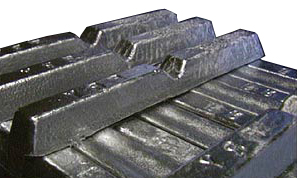
NALCO’s net profit surged 88% year-on-year to Rs 2,002.38 crore for the quarter ended June 2026, up from Rs 1,063.86 crore in the same period last year, the state-run company said on Thursday, July 31, 2026.
Revenue from operations rose 39% year-on-year to Rs 5,302.38 crore, boosted by favourable global aluminium prices along with higher production and sales volumes, especially domestic alumina sales.
The company recorded its highest-ever first-quarter bauxite excavation at 19.52 lakh tonnes and highest-ever first-quarter calcined alumina production at 5.77 lakh tonnes, with alumina and hydrate sales at 3.47 lakh tonnes.
Chairman Brijendra Pratap Singh said NALCO ‘commenced FY 2026-27 on a strong note, reflecting the company’s operational resilience and prudent business strategy,’ pointing to favourable prices and higher volumes as drivers.
The board recommended a final dividend of Re 1 per equity share, totalling about Rs 183.66 crore for FY 2025-26, pending shareholder approval.
NALCO’s Q1 FY27 earnings call is set for August 3 at 10:30 am, when management will lay out expectations for the rest of the year.
NALCO is administered by the Ministry of Mines and remains one of the largest bauxite-alumina-aluminium integrated complexes in Asia, with operations spread across mining, refinery and smelter sites in Odisha.
The company’s shares are traded on both the BSE and NSE, and quarterly results such as these are closely tracked by investors in India’s public sector commodity space.
NALCO’s board also recommended a final dividend of Re 1 per equity share, or 20% of face value, amounting to about Rs 183.66 crore for FY 2025-26, subject to shareholder approval.
The company operates bauxite mines, an alumina refinery and an aluminium smelter across Odisha, making it one of India’s largest integrated aluminium producers and a major public sector undertaking under the Ministry of Mines.
NALCO plans to hold its Q1 FY27 earnings conference call on August 3 at 10:30 am, where management is expected to discuss the outlook for the rest of the financial year.
Photo by Lafrance, Wikimedia Commons, CC BY-SA 3.0


Business
Should you worry about a 1.36x retail subscription? NSE IPO explained
The Rs 22,569 crore NSE IPO closed on September 21 with 5.69 times subscription, led by qualified institutional buyers at 12.68 times, with retail investors at 1.36 times and listing expected on September 24.
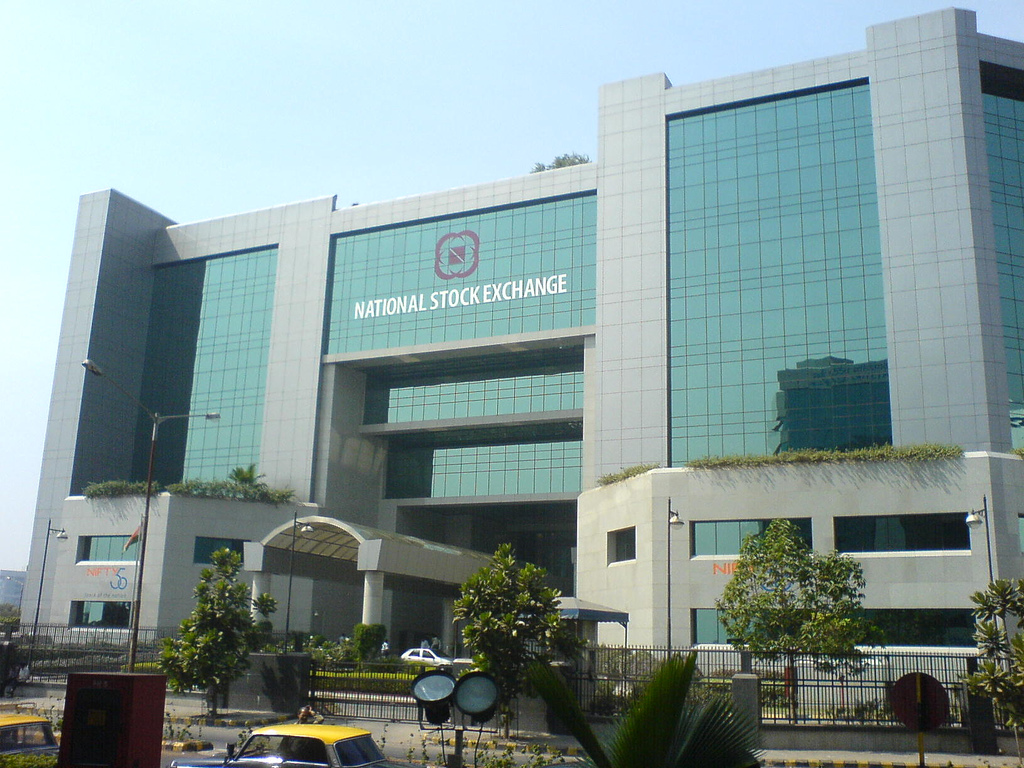
Retail investors subscribed the NSE IPO 1.36 times, a lower multiple than institutions at 12.68 times.
The retail quota is a smaller share of the offer, and its subscription depends on the lot size and price.
One lot is 8 shares, so the minimum investment is about Rs 14,280.
Overall subscription was 5.69 times.
Listing is expected on September 24.
The lot size is 8 shares, which makes the minimum investment about Rs 14,280 at the upper end of the price band.
The issue is entirely an offer for sale, which means the proceeds go to existing shareholders selling their stake and not to the exchange itself.
Bidding opened on September 17, 2026, and closed on September 21, 2026.
The shares are tentatively expected to list on September 24, 2026.
The grey market premium was reported at about Rs 61 per share, which would suggest listing gains of around 3.5 percent, though grey market figures are unofficial and can change quickly.
After Hyundai Motor India’s Rs 27,870 crore IPO in 2024, the NSE issue is the second-largest public offering in India.
Earlier on the final day, the issue had been reported at 1.16 times subscription before institutional demand came in late in the day.
The size of the offer drew liquidity away from the secondary market during the week, and market commentary linked it to the muted gains in benchmark indices.
Investors who applied in the IPO can check allotment status through the registrar once the basis of allotment is finalised, which is expected on September 22.
IPO subscription figures show demand at the close of bidding and do not guarantee a listing gain, since listing-day prices depend on market conditions.
The Rs 22,569 crore initial public offering of the National Stock Exchange of India received 5.69 times subscription on the final day of bidding, September 21, 2026.
National Stock Exchange of India, Mumbai (representative image), Wikimedia Commons, CC BY-SA 2.0
Business
Nifty above 23,400? What Monday’s market close tells us
Sensex and Nifty rose on Monday, September 21, tracking Asian markets and easing crude oil prices after six straight weekly losses; the Sensex was up about 420 points in early trade, with reports putting the close near 74,859.

Market wraps reported the Nifty closing at 23,414.30 on Monday, up about 68 points.
The Sensex closed at 74,858.99, up about 564 points, according to the same reports.
The move followed six weekly losses.
Crude oil eased, and Asian markets were higher.
Direction ahead depends on oil, foreign flows and Middle East developments.
The gains came as easing crude oil prices offered relief to a market that had been on edge over Middle East tensions.
Brent crude fell about 2.2 percent to roughly 101.56 dollars a barrel, and US crude fell about 2.4 percent to about 97.93 dollars.
Asian markets had closed broadly higher, with South Korea’s Kospi up 1.43 percent and Japan’s Nikkei up 1.38 percent.
InterGlobe Aviation, which runs IndiGo, rose about 1.55 percent to Rs 4,996.50, helped by lower fuel costs.
Sun Pharma rose about 1.39 percent and Reliance Industries about 1.36 percent in early trade.
Adani Ports fell about 2.8 percent, Bharti Airtel about 2.3 percent and Wipro about 1.8 percent.
The rebound followed a sixth consecutive weekly loss for the Sensex and Nifty, the longest such run in about six years for the Sensex.
Investors were also watching the closing of the Rs 22,569 crore NSE IPO, which had drawn liquidity from the secondary market.
Oil-importing India is sensitive to crude prices, since lower prices reduce the import bill and support the rupee and inflation outlook.
Market direction in the coming days is likely to depend on crude oil, foreign fund flows and developments in the Middle East.
In early trade on Monday, September 21, the BSE Sensex rose 419.94 points, or 0.57 percent, to 74,714.90.
The NSE Nifty 50 added 39.75 points, or 0.17 percent, to 23,386.15 in early deals.
Some reports put the opening levels slightly lower, with the Sensex up about 330 points at 74,624.74 and the Nifty at about 23,372.
Phiroze Jeejeebhoy Towers, Bombay Stock Exchange (representative image), Wikimedia Commons, CC BY-SA 2.0
Business
Gold, silver rates on Sunday: 24K at Rs 1.56 lakh per 10 grams
24-carat gold is priced at about Rs 15,584 per gram in India on September 20, with silver at Rs 255 per gram, unchanged from the previous day.

24-carat gold cost about Rs 1.56 lakh for 10 grams on Sunday, September 20.
The rate list showed Rs 1,55,840, while another listing showed Rs 1,55,999.
22-carat gold was Rs 1,42,850 for 10 grams.
Silver was Rs 255 per gram.
Rates vary slightly between sources.
Silver was quoted at Rs 255 per gram, which is Rs 2,550 for 10 grams and about Rs 2,55,000 per kilogram.
The silver rate was unchanged from the previous day.
Other listings showed slightly different figures, with one putting 24-carat gold at Rs 1,55,999 per 10 grams, because bullion rates vary by source and time of day.
Advertised per-gram rates do not reflect the final cost of jewellery, which also includes making charges, GST and other costs.
Buyers are advised to compare the total jewellery bill rather than only the advertised gold rate.
Purity should be checked, and hallmarked jewellery is the standard way to verify the carat of gold.
Gold prices in India are influenced by global bullion prices, the rupee exchange rate, import duties and local demand.
Festival and wedding seasons typically raise demand for gold in India, which can support prices.
Rates are indicative and can change during the day, so buyers should confirm the live rate with their jeweller before purchase.
24-carat gold is the purest form at about 99.9 percent, while 22-carat gold is about 91.6 percent pure and is the standard for most jewellery.
On the day, the gap between the 24-carat and 22-carat rates was Rs 1,299 per gram.
Silver at Rs 255 per gram works out to about Rs 2.55 lakh per kilogram.
On Sunday, September 20, 2026, 24-carat gold was quoted at Rs 15,584 per gram, or Rs 1,55,840 for 10 grams, in a widely published rate list.
The same list put 22-carat gold at Rs 14,285 per gram, or Rs 1,42,850 for 10 grams.
Gold jewellery, Kolkata (representative image), Wikimedia Commons, CC BY-SA 4.0


Acharya Hemanshu Ji Honoured with Lifetime Achievement Award at National Dharma Jyotish Sammelan 2026 in Lucknow

Taptwice Media Restricts Its Social Media Arm, Taptwice Social, to 100% Human-Led Engagement Providers Only

Starship to fly reused heatshield tiles for the first time

Redfox Overseas: Customize Your Own Energy Drink and Stand Out in the Market

Zamzam Company CEO Chhote Bhai-Bade Bhai gave a grand welcome to Indian writer Devhari Sirvi in Dubai

Shikha Sharma: The Fashion Journalist, Blogger, and Plus-Size Model Taking the Industry by Storm
-
 Brandpost2 years ago
Redfox Overseas: Customize Your Own Energy Drink and Stand Out in the Market
-
 Brandpost2 years ago
Zamzam Company CEO Chhote Bhai-Bade Bhai gave a grand welcome to Indian writer Devhari Sirvi in Dubai
-
 Fashion2 years ago
Shikha Sharma: The Fashion Journalist, Blogger, and Plus-Size Model Taking the Industry by Storm
-
Entertainment1 year ago
Lucky Roxx’s “Yadav Ki Pukar” Goes Viral! Youth Celebrate Unity & Power
-

 Entertainment9 years ago
New Season 8 Walking Dead trailer flashes forward in time
-
Entertainment9 years ago
Meet Superman’s grandfather in new trailer for Krypton
-
Uncategorized2 years ago
Hello world!
-

 Brandpost2 years ago
From Local Hero to National Icon: Satyam Yadav’s Journey with TwentyOne