Business
NALCO Q1 profit surges 88% to Rs 2,002 crore on higher prices, output
NALCO’s Q1 FY27 net profit surged 88% to Rs 2,002.38 crore, supported by record bauxite and alumina output and higher aluminium prices.
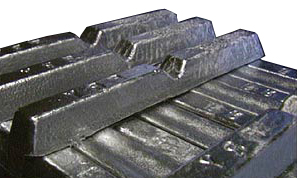
NALCO’s net profit surged 88% year-on-year to Rs 2,002.38 crore for the quarter ended June 2026, up from Rs 1,063.86 crore in the same period last year, the state-run company said on Thursday, July 31, 2026.
Revenue from operations rose 39% year-on-year to Rs 5,302.38 crore, boosted by favourable global aluminium prices along with higher production and sales volumes, especially domestic alumina sales.
The company recorded its highest-ever first-quarter bauxite excavation at 19.52 lakh tonnes and highest-ever first-quarter calcined alumina production at 5.77 lakh tonnes, with alumina and hydrate sales at 3.47 lakh tonnes.
Chairman Brijendra Pratap Singh said NALCO ‘commenced FY 2026-27 on a strong note, reflecting the company’s operational resilience and prudent business strategy,’ pointing to favourable prices and higher volumes as drivers.
The board recommended a final dividend of Re 1 per equity share, totalling about Rs 183.66 crore for FY 2025-26, pending shareholder approval.
NALCO’s Q1 FY27 earnings call is set for August 3 at 10:30 am, when management will lay out expectations for the rest of the year.
NALCO is administered by the Ministry of Mines and remains one of the largest bauxite-alumina-aluminium integrated complexes in Asia, with operations spread across mining, refinery and smelter sites in Odisha.
The company’s shares are traded on both the BSE and NSE, and quarterly results such as these are closely tracked by investors in India’s public sector commodity space.
NALCO’s board also recommended a final dividend of Re 1 per equity share, or 20% of face value, amounting to about Rs 183.66 crore for FY 2025-26, subject to shareholder approval.
The company operates bauxite mines, an alumina refinery and an aluminium smelter across Odisha, making it one of India’s largest integrated aluminium producers and a major public sector undertaking under the Ministry of Mines.
NALCO plans to hold its Q1 FY27 earnings conference call on August 3 at 10:30 am, where management is expected to discuss the outlook for the rest of the financial year.
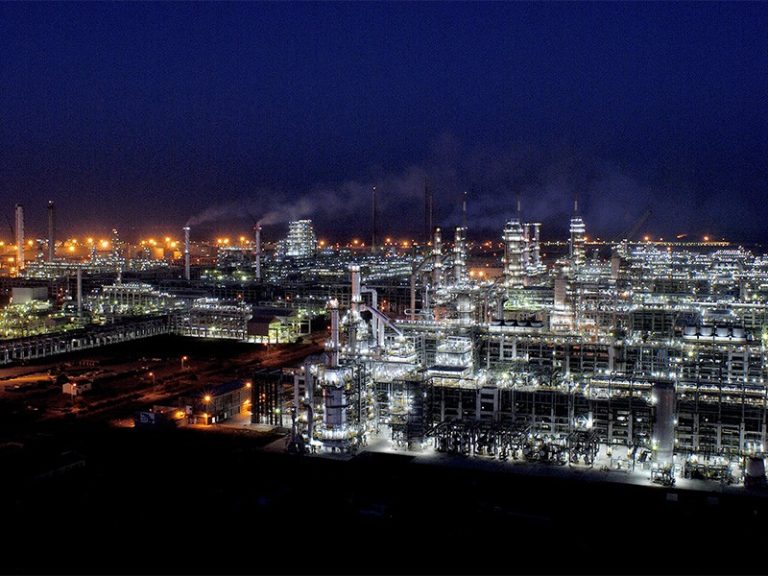
Photo by Lafrance, Wikimedia Commons, CC BY-SA 3.0
Business
Maruti Suzuki Q1 net profit falls 9%, revenue climbs 36% on record volumes
Maruti Suzuki’s Q1 FY27 net profit fell 9% to Rs 3,447 crore, even as revenue rose 36% on the back of a 29.3% jump in vehicle sales.
Maruti Suzuki’s consolidated net profit fell 9.11% year-on-year to Rs 3,446.9 crore in the quarter ended June 2026, down from Rs 3,792.4 crore, even as the carmaker posted its fastest revenue growth in several quarters.
Revenue from operations on a consolidated basis rose 35.91% to Rs 52,469.8 crore, up from Rs 38,605.2 crore a year earlier. Standalone net profit came in at Rs 3,352.1 crore, down from Rs 3,758.1 crore, while standalone net sales climbed 36% to Rs 49,959.1 crore.
The company sold 6,82,724 units during the quarter, a rise of 29.3% year-on-year, with domestic small car sales up 34.1%, SUV sales up 44.6% and exports up 28.6%. Domestic market share improved to 41.2%, a gain of 2.3 percentage points.
Operating EBITDA margin slipped to 8.22% from 10.4% a year earlier as higher material costs and increased promotional spending pressured profitability despite the strong volume growth.
The company said the commissioning of its Kharkhoda plant in Haryana had boosted production capacity, allowing it to meet rising domestic and export demand through the quarter.
Maruti Suzuki shares closed 0.36% higher at Rs 14,239.40 on the BSE ahead of the results announcement on Friday, July 31, 2026.
Maruti Suzuki’s results arrived during a busy earnings week for Indian markets, with Sun Pharma, Bajaj Finserv, Indian Oil Corporation and ABB among other large companies also reporting first-quarter numbers.
Separately, foreign institutional investors trimmed their holdings across several Nifty 50 companies during the quarter, even as domestic institutional investors raised their combined index ownership to a record 25.9%.
The company said the ramp-up at its Kharkhoda plant in Haryana added meaningfully to output during the quarter, helping it meet strong domestic and export demand.
Maruti Suzuki remains India’s largest carmaker by volume, competing with Hyundai, Tata Motors and Mahindra & Mahindra across the passenger vehicle segment.
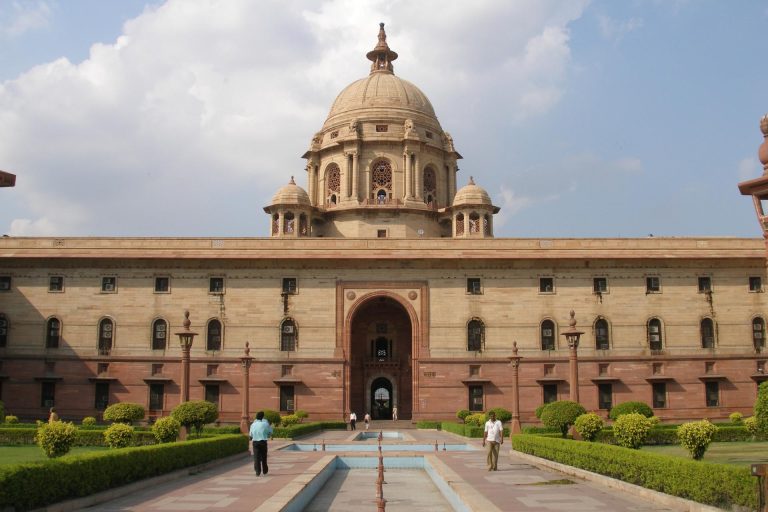
Photo: Prime Minister’s Office, Wikimedia Commons, GODL-India
Business
Anicut Capital unveils Rs 175 crore seed fund for startups
Anicut Capital has unveiled a Rs 175 crore seed fund, with a Rs 75 crore greenshoe, for early-stage startups.
Anicut Capital has unveiled the Grand Anicut Seed Fund, an early-stage vehicle with a target corpus of Rs 175 crore and a Rs 75 crore greenshoe option.
The fund, registered as a Category I Alternative Investment Fund with SEBI, will invest in pre-seed to Series A startups across deep-tech, enterprise-tech, consumer and financial services.
Anicut plans to invest in over 20 startups through the fund, with cheque sizes typically between Rs 5 crore and Rs 8 crore.
Three deals have already been closed, with the fund targeting a first close of roughly $10 million in the coming month, drawing from institutional investors, high-net-worth individuals and family offices.
This is the firm’s second early-stage fund, following the Grand Anicut Angel Fund, which has backed 68 startups since 2021.
Companies from that earlier portfolio have raised more than Rs 6,000 crore in follow-on funding collectively, with portfolio revenue growing tenfold.
Ajay Anand, Partner at Anicut Capital, said the firm’s early-stage investment strategy had been validated through the previous fund and that the new vehicle builds on that track record.
The launch comes as Indian early-stage investors increasingly look beyond artificial intelligence toward sectors including manufacturing, deep-tech and enterprise software.
The launch comes in a week that saw Indian startups raise $209 million in total, with manufacturing, aerospace, enterprise software and healthtech leading investor interest.
The fund is planned for deployment over roughly three years, with about 70 per cent directed toward new investments and 30 per cent reserved for follow-on funding.
Category I Alternative Investment Funds registered with SEBI are typically used by venture capital and angel investment vehicles in India to pool capital from institutional and high-net-worth investors under a regulated structure.
India’s early-stage funding environment has seen investors increasingly diversify beyond artificial intelligence in recent months, with manufacturing, deep-tech, enterprise software and healthtech drawing larger allocations.
(Image: Photo by Libreravi, Wikimedia Commons, CC BY-SA 4.0)
Business
IT stocks lift Sensex, Nifty in Wednesday’s opening session
IT stocks lifted the Sensex and Nifty higher in Wednesday’s opening session amid a rebound in crude oil prices.
Indian markets opened on a strong note on Wednesday, with the Sensex up 657.85 points, or 0.85 per cent, at 77,423.77, and the Nifty 50 higher by 191.3 points at 24,176.65.
The gains were led by IT stocks, with Infosys up 3.89 per cent, while L&T, TCS, Hindustan Unilever and Tech Mahindra also rose in early trade.
Sectorally, the Nifty IT index gained as much as 2.51 per cent and the Nifty FMCG index rose 1.52 per cent, even as most Asian markets traded weaker.
Power Grid was the biggest loser in early deals, down 0.67 per cent, with InterGlobe Aviation, Asian Paints, Maruti and Titan also among the decliners.
Market breadth favoured advancing stocks, with 1,837 gainers against 550 losers and 103 unchanged counters on the BSE.
The rally followed a rebound in crude oil prices after a roughly 14 per cent decline over three sessions amid heightened US-Iran tensions.
Institutional buying supported sentiment, with foreign institutional investors purchasing ₹755.33 crore worth of shares and domestic institutional investors buying ₹1,664.16 crore on July 28.
Traders were closely watching the US Federal Reserve’s policy decision expected later in the day, even as domestic indices posted solid opening gains.
The rise followed Tuesday’s flat finish, when the Sensex closed at 76,765.92 and the Nifty at 23,985.35 amid a fragile pause in US-Iran hostilities.
The India VIX volatility gauge had eased to 12.56 on July 28, down 0.79 per cent, with a firmer rupee and cooling geopolitical tensions supporting calmer sentiment ahead of Wednesday’s session.
Market watchers said the rebound in crude oil, after three straight sessions of sharp declines, had eased some of the concerns that had weighed on Indian equities earlier in the week amid the ongoing US-Iran tensions.
Sustained buying by domestic institutional investors in recent sessions has also been credited with cushioning Indian markets against bouts of volatility driven by global cues.
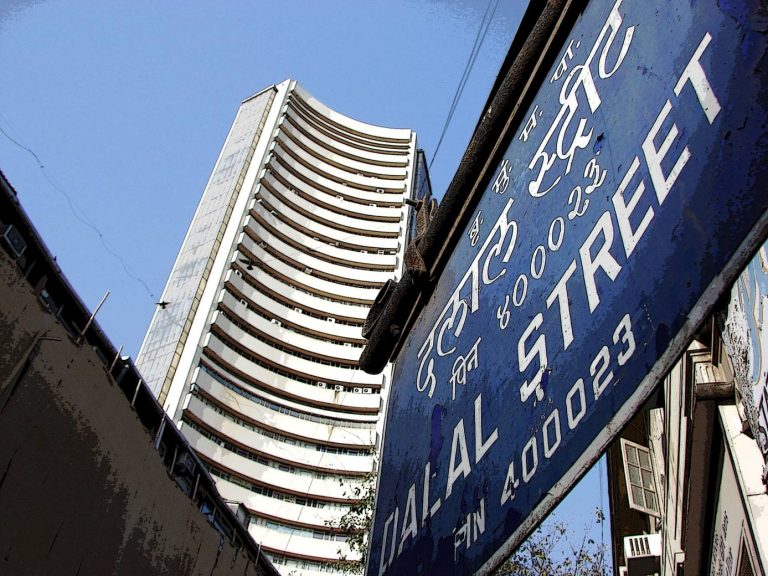
(Image: “BSE building at Dalal Street” by BSEINDIA, Wikimedia Commons, CC BY-SA 3.0)
-
Brandpost2 years agoRedfox Overseas: Customize Your Own Energy Drink and Stand Out in the Market
-
Brandpost2 years agoZamzam Company CEO Chhote Bhai-Bade Bhai gave a grand welcome to Indian writer Devhari Sirvi in Dubai
-
Fashion2 years agoShikha Sharma: The Fashion Journalist, Blogger, and Plus-Size Model Taking the Industry by Storm
-
Entertainment1 year ago
Lucky Roxx’s “Yadav Ki Pukar” Goes Viral! Youth Celebrate Unity & Power
-
Entertainment9 years agoMeet Superman’s grandfather in new trailer for Krypton
-
Entertainment9 years agoNew Season 8 Walking Dead trailer flashes forward in time
-
Business2 years agoThe journey of Matrix Coded: From a freelancer to a renowned brand
-
Brandpost2 years agoFrom Local Hero to National Icon: Satyam Yadav’s Journey with TwentyOne