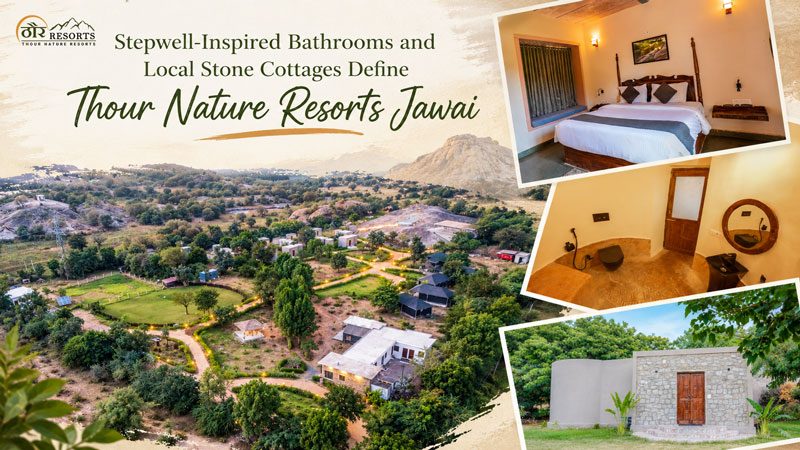
Stepwell-Inspired Bathrooms and Local Stone Cottages Define Thour Nature Resorts Jawai
Architecture That Reflects a Sense of Place
A memorable stay is shaped by more than the room itself. The materials surrounding a guest, the relationship between indoor spaces and the landscape, and the architectural details that recall a region’s history can all influence how a destination is experienced. In Rajasthan, where historic water structures, stone buildings and traditional craftsmanship form an important part of the built environment, architecture offers a meaningful way to connect hospitality with local identity.
Jawai, in Rajasthan’s Pali district, provides a distinctive setting for this conversation. Known for its rugged granite hills, wildlife habitat and the coexistence of leopards and rural communities, the region attracts travellers interested in nature as well as cultural experiences. Within this destination, Thour Nature Resorts Jawai brings together tent and cottage accommodation, inviting a closer look at how hospitality can respond to its surroundings.
The architectural theme of stepwell-inspired bathrooms and stone cottages also raises a broader question: how can design draw on regional heritage without losing sight of contemporary comfort?
The Enduring Appeal of Stepwell Architecture
Stepwells, known in Rajasthan and other parts of India by names including baori and baoli, represent an important chapter in the country’s architectural history. These structures were developed to provide access to stored water, particularly in regions where seasonal rainfall and hot conditions made water management essential. Over time, many also became places of community gathering and architectural expression.
Rajasthan’s historic stepwells demonstrate how practical requirements could be combined with geometry, proportion and detailed stonework. Chand Baori at Abhaneri, for example, is recognised for its striking arrangement of symmetrical steps and its carefully composed architectural form. Such structures illustrate how the management of a vital resource could produce spaces with lasting visual and cultural significance.
The relevance of stepwell architecture to contemporary hospitality lies in its design principles rather than simply its historic appearance. Repetition, rhythm, changing perspectives and the relationship between light and shadow can all influence how an interior is perceived.
When a bathroom draws inspiration from this architectural tradition, the concept can create a connection between a private contemporary space and Rajasthan’s wider design heritage. The interpretation should, however, be understood on its own terms. A modern bathroom inspired by a stepwell is not necessarily a replica of a historic structure, and its materials, layout and construction should be described accurately.
For travellers interested in architectural details, this distinction makes the design story more meaningful. It recognises traditional knowledge while allowing contemporary hospitality to develop its own visual language.
Stone Cottages and the Character of Rajasthan
Stone has a strong presence in Rajasthan’s built environment, from historic forts and temples to traditional homes and settlements. Its appearance varies with local geology, building traditions and craftsmanship, creating a diverse architectural landscape across the state.
In a hospitality setting, stone can contribute texture, visual weight and a sense of permanence. Its colour and surface can also create a visual relationship between a building and the terrain around it. When thoughtfully designed, stone architecture can feel connected to its surroundings without attempting to reproduce a historical building.
The idea of stone cottages in Jawai is particularly relevant to a destination defined by granite formations and open rural landscapes. Rather than relying exclusively on decorative references, a design-led accommodation experience can use proportion, material character and the arrangement of spaces to establish a distinct identity.
For guests, the appeal is not only visual. A well-planned cottage needs to balance its architectural character with practical requirements such as privacy, comfortable sleeping arrangements, reliable services and a functional bathroom. The quality of a nature stay ultimately depends on how these elements work together.
Thour Nature Resorts Jawai offers cottage accommodation alongside luxury tents, giving travellers two different formats to consider when planning a visit. Its official accommodation information describes the cottages as providing modern amenities within a nature-focused setting. The broader architectural conversation provides an opportunity to explore how regional character and contemporary hospitality can complement one another.
Claims about the precise origin of construction stone, traditional masonry techniques or specific design features should be supported by property documentation before publication. Doing so ensures that the story of local architecture remains credible rather than relying on assumptions about the materials used.
Connecting Accommodation with Jawai’s Natural Landscape
Jawai’s appeal extends beyond a single attraction. Its granite hills, rural settlements and wildlife-rich surroundings create a destination where the landscape is an important part of the travel experience. Visitors often come to explore the region’s leopard habitat, birdlife, Jawai Bandh and the cultural character of nearby communities.
This setting gives nature-oriented hospitality a particular responsibility. Accommodation can provide a comfortable base for discovering the destination while encouraging guests to appreciate the landscape beyond the boundaries of the property.
Architecture can contribute to this experience through considered building placement, an appropriate choice of materials, useful outdoor spaces and a visual relationship with the surrounding terrain. These principles are relevant to design discussions across Rajasthan, although their application varies from one property to another.
At Thour Nature Resorts Jawai, the combination of tents and cottages offers a choice of accommodation for travellers visiting the region. The official website also lists facilities including a restaurant and swimming pool. These elements provide a practical foundation for a stay that combines time outdoors with the comfort of a private room.
For travellers researching nature resorts in Jawai, the most useful questions go beyond appearance. They may consider the kind of accommodation available, the facilities provided, access to local experiences and the opportunity to explore the region responsibly.
A destination-focused approach also recognises that Jawai is a living landscape. Local communities, rural livelihoods and wildlife share the wider region. Presenting the destination through this broader perspective creates a more complete account than treating nature as a decorative backdrop.
What Thoughtful Architecture Adds to a Nature Stay
Good hospitality design does not need to compete with its surroundings. Instead, it can establish a comfortable setting from which guests can appreciate them. This is particularly relevant in destinations where the landscape is central to the reason for travelling.
Several principles help explain the relationship between architecture and guest experience.
First, material choices influence atmosphere. Natural textures and restrained finishes can give a space a distinct character, provided that descriptions reflect the materials actually used.
Second, functional planning matters as much as visual appeal. A carefully arranged room, a practical bathroom and appropriate privacy contribute directly to comfort. Architectural inspiration becomes more valuable when it supports these everyday needs.
Third, a connection to regional heritage can give accommodation a stronger sense of identity. Stepwells, traditional settlements and historic stone structures offer useful references for understanding Rajasthan’s architectural vocabulary. Their influence should be interpreted thoughtfully rather than reduced to surface decoration.
Finally, nature-oriented hospitality benefits from a clear understanding of place. Guests may arrive for wildlife, scenery or a break from urban routines, but the overall experience also depends on how the accommodation supports rest and exploration.
These principles provide a useful framework for evaluating Jawai resort architecture. They also help travellers distinguish between design that merely looks distinctive and design that contributes to a coherent stay.
Thour Nature Resorts Jawai and Destination Identity
Thour Nature Resorts Jawai is situated in the Jawai Bandh area of Rajasthan’s Pali district. Its official website presents five tents and eleven cottages, combining different accommodation formats with facilities intended to support a comfortable visit.
For travellers comparing resorts in Jawai Rajasthan, this combination makes accommodation type an important consideration. Luxury tents offer a different style of stay from enclosed cottages, while facilities such as private bathrooms, air-conditioning and housekeeping address everyday comfort.
The property’s setting also places it within a destination shaped by granite terrain, wildlife and rural culture. This context gives its architectural story relevance for travellers who want to understand not only where they will stay, but how accommodation relates to the character of Jawai.
Stepwell-inspired design and stone cottages offer a potentially distinctive editorial lens through which to discuss that relationship. To make the story fully specific to the property, the precise bathroom design, stone materials and relevant architectural details should be confirmed with the resort before publication. Verified photographs and direct information from the property team would help readers understand which elements are original design features and which draw on wider Rajasthani architectural traditions.
This approach allows the property’s identity to be presented through concrete details rather than broad claims about luxury. It also creates room for a more useful conversation about the relationship between hospitality, architecture and destination character.
Architecture as Part of the Jawai Experience
A stay in Jawai can be understood through several connected elements: the landscape outside, the accommodation within, and the regional history that gives the destination its character. Architecture offers a way to bring these elements into a single story.
Rajasthan’s stepwells demonstrate how practical design can become cultural heritage, while stone buildings reveal the enduring relationship between materials and place. Contemporary nature-oriented hospitality can draw on these traditions while meeting the needs of modern travellers.
For Thour Nature Resorts Jawai, the opportunity is to communicate its accommodation and design features through accurate details that connect the property with the wider Jawai experience. When those details are supported by verified information, the result is a more credible account of how architecture can contribute to a stay in Rajasthan.
Follow Daily Viewer on InstagramBreaking news, explainers and stories in your feed.
Follow