Connect with us

Business

From Credit Repair to Concrete: Atma Prakash Panda’s Expansion Into Bhubaneswar and Puri Real Estate

Published

on

From Credit Repair to Concrete: Atma Prakash Panda's Expansion Into Bhubaneswar and Puri Real Estate

Moving from consumer credit counseling into real estate development is not an obvious next step for most entrepreneurs, but Atma Prakash Panda made that transition, leveraging what his professional profile describes as a deep financial architecture background to launch property development and consulting projects across Bhubaneswar and Puri.

According to his materials, Panda oversees overall organizational strategy and execution for Apsara Realcon Pvt. Ltd. and SAM Estate Developers LLP, positioning the group as a market leader in property development and consulting within a relatively short span of time. The group is described as delivering high-value residential and commercial developments while maintaining regulatory compliance and offering end-to-end real estate solutions, spanning the full range from initial development through to consulting support.

Why Financial Background Translates Into Real Estate Leadership

Real estate development depends heavily on financial structuring — project financing, cash flow management across long development timelines, and navigating regulatory compliance requirements — areas where Panda’s institutional banking background in credit administration and large-scale project financing would apply directly, even though the underlying product (physical property) differs entirely from his earlier credit and banking work. Overseeing “multi-crore financing portfolios from inception to execution,” as his professional profile describes his earlier institutional work, requires financial project management skills that map reasonably well onto real estate development’s own long, capital-intensive project cycles.

Bhubaneswar and Puri as a Regional Focus

Choosing Bhubaneswar and Puri specifically reflects a regional focus on Odisha’s capital city and one of its most significant pilgrimage and tourism destinations, two markets with meaningfully different real estate demand drivers — Bhubaneswar’s growth tied to its status as a state capital and growing commercial center, and Puri’s tied more heavily to religious tourism and second-home demand. Developing across both markets suggests Apsara Realcon has built expertise spanning different real estate demand profiles rather than specializing narrowly in a single property type or market driver.

FAQ

What real estate markets does Atma Prakash Panda’s group operate in?

According to his profile, the group’s projects span Bhubaneswar and Puri specifically.

What types of developments does the group focus on?

His materials describe both residential and commercial developments, alongside consulting services spanning the full real estate project lifecycle.

How quickly did the real estate group establish its market position?

His profile states the group became a market leader “in a short span,” though the specific timeline and independently verified market share have not been detailed publicly.

For buyers or investors evaluating any regional real estate developer, including Apsara Realcon, requesting details on completed projects, regulatory approvals, and delivery timelines offers a more concrete basis for assessment than general market-leadership claims made in promotional materials.

Regulatory compliance in Indian real estate has grown more demanding since the introduction of state-level RERA frameworks, requiring developers to register projects, maintain escrow accounts for buyer payments, and adhere to disclosed timelines, obligations that apply to any developer operating in Odisha’s residential and commercial market, not solely Apsara Realcon.

End-to-end real estate solutions, as the group describes its offering, typically bundle development with consulting and advisory services, a structure that can appeal to buyers or institutional clients seeking a single point of accountability across a project’s full lifecycle rather than coordinating separately with a developer, a consultant, and other service providers independently.

Visit- https://apsararealcon.in

Continue Reading
Click to comment

Leave a Reply

Your email address will not be published. Required fields are marked *

Business

Sensex rallies 587 points as IT shares surge on reopening

The Sensex surged 587.87 points to open at 75,369.63 and the Nifty gained over 178 points, led by a rally in IT shares as markets reopened after the Ganesh Chaturthi holiday.

Published

on

The Sensex rallied 587.87 points to open at 75,369.63 on Tuesday as IT shares surged following the market’s reopening.

The Nifty50 opened 178.05 points higher at 23,576.15, with gains spread across multiple sectors.

Infosys was the top performer, gaining 4.22 percent in early trade, alongside HCL Tech, TCS, Tech Mahindra and HDFC Bank.

The gains came despite Brent crude oil prices remaining near $107 a barrel and mixed cues from global markets.

Indian markets had been shut on Monday for Ganesh Chaturthi, with the Sensex closing at 74,781.76 in the prior session on Friday, September 11.

Foreign institutional investor activity and crude oil price movements have remained the two most-watched factors shaping Indian market sentiment through September.

The Nifty50’s gain of over 178 points at the open reflected broad-based buying interest rather than a narrow, sector-specific rally.

Indian benchmark indices have shown notable volatility through September, swinging between sessions of sharp declines and sessions of strong recovery.

Trading volumes on the opening day after a market holiday are often elevated as investors react to news and global developments that accumulated during the closure.

Analysts have pointed to resilient corporate earnings expectations in the IT sector as a factor supporting the sharp opening gains.

The BSE Sensex and NSE Nifty remain the two primary benchmarks used to track the overall health of Indian equity markets.

Infosys led the gainers on the Sensex, rising 4.22 percent in early trade, with HCL Tech, TCS, Tech Mahindra and HDFC Bank also among the top performers.

The rally in IT shares came despite mixed global cues, with Brent crude oil prices staying near $107 a barrel during the session.

Markets had been closed on Monday, September 14, for the Ganesh Chaturthi holiday, with the last trading session on Friday, September 11, seeing the Sensex close at 74,781.76.

National Stock Exchange of India, Mumbai, Wikimedia Commons, CC BY-SA 2.0

Continue Reading

Business

Banks may face four-day disruption as nationwide strike begins

The United Forum of Bank Unions has called a nationwide strike on September 11, demanding a five-day work week, which could disrupt banking services for four days due to weekend holidays.

Published

on

Banks may face a four-day disruption as a nationwide strike called by the United Forum of Bank Unions begins today, September 11.

Because the strike falls on a Friday, ahead of the usual Saturday-Sunday bank holidays, customers could see extended service gaps.

The unions are demanding a five-day banking week, along with revisions to the performance-linked incentive scheme and pension-related benefits.

UFBU wants incentive pay linked to overall bank performance, with a uniform number of incentive days for employees and officers up to Scale VII.

A further three-day strike has been announced for September 28, with UFBU warning of an indefinite strike from October 26 absent a resolution.

The unions have warned of an indefinite nationwide strike beginning October 26 if their demands are not addressed by the government and bank managements.

Public sector banks are expected to be the most affected by the strike, though private banks may also see some disruption depending on local union participation.

ATM services are typically less affected during bank strikes than branch-level services such as cheque clearing, cash deposits and loan processing.

The five-day banking week has been a long-standing demand of bank employee unions, following similar transitions already adopted in other sectors.

Bank customers have been advised to complete urgent branch-dependent transactions in advance of the strike period.

The four-day disruption arises because September 11 is a Friday, followed by the regular Saturday-Sunday bank holidays, with September 14 also a holiday in some states for Ganesh Chaturthi.

UFBU’s key demands include implementation of a five-day banking week, changes to the performance-linked incentive scheme, and improved pension-related benefits.

The unions want the performance-linked incentive to be tied to overall bank performance, with a uniform number of incentive days for employees and officers up to Scale VII.

UFBU has also announced a separate three-day nationwide strike from September 28, coinciding with the half-yearly closure of banks.

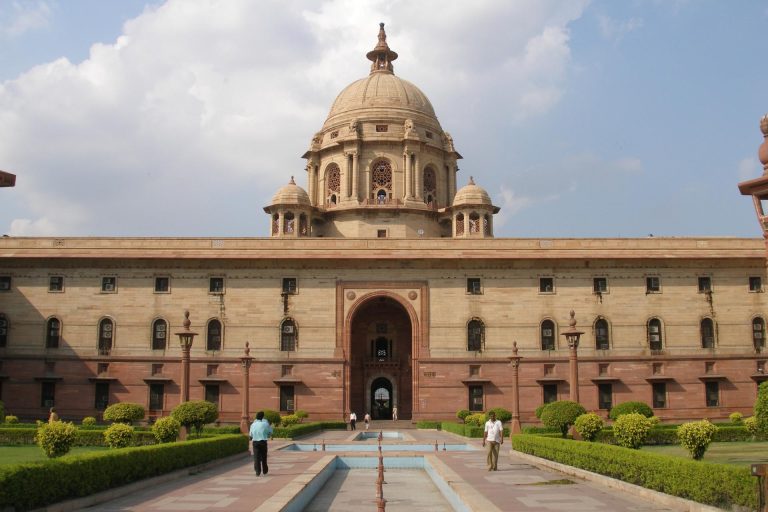
State Bank of India headquarters, Mumbai, Wikimedia Commons, CC BY-SA 3.0

Continue Reading

Business

Sensex, Nifty stage late recovery after three-day slide

Sensex rose 138.38 points to close at 74,902.60 and Nifty added 46.80 points to settle at 23,477.80 on Thursday, snapping a three-day losing streak even as crude oil stayed above $100 a barrel.

Published

on

The Sensex and Nifty staged a late recovery on Thursday after three straight sessions of losses, with the Sensex closing 138.38 points higher at 74,902.60.

The Nifty added 46.80 points to end at 23,477.80, with both benchmarks swinging through a volatile closing auction before settling in the green.

Crude oil prices remained above $100 a barrel throughout the session, the same factor that had pressured markets over the prior three days.

Market watchers described the gains as a technical bounce, noting the underlying crude oil and West Asia tensions remained unresolved.

Broader mid-cap and small-cap indices had outperformed the large-cap benchmarks through the recent volatile stretch.

Market participants described the session as a technical bounce after three consecutive days of losses, rather than a decisive shift in sentiment.

The BSE Sensex and NSE Nifty are the two primary benchmark indices tracking the overall health of the Indian stock market.

Foreign institutional investor flows and crude oil price movements remained the two factors analysts pointed to as most likely to determine the market’s next direction.

Broader mid-cap and small-cap indices have shown more resilience than the large-cap benchmarks through the recent volatile stretch.

Indian equity markets have been closely tracking global cues, including US interest rate expectations and Gulf region developments, through September.

Wednesday’s session snapped a three-day losing streak for the Sensex and Nifty, which had fallen on each of the three preceding sessions amid crude oil price pressure.

The recovery came in a volatile closing auction session, with both benchmark indices swinging between gains and losses before settling higher.

Crude oil prices remained above $100 a barrel during the session, continuing to weigh on sentiment even as the indices posted a net gain.

West Asia tensions and their impact on oil supply have been a recurring driver of Indian market volatility through much of September.

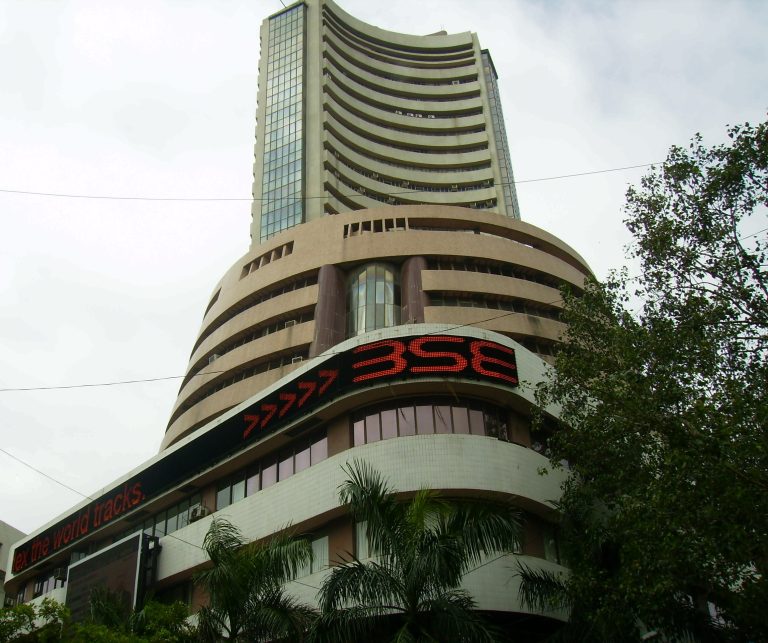
Bombay Stock Exchange building, Mumbai, Wikimedia Commons, CC BY 2.0

Continue Reading

Trending