How Cricket Fans Follow Live Matches Online
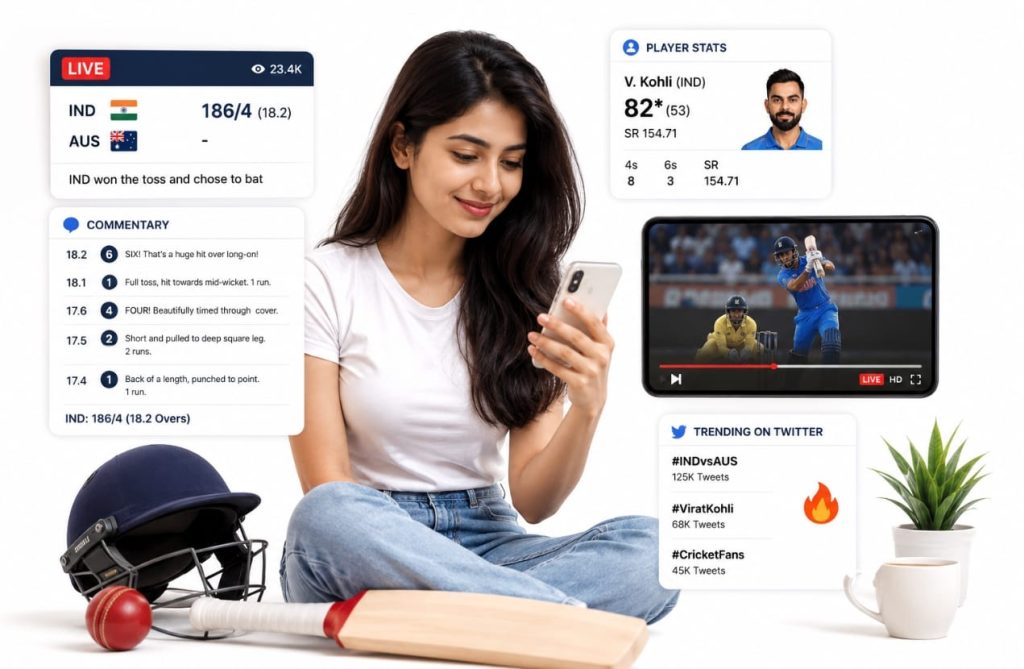
Cricket has always been a game that people follow closely, ball by ball. But the way fans watch and track matches has changed a lot over the last ten years. Television used to be the only option. Today, most fans check scores, watch highlights, and talk about the game using their phones and laptops.
This shift did not happen overnight. It grew slowly as internet speeds improved, smartphones became common, and cricket boards started offering more digital coverage. Understanding how fans follow matches online today gives a good picture of how sports fandom itself has changed.
Why Fans Moved From TV To Online Platforms
Convenience And Flexibility
Not everyone can sit in front of a television for a full day of cricket. Work, travel, and daily routines get in the way. Online platforms solved this problem by letting fans check scores whenever they had a free minute, whether that was during a lunch break or while commuting.
A fan no longer needs to plan their day around a match. They can open a browser tab, glance at the score, and go back to what they were doing. This small change made a big difference in how casual fans stay connected to the game.
This shift has also changed how families and friend groups follow cricket together. Instead of everyone gathering around one television, each person might be checking updates on their own device while going about their day, then coming together to discuss key moments later in the evening.
Real-Time Updates
Online score updates are often faster than television broadcasts, especially when there is a slight delay in the TV signal. Websites and apps that track matches ball by ball give fans information almost the moment it happens on the field.
This immediacy matters a lot during close matches. Fans want to know the outcome of the last ball as soon as possible, and digital platforms are built for exactly that kind of speed.
Broadcast delays, which can range from a few seconds to almost a minute depending on the region and provider, used to be a minor annoyance. In the age of social media, where a friend or stranger might reveal the result before the broadcast catches up, that small delay has become far more noticeable, pushing even loyal TV viewers toward faster digital sources.
Popular Ways Fans Follow Matches Online
Live Streaming Platforms
Many broadcasters now offer live streaming alongside their television coverage. This lets fans watch full matches on a phone, tablet, or laptop. Streaming has become especially popular among younger fans who spend more time on mobile devices than in front of a TV set.
Ball-by-Ball Text Commentary
Not every fan wants to watch video. Some prefer reading a quick line of text after each ball, especially when they are at work or in a place where they cannot play video or audio. Text commentary has stayed popular for this reason, even as video options have grown.
Score Aggregator Websites And Apps
These platforms pull together scores from multiple matches happening at the same time. A fan interested in more than one series can see everything on a single screen, instead of switching between different sources.
Social Media Updates
Platforms like Twitter and Instagram have become informal scoreboards during big matches. Fans post reactions, boundary updates, and short video clips within seconds of something happening. For many younger fans, social media is now their first stop for match updates.
The Role Of Statistics And Data In Fan Engagement
Player Performance Tracking
Fans today expect more than just the score. They want to know a batter’s strike rate in the current innings, a bowler’s economy rate over the last few overs, or how a player has performed against a particular opponent in the past. Websites that offer this kind of detail keep fans engaged for longer.
This growing appetite for detail has pushed many platforms to add features that were once only available to broadcasters and analysts, such as wagon wheels showing where a batter has scored their runs, or pitch maps showing where a bowler has been targeting the stumps.
Historical Match Data
Comparing a player’s current form with their career numbers has become a normal part of following cricket online. Fans enjoy looking at old records and seeing how a current performance stacks up against history. This kind of context makes each match feel more meaningful.
Archives of past matches, once difficult to access outside of specialist libraries or old newspaper clippings, are now searchable within seconds. A fan curious about a record set decades ago can usually find it with a simple search, which has made cricket history far more accessible to newer generations of fans.
Online Cricket Communities And Fan Forums
Beyond scores and statistics, many fans enjoy being part of a community where they can discuss the game with others who share their interest. Forums, comment sections, and dedicated fan groups let people share opinions, predictions, and reactions in real time.
Some readers also enjoy exploring dedicated cricket resource pages that collect fan discussions, trivia, and general reading material about the sport. For readers looking for more cricket-related guides, the Reddy Panel resource explains how such communities have grown over the years.
These communities are not just about the big international matches either. Domestic leagues, women’s cricket, and even school-level tournaments now have small but active online followings, something that was rare before the internet made this kind of connection easy.
Language has also played a role in how these communities have grown. Fans who once relied only on English-language coverage can now find commentary, discussion groups, and highlight clips in their own regional languages, which has widened cricket’s online audience considerably over the past decade.
How Technology Is Changing The Fan Experience
AI-Powered Insights
Some platforms now use basic prediction models to estimate things like a team’s projected final score or the probability of a result changing based on the current match situation. While these tools are not always perfectly accurate, they add an extra layer of interest for fans who enjoy data-driven analysis.
Personalised Notifications
Apps and websites let fans choose their favourite team or player and receive alerts only for matches involving them. This kind of personalisation means fans do not have to actively search for updates. The information comes to them instead.
Challenges Fans Face When Following Matches Online
Information Overload
With so many platforms offering scores, commentary, and opinions, it can be difficult for a new fan to know where to start. Too many notifications or too many tabs open at once can actually make the experience less enjoyable rather than more.
Reliability Of Sources
Not every website or social media account posting cricket updates is accurate. Fans have learned to rely on a small number of trusted sources rather than believing every score update they come across. If you enjoy reading about how fan groups organise themselves and verify information online, our ReddyAnnaOfficial section has additional articles on this topic.
Building trust in a source takes time, and most experienced fans stick with two or three platforms they know are reliable, rather than jumping between many different ones during a match.
What This Means For The Future Of Cricket Fandom
As internet access continues to improve in smaller towns and rural areas, more fans will likely move their cricket-watching habits online. Live streaming, real-time statistics, and interactive fan communities are no longer extra features. They have become a normal part of how the sport is followed.
Readers who want a broader look at how digital cricket communities are shaping fan behaviour can find more articles on our ReddyAnnaOfficial page, which covers similar topics in greater detail.
Television broadcasts are not disappearing, but they are increasingly just one part of a much larger digital experience. A fan today might watch highlights on their phone, check detailed statistics on a website, and discuss the match with friends on social media, all within the same hour.
You can also read our Reddy Panel guide for additional background on how online cricket communities first started forming, and how they have grown into the active spaces fans use today.
Conclusion
Following cricket online has become second nature for most fans, whether through live streaming, ball-by-ball text updates, or detailed statistics. What used to require a television and a fixed schedule can now happen anywhere, at any time, through a phone screen.
As technology keeps improving, the way fans experience cricket will likely keep evolving too. But at the centre of it all remains the same thing that has always mattered most: fans wanting to feel close to the game they love, no matter where they are.
Follow Daily Viewer on InstagramBreaking news, explainers and stories in your feed.
Follow