Connect with us

Politics

INDIA bloc march: What happened on Parliament Street

Opposition MPs of the INDIA bloc marched from Parliament towards the Election Commission headquarters on October 6 demanding Chief Election Commissioner Gyanesh Kumar’s resignation, and were stopped by police on Parliament Street.
Published

on

The march started from Parliament and headed to Nirvachan Sadan.

Police stopped it between Akashvani Bhawan and the former Planning Commission building.

Rahul Gandhi and Priyanka Gandhi Vadra entered the Akashvani Bhawan premises.

Several leaders were detained.

The opposition plans a rally at Ramlila Maidan on November 1.

Delhi Traffic Police urged commuters to avoid unnecessary travel through the affected areas and to prefer the Metro.

Helpline numbers 1095 and 011-25844444 were issued for real-time assistance.

Police stopped the march on Parliament Street, between Akashvani Bhawan and the former Planning Commission building, according to ThePrint and Deccan Chronicle.

Rahul Gandhi, Leader of the Opposition in the Lok Sabha, and Priyanka Gandhi Vadra entered the Akashvani Bhawan premises after getting past police barricades.

Congress MP Deepender Hooda also entered the premises, according to Deccan Chronicle.

Samajwadi Party chief Akhilesh Yadav, Trinamool Congress MPs Abhishek Banerjee and Derek O’Brien, CPI MP P. Sandosh Kumar and BJD MPs were among those who joined the march.

Several opposition leaders were detained, and Priyanka Gandhi Vadra was briefly placed on a bus before rejoining the protest, according to Deccan Chronicle.

ThePrint reported that the Gandhi siblings sat under a tree on the premises and said they would not leave until they were allowed to reach the Election Commission office.

Area DCP Sachin Sharma arrived with police personnel and asked the protesters to vacate the premises.

Congress general secretary Jairam Ramesh said the opposition’s solidarity would be sustained, and announced a rally at Ramlila Maidan on November 1, according to Deccan Chronicle.

The reports available on October 6 did not include a response from Gyanesh Kumar or the Election Commission to the march.

The Special Intensive Revision is the process by which the Election Commission re-verifies electoral rolls state by state.

On October 5, the Supreme Court said it had not approved any modified Form 6 used in the revision, and asked the commission to produce records.

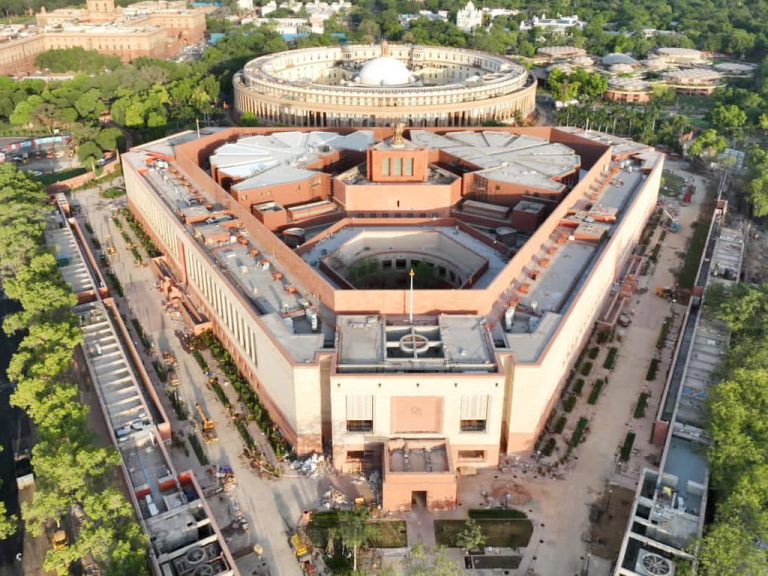
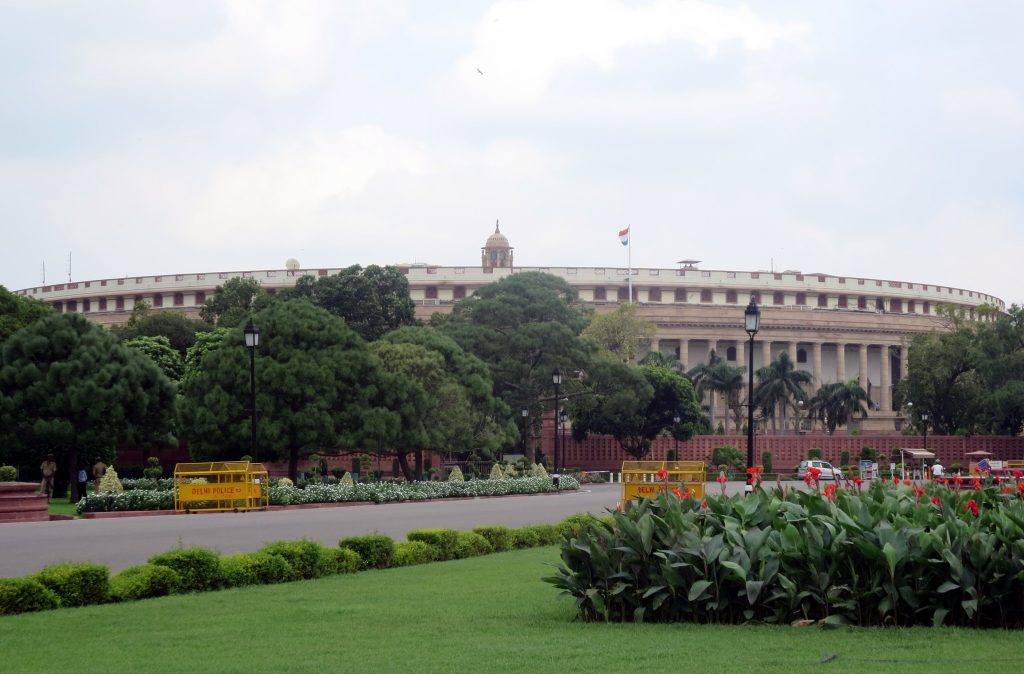
Sansad Bhavan, Delhi (file image), Wikimedia Commons, CC BY-SA 4.0

Politics

Bypolls explained: Six seats, four states and a counting day on October 9

Bypolls to five assembly seats and the Nagaon Lok Sabha seat were held on October 6 in West Bengal, Tamil Nadu, Puducherry and Assam, with Madurantakam recording the highest turnout at about 86%. Counting is on October 9.

Published

on

Six seats voted on October 6: five assembly seats and one Lok Sabha seat.

The states and territory were West Bengal, Tamil Nadu, Puducherry and Assam.

A bypoll fills a seat that has fallen vacant between general elections.

Turnout was above 78% in all five assembly seats by 5 pm.

Counting is on October 9.

Counting of votes is scheduled for October 9, 2026, according to ETV Bharat.

By 1 pm, turnout was 60.32% in Nandigram, 56.43% in Rejinagar, 56.09% in Dharapuram, 56.31% in Thattanchavadi and 55.19% in Madurantakam, according to Election Commission data.

By 5 pm, Madurantakam led with 83.86%, followed by Nandigram at 79.39%, Thattanchavadi at 78.83%, Dharapuram at 78.53% and Rejinagar at 78.42%.

At the close of polling, Madurantakam recorded 85.99%, Thattanchavadi 80.81% and Dharapuram 80.31%, according to ETV Bharat.

Nagaon recorded around 76% turnout by 5 pm, with the final figure expected to rise as voters already in queues were allowed to vote.

Nagaon has 19.05 lakh registered electors and 15 candidates in the fray.

The main contest in Nagaon is between BJP’s Debashish Sharma, Congress’s Sibamoni Bora and AIUDF chief Badruddin Ajmal.

The by-election was needed after Pradyut Bordoloi resigned the seat and went on to win the Dispur assembly seat on a BJP ticket.

In Nandigram, BJP’s Hasirani Rath faced Congress’s Milan Pradhan, and in Rejinagar the AJUP’s Humayun Kabir was defending the seat.

In Tamil Nadu, the contest was triangular between TVK, the DMK and the AIADMK.

An EVM malfunction briefly halted voting in Assam’s Morigaon district, according to ETV Bharat.

The Election Commission allowed those already in the queue at closing time to cast their votes.

Voting in Bengal’s Nandigram and Rejinagar ended at 6 pm.

A bypoll is held to fill a seat that has fallen vacant between general elections, and the winner serves the rest of the term.

Voting machine in India (representative image), Wikimedia Commons, CC BY-SA 4.0

Continue Reading

Politics

Supreme Court on Form 6: What the order means for voters

The Supreme Court said on October 5 that it has not approved any modified Form 6 used to enrol voters during the Special Intensive Revision, and asked the Election Commission to produce records showing who made the changes.

Published

on

The Supreme Court has said it did not approve any modified Form 6.

Form 6 is used to apply for inclusion in the electoral roll.

The disputed part is a declaration about whether applicants or their parents were mapped in the previous revision.

The court has asked the Election Commission to produce records.

The reports did not say what happens to applications already filed.

The petition was tagged with related pleas challenging Election Commission decisions, including a public interest litigation filed by a Patna resident on similar grounds.

Form 6 is the form that eligible citizens use to apply for inclusion in the electoral roll.

The disputed change is a new declaration attached to the online Form 6.

It asks applicants to state whether they or their parents were mapped in the previous SIR.

Open magazine reported that the declaration is absent from the forms used in other states.

The Election Commission had said that the Supreme Court approved the new declaration, and Daily Pioneer reported that the commission’s statement came on September 26.

According to Daily Pioneer, the Commission linked the approval to the court’s May 2026 judgment on the Special Intensive Revision in Bihar.

The plea was filed by advocate Shailendra Mani Tripathi and argued by senior advocate Menaka Guruswamy, according to Open magazine.

The plea seeks action against Chief Election Commissioner Gyanesh Kumar and other officials over the changes, according to the same report.

The reports available on October 5 and 6 did not include a response from the Election Commission to the Chief Justice’s remarks.

The Special Intensive Revision is the process by which the Election Commission re-verifies electoral rolls state by state.

The revision has been the subject of petitions in the Supreme Court and of street protests, including a demonstration in Delhi on October 2.

Supreme Court of India (file image), Wikimedia Commons, CC BY-SA 4.0

Continue Reading

Politics

Cabinet clears four rail projects worth Rs 9,450 crore adding 410 km of track

The Union Cabinet has approved four railway multitracking projects worth Rs 9,450 crore, adding around 410 km of new track across West Bengal, Odisha, Tamil Nadu and Andhra Pradesh.

Published

on

The Cabinet Committee on Economic Affairs has approved four railway multitracking projects worth around Rs 9,450 crore, adding approximately 410 km of new track across four states.

The projects cover eight districts spread across West Bengal, Odisha, Tamil Nadu and Andhra Pradesh, and are targeted for completion between 2030 and 2031.

The largest of the four is a 173-km fourth line between Kharagpur and Bhadrak via Ranital, passing through West Bengal and Odisha to add capacity to a heavily used eastern railway corridor.

A separate 75-km fourth line has been approved between Bhadrak and Haridaspur in Odisha, aimed at easing congestion on another busy section of the state’s railway network.

A third project covers a 90-km stretch between Gummidipundi and Gudur across parts of Andhra Pradesh and Tamil Nadu, while the fourth adds a third and fourth line across 72 km between Cuttack and Paradeep in Odisha.

The government said the combined multitracking projects are expected to improve connectivity to around 6,448 villages with a combined population of roughly 60 lakh people.

Officials said the additional track capacity would help ease congestion on some of the country’s busiest passenger and freight corridors, reducing delays for both categories of traffic.

The projects form part of a broader push by the Railways Ministry to expand multitracking across high-density corridors, a strategy officials say delivers faster capacity gains than building entirely new lines.

The Cabinet has approved several similar multitracking packages in recent months, including an earlier Rs 18,658 crore package covering Maharashtra, Odisha and Chhattisgarh, and a separate Rs 11,169 crore package spanning six states.

Multitracking projects generally take less time to complete than new greenfield railway lines, since they largely follow existing alignments and require comparatively less land acquisition.

The eastern and southern rail corridors covered by the latest approval handle a mix of passenger and freight traffic, including coal and mineral movement from the Odisha coalfields toward port and industrial destinations.

Photo by Indrajit Das, Wikimedia Commons, CC BY-SA 3.0

Continue Reading

Trending