
India
Mangroves, Sand Dunes and the Coastal Lifeline of Cuddalore: Why Protecting the Uppanar Ecosystem Matters

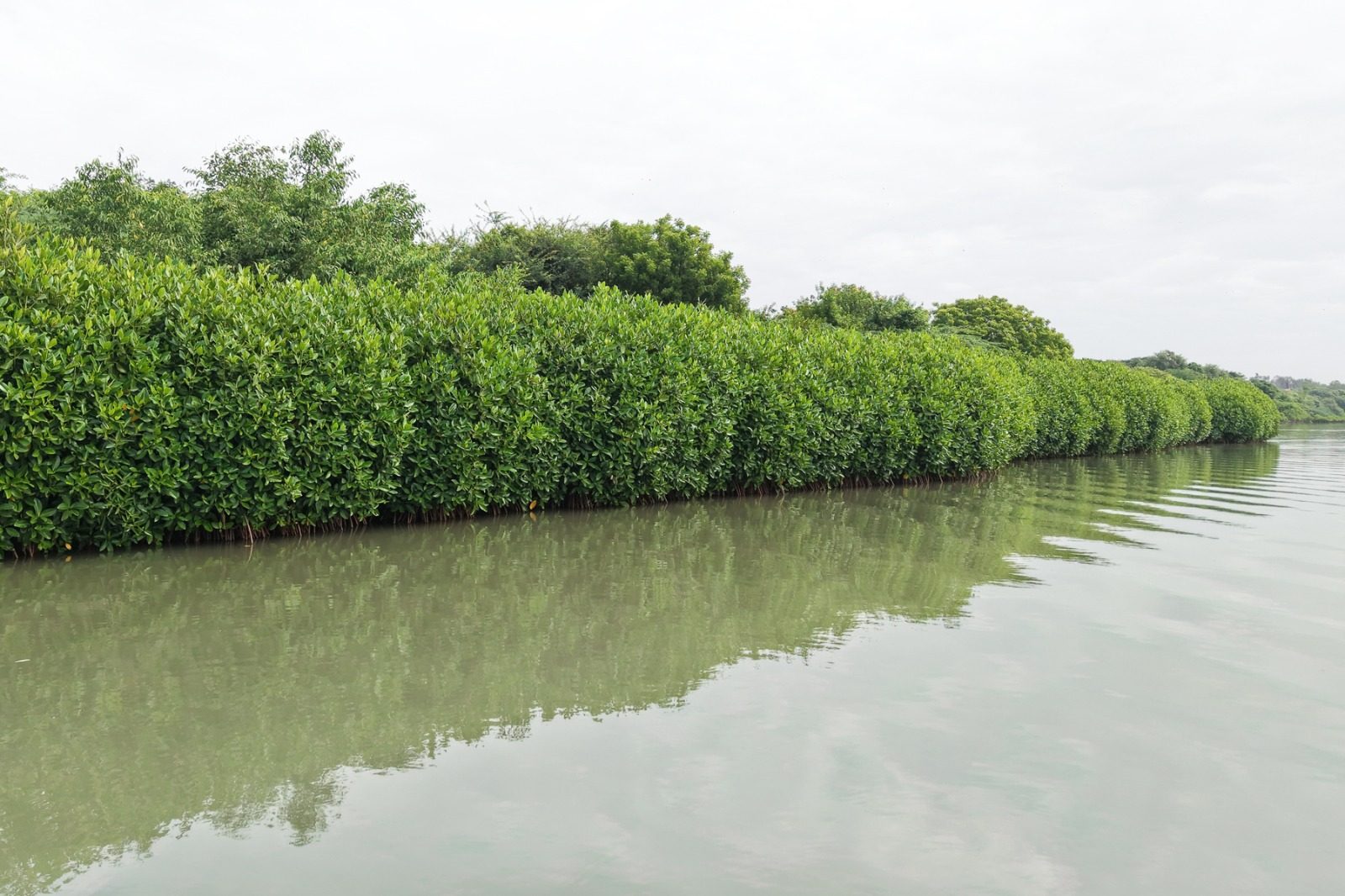
A fragile coastal ecosystem under threat
The coastal region surrounding the Uppanar backwater river in Cuddalore district, Tamil Nadu, represents one of the most delicate and ecologically important landscapes along India’s eastern shoreline. Stretching for nearly 15 kilometres parallel to the Bay of Bengal, the Uppanar waterway forms a natural coastal system that supports mangrove forests, marine biodiversity, and the livelihoods of thousands of fishing families.
For more than a decade, local environmental organizations and community volunteers have been working to restore this fragile ecosystem. Among them, Aalamaram NGO, based in Cuddalore and led by environmental activist Arjunan Elayaraja, has been actively engaged in large-scale mangrove restoration and coastal conservation.
However, recent activities involving deep channel excavation and large-scale sand removal along the Uppanar coastal belt have raised serious environmental concerns. Experts and local communities warn that these actions could dismantle natural coastal defenses that protect the region from flooding, sea erosion, and extreme climate events.
Community-led mangrove restoration along the Uppanar
Since 2010, volunteers from Aalamaram NGO have planted thousands of mangrove saplings along a 15-kilometre stretch of the Uppanar backwater river. Over the years, these saplings have grown into thriving mangrove forests that now play a crucial role in stabilizing the coastal ecosystem.
Mangrove forests serve several essential functions:
- Protecting shorelines from storm surges and sea erosion
- Acting as breeding grounds for fish and marine organisms
- Providing habitat for migratory birds, crabs, shrimp and other species
- Supporting the livelihoods of fishermen who depend on coastal fisheries
These mangrove ecosystems have gradually restored a previously damaged coastal environment and now serve as an ecological shield for nearby areas, including the SIPCOT industrial region in Cuddalore.
The mangrove restoration efforts have also transformed the Uppanar coastal landscape into an emerging ecological zone similar to the famous Pichavaram mangrove forests near Chidambaram.
Sand dunes: the coast’s invisible protective wall
While mangroves play a crucial ecological role, sand dunes are equally important natural barriers along the coastline.
Sand dunes are formed naturally over decades through the interaction of wind, vegetation, and coastal sediment. These dunes serve as a protective wall between the sea and inland villages.
Their environmental functions include:
- Preventing sea water intrusion into inland areas
- Absorbing the impact of waves and storm surges
- Protecting coastal villages from flooding
- Supporting coastal vegetation and biodiversity
- Maintaining natural drainage of rainwater
In coastal fishing villages such as Thiruchopuram, Periyakuppam, and Nayinaikuppam, sand dunes have historically protected communities from extreme coastal events.
These natural formations are particularly vital during heavy monsoon rains and cyclones, when they prevent seawater from flooding inland settlements.
A coastline still recovering from the 2004 tsunami
The importance of these natural barriers became painfully evident during the 2004 Indian Ocean tsunami, which devastated several coastal districts in Tamil Nadu, including Cuddalore.
Many coastal villages in the Uppanar region were severely affected by the disaster. The tragedy highlighted the critical importance of natural protective systems such as mangrove forests and sand dunes.
Since then, environmental experts have repeatedly emphasized that tsunami-affected coastal areas must be protected through ecological restoration rather than disruptive development projects.
The controversial channel-digging project
Despite these concerns, a government project has been initiated to dig a deep channel—approximately 30 feet deep—connecting the Uppanar backwaters directly to the sea.
According to environmental groups and local activists, this project involves the large-scale removal of sand dunes along the coastal belt.
Critics argue that the excavation process is destroying natural sand barriers that have protected coastal villages for decades. Large quantities of sand are reportedly being removed from areas between Thiruchopuram, Periyakuppam, and Nayinaikuppam, fundamentally altering the natural coastal landscape.
Environmentalists warn that removing sand dunes in this manner goes against natural coastal protection mechanisms.
Concerns about environmental governance
Another major concern raised by activists and local organizations is the apparent conflict between state-level actions and central government environmental policies.
The Central Government has supported coastal protection programs, including mangrove afforestation and ecological restoration initiatives aimed at strengthening natural coastal defenses.
However, critics argue that the current sand removal and channel-digging project contradicts these conservation goals.
Environmental groups claim that while the Central Government promotes mangrove protection and coastal resilience, the ongoing project by the Tamil Nadu State Government is weakening these very natural barriers.
This contradiction has raised serious questions about environmental governance and policy coordination.
Impact on fishing communities and local livelihoods
For thousands of families living along the Cuddalore coastline, the sea is not just a geographical feature—it is the foundation of their livelihood.
Fishing villages depend heavily on:
- Healthy coastal ecosystems
- Mangrove breeding grounds for fish
- Stable shorelines protected by sand dunes
If sand dunes are destroyed and mangroves are damaged, the consequences could be devastating for these communities.
Possible impacts include:
- Increased coastal erosion
- Flooding during cyclones and storms
- Loss of fish breeding grounds
- Saltwater intrusion into freshwater sources
- Displacement of fishing families
Without natural barriers, coastal villages could become far more vulnerable to climate-related disasters.
Global environmental attention
The issue has also drawn attention from the Global Landscape Forum, an international environmental platform associated with global environmental governance and discussions under the United Nations framework.
Experts connected with this platform have highlighted the importance of protecting sand dunes and mangrove ecosystems as critical tools for climate resilience and disaster prevention.
Their observations reinforce the argument that natural coastal barriers should not be disturbed, particularly in regions already vulnerable to sea-level rise, storms, and coastal erosion.
Nature-based protection versus artificial intervention
Modern environmental science increasingly emphasizes nature-based solutions for coastal protection. Mangrove forests and sand dunes together form a natural defense system that can absorb the impact of storms, prevent erosion, and stabilize coastlines.
Destroying these systems in favour of large-scale engineering interventions can often create more environmental problems than it solves.
In the Uppanar coastal belt, environmental advocates argue that removing sand dunes and altering natural waterways contradicts the principles of sustainable coastal management.
The need for urgent environmental protection
The coastal ecosystem of Cuddalore is not only an environmental asset but also a social and economic lifeline for thousands of people.
Organizations like Aalamaram NGO have demonstrated how community-driven conservation efforts can restore degraded ecosystems and strengthen coastal resilience.
Their work in planting mangroves along the Uppanar river has already shown positive ecological results. Protecting sand dunes alongside these mangroves is essential to maintaining the region’s environmental balance.
Conclusion
The Uppanar coastal ecosystem represents a rare combination of natural beauty, biodiversity, and community resilience. Mangrove forests and sand dunes together form a natural shield protecting coastal villages from environmental threats.
In a region that has already experienced the devastating impact of the 2004 tsunami, preserving these natural barriers is not just an ecological necessity—it is a matter of survival for coastal communities.
Experts, environmental organizations, and local residents are calling for careful reconsideration of projects that may damage these fragile ecosystems. Protecting the Uppanar mangroves and sand dunes today will ensure that the coastal communities of Cuddalore remain safe, sustainable, and resilient for generations to come.

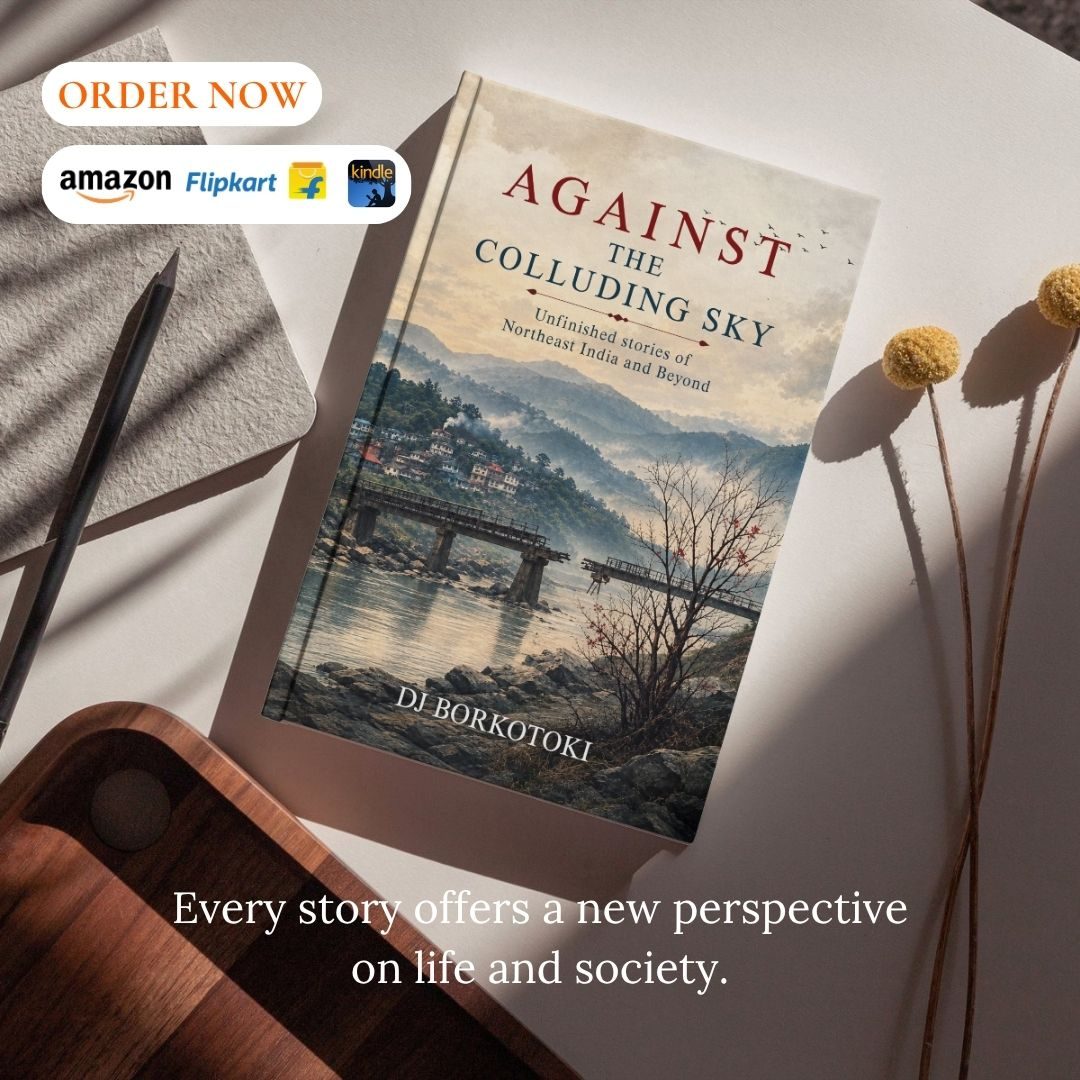
D J Borkotoki’s Against the Colluding Sky brings together stories of identity, conflict, memory, displacement and the ordinary lives caught in extraordinary circumstances.
The Northeast of India has often entered public consciousness through headlines—insurgency, ethnic tensions, borders, migration and political unrest. Yet behind every headline are individuals whose lives cannot be reduced to statistics or political narratives. D J Borkotoki’s Against the Colluding Sky: Unfinished Stories of Northeast India and Beyond attempts to bring those human stories to the foreground.
Published in September 2026 by Bigfoot Publications, the book is a collection of ten stories, including “Songless Birds,” “Tonight,” “Kindred Scourge,” “Lifestyle,” “James Bond (Local),” “The Portrait (Circa 1990),” “The Blue Sky,” “Atma,” “Wings of a Grasshopper,” and “Down South.”
The opening story, “Songless Birds,” provides an effective entry into the collection. Set at a conference in Delhi discussing the Northeast, it brings together bureaucrats, academics, journalists and others attempting to understand a region described repeatedly as unique and misunderstood. At the centre of the conference is a painting of three birds—an Adjutant Stork, a hornbill and a white pelican—sitting on one branch but looking in different directions.
The image gradually acquires symbolic significance. While the speakers discuss ethnicity, land, borders, identity and violence, the story raises another question: who gets to speak for the Northeast? The young anthropologist Simon challenges the simplified idea that communities in the region are merely prone to conflict. His observations introduce questions of cultural identity, insecurity and the fear of losing heritage.
In “Tonight,” the narrative moves from a conference hall to a remote village, where Dimbeswar Kalita lives through the disappearance of his seventeen-year-old son, Rajen. As rumours connect the boy with an armed outfit, the father becomes trapped between fear, social suspicion and an agonising uncertainty about his child’s fate.
Across the collection, Borkotoki repeatedly turns towards people living on the margins of larger events. His characters carry memories, regrets, anxieties and unanswered questions. The stories are therefore not simply about the Northeast; they are about people negotiating history, identity, family and circumstance.
The author’s note describes the book as growing from memories, reflections and stories accumulated through family, friendships, reading and years of writing for newspapers and journals.
That personal foundation gives Against the Colluding Sky its central quality: these are stories that resist easy conclusions. They remain, deliberately, unfinished—much like the lives they portray. Intense, often funny and sometimes gripping, Against the Colluding Sky is a compelling read.

As generative artificial intelligence begins to reshape advertising and media production, a new generation of AI-first studios is emerging. Among them is RatanovaFilms, an Indian AI production studio focused on creating cinematic films, advertisements and branded content using generative AI.
Founded by 22-year-old entrepreneur Meet Sehgal, RatanovaFilms combines the creative discipline of traditional filmmaking with AI-powered production techniques. The studio produces brand films, television commercials, product content, UGC videos, microdramas, AI avatars and other forms of digital storytelling.
With a remote production model, the studio works with brands, agencies and creators across different markets while using AI to make visual production faster and more flexible.
A Filmmaker’s Approach to AI Production
Generative AI has significantly changed the way visual content can be produced. However, RatanovaFilms’ approach is based on the idea that technology alone does not create an effective film.
Meet Sehgal started the studio with a belief that AI should raise the standard of brand filmmaking rather than lower it. The creative process therefore remains rooted in filmmaking fundamentals, with projects developed around direction, storytelling, lighting, camera perspective, texture and performance.
Generative AI is then incorporated into the production process to bring the creative concept to life.
This approach allows RatanovaFilms to combine the visual thinking associated with traditional filmmaking with the speed and flexibility of emerging AI production technologies.
What RatanovaFilms Creates
The studio offers a range of AI-powered production services for brands, agencies and creators.
AI Films and TV Commercials
RatanovaFilms creates cinematic brand films and advertising content designed around storytelling, visual communication and emotional engagement.
Product Films and Product Shoots
The studio produces product-focused visuals that highlight details such as packaging, ingredients, textures and product features through AI-generated environments and imagery.
UGC Content
For brands looking to communicate through social platforms, RatanovaFilms produces UGC-style content designed for digital campaigns and performance marketing.
Microdramas
The studio also develops short-form episodic stories that can be used for digital entertainment, brand storytelling and content-led campaigns.
AI Avatars
AI avatars and digital presenters allow brands and creators to develop recurring video content while maintaining a consistent visual identity.
Automated Content Workflows
Beyond individual productions, RatanovaFilms works on automated content workflows designed to help businesses create and manage creative assets at scale.
Trusted by Indian and Global Brands
RatanovaFilms has delivered work for some of India’s best-known brands, along with global brands from the USA and Europe. Its clients span FMCG and food, personal care, banking and financial services, pharma and healthcare, education, e-commerce, consumer appliances, nutrition, entertainment and AI technology.
The studio also partners with creative agencies and fast-growing startups. For agencies, it acts as a production partner that can turn campaign ideas into finished films quickly. For startups, it makes high-end brand films accessible from an early stage.
Its client mix reflects the growing use of AI-generated production across both established businesses and emerging companies looking for new ways to create commercial content.
A Remote Studio Built for a Global Market
RatanovaFilms operates as a fully remote team, allowing the studio to collaborate with clients across India, the United States and Europe.
The remote model also gives the company flexibility to work with different creative teams, agencies and businesses without being restricted by a conventional physical production setup.
For brands, this can make it easier to develop visual campaigns across multiple formats while adapting production workflows to the requirements of digital platforms.
Meet Sehgal’s Vision for AI Filmmaking
At the centre of RatanovaFilms is its founder, Meet Sehgal, who launched the company at the age of 22.
His vision is focused on maintaining the creative standards of filmmaking while taking advantage of what generative AI can offer.
“AI has made it possible to create anything, but that doesn’t make everything worth watching,” says Meet Sehgal, Founder of RatanovaFilms. “Our focus is on craft. We want every film we make to stand next to a traditional production and hold its own, while giving brands the speed and flexibility they need today.”
The philosophy highlights an important distinction in the growing AI video industry. As generative tools become more accessible, the ability to produce an image or video is becoming less of a barrier. Creative direction, storytelling and execution increasingly determine whether the resulting content can work effectively for a brand.
Building the Future of AI-Powered Brand Content
The demand for video content continues to expand across advertising, social media, e-commerce and digital marketing. At the same time, brands are looking for ways to produce more content without sacrificing creative quality.
AI-powered production is becoming part of that changing landscape, providing new possibilities for brands to experiment with formats, visual styles and storytelling approaches.
RatanovaFilms is building its position within this emerging production ecosystem by combining generative AI with a filmmaking-led creative process.
Rather than treating AI simply as a tool for generating images or videos, the studio aims to use the technology as part of a broader production system where creative direction remains central.
As AI filmmaking continues to develop, RatanovaFilms aims to work with businesses looking for faster and more flexible production while maintaining a strong emphasis on cinematic execution.
About RatanovaFilms
RatanovaFilms is an AI production studio founded by Meet Sehgal. The studio creates AI films, TV commercials, product films, UGC content, microdramas, AI avatars and automated content workflows for brands, agencies and creators in India, the USA and Europe.
To see the studio’s work, visit www.ratanovafilms.com and www.meetsehgal.com.
India
From Manufacturing to Building a Fashion Brand: How Vani Lifestyle Is Expanding Its Vision with Baano Studio

Jaipur: The Indian fashion industry is witnessing a shift in the way apparel businesses are building and scaling their brands. While manufacturing continues to remain the backbone of the industry, an increasing number of businesses are exploring opportunities to move closer to the consumer and build their own fashion identities.
Vani Lifestyle, a women’s apparel manufacturing company founded by Avi Gupta, is taking a similar path. After establishing itself in the B2B segment over the past four to five years, the company has now entered the direct-to-consumer space with the launch of Baano Studio, a consumer-facing fashion brand led by Co-founder Shivani Rawat.
The move marks an important evolution for the company—from primarily manufacturing for other businesses to also building a brand that can directly engage with consumers.
A Manufacturing Foundation
Vani Lifestyle began its journey with a focus on manufacturing women’s apparel for the B2B market. Its product portfolio includes categories such as kurtis, palazzos, coordinated sets and other women’s garments, serving retailers, wholesalers, distributors and fashion businesses.
Over the years, the company has expanded its manufacturing operations and moved to a two-factory setup, allowing it to build a larger production infrastructure and cater to growing business requirements.
For founder Avi Gupta, the manufacturing business has provided the foundation for the company’s next stage of growth. Rather than remaining limited to supplying products to other brands and retailers, Vani Lifestyle is now using its experience within the apparel ecosystem to explore the consumer side of the industry.
Entering the D2C Fashion Space
The launch of Baano Studio represents this new direction.
Led by Co-founder Shivani Rawat, Baano Studio has been established as a D2C fashion brand with a focus on connecting directly with consumers. The venture gives the group an opportunity to create its own brand identity, understand consumer preferences firsthand and participate in the rapidly evolving digital fashion market.
For Shivani Rawat, leading Baano Studio represents a different side of the fashion business—one that goes beyond production and focuses on how consumers discover, experience and connect with a brand.
The D2C model also allows the company to gain direct insights into consumer behaviour, including preferences around designs, styles, collections and purchasing patterns. These insights can potentially complement the manufacturing expertise that Vani Lifestyle has developed through its B2B operations.
Two Sides of the Same Fashion Business
The development of Baano Studio does not replace Vani Lifestyle’s B2B operations. Instead, the two businesses represent different sides of the same fashion ecosystem.
Vani Lifestyle continues to operate as a manufacturing-focused business, working with other businesses and supplying women’s apparel across categories. Baano Studio, on the other hand, gives the group a direct connection with the end consumer.
This combination creates an interesting model for an apparel company—one that has visibility across manufacturing, wholesale and increasingly, the consumer market.
It also reflects how the boundaries between manufacturers and fashion brands are becoming less defined. With access to production capabilities, market understanding and digital distribution, manufacturers have an opportunity to develop their own brands and establish a direct presence in the market.
Looking Beyond Manufacturing
Vani Lifestyle’s journey over the last four to five years has been centred around building its manufacturing business. Its recent expansion into the D2C segment signals a broader ambition.
Under Avi Gupta’s leadership, the company is exploring opportunities not only within the B2B apparel ecosystem but also in international markets, including business connections with Dubai and the USA.
At the same time, Shivani Rawat’s leadership of Baano Studio brings a consumer-focused dimension to the group’s growth strategy.
The combination of these two directions—strengthening the manufacturing business while developing a consumer-facing fashion brand—could allow the company to participate across multiple stages of the apparel value chain.
The Next Chapter for Vani Lifestyle
For Vani Lifestyle, the launch of Baano Studio represents more than the introduction of another fashion label. It marks a shift in the company’s vision—from being primarily behind the scenes in the apparel supply chain to also building a direct relationship with consumers.
With Avi Gupta continuing to drive the company’s manufacturing and B2B journey and Shivani Rawat leading the D2C direction through Baano Studio, the business is entering a new chapter.
As the Indian fashion market continues to evolve, Vani Lifestyle’s transition from manufacturer to a business with both B2B and D2C ambitions highlights a broader opportunity within the industry: building a fashion business that is capable of creating, manufacturing and taking products directly to the consumer.
For Vani Lifestyle and Baano Studio, the journey ahead is about building on that foundation and creating a larger presence within India’s evolving women’s fashion landscape.


Book Review | D J Borkotoki’s Against the Colluding Sky

RatanovaFilms: The Indian AI Studio Raising the Bar for Brand Films

From Manufacturing to Building a Fashion Brand: How Vani Lifestyle Is Expanding Its Vision with Baano Studio

Redfox Overseas: Customize Your Own Energy Drink and Stand Out in the Market

Zamzam Company CEO Chhote Bhai-Bade Bhai gave a grand welcome to Indian writer Devhari Sirvi in Dubai

Shikha Sharma: The Fashion Journalist, Blogger, and Plus-Size Model Taking the Industry by Storm
-
 Brandpost2 years ago
Redfox Overseas: Customize Your Own Energy Drink and Stand Out in the Market
-
 Brandpost2 years ago
Zamzam Company CEO Chhote Bhai-Bade Bhai gave a grand welcome to Indian writer Devhari Sirvi in Dubai
-
 Fashion2 years ago
Shikha Sharma: The Fashion Journalist, Blogger, and Plus-Size Model Taking the Industry by Storm
-
Entertainment2 years ago
Lucky Roxx’s “Yadav Ki Pukar” Goes Viral! Youth Celebrate Unity & Power
-

 Entertainment9 years ago
New Season 8 Walking Dead trailer flashes forward in time
-
Entertainment9 years ago
Meet Superman’s grandfather in new trailer for Krypton
-
Uncategorized2 years ago
Hello world!
-
 Brandpost2 years ago
From Local Hero to National Icon: Satyam Yadav’s Journey with TwentyOne