Connect with us

Brandpost

Online Trading Campus: Revolutionizing Financial Education and Empowering Traders Globally

Published

on

A New Era of Trading Mastery

In today’s fast-paced financial landscape, success in online trading requires more than just intuition—it demands strategy, knowledge, and continuous learning. Online Trading Campus is setting a new standard in financial education, equipping traders of all levels with the tools, skills, and mindset needed to excel in global markets.

With a mission to empower individuals through world-class trading education, Online Trading Campus bridges the gap between traditional investing and modern trading strategies. Whether you’re a beginner looking to understand market fundamentals or an experienced trader refining your approach, this platform provides a structured, interactive, and highly effective learning environment.


What Sets Online Trading Campus Apart?

Comprehensive, Real-World Education

Unlike generic trading courses, Online Trading Campus offers an applied learning approach, combining theoretical knowledge with hands-on practice. Through live trading sessions, market simulations, and expert mentorship, students gain real-world experience that directly translates into profitable trading strategies.

Expert-Led Training by Professional Traders

The platform is led by seasoned market professionals with years of experience navigating stocks, forex, commodities, and cryptocurrency markets. Their data-driven methodologies and risk management techniques give traders a competitive edge, helping them make informed decisions.

Advanced Trading Tools & AI-Powered Insights

Technology is at the heart of Online Trading Campus. The platform integrates cutting-edge AI-driven tools, trading indicators, and analytics to enhance market forecasting and execution. Traders gain access to real-time market data, ensuring they stay ahead of trends and opportunities.

Personalized Mentorship & Community Support

Unlike self-paced courses, Online Trading Campus fosters a dynamic learning community where students receive one-on-one mentorship, group coaching, and peer discussions. This collaborative environment ensures that traders can learn, refine, and optimize their strategies in a supportive ecosystem.


A Curriculum Designed for All Traders

Online Trading Campus offers structured courses tailored to different experience levels:

 Beginner Program – Understanding market mechanics, trading psychology, and basic technical analysis.
 Intermediate Program – Advanced chart patterns, risk management, and portfolio diversification.
 Advanced Program – Mastering algorithmic trading, macroeconomic analysis, and proprietary trading techniques.

The step-by-step approach ensures that learners build confidence, master strategies, and develop a disciplined trading mindset.


Transforming Lives Through Trading

More than just an educational platform, Online Trading Campus is a launchpad for financial independence. Thousands of students have transformed their lives, leveraging their trading skills to create passive income, build investment portfolios, and even transition into full-time trading careers.

Success stories continue to emerge from individuals who, under expert mentorship, have turned uncertainty into opportunity and market volatility into profitability.

As the trading landscape evolves, Online Trading Campus remains at the forefront of innovation, education, and community-driven learning, shaping the next generation of successful traders.


Ready to Take Control of Your Financial Future?

Whether you’re looking to generate additional income, achieve financial freedom, or pursue trading as a career, Online Trading Campus provides the roadmap to success.

Join the revolution today and unlock your full trading potential with expert guidance, cutting-edge tools, and a thriving community of traders.

🔗 Visit Online Trading Campus to start your journey toward mastering the markets! 🚀📈

Continue Reading
Click to comment

Leave a Reply

Your email address will not be published. Required fields are marked *

Brandpost

Shiwa Tensile Structures Brings Modern Tensile Solutions to Lucknow and Uttar Pradesh

Published

on

By

Lucknow, Uttar Pradesh: As residential, commercial and institutional properties increasingly look for outdoor structures that combine protection, functionality and contemporary design, tensile architecture is becoming an important part of modern construction. From car parking and covered walkways to entrance canopies, gazebos, swimming-pool shades and larger architectural structures, tensile solutions are finding applications across a wide range of projects across India.

Unlike conventional RCC or metal-sheet roofing, tensile structures rely on tensioned fabric membranes stretched across a lightweight steel framework. This engineering approach allows for large, column-free spans, flowing architectural curves, and structures that can be fabricated faster and often at a lower overall cost than traditional permanent construction. As urban development accelerates across Tier-2 cities like Lucknow, developers, architects and institutions are increasingly evaluating tensile architecture not as a niche alternative, but as a mainstream design and engineering option.

In Lucknow, Shiwa Tensile Structures is building a specialized presence in this growing segment, offering tensile structure design, fabrication and installation services for different residential, commercial and industrial requirements.

Based in Lucknow, Uttar Pradesh, Shiwa Tensile Private Limited describes itself as a manufacturer, supplier and service provider specializing in tensile structures and related outdoor solutions. Its publicly listed portfolio includes tensile car parking structures, fabric structures, walkway coverings, tensile umbrellas, gazebos, canopies, swimming-pool structures and other customized applications.

For customers searching for tensile structure solutions in Lucknow and across Uttar Pradesh, the company’s growing portfolio reflects the increasing role of tensile architecture in creating functional and visually distinctive outdoor spaces.

From Car Parking to Complete Architectural Structures

Tensile structures have traditionally been associated with covered parking and outdoor shade. However, their applications have expanded considerably over the last decade, driven by changing design sensibilities and the need for structures that can be built quickly without compromising on aesthetics.

Today, tensile systems can be designed for parking areas, building entrances, walkways, gardens, food courts, swimming pools, recreational spaces, courtyards and other environments where covered space is required without relying exclusively on conventional roofing. Architects and planners increasingly treat tensile canopies as design statements in their own right, rather than purely functional additions bolted onto a finished building.

Shiwa’s current product and service listings reflect this broader application. The company offers tensile car parking structures, entrance tensile structures, walkway covering structures, outdoor tensile structures, arena structures, fabric gazebos and canopies, alongside specialized fabrication and installation services.

This range allows the company to address projects where structural performance and architectural appearance need to work together. A single client, for instance, may require a covered parking bay at the entrance of a residential society, a shaded walkway connecting two blocks, and a decorative gazebo in a common garden area — each with different spans, wind-load considerations and fabric specifications, but all falling under the same broad category of tensile engineering.

A Growing Tensile Structure Market in Lucknow

Lucknow has a growing ecosystem of companies operating in tensile structures, roofing, parking sheds and architectural shade solutions. Local competitors including Aecon Structure and Gyanusha Tensile also market solutions covering car parking, walkways, gazebos, auditorium structures, swimming-pool structures and other tensile applications.

This growing competitive landscape is itself a signal of demand. As residential townships, commercial complexes, educational institutions and hospitality projects multiply across Lucknow and the wider National Capital Region of Uttar Pradesh, the requirement for covered outdoor space — without the cost and time associated with permanent construction — has risen sharply.

The competitive landscape highlights an important shift in customer expectations: tensile-structure projects are increasingly being approached as complete design-and-execution requirements rather than simply the purchase of a prefabricated shade. Clients are no longer comparing suppliers purely on a per-square-foot basis; they are evaluating design capability, fabrication quality, on-site installation standards and after-sales support as a combined package.

For property owners, developers and institutions, factors such as customization, fabrication, installation, appearance, material selection and project-specific requirements can all influence the final structure. A parking shed designed for a gated residential community, for example, must account for vehicle turning radius, drainage, and long-term UV exposure, while a decorative gazebo for a resort may prioritize visual form and ambient lighting.

Within this environment, Shiwa is positioning its tensile structure services in Lucknow around an integrated approach covering design, fabrication and installation — allowing clients to work with a single accountable partner across the full project lifecycle rather than coordinating separately with designers, fabricators and installation contractors.

Shiwa Tensile Structures: Designed Around the Project

One of the advantages of tensile architecture is its adaptability.

A parking structure for an apartment complex may have very different requirements from an entrance canopy for a commercial building. Similarly, a walkway for a school, a garden gazebo for a residential property or a large covered space for a food court may require different structural configurations, fabric grades, and frame geometries.

Shiwa’s stated capabilities include tensile structure designing, fabrication and installation, enabling the company to approach different projects according to their intended application and site requirements. Its public company profile also describes facilities for cutting, welding and shaping materials, along with equipment for canopy and umbrella fabrication.

This in-house fabrication capability is significant. Many smaller players in the tensile structure market outsource fabrication or rely on standardized, pre-cut components that limit design flexibility. By maintaining its own cutting, welding and shaping facilities, a company is better positioned to accommodate custom spans, non-standard shapes, and site-specific structural requirements — whether that means an irregular plot boundary, an unusual roof pitch, or a request for a particular fabric colour and finish.

The company can therefore be positioned not simply as a supplier of individual products, but as a provider of end-to-end tensile structure solutions, managing everything from the initial design consultation through to the final on-site handover.

Tensile Car Parking Solutions for Modern Properties

Among the most visible applications of tensile architecture is vehicle parking.

Covered parking is increasingly important for residential societies, offices, commercial properties, institutions, hotels and other developments — both for protecting vehicles from sun, rain and dust, and for improving the overall visual presentation of a property. In a market where property buyers and tenants increasingly compare amenities, a well-designed tensile parking structure can be a meaningful differentiator.

Tensile car parking structures provide an alternative to conventional permanent roofing while allowing designers to create lighter and more visually distinctive covered spaces. Unlike solid-roof car sheds, tensile parking canopies can span larger areas with fewer supporting columns, making it easier to manoeuvre vehicles and maximize usable parking area.

Shiwa’s listed range includes car parking tensile structures, pyramid tensile car parking sheds, vehicle parking structures, car parking canopies and different car-shed configurations, giving clients multiple design options depending on the number of vehicles, available space, and architectural preferences.

The company also lists parking-shed fabrication as part of its service portfolio, with publicly available product information describing applications for carports and other covered spaces. This includes structures suitable for individual bungalows and villas as well as larger multi-bay parking areas for commercial complexes and institutional campuses.

For Lucknow’s residential and commercial developments — many of which are being built or renovated with an eye toward modern amenities — this makes tensile parking one of the company’s key areas of specialization.

Walkway Covers, Entrance Canopies and Outdoor Spaces

The potential of tensile architecture extends well beyond parking.

Walkways and entrances are important transition spaces within schools, hospitals, offices, hotels, residential communities and commercial properties. These are often high-footfall areas where weather protection directly affects daily usability — a covered walkway between a hospital’s outpatient block and its parking area, for instance, can make a meaningful difference for patients and staff during Lucknow’s hot summers and monsoon season.

A well-designed canopy can provide covered movement while also contributing to the visual identity of a building. Increasingly, entrance canopies are being treated as an architectural signature — the first structural element visitors encounter — rather than a purely functional add-on.

Shiwa lists walkway covering structures, entrance tensile structures and canopy fabrication services among its offerings, addressing this dual requirement of function and appearance.

The company also provides outdoor-focused structures such as gazebos, pagoda-style structures, garden solutions and tensile umbrellas, opening applications in hospitality, residential landscaping, recreational spaces and outdoor seating. These smaller-format structures are often used in resorts, farmhouses, restaurants, and residential gardens where clients want a shaded seating or gathering area that still feels open and connected to the surrounding landscape.

Swimming Pool and Recreational Tensile Structures

Swimming-pool areas present another application where tensile architecture can combine shade and visual design.

Pool decks and surrounding areas are particularly demanding environments — they require materials that can withstand constant sun exposure, humidity, and chlorinated water splash, while still allowing natural light and ventilation. Tensile fabric structures are well suited to this requirement, offering weather protection without fully enclosing the space.

Shiwa’s public product listings include swimming-pool tensile shades, PVC swimming-pool covers, PVC swimming-pool sheds and aluminium tensile swimming-pool sheds, catering to different structural and budgetary requirements.

Such structures can be considered for residential developments, resorts, clubs and other properties where outdoor recreational areas need protection while retaining an open architectural character. A resort, for example, might use a larger tensile canopy over its main pool deck for guest comfort, while a residential society might opt for a smaller, more cost-effective shade structure over a community pool.

Fabrication and Installation Under One Service Model

For a tensile project, the final appearance is only one part of the equation. Structural design, fabrication accuracy, material selection, framework construction and installation all contribute to the finished result — and weaknesses at any one stage can affect the durability and safety of the final structure.

Shiwa describes its tensile fabrication and installation services as covering the project journey from design and fabrication through installation. Its company information also highlights a fabrication facility in Lucknow equipped for cutting, welding and shaping structural materials — capabilities that allow the company to manufacture components locally rather than depending entirely on outsourced or imported parts.

The company’s tensile fabrication listings include applications such as toll-plaza structures and parking-shed fabrication, while its broader portfolio covers canopies, event structures, gazebos, walkways, courtyards and amphitheatre shade structures. This range suggests a fabrication capability built to handle both small residential-scale projects and larger infrastructure-adjacent applications such as toll booths and public amphitheatres.

For customers, an integrated service approach can make it easier to coordinate design requirements with fabrication and on-site installation, reducing the communication gaps and scheduling delays that often arise when multiple contractors are involved in a single project.

Why Tensile Architecture Is Becoming an Attractive Choice

The growing interest in tensile structures is connected to their ability to combine several requirements within one architectural system.

They can provide:

  • Covered outdoor space without the cost and construction time of permanent roofing
  • Protection from sun and weather across varying climate conditions
  • Flexible architectural forms, including curves, domes, cones and hyperbolic shapes
  • Customized designs tailored to specific site dimensions and client preferences
  • Visually distinctive structures that enhance a property’s overall presentation
  • Applications ranging from small residential projects to larger commercial and institutional spaces

The specific performance of any tensile structure, however, depends on its design, materials, engineering, installation and maintenance requirements. Fabric grade, frame material, wind-load calculations and drainage design all play a role in how a structure performs over its service life. Project specifications should therefore be evaluated according to the individual site and intended application, ideally in consultation with an experienced design and fabrication team.

A Specialized Tensile Partner for Lucknow and Uttar Pradesh

For a city such as Lucknow, where residential developments, commercial properties, institutions and hospitality projects continue to create demand for functional outdoor spaces, specialized tensile solutions offer another approach to architectural planning.

Shiwa Tensile Structures’ focus on tensile design, fabrication and installation gives it a defined position within this market. Rather than competing purely on price for standardized products, the company’s approach centers on matching structural solutions to the specific needs of each project — whether that is a compact residential gazebo or a larger commercial parking installation.

From car parking structures and entrance canopies to walkway covers, gazebos, swimming-pool shades, tensile umbrellas, food-court structures and customized fabric solutions, the company’s portfolio addresses a broad range of outdoor applications across residential, commercial, institutional and hospitality sectors.

Its Lucknow base also places the company within an active local tensile-structure market, where multiple manufacturers and service providers are competing across parking, roofing, walkway and architectural applications. This local presence can be an advantage for clients who value shorter response times, easier site visits, and a fabrication facility within reach for custom requirements.

For businesses, builders, architects, institutions and property owners looking for a specialized provider, Shiwa Tensile Structures offers a portfolio centered on customized tensile architecture and outdoor structural solutions, backed by in-house design and fabrication capability.

Looking Beyond Conventional Roofing

The evolution of tensile architecture reflects a wider change in how outdoor spaces are designed. A parking area can become an architectural feature. A walkway can become an integrated part of a building’s design. A swimming-pool cover can provide shade without creating the visual weight of conventional construction.

That combination of function, flexibility and contemporary design is helping tensile structures find a wider place in modern architecture — not just as a cost-saving alternative to permanent roofing, but as a design choice in its own right. As more architects and developers in Uttar Pradesh become familiar with what tensile systems can achieve, the range of applications is likely to keep expanding, from small residential add-ons to larger public and commercial installations.

With its focus on design, fabrication and installation, Shiwa Tensile Structures is positioning itself as a specialized tensile solution provider from Lucknow, serving requirements that range from everyday parking protection to customized architectural structures.

For projects where outdoor protection needs to be combined with a distinctive architectural appearance, tensile structure solutions in Lucknow represent an increasingly relevant option for property owners and project developers across the region — one that is likely to become more visible as the city’s residential and commercial landscape continues to grow.

About Shiwa Tensile Structures

Headquarters

  • Address: Shiwatensile Pvt. Ltd, 591KA/071, Chiraiyabagh, Near Sec-7 RBL Road, Lucknow-226029, Uttar Pradesh, India
  • Contact: +91 99119 28945
  • Email: info@shiwatensile.com
Continue Reading

Brandpost

Before ‘I Do’: Why India Needs a Pre-Marriage Medical Screening Law, Says Advocate Anik M. Iktear Uddin

Published

on

By

Drawing on matrimonial disputes over concealed health conditions, an advocate with 18 years of experience argues that India needs a carefully designed pre-marital health disclosure framework built on informed consent, not compulsory fitness certification.

A marriage may begin with love, trust and family celebrations, but what happens when a serious health issue that could materially affect married life is discovered only after the wedding? That question sits at the centre of a growing body of matrimonial litigation in India, and it is one that Advocate Anik M. Iktear Uddin, who has practised law for 18 years, believes deserves far more public attention than it currently receives.

Advocate Anik points to a disturbing matrimonial dispute in which a wife alleged that her husband suffered from erectile dysfunction and, instead of addressing the medical problem, allegedly asked her to have a sexual relationship with his friend so that they could have a child. Whether every allegation in such cases is ultimately proved is a matter for the court to decide. But disputes of this nature, he argues, raise a larger question: should couples be mandatorily required to undergo appropriate health screening before marriage?

His answer begins with a clarification of what the debate is actually about. According to Advocate Anik, the issue is not about judging a person’s health, fertility or sexual capability. It is about informed consent.

What the Courts Have Already Grappled With

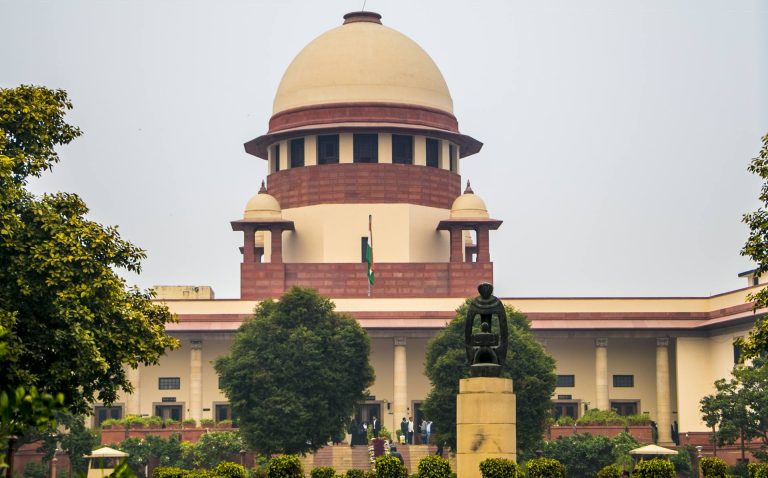
Indian courts have repeatedly encountered matrimonial disputes involving infertility, impotency, mental health and concealment of medical conditions. In Deep Mukerjee v. Sreyashi Banerjee, the Supreme Court considered a matrimonial dispute involving alleged non-consummation due to the husband’s impotency and upheld, to that extent, a direction requiring the husband to undergo a medical potentiality test.

In another recent development, the Chhattisgarh High Court upheld a divorce where the court found that concealment of a significant medical condition affecting matrimonial life and the prospect of childbirth amounted to mental cruelty. The case is significant, Advocate Anik notes, not because every medical condition should become a ground for divorce, but because it demonstrates the consequences that may follow when material health information is allegedly withheld before marriage.

A Problem Wider Than Infertility

The concern, Advocate Anik explains, extends well beyond fertility alone. A recent study of women experiencing delayed conception in North India found that 17.1 percent reported emotional abuse from their partners and 2 percent reported divorce; among women reporting pressure from other family members over delayed conception, 48.9 percent reported emotional abuse and 2.7 percent reported divorce. These figures do not establish that infertility causes divorce, but they illustrate how reproductive health can become a source of significant marital and family conflict.

India also lacks comprehensive national statistics showing how many divorces are directly attributable to medical conditions, Advocate Anik points out, adding that this statistical gap itself deserves attention. A study of 100 couples seeking divorce in a Mumbai family court found interpersonal problems to be the most common reported reason, at 34 percent, while sexual dissatisfaction and psychiatric illness each accounted for 5 percent of the recorded reasons. The same study also found significant psychological distress among many participants.

Balancing Privacy Against Informed Consent

Advocate Anik is careful to frame this as a difficult balance rather than a simple fix. On one side is the individual’s fundamental right to privacy, bodily autonomy and medical confidentiality. A person should not be forced to disclose every medical detail merely because they intend to marry, and any mandatory medical regime, he cautions, must never become a tool for discrimination against persons with disabilities, chronic illnesses, mental-health conditions, infertility or other health conditions.

On the other side sits the principle of informed consent. If a person knowingly conceals a serious condition that substantially affects sexual relations, reproduction or the fundamental expectations of matrimonial life, the other prospective spouse may enter the marriage without information that could materially influence their decision to marry at all.

A Disclosure Framework, Not a Fitness Test

The answer, according to Advocate Anik, may lie not in a compulsory “fitness certificate” for marriage, but in a carefully designed Pre-Marital Health Disclosure and Screening Framework. Such a framework, he suggests, could include voluntary or mandatory counselling, screening for communicable diseases, reproductive-health assessment where both parties consent, and a confidential declaration of material medical conditions, with the objective centred on awareness rather than exclusion.

He further proposes that the government could consider a standard marriage-health checklist covering sexual health, reproductive health, hereditary conditions, major chronic illnesses, mental-health history and communicable diseases, with sensitive information kept confidential and disclosed only to the prospective spouse with informed consent.

Why the Debate Matters Now

Recent cases, Advocate Anik argues, demonstrate why such reform deserves serious public debate. At one end are cases involving alleged concealment of medical conditions; at the other are cases where courts have protected individuals from casual or unjustified medical examination. The Bombay High Court, for example, recently cautioned that medical or psychiatric examinations in matrimonial proceedings cannot be ordered casually and require proper judicial reasoning and evidence.

The purpose of pre-marital screening, he concludes, should not be to declare someone “fit” or “unfit” for marriage. Marriage is not a medical examination. But marriage is a legal and personal commitment built on trust, and the law, in his view, should help ensure that such trust begins with honesty.

Read More Legal Analysis

More legal commentary and case analysis is available at primelegal.in.

Continue Reading

Brandpost

Apple Service Centre in Sector 2 Emerges as a Reliable Repair Destination for Noida Residents

Published

on

By

Tucked behind the Priyagold landmark in C Block, Sector 2, Apple Service Centre has become a go-to address for Noida residents looking for dependable, professional care for their iPhones, MacBook Pro laptops and iPads.

Noida’s rapidly expanding base of Apple users, from students and young professionals to established residents across its sectors, has created a consistent need for repair services that combine technical skill with easy accessibility. Serving that need in Sector 2 is Apple Service Centre, located at B2 C-79, behind Priyagold, C Block, Sector 2, Noida, Uttar Pradesh 201301. Its position within a well-known residential and commercial pocket of the city has made it a familiar stop for anyone whose iPhone, MacBook Pro or iPad needs attention.

As Apple devices have become deeply woven into daily routines, whether for remote work, online classes, content creation or simply staying connected with family, even a small hardware fault or software hiccup can bring an otherwise smooth day to a halt. Apple Service Centre has built its standing in the area by addressing precisely this kind of disruption, offering prompt and knowledgeable service for issues ranging from a shattered iPhone screen to a MacBook Pro that will not boot up.

One Address, Multiple Apple Devices

A key reason residents keep returning to Apple Service Centre is the breadth of devices it services under a single roof. Rather than customers having to hunt for separate specialists for their phone, laptop and tablet, the centre is equipped to handle iPhones, MacBook Pro laptops and iPads together, saving time and reducing the guesswork that often comes with choosing where to take a faulty device.

For iPhone owners, the centre offers repair services covering everyday concerns such as cracked or unresponsive screens, battery drain, faulty charging ports, camera malfunctions and general diagnostic checks after accidental drops or exposure to water. Because an iPhone often doubles as a primary means of communication and work, the centre’s emphasis on quick, accurate diagnosis is particularly valued by customers who cannot afford to be without their device for long.

On the laptop front, Apple Service Centre handles MacBook Pro repairs that range from routine software troubleshooting to more demanding hardware jobs, including display issues and internal component faults. Laptops that have suffered screen damage, keyboard problems or battery degradation over time can be assessed and repaired locally, sparing customers the inconvenience of travelling to a distant part of Delhi NCR or waiting for parts to be shipped from elsewhere.

iPad repair rounds out the centre’s core services, addressing issues such as cracked displays, battery replacement and charging faults. With tablets increasingly used for both academic work and professional presentations, having a nearby, specialised repair option adds genuine convenience for students and working professionals across Sector 2 and the surrounding sectors.

Why the Sector 2 Location Works in Its Favour

A repair centre’s real-world usefulness often depends as much on where it sits as on the expertise behind the counter, and Apple Service Centre’s address behind the well-known Priyagold landmark makes it easy to locate for both long-time residents and newcomers to the area. Its position in C Block places it within comfortable reach for people living across Sector 2 and nearby sectors, without requiring a long detour through Noida’s busier commercial stretches.

This local accessibility is complemented by the centre’s presence in Noida’s broader technology and services landscape. Rather than being a purely word-of-mouth outfit, its address, contact numbers and online listings make it straightforward for customers to plan a visit in advance, whether that means calling ahead to check on a specific repair or simply looking up directions before heading over.

Why a Specialised Centre Makes a Difference

Apple’s devices are designed with closely integrated hardware and software, which means that repairs carried out without the right parts, tools or technical understanding can sometimes cause more harm than good. A centre that focuses specifically on Apple products, rather than juggling every electronics brand that walks through the door, is generally in a stronger position to diagnose problems correctly the first time and use components that are properly suited to the device.

This distinction matters most in jobs that go beyond a simple screen swap, such as internal hardware diagnostics on a MacBook Pro or component-level work on an iPhone. Technicians who handle these devices day in and day out tend to be more familiar with the small but important details that determine whether a repair holds up over time or leads to repeat visits.

Getting in Touch and Planning a Visit

Customers looking to get their Apple devices checked or repaired can reach Apple Service Centre by phone at 0120 314 7974, or on the mobile number 9990234455, to enquire about a specific issue or to confirm availability before visiting in person. The centre’s official website provides further details on the services on offer, giving prospective customers a clearer picture of what to expect before they make the trip to Sector 2.

For anyone unfamiliar with the exact location, the centre’s presence on Google Maps makes it simple to navigate directly to B2 C-79, behind Priyagold, whether arriving by car, two-wheeler or on foot from a nearby residence or office. This straightforward access, combined with its focus on Apple-specific repairs, positions the centre as a practical option for residents across Noida who would rather resolve a device issue nearby than travel across the city.

As reliance on Apple products continues to grow across Noida’s residential sectors, having a specialised, well-located and easily contactable service centre nearby removes much of the uncertainty that often surrounds getting a device repaired. Whether it is a cracked iPhone screen, a MacBook Pro that needs a closer look, or an iPad with a fading battery, Apple Service Centre’s presence in Sector 2 offers residents a nearby, dependable option for keeping their devices running the way they should.

Find Apple Service Centre

Address: B2 C-79, behind Priyagold, C Block, Sector 2, Noida, Uttar Pradesh 201301

Phone: 0120 314 7974   |   Mobile: 9990234455

Website: appleservicenoida.com

Google Maps: View location

Continue Reading

Trending