Politics
PM Modi announces nuclear, chip manufacturing push on Independence Day
PM Modi outlined plans for 100 GW nuclear capacity by 2047 and new semiconductor plants in his Independence Day address from Red Fort.
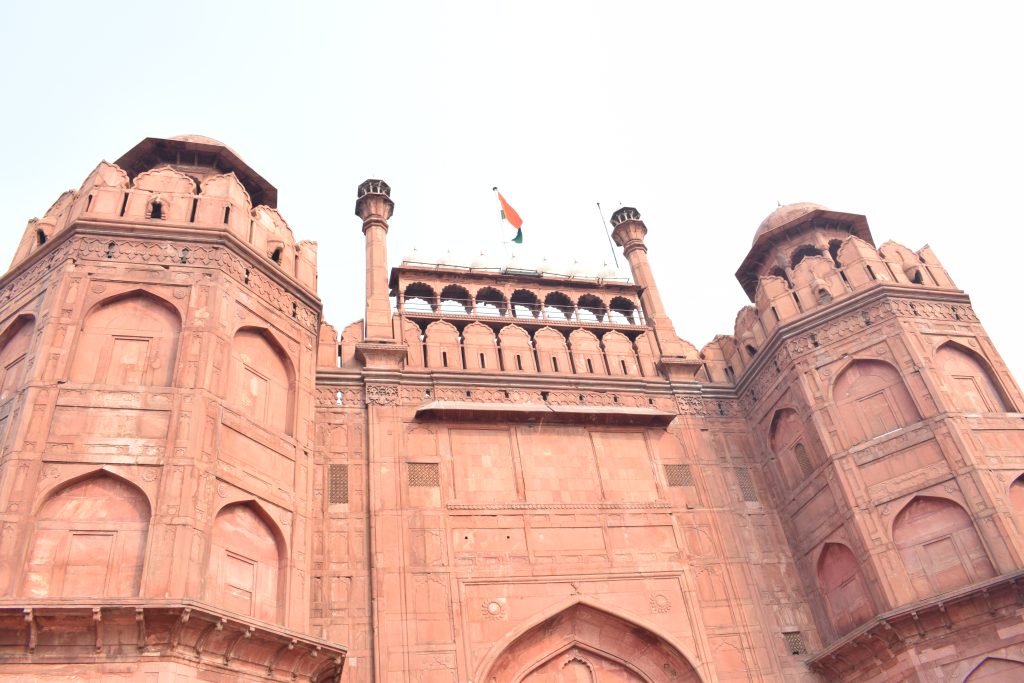
Prime Minister Narendra Modi hoisted the national flag at Red Fort on Saturday as India marked its 80th Independence Day, addressing the nation around 7:39 am.
Modi reaffirmed the government’s target of 100 gigawatts of nuclear power capacity by 2047, saying five new reactors are expected to become operational within six to seven years.
He said seven to eight new semiconductor manufacturing plants should be operational within one to two years, as part of efforts to strengthen domestic chip production.
The prime minister also announced AI-driven skill training for one crore young people over the next year, free online coaching for competitive exams, and a nationwide sports talent search for children aged five to 15.
Modi said previously restricted maritime zones would be opened for mineral and crude oil exploration, part of a wider energy security push tied to the ‘Viksit Bharat’ goal for 2047.
He said the youth have a major role in that journey, framing the announcements around Viksit Bharat and Atmanirbhar Bharat, or self-reliant India.
Celebrations were held across the country to mark the occasion, with flag-hoisting ceremonies and cultural programmes organised at state capitals, schools and government offices nationwide.
Modi opened his address by expressing solidarity with families affected by floods, landslides and other natural calamities across the country in recent weeks.
The prime minister also warned against what he described as ‘dimaagi Naxals,’ or intellectual Naxalism, calling for such elements to be identified and isolated to keep the country’s development on track.
Around five thousand special guests were invited to witness the celebrations at Red Fort, including artisans under the PM Vishwakarma scheme, women entrepreneurs under the PM Mudra Yojana, street vendors under PM SVANidhi, and taxi drivers of Bharat Taxi.
This year’s address marked Modi’s 13th consecutive Independence Day speech from the ramparts of Red Fort since he first took office in 2014.
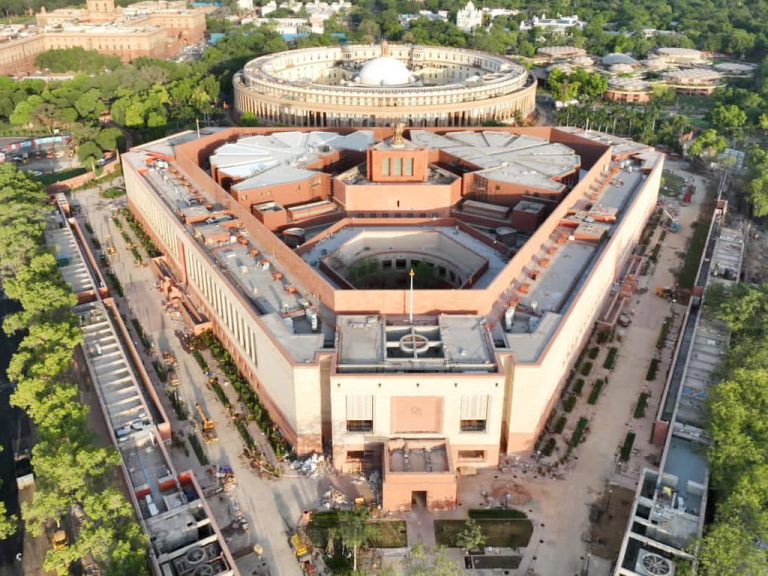
Photo by Mr. Debapriya Hore, Wikimedia Commons, CC BY-SA 4.0
Politics
PM Modi launches nationwide youth anti-drug pledge campaign
PM Modi launched the ‘Nasha Mukt Yuva for Viksit Bharat Sankalp Abhiyan’ on August 2, with over 1 crore youth taking a national pledge against substance abuse.
Prime Minister Narendra Modi launched the ‘Nasha Mukt Yuva for Viksit Bharat Sankalp Abhiyan’ on Sunday, August 2, 2026, at 11 am through video conferencing, beginning a nationwide campaign against substance abuse among young people.
The launch involved nearly 10,000 locations across the country, with more than 1 crore youth taking a national pledge to avoid substance abuse and act as ambassadors of positive social change in their communities.
The event drew participation from MY Bharat Volunteers, the National Service Scheme, youth clubs, schools, colleges, universities, NGOs, industrial associations and more than 125 spiritual organisations.
The launch marks the beginning of a 100-week Jan Bhagidari campaign against substance abuse, with weekly activities planned every Sunday across the country.
The weekly schedule includes sports events, walkathons, meditation sessions, cultural programmes, awareness campaigns, nukkad nataks, discussion forums and art competitions.
The campaign builds on the government’s existing Nasha Mukt Bharat Abhiyan, extending it into a structured, multi-year calendar of youth engagement activities.
The ‘Viksit Bharat’ framing links the anti-drug campaign to the government’s broader goal of a developed India by 2047, positioning youth wellbeing as a foundation for the country’s long-term development agenda.
Educational institutions, from schools to universities, are expected to play a central role in sustaining the weekly Sunday activities, given their direct access to the young people the campaign is targeting.
The campaign builds on the government’s broader Nasha Mukt Bharat Abhiyan, which has run de-addiction and awareness drives across India’s states and union territories in recent years.
Officials said the choice of Sunday for weekly activities is intended to maximise participation from students and working professionals who have more free time to join community events on the day.
The 100-week timeline gives the campaign a multi-year runway, allowing organisers to track engagement and adjust programming based on which activity formats draw the strongest youth participation in different regions.
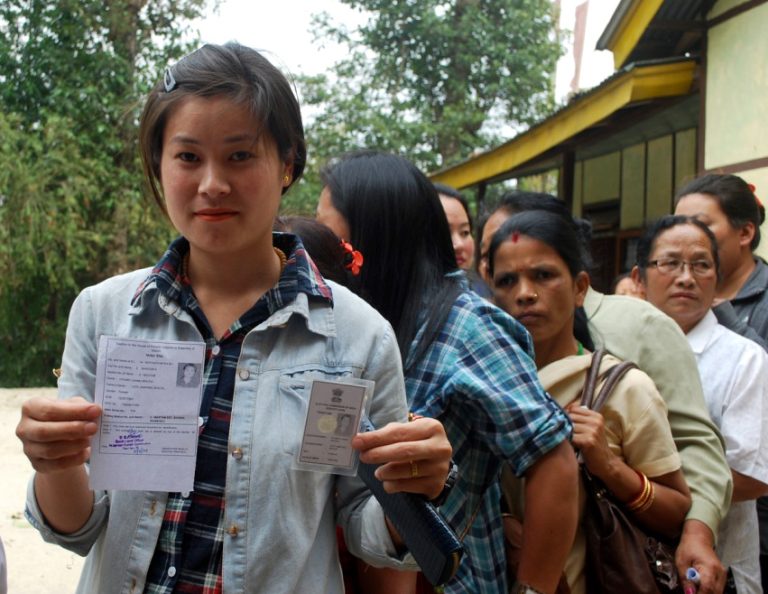
Photo: Prime Minister’s Office, Wikimedia Commons, GODL-India
Politics
Cabinet approves Rs 84,084 crore offshore exploration scheme Samudra Manthan
The Union Cabinet has approved the Rs 84,084 crore Samudra Manthan scheme to expand offshore oil and gas exploration in India through FY2030-31.
The Union Cabinet, headed by Prime Minister Narendra Modi, approved the ‘Samudra Manthan’ National Offshore Exploration Scheme on Thursday, July 31, 2026, with a total outlay of Rs 84,084 crore for implementation through FY2030-31.
The Central Sector Scheme, to be run by the Ministry of Petroleum & Natural Gas, aims to catalyse reserve accretion of more than 600 million metric tonnes of oil equivalent while expanding offshore exploration and domestic production.
More than Rs 43,200 crore of the outlay is set aside for deep-sea and ultra-deep-sea drilling over five years through 2031, with support of up to Rs 650 crore per well in deepwater and ultra-deepwater zones, where drilling can cost Rs 950 crore to Rs 2,400 crore per well.
The scheme further allocates Rs 10,000 crore for common infrastructure, Rs 28,534 crore for offshore data acquisition, and Rs 2,000 crore for oil and gas manufacturing and services zones.
Union minister Ashwini Vaishnaw called the scheme a ‘major game-changer’ that would help India substantially raise domestic production and conserve foreign currency spent on crude oil imports.
The scheme is also expected to create large-scale employment as exploration activity picks up across India’s offshore basins in the coming years, officials said.
India currently imports a large share of its crude oil requirement, a dependence successive governments have sought to reduce through incentives for domestic exploration and production.
The petroleum ministry has previously run rounds of offshore acreage auctions under the Open Acreage Licensing Policy, aimed at drawing both public and private sector investment into exploration blocks.
Deep-sea and ultra-deep-sea drilling is considered technically demanding and capital-intensive, which is why the scheme sets aside dedicated funding specifically for wells in those zones.
The scheme’s data acquisition component is intended to help identify new sedimentary basins and improve the accuracy of reserve estimates before companies commit to expensive drilling programmes.
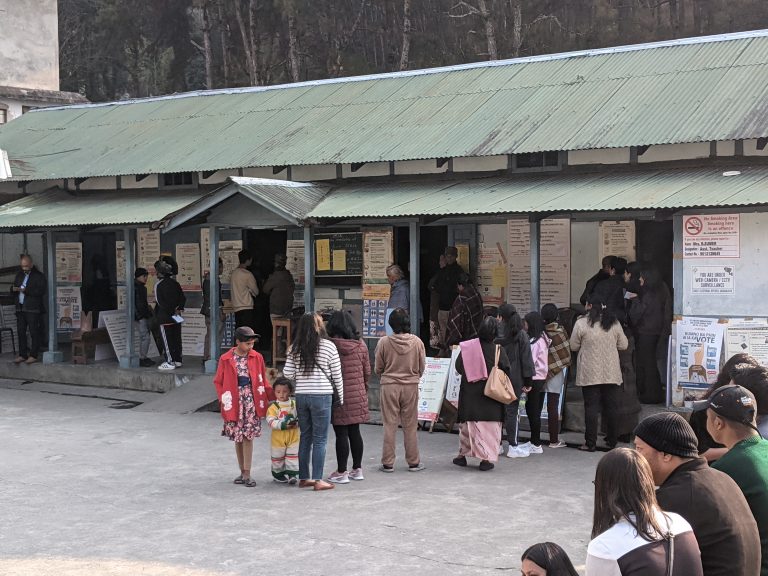
Photo: Indian Navy, Wikimedia Commons, GODL-India
Politics
Kharge, Nadda trade barbs in Rajya Sabha over police action
Mallikarjun Kharge and JP Nadda traded barbs in the Rajya Sabha on Wednesday over police action against protesters.
Congress president Mallikarjun Kharge and BJP leader JP Nadda traded barbs in the Rajya Sabha on Wednesday over police action against student protesters.
Kharge pointed to an attempt by a Delhi Police team to detain SFI leader Aishe Ghosh from the CPM’s AKG Bhavan office on Tuesday, calling it “very shameful” that police would “barge into a national party office and try to arrest.”
“I request you, people who have gone there unauthorised, they should be punished,” Kharge told the House, adding, “Democracy is not safe, people are not safe.”
Nadda, in his capacity as Leader of the House, defended the police action, calling it “a very normal law and order situation that we have to understand,” and insisting police had “acted according to the law and order situation.”
He added that “any student who is into activism will have to face such a situation,” citing his own arrest as a student activist during the Emergency.
The exchange follows the July 20 ‘Sansad Chalo’ march, when protesters affiliated with the Cockroach Janta Party marched from Jantar Mantar towards Parliament over alleged exam paper leaks.
The march turned confrontational after security personnel tried to stop it, with reports of lathi-charge and tear gas shelling during the clashes.
The protests eventually led to the resignation of Union Education Minister Dharmendra Pradhan on July 25, following weeks of demonstrations over exam-related concerns.
The exchange in the Rajya Sabha came as the Lok Sabha continued to debate the Public Examinations (Prevention of Unfair Means) Amendment Bill, intended to strengthen action against paper leak rackets.
The Public Examinations (Prevention of Unfair Means) Amendment Bill, which proposes stricter penalties including imprisonment of up to 10 years and fines of up to Rs 50 lakh for organised paper leak rackets, has been under discussion in the Lok Sabha through the week.
(Image: Ministry of Parliamentary Affairs, Government of India (GODL-India), via Press Information Bureau)
-
Brandpost2 years agoRedfox Overseas: Customize Your Own Energy Drink and Stand Out in the Market
-
Brandpost2 years agoZamzam Company CEO Chhote Bhai-Bade Bhai gave a grand welcome to Indian writer Devhari Sirvi in Dubai
-
Fashion2 years agoShikha Sharma: The Fashion Journalist, Blogger, and Plus-Size Model Taking the Industry by Storm
-
Entertainment1 year ago
Lucky Roxx’s “Yadav Ki Pukar” Goes Viral! Youth Celebrate Unity & Power
-
Entertainment9 years agoMeet Superman’s grandfather in new trailer for Krypton
-
Entertainment9 years agoNew Season 8 Walking Dead trailer flashes forward in time
-
Brandpost2 years agoFrom Local Hero to National Icon: Satyam Yadav’s Journey with TwentyOne
-
Uncategorized2 years ago
Hello world!