Connect with us

Brandpost

Reetesh Das: A Torchbearer of Social Justice and Human Rights in India
Published

on

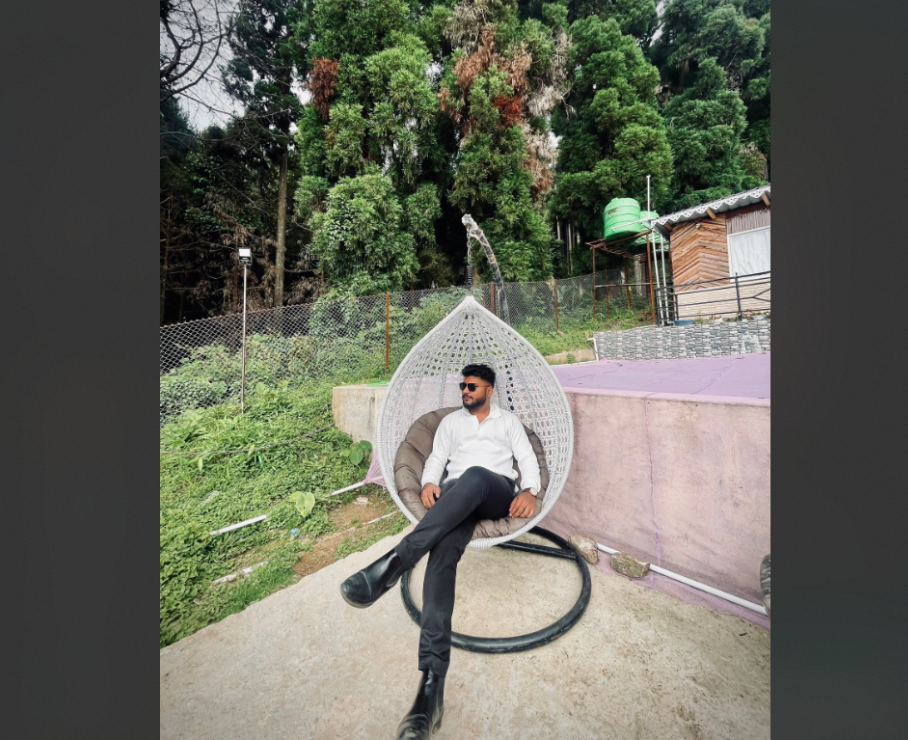
In a country where millions continue to struggle under the weight of poverty, exploitation, and injustice, Advocate Reetesh Das has emerged as a beacon of hope and justice for the oppressed. A legal professional and dedicated human rights activist from West Bengal, Das has carved a distinctive path through his tireless work in the fields of social service, legal empowerment, and ethical public advocacy.

Though his work often remains outside the limelight, his impact resonates deeply in the lives of countless individuals—families struggling with poverty, victims of domestic abuse, abandoned women, and neglected elderly citizens—who have found solace, protection, and empowerment through his efforts. In an age where social activism is often conflated with media campaigns and digital trends, Reetesh Das stands apart as a silent warrior committed to tangible, grassroots change.

A Lifelong Advocate for the Voiceless

Reetesh Das’s mission is simple but powerful: to make the law accessible and effective for those who need it the most. From remote villages to inner-city slums, Das has led legal literacy drives that teach basic rights and protections to those who have long been excluded from justice systems. These include women facing domestic violence, laborers being denied wages, elderly people struggling to claim pensions, and single mothers unaware of their entitlements.

Whether it is explaining maintenance laws to abandoned wives or helping daily wage workers understand labor protections, Das does not just offer counsel—he offers dignity.

Relief Through Action: The Quiet Power of Compassion

Beyond his professional duties, Reetesh Das has gone above and beyond to offer humanitarian support through acts of silent charity. Unlike conventional charity efforts that often chase media attention, his relief work is executed with humility and discretion.

Over the years, he has distributed food, clothing, hygiene kits, and medical supplies to homeless individuals and impoverished families. He has supported school-going children from disadvantaged backgrounds with essentials like uniforms, schoolbags, and books—often making the difference between education and dropout.

In shelters and crisis centers, his legal guidance and personal support have aided abandoned women and survivors of abuse in seeking justice and rebuilding their lives. For elderly widows living alone or without family, he has not only facilitated access to pension and welfare schemes but also ensured they are treated with the respect they deserve.

Laborers—among the most exploited groups in the informal economy—have found an advocate in Reetesh Das. Whether it is helping them retrieve unpaid wages or protecting them from unsafe work conditions, he continues to defend the rights of those whose voices are too often ignored.

Recognition Rooted in Service

His contributions have not gone unnoticed. Several prestigious institutions across India have honored him for his dedication, sincerity, and unwavering service to humanity and the rule of law.

In 2025 alone, Reetesh Das has been recognized by six different organizations that celebrate exceptional public service and moral integrity:

🏅 Dr. B.R. Ambedkar Rashtriya Samman – Presented by Global Icons of India E-Magazine, this award acknowledges his relentless pursuit of social justice.

🏅 Rashtriya Naitikta Samman – From the Tretayug Foundation, honoring his commitment to ethical values and community upliftment.

🏅 Rashtriya Pratishtha Puraskar – Conferred by the Worthy Wellness Foundation for his exemplary work in defending human rights.

🏅 Global Icon Award 2025 – Given by Gyan Uday Foundation, recognizing his impactful leadership in legal and social spheres.

🏅 IPBR Bhartiya Seva Gaurav Samman – Awarded by India Proud Book of Records, citing him as a standout social worker whose grassroots work is changing lives.

🏅 Icon of India Award 2025 – Presented by Blue Star Events, this prestigious honor celebrates his national influence and sustained contributions to social justice and humanitarian efforts.

Each of these honors is more than just a medal or certificate—they are testaments to a life spent in service of others. They reflect not only legal brilliance, but the moral courage to stand with the vulnerable and defend what is right, often in difficult circumstances.

The Path Forward

As India continues to grapple with socio-economic inequalities, caste and gender-based discrimination, and barriers to justice for its most vulnerable citizens, individuals like Advocate Reetesh Das serve as essential changemakers. His model of leadership—quiet, ethical, inclusive, and action-driven—is a timely reminder of the values that must underpin any lasting progress.

What sets him apart is not just his commitment to human rights but the way he channels his professional skills into human service, without seeking applause or recognition. In an era defined by noise, his silence is his strength—and his service, his legacy.

Continue Reading
Click to comment

Leave a Reply

Your email address will not be published. Required fields are marked *

Brandpost

AI IN EDUCATION: PREPARING STUDENTS FOR FUTURE EMPLOYMENT OPPORTUNITIES

Published

on

Prof. Maria M
Principal
United international business school

Artificial Intelligence (AI) is rapidly changing education and employment. It is now used in almost every sector, including finance, healthcare, marketing, HR, and manufacturing. Therefore, education must prepare students for future AI-driven jobs.

AI and Jobs

AI is not only replacing jobs but also changing them. According to the International Labour Organization (ILO), AI is more likely to support and improve jobs rather than fully replace them.

A 2024 Microsoft–LinkedIn report found that:

  • 75% of workers already use AI at work
  • 66% of employers prefer candidates with AI skills
  • 71% prefer less-experienced candidates with AI skills over experienced ones without them

This shows that AI skills are now essential for employment.

India’s Situation

In India, the impact is even stronger:

  • 92% of workers already use AI
  • 75% of employers will not hire without AI skills
  • 80% prefer candidates with AI skills over more experienced ones

This means students must learn AI along with their main subjects.

AI in Education

AI should be included in all fields:

  • Commerce: accounting, taxation, auditing
  • Finance: forecasting and investment analysis
  • Management: decision-making and HR
  • Marketing: customer analysis and digital marketing
  • HR: recruitment and workforce planning
  • Analytics: data and prediction models

This helps students understand how AI is used in real jobs.

Skills Needed

Future employees need both technical and human skills:

  • AI and digital literacy
  • Data analysis
  • Critical thinking
  • Problem-solving
  • Creativity
  • Communication
  • Teamwork
  • Ethical awareness

Students should learn how to use AI wisely, not depend on it completely.

Role of Teachers

Teachers will remain important. Their role will shift to guiding students, improving thinking skills, and helping them use AI responsibly.

Challenges

AI also brings risks like plagiarism, misinformation, and over-dependence. Students must be trained to use AI ethically and carefully.

Conclusion

AI is changing the future of work. Jobs will not disappear completely, but they will change. Students who learn AI skills along with their subjects will have better career opportunities.

Education should aim to make students AI-ready, not just degree holders.

 College link: https://www.uibsblr.com/vision-mission-and-goal

Continue Reading

Brandpost

From Diet Charts to Real-Life Change: Dt. Priyanka Gupta Brings Personalized Nutrition Guidance Online

Published

on

By

INDIA — August 2026: What if eating healthy didn’t have to mean completely changing the way you live? For many people trying to improve their health, the internet has created an overwhelming amount of nutrition advice. One diet recommends cutting carbohydrates. Another promotes intermittent fasting. Social media offers a new “perfect” meal plan every week. The result, for most people navigating this landscape, is more information but often less clarity about what actually applies to their own life.

This is the gap Dt. Priyanka Gupta, a Clinical Dietitian and Nutritionist, is working to close, building an online presence around a simple objective: help people understand nutrition and make healthier eating practical for everyday life rather than another temporary experiment. With her digital presence at dtpriyankagupta.com, she is bringing personalized nutrition consultations and diet-planning services to people looking for structured, professional guidance they can access online rather than only in a clinic waiting room.

A Philosophy Built Around Fit, Not Restriction

“You Don’t Need Another Diet. You Need a Plan That Fits Your Life.”

That message sits at the center of Dt. Priyanka Gupta’s brand. Rather than presenting nutrition as a collection of rigid rules, her stated philosophy focuses on personalized diet planning, practical food choices, evidence-based nutrition guidance and sustainable habits over quick-fix promises. The framing is particularly relevant for people who have tried multiple diets in the past but struggled to maintain them alongside work schedules, family responsibilities, social occasions and the general unpredictability of everyday routines.

A nutrition plan can look perfect on paper, laid out with precise macros and meal timings, but if it does not fit someone’s actual lifestyle — their working hours, their family’s cooking habits, their travel schedule, their food preferences — following it consistently can become difficult very quickly. That disconnect between a theoretically ideal plan and a livable one is, according to her stated approach, one of the most common reasons diets fail even when the underlying nutrition science behind them is sound.

Personalized Diet Plans, Not One-Size-Fits-All Charts

One of the central services offered through Dt. Priyanka Gupta’s platform is personalized diet planning. Instead of relying on a generic meal chart handed to every client regardless of their circumstances, her nutrition guidance is designed to take into account an individual’s food preferences, daily routine, lifestyle constraints and specific health goals. The stated objective is to make nutrition easier to understand and, just as importantly, easier to actually implement day to day.

For Indian families in particular, this approach can mean making room for familiar, everyday foods rather than treating healthy eating as something entirely separate from normal life. Dal, roti, rice, vegetables, fruits, curd, paneer and other staples common to Indian kitchens can be incorporated into a balanced eating pattern when planned appropriately for portion size, timing and combination — rather than being eliminated wholesale in favor of unfamiliar packaged “diet foods” that may be harder for a family to sustain together.

Nutrition Education Beyond Weight Loss

Although weight management remains an important area of nutrition support and one of the most common reasons people seek out a dietitian, Dt. Priyanka Gupta’s brand is not built around weight loss alone. Her practice also provides nutrition-focused guidance across several other areas, including general healthy eating, PCOS (polycystic ovary syndrome) nutrition, diabetes nutrition, thyroid nutrition and digestive health — conditions where dietary management is commonly recommended as a complement to, though not a replacement for, medical treatment and a healthcare provider’s guidance.

The broader stated goal is to help people develop a better working understanding of food and nutrition generally, rather than simply handing them a temporary diet to follow without explanation. That distinction matters for long-term outcomes: guidance built around understanding why certain food choices matter tends to translate more naturally into habits that persist once a structured program ends, compared with rules followed without context.

A Qualified Clinical Dietitian and Nutritionist

Dt. Priyanka Gupta holds an M.Sc. in Food & Nutrition and a B.Sc. in Clinical Nutrition, and has clinical dietetics experience underpinning her consultation practice. Her professional positioning combines formal nutrition education with what is described as an approachable, practical communication style — a distinction that carries particular weight in an environment where social media is increasingly filled with conflicting, and sometimes unqualified, nutrition claims from influencers without formal training.

The brand’s stated aim is to make professional, evidence-informed nutrition information accessible without resorting to unrealistic promises or promoting extreme dietary restriction — an approach that positions her consultation practice differently from the more aggressive, rapid-transformation marketing common among some online diet programs.

Why Personalized Nutrition Matters

There is no single universal meal plan that works equally well for every person. Two individuals can have completely different work schedules, food preferences, cultural eating patterns, activity levels and underlying health goals, even if they are nominally trying to achieve something similar, such as weight management or better energy levels. That variability is precisely why personalization sits at the center of Dt. Priyanka Gupta’s stated service philosophy.

Instead of asking clients to fit themselves into a pre-built diet template, the objective described in her practice is to construct nutrition guidance that works around the individual’s existing life — their routine, their kitchen, their preferences — rather than requiring them to restructure their life around a diet. In principle, that reversal can make sustained healthy eating feel considerably less complicated and more achievable over the long term, though, as with any nutrition approach, individual results depend on consistency, underlying health status and factors beyond diet alone.

Building a Trusted Nutrition Brand Online

Through dtpriyankagupta.com, Dt. Priyanka Gupta is building an online destination centered on personalized diet plans, nutrition consultations and practical nutrition education. The website is positioned to serve as a growing resource for people searching for reliable information about diet planning, weight management, healthy eating, PCOS nutrition, diabetes-friendly nutrition, thyroid nutrition, digestive health and everyday Indian nutrition specifically — a niche that general international nutrition content does not always address well, given how much traditional Indian cooking and eating patterns differ from the Western diet frameworks many popular nutrition resources are built around.

Alongside one-on-one consultations and diet plans, the brand has stated plans to continue publishing educational content covering food choices, nutrition fundamentals, healthy meal ideas and answers to common nutrition questions, positioning the website as an ongoing resource rather than a one-time consultation touchpoint.

The Bigger Message Is Simple

Healthy eating doesn’t have to be perfect. It needs to be practical, personalized and sustainable. And sometimes, the most useful nutrition advice isn’t another complicated diet trend borrowed from social media — it’s simply having someone qualified help translate general nutrition science into a plan that fits an individual’s actual life, family, and food culture.

Frequently Asked Questions

What services does Dt. Priyanka Gupta offer?

Her practice offers personalized diet plans, nutrition consultations, and guidance across weight management, PCOS nutrition, diabetes nutrition, thyroid nutrition and digestive health.

What are Dt. Priyanka Gupta’s qualifications?

She holds an M.Sc. in Food & Nutrition and a B.Sc. in Clinical Nutrition, along with clinical dietetics experience.

Are consultations available online?

Yes, consultations and diet-planning services are offered online through dtpriyankagupta.com, in addition to any in-person availability.

Does Dt. Priyanka Gupta only focus on weight loss?

No. While weight management is one area of focus, her practice also covers PCOS, diabetes, thyroid-related nutrition, digestive health and general healthy eating guidance.

Can Indian home foods be part of the diet plans?

Yes — her stated approach incorporates familiar foods such as dal, roti, rice, vegetables, curd and paneer into personalized, balanced eating plans rather than eliminating them.

Website- www.dtpriyankagupta.com

Phone: 9644888820

Brand: Dt. Priyanka Gupta – Clinical Dietitian & Nutritionist

Location: India | Online Nutrition Consultations

Continue Reading

Brandpost

From Messy Word Templates to One-Click PDFs: Inside Biodata99.com’s Free Marriage Biodata Maker

Published

on

By

A closer look at how the platform’s guided tools, privacy rules and community-specific formats aim to fix the most common mistakes in marriage biodatas

Anyone who has tried to put together a marriage biodata in Microsoft Word knows the frustration: a photo that will not sit where it is supposed to, spacing that shifts the moment the file is opened on another device, and fonts that render differently on a relative’s laptop than they did on the original computer. Biodata99.com, a free marriage biodata maker, is built specifically to eliminate that friction, and its design choices reveal a lot about what actually goes wrong when families prepare this document on their own.

Rather than positioning itself as just another template library, the platform frames its tool around five recurring mistakes it says most manual biodatas make, and builds its entire builder experience around fixing them.

Mistake One: Messy, Inconsistent Formatting

Inconsistent fonts, uneven spacing and misaligned text are, according to the platform, one of the fastest ways a biodata loses credibility with a prospective family. Biodata99.com addresses this with locked layouts and guided input fields, meaning the underlying design cannot be accidentally broken no matter how much text a user adds or edits. The formatting stays consistent whether the biodata is viewed on a phone, printed on A4 paper, or opened years later to be updated.

Mistake Two: Oversharing Sensitive Information

The platform is unusually direct about privacy risk. Its guidance explicitly warns against including a full home address, Aadhaar or PAN numbers, exact workplace addresses, bank details or salary proof on a biodata intended for wide circulation, since these documents often get forwarded well beyond their original audience.

To reduce this risk, Biodata99.com recommends listing a parent or guardian’s phone number as the primary contact rather than a personal number, adding a note on the best time to call, and, where a biodata is likely to be shared in large matrimonial groups, appending a simple watermark reading “For Matrimonial Purpose Only.” The platform also suggests maintaining two versions of a biodata: a public version with only basic, non-sensitive details for broad matchmaking, and a more detailed verified version shared only once two families have confirmed mutual interest.

Mistake Three: Low-Quality or Inappropriate Photos

Photo selection is treated as its own category of risk. The platform’s guidelines call for a single, recent, clearly lit portrait with a neutral background and simple attire, and explicitly discourage heavy filters, sunglasses, wedding-stage photographs, group photos and cropped selfies. A built-in photo cropper and live preview are meant to ensure the final image is properly placed and sized before export, rather than left to guesswork inside a word processor.

Mistake Four: Multiple, Outdated Versions in Circulation

A subtler problem the platform addresses is version control. Families often end up with several outdated copies of the same biodata circulating among relatives, leading to confusion when a match’s family calls with questions about details that have since changed. Biodata99.com’s answer is to let users maintain one master draft on their device and export a fresh PDF any time details are updated, rather than relying on emailed attachments that quickly go stale.

Mistake Five: Writing Too Much

Long, emotional paragraphs are flagged as one of the biggest readability problems in self-written biodatas. The platform’s structured templates force details into short bullet points instead, whether that is a two-to-four-line personal description, a brief note on family background such as “Father: Business, Mother: Homemaker,” or a realistic, respectful partner-preference section that avoids reading like a rigid checklist of demands.

Built-In Support for Regional and Community Formats

Beyond fixing formatting mistakes, Biodata99.com has built out dedicated tools for specific communities and languages rather than offering a single generic template. Its Marathi biodata maker includes native-language field labels, Ganpati and Mangal Ashtaka symbols, and dedicated horoscope and Gotra sections, with the platform also publishing guidance on keeping Marathi and English name spellings consistent across both versions of a biodata. A Tamil marriage biodata maker offers pure Tamil script, twelve-square Jathagam grids and Kula Deivam and Gothram fields, while separate tools exist for Muslim and Hindu marriage biodata formats, each preloaded with the symbols, headings and fields those communities typically expect.

The platform also offers more than fifty visual template styles, ranging from Classic Golden Corner Border and Royal Maroon Vintage designs to minimalist Elegant Floral White layouts, all of which remain editable within an in-browser studio for colors, backgrounds, frames and fonts.

A Growing Library of Written Guides

Alongside the builder tool, Biodata99.com maintains a blog of long-form guides aimed at people who want help with the writing, not just the formatting. Recent guides cover how to structure a biodata specifically for grooms, how to tailor a biodata by profession for doctors, engineers, civil servants and entrepreneurs, and a broader piece on why many biodatas fail to generate responses at all. Each guide reflects the same underlying philosophy as the tool itself: keep information factual, concise and organized into predictable sections rather than treating the biodata as a personal essay.

No Login, No Server Storage

For a document containing this much personal detail, Biodata99.com has made a point of not requiring account creation. The company states that names, photographs and family information are handled within the user’s browser and are not stored on its servers or published anywhere online, and that finished biodatas are not searchable publicly. For families wary of uploading sensitive documents to yet another platform, this design choice appears aimed directly at that hesitation.

The Bottom Line

Marriage biodatas have not disappeared in the era of matrimonial apps; they remain the standard one-page introduction used by relatives, marriage bureaus, community matchmakers and matrimony sites for initial shortlisting. What Biodata99.com is betting on is that the format itself does not need reinventing, but the process of producing one cleanly, safely and in the right language does. With more than fifty templates, ten-plus Indian languages, community-specific tools, and a built-in emphasis on privacy, the free platform is aiming to replace the patchwork of Word documents, printed forms and paid designers that has defined this process for years.

Continue Reading

Trending