
India
The Glory of the Soil and the Tradition of the World’s Provider: Shri Jagdishchandra Bariya’s Herculean Effort to Preserve Culture

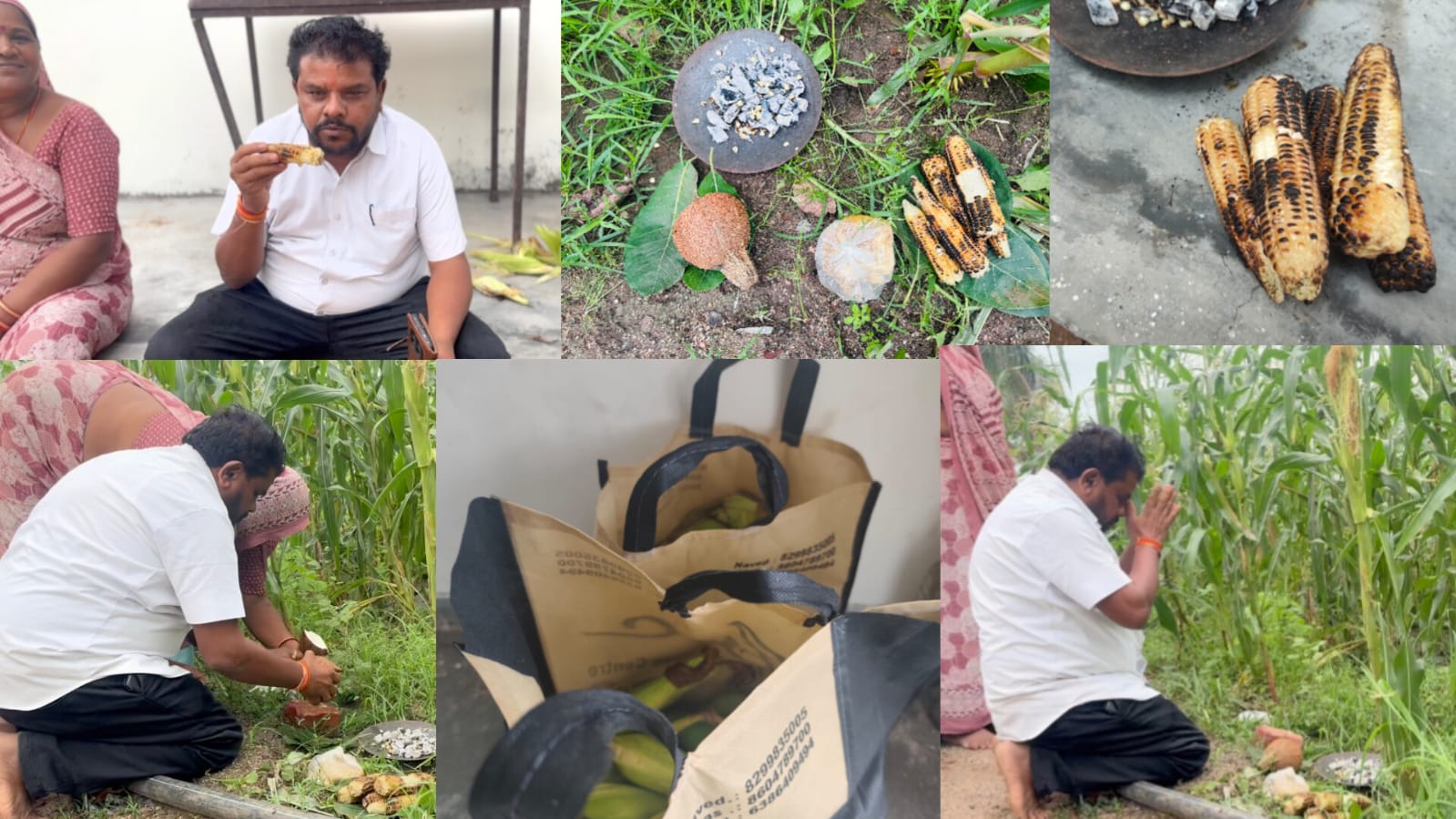
In today’s digital and computer age, where human life is rapidly changing, the Indian farmer still holds fast to ancient cultural traditions with all his heart. Amidst the era of science and technology, Shri Jagdishchandra Bariya has undertaken the inspiring task of preserving—and showcasing to society—the invaluable culture and sacred practices of farmers that were otherwise fading into oblivion.
Boundless Faith in Mother Earth and Compassion for Living Beings
Shri Jagdishchandra Bariya highlights the profound values inherent in a farmer’s life—values that see the farmer begin his work only after offering obeisance to Mother Earth.
The First Right of Birds and Creatures
A farmer never immediately claims exclusive rights over the fresh grain harvested through his hard work. Jagdishchandra Bariya notes that before consuming the new grain himself, the farmer scatters feed for the birds of the sky and sets aside a portion for the creatures and insects of the earth.
The Spirit of Co-existence:
Shri Jagdishchandra Bariya regards this noble tradition—wherein the farmer brings the new grain into his home only after ensuring that every living being in nature has been fed—as a true jewel of our culture. Welcoming Nephews and Relatives: The ‘Doda’ (Fresh Corn/Grain) Tradition
In our ancient traditions, the nephew holds a highly revered place. Shri Jagdishchandra Bariya has beautifully highlighted this sacred family custom practiced by farming communities:
The Tradition of Offering ‘Doda’: When a new crop of maize, sorghum (juwar), or pearl millet (bajra) is ready in the fields, the farmer extends a special invitation to his nephews and relatives. Fresh green cobs or grain heads (doda or kans) are roasted or prepared as ponk (tender roasted grain) and served to the nephew with great affection—making him the first to taste the new harvest.
Selflessness and Respect:
The farmer tastes the new grain himself only after his nephews and relatives have partaken of it. Shri Jagdishchandra Bariya regards this selfless sentiment of the farmer as truly worthy of reverence in today’s times.
Unwavering Generosity Amidst Nature’s Blows
Shri Jagdishchandra Bariya gives voice to a poignant yet noble reality of a farmer’s life: no matter how many harsh blows nature deals—be it drought, excessive rain, or crop failure—the farmer never utters a bitter word.
Despite enduring all these hardships, the farmer never fails to set aside a share of the harvest for his loved ones, as well as for birds and other living creatures. Only after feeding everyone else does he put the last grain of food into his own mouth.
When a River Becomes a Witness to History
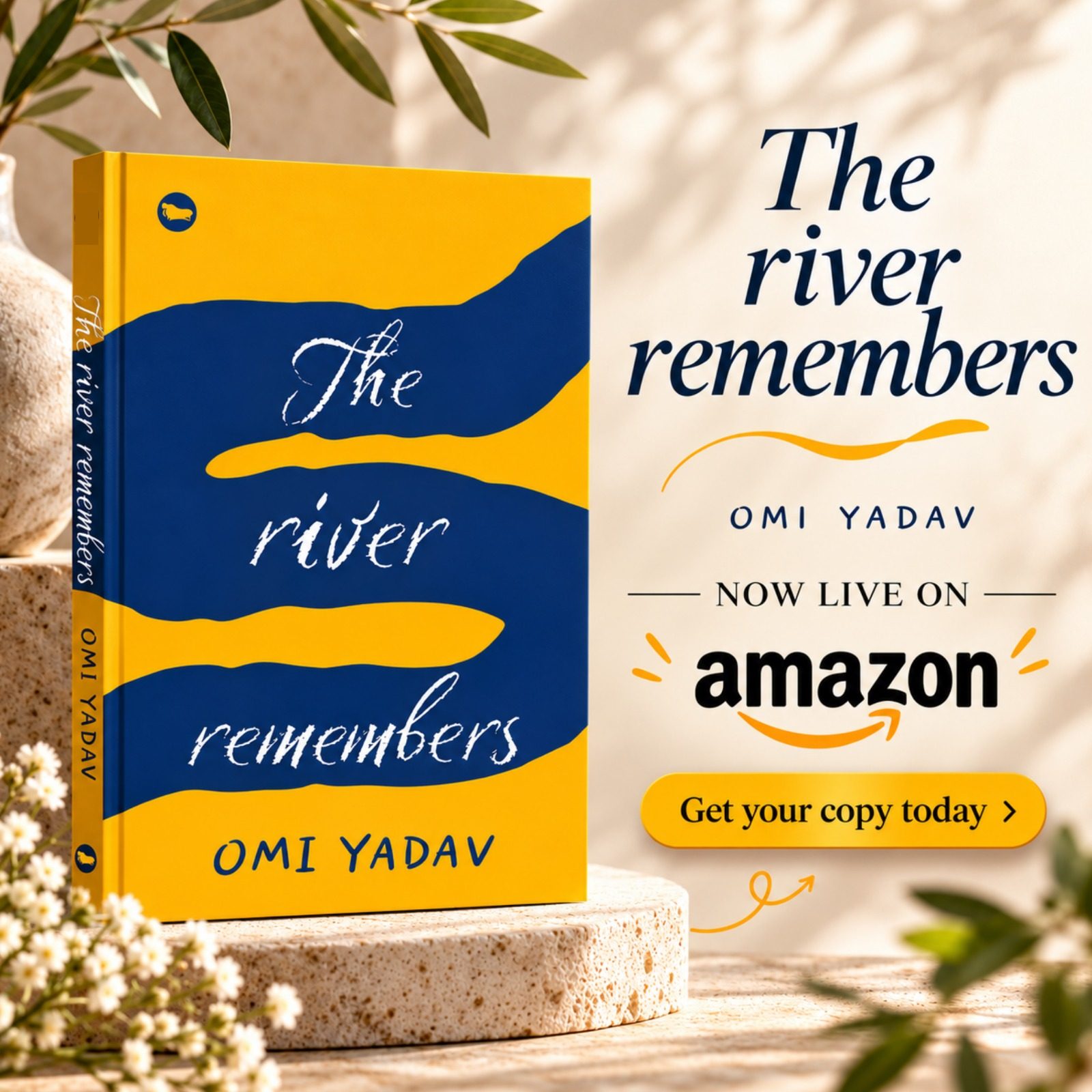
‘The River Remembers’ by Omi Yadav is an ambitious debut novel that attempts something unusually expansive: to tell the story of Bihar across 2,300 years through the lives of ordinary people who live beside its rivers, roads, institutions and changing landscapes. Published in September 2026, the novel moves from Pataliputra in 300 BCE to a Delhi street in April 2026, connecting vastly different historical moments through one enduring presence—the river.
The novel begins with Devadatta, a wood-carver in ancient Pataliputra, whose intimate observations of the Ganga establish one of the book’s central ideas: places remember even when people do not. From there, Omi moves through the burning of Nalanda, the age of Sher Shah Suri, colonial exploitation, Independence, floods, migration, industrialisation and the mass movement of labour towards Indian cities.
What distinguishes the novel is its decision to approach history through individual lives rather than through kings, battles and political chronology alone. A monk running from the burning Nalanda library with manuscripts, a road-builder’s wife travelling alongside her husband, families confronting displacement, workers leaving Bihar for employment and a young girl cycling to school become parts of a much larger historical narrative.
The recurring metaphor of the river gives the book structural unity. It flows while empires disappear, roads are constructed, libraries burn and generations migrate. The river does not interpret these events; it simply continues. The people, however, remember—and it is their memories that give history its emotional weight.
The final section brings the centuries-old narrative sharply into the present. Priya, a fifteen-year-old girl from Darbhanga, cycles to school each morning, representing education, mobility and the possibility of choosing to remain. Her story is placed alongside the account of Pandav Kumar, a twenty-one-year-old from Khagaria who worked as a food-delivery worker in Delhi and died in April 2026. The epilogue uses his story to confront the prejudice and vulnerability surrounding migrant workers from Bihar.
Omi Yadav’s prose is reflective and cinematic, often lingering on landscapes, objects and small human gestures. At times, the historical sweep can feel deliberately weighty, but that breadth is also the novel’s defining characteristic.
Ultimately, The River Remembers is less a conventional historical novel than an extended meditation on memory, migration, belonging and survival. Its central question—whether people should trust the land or leave it—echoes across generations. The river keeps moving; what changes is the meaning people attach to the journey.
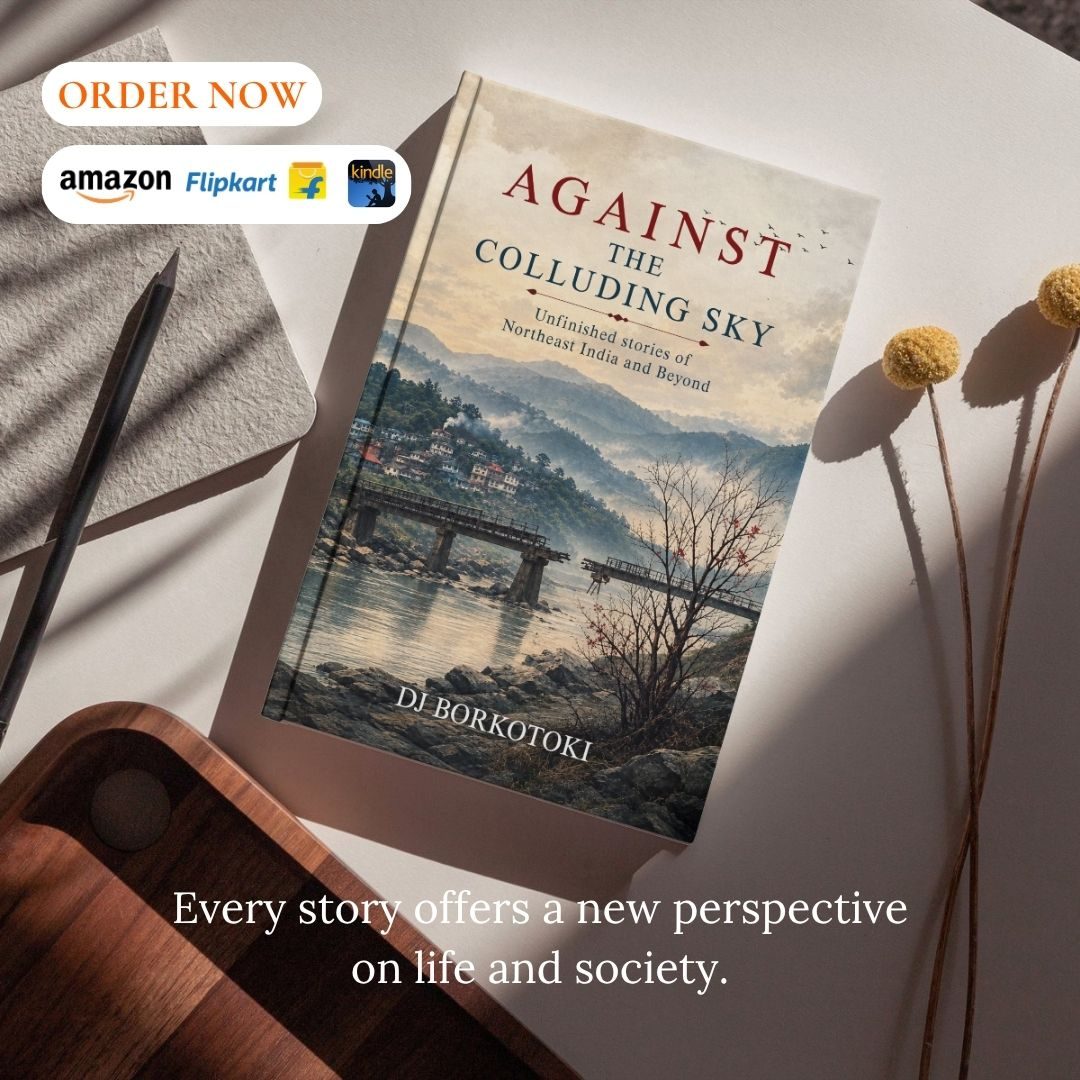
D J Borkotoki’s Against the Colluding Sky brings together stories of identity, conflict, memory, displacement and the ordinary lives caught in extraordinary circumstances.
The Northeast of India has often entered public consciousness through headlines—insurgency, ethnic tensions, borders, migration and political unrest. Yet behind every headline are individuals whose lives cannot be reduced to statistics or political narratives. D J Borkotoki’s Against the Colluding Sky: Unfinished Stories of Northeast India and Beyond attempts to bring those human stories to the foreground.
Published in September 2026 by Bigfoot Publications, the book is a collection of ten stories, including “Songless Birds,” “Tonight,” “Kindred Scourge,” “Lifestyle,” “James Bond (Local),” “The Portrait (Circa 1990),” “The Blue Sky,” “Atma,” “Wings of a Grasshopper,” and “Down South.”
The opening story, “Songless Birds,” provides an effective entry into the collection. Set at a conference in Delhi discussing the Northeast, it brings together bureaucrats, academics, journalists and others attempting to understand a region described repeatedly as unique and misunderstood. At the centre of the conference is a painting of three birds—an Adjutant Stork, a hornbill and a white pelican—sitting on one branch but looking in different directions.
The image gradually acquires symbolic significance. While the speakers discuss ethnicity, land, borders, identity and violence, the story raises another question: who gets to speak for the Northeast? The young anthropologist Simon challenges the simplified idea that communities in the region are merely prone to conflict. His observations introduce questions of cultural identity, insecurity and the fear of losing heritage.
In “Tonight,” the narrative moves from a conference hall to a remote village, where Dimbeswar Kalita lives through the disappearance of his seventeen-year-old son, Rajen. As rumours connect the boy with an armed outfit, the father becomes trapped between fear, social suspicion and an agonising uncertainty about his child’s fate.
Across the collection, Borkotoki repeatedly turns towards people living on the margins of larger events. His characters carry memories, regrets, anxieties and unanswered questions. The stories are therefore not simply about the Northeast; they are about people negotiating history, identity, family and circumstance.
The author’s note describes the book as growing from memories, reflections and stories accumulated through family, friendships, reading and years of writing for newspapers and journals.
That personal foundation gives Against the Colluding Sky its central quality: these are stories that resist easy conclusions. They remain, deliberately, unfinished—much like the lives they portray. Intense, often funny and sometimes gripping, Against the Colluding Sky is a compelling read.

As generative artificial intelligence begins to reshape advertising and media production, a new generation of AI-first studios is emerging. Among them is RatanovaFilms, an Indian AI production studio focused on creating cinematic films, advertisements and branded content using generative AI.
Founded by 22-year-old entrepreneur Meet Sehgal, RatanovaFilms combines the creative discipline of traditional filmmaking with AI-powered production techniques. The studio produces brand films, television commercials, product content, UGC videos, microdramas, AI avatars and other forms of digital storytelling.
With a remote production model, the studio works with brands, agencies and creators across different markets while using AI to make visual production faster and more flexible.
A Filmmaker’s Approach to AI Production
Generative AI has significantly changed the way visual content can be produced. However, RatanovaFilms’ approach is based on the idea that technology alone does not create an effective film.
Meet Sehgal started the studio with a belief that AI should raise the standard of brand filmmaking rather than lower it. The creative process therefore remains rooted in filmmaking fundamentals, with projects developed around direction, storytelling, lighting, camera perspective, texture and performance.
Generative AI is then incorporated into the production process to bring the creative concept to life.
This approach allows RatanovaFilms to combine the visual thinking associated with traditional filmmaking with the speed and flexibility of emerging AI production technologies.
What RatanovaFilms Creates
The studio offers a range of AI-powered production services for brands, agencies and creators.
AI Films and TV Commercials
RatanovaFilms creates cinematic brand films and advertising content designed around storytelling, visual communication and emotional engagement.
Product Films and Product Shoots
The studio produces product-focused visuals that highlight details such as packaging, ingredients, textures and product features through AI-generated environments and imagery.
UGC Content
For brands looking to communicate through social platforms, RatanovaFilms produces UGC-style content designed for digital campaigns and performance marketing.
Microdramas
The studio also develops short-form episodic stories that can be used for digital entertainment, brand storytelling and content-led campaigns.
AI Avatars
AI avatars and digital presenters allow brands and creators to develop recurring video content while maintaining a consistent visual identity.
Automated Content Workflows
Beyond individual productions, RatanovaFilms works on automated content workflows designed to help businesses create and manage creative assets at scale.
Trusted by Indian and Global Brands
RatanovaFilms has delivered work for some of India’s best-known brands, along with global brands from the USA and Europe. Its clients span FMCG and food, personal care, banking and financial services, pharma and healthcare, education, e-commerce, consumer appliances, nutrition, entertainment and AI technology.
The studio also partners with creative agencies and fast-growing startups. For agencies, it acts as a production partner that can turn campaign ideas into finished films quickly. For startups, it makes high-end brand films accessible from an early stage.
Its client mix reflects the growing use of AI-generated production across both established businesses and emerging companies looking for new ways to create commercial content.
A Remote Studio Built for a Global Market
RatanovaFilms operates as a fully remote team, allowing the studio to collaborate with clients across India, the United States and Europe.
The remote model also gives the company flexibility to work with different creative teams, agencies and businesses without being restricted by a conventional physical production setup.
For brands, this can make it easier to develop visual campaigns across multiple formats while adapting production workflows to the requirements of digital platforms.
Meet Sehgal’s Vision for AI Filmmaking
At the centre of RatanovaFilms is its founder, Meet Sehgal, who launched the company at the age of 22.
His vision is focused on maintaining the creative standards of filmmaking while taking advantage of what generative AI can offer.
“AI has made it possible to create anything, but that doesn’t make everything worth watching,” says Meet Sehgal, Founder of RatanovaFilms. “Our focus is on craft. We want every film we make to stand next to a traditional production and hold its own, while giving brands the speed and flexibility they need today.”
The philosophy highlights an important distinction in the growing AI video industry. As generative tools become more accessible, the ability to produce an image or video is becoming less of a barrier. Creative direction, storytelling and execution increasingly determine whether the resulting content can work effectively for a brand.
Building the Future of AI-Powered Brand Content
The demand for video content continues to expand across advertising, social media, e-commerce and digital marketing. At the same time, brands are looking for ways to produce more content without sacrificing creative quality.
AI-powered production is becoming part of that changing landscape, providing new possibilities for brands to experiment with formats, visual styles and storytelling approaches.
RatanovaFilms is building its position within this emerging production ecosystem by combining generative AI with a filmmaking-led creative process.
Rather than treating AI simply as a tool for generating images or videos, the studio aims to use the technology as part of a broader production system where creative direction remains central.
As AI filmmaking continues to develop, RatanovaFilms aims to work with businesses looking for faster and more flexible production while maintaining a strong emphasis on cinematic execution.
About RatanovaFilms
RatanovaFilms is an AI production studio founded by Meet Sehgal. The studio creates AI films, TV commercials, product films, UGC content, microdramas, AI avatars and automated content workflows for brands, agencies and creators in India, the USA and Europe.
To see the studio’s work, visit www.ratanovafilms.com and www.meetsehgal.com.


Markets bounce back: Where the Sensex and Nifty stand after three sessions

Records in Ranchi: West Indies’ highest T20I chase

Book Review: ‘The River Remembers’ by Omi Yadav

Redfox Overseas: Customize Your Own Energy Drink and Stand Out in the Market

Zamzam Company CEO Chhote Bhai-Bade Bhai gave a grand welcome to Indian writer Devhari Sirvi in Dubai

Shikha Sharma: The Fashion Journalist, Blogger, and Plus-Size Model Taking the Industry by Storm
-
 Brandpost2 years ago
Redfox Overseas: Customize Your Own Energy Drink and Stand Out in the Market
-
 Brandpost2 years ago
Zamzam Company CEO Chhote Bhai-Bade Bhai gave a grand welcome to Indian writer Devhari Sirvi in Dubai
-
 Fashion2 years ago
Shikha Sharma: The Fashion Journalist, Blogger, and Plus-Size Model Taking the Industry by Storm
-
Entertainment2 years ago
Lucky Roxx’s “Yadav Ki Pukar” Goes Viral! Youth Celebrate Unity & Power
-

 Entertainment9 years ago
New Season 8 Walking Dead trailer flashes forward in time
-
Entertainment9 years ago
Meet Superman’s grandfather in new trailer for Krypton
-
Uncategorized2 years ago
Hello world!
-

 Brandpost2 years ago
From Local Hero to National Icon: Satyam Yadav’s Journey with TwentyOne