
Tech
The Man Who Says No to Ransomware:
Inside India’s Most Trusted Data Recovery Company Every day, somewhere in India, a business owner wakes up to find that their computer screens are frozen, their files are locked, and a threatening message is demanding lakhs of rupees in cryptocurrency. For most victims, that moment feels like the end. For Sundeep Maan, it is just…


Inside India’s Most Trusted Data Recovery Company
Every day, somewhere in India, a business owner wakes up to find that their computer screens are frozen, their files are locked, and a threatening message is demanding lakhs of rupees in cryptocurrency. For most victims, that moment feels like the end. For Sundeep Maan, it is just another morning at work.
Maan is the Managing Director and CEO of Virus Solution Provider, a Delhi-based ransomware data recovery company that has quietly become one of the most relied-upon names in Indian cybersecurity. While the country’s larger IT firms talk about building firewalls and selling antivirus subscriptions, Virus Solution Provider does something far more difficult — it walks into the aftermath of a cyberattack and tries to bring back what was lost.
“People come to us when everyone else has given up,” Maan says. “A chartered accountant who has lost fifteen years of client data. A factory owner whose entire production records are encrypted. A hospital that cannot access patient files. These are not just technical problems. They are emergencies.”
A Problem That India Was Not Ready For
India’s ransomware crisis did not arrive overnight. For years, cybersecurity in the country was treated as a checkbox — install an antivirus, set a password, move on. Small and medium businesses, which form the backbone of the Indian economy, rarely had dedicated IT teams. Their computers ran outdated versions of Windows. Their Remote Desktop ports were left open to the internet. Their backups, if they existed at all, were stored on the same network that got infected.
Hackers noticed all of this before most Indian businesses did.
Today, India is the single largest target of Makop ransomware in the entire world. According to research published by cybersecurity firm Acronis, over 55 percent of all Makop attacks globally in 2025 were directed at Indian organizations. Mallox, another aggressive ransomware strain that specifically hunts unsecured SQL database servers, saw a 174 percent increase in activity in 2023 and has continued to grow since. Variants like Weax, Wxr, P2K, Dharma, Phobos, Crypton, WannaCry, and dozens of others have collectively encrypted the data of thousands of Indian businesses, hospitals, schools, and government offices.
For a long time, victims had almost nowhere to turn.
Building a Solution From the Ground Up
Virus Solution Provider was founded with one clear mission: to give ransomware victims a fighting chance. Operating from its office in Meera Bagh, Paschim Vihar in New Delhi, the company has built a team of specialists who work exclusively on ransomware data recovery — a field that requires a rare combination of forensic investigation, cryptographic knowledge, and hands-on technical experience.
Unlike generic IT support shops that attempt ransomware cases on the side, Virus Solution Provider treats data recovery as its entire purpose. The team has developed deep expertise across the full spectrum of ransomware variants that plague Indian systems — from the widely prevalent Makop and MKP families to the more targeted Mallox attacks on SQL servers, from the double-extortion tactics of Weax and Wxr to the older but still-active WannaCry variants that continue to infect unpatched machines.
“We have seen every kind of attack,” says Maan. “Old ransomware, new ransomware, ransomware that nobody has documented yet. Our approach is always the same — understand the variant first, then work toward the data.”
The company’s process begins with a free diagnosis. Before any fees are discussed, the team assesses the infected system, identifies the ransomware strain, evaluates what data may be recoverable, and gives the client an honest picture of their options. It is a policy that reflects a core belief at the company: that victims who have already suffered an attack should not be charged simply for hope.
Three Ways to Reach Help
One of the things that sets Virus Solution Provider apart is its understanding that not every client can walk into a Delhi office with a hard drive under their arm. A textile manufacturer in Surat, a logistics company in Chennai, a small trading firm in Lucknow — all of them face the same ransomware threats but have different practical needs when disaster strikes.
To address this, the company has built three distinct service channels.
The first is online remote recovery. Using secure remote access tools, Virus Solution Provider’s experts connect directly to the client’s infected system from anywhere in India. The diagnosis, analysis, and recovery attempt all happen without the client needing to travel or ship any hardware. For businesses spread across the country, this has been the most widely used service.
The second is the office visit model, where clients bring their affected devices to the company’s New Delhi location. For those in the capital and surrounding regions, this allows for a faster, more hands-on assessment with the full resources of the recovery lab immediately available.
The third — and perhaps the most valued by large enterprises — is the on-site visit service, where Virus Solution Provider’s team travels directly to the client’s premises. When an attack has compromised an entire server room, a network of twenty machines, or a business-critical database that cannot safely be moved, having recovery experts physically present makes all the difference. This service has been used by manufacturing plants, corporate offices, and institutions where the scale of the attack demanded an in-person response.
“We go where the problem is,” Maan explains simply
The Question Everyone Asks
There is one question that every ransomware victim asks before anything else: do I have to pay the ransom?
Maan’s answer is consistent and unambiguous. “We always advise against paying. Not just because there is no guarantee you will get your files back — and in roughly forty percent of cases, victims who pay still do not receive a working decryption key — but because paying funds the next attack. It funds the attack on the next hospital, the next school, the next small business owner who cannot afford to lose their data.”
In many cases, Virus Solution Provider is able to recover data through technical means without any ransom payment at all. The methods vary by ransomware variant — some older families have known weaknesses that trained experts can exploit, others require more forensic work — but the principle is always the same: exhaust every technical option before considering payment.
For cases where full recovery is not possible, the team works to retrieve whatever can be salvaged — partial files, database records, accounting data — so that clients can rebuild with something rather than nothing.
What the Numbers Say About India’s Ransomware Crisis
The scale of the problem that companies like Virus Solution Provider are working against is difficult to overstate. India has seen a dramatic and sustained increase in ransomware attacks over the past three years. The manufacturing sector, which relies heavily on older industrial software and frequently neglected network security, has been among the hardest hit. Healthcare institutions, which cannot afford system downtime, have become a preferred target precisely because their desperation makes them more likely to pay. Educational institutions and government offices, operating on tight budgets with aging infrastructure, have proven to be soft targets for variants like WannaCry that exploit long-unpatched Windows vulnerabilities.
The attacks are not random. Modern ransomware operators run structured criminal enterprises. They conduct reconnaissance before striking, identify the most valuable files on a network, disable backup systems before encrypting primary data, and set ransom demands calibrated to what they believe the victim can afford to pay. Variants like Weax and Wxr go further still — stealing sensitive business data before encrypting it, so that even victims who successfully restore from a backup face the threat of their confidential information being published on the dark web.
It is a sophisticated adversary. And it is one that Virus Solution Provider has chosen to face head-on.
A Mission That Goes Beyond Recovery
Maan is clear that data recovery, while central to what Virus Solution Provider does, is not the whole picture. The company also works with clients after a successful recovery to understand how the attack happened, close the vulnerabilities that were exploited, and build better defenses for the future.
“Recovering the data is the first step,” he says. “But if we send someone back to the same environment with the same weak passwords and the same exposed RDP port, we have not really helped them. We have just delayed the next attack.”
This post-recovery security work — identifying the entry point, patching vulnerabilities, setting up proper backup systems, and advising on basic security hygiene — has become an increasingly important part of the company’s offering. In a country where cybersecurity awareness is still developing and budgets are tight, practical, plain-language advice from someone who has seen exactly what went wrong can be far more valuable than a formal security audit.
The Calls That Come at Night
Data recovery is not a nine-to-five business. Ransomware does not observe office hours, and neither does Virus Solution Provider. The company operates around the clock, and the calls that come late at night or on weekend mornings are often the most urgent.
“A business owner calls at two in the morning because their accountant just discovered that all the Tally files are encrypted three days before the GST filing deadline. A factory manager calls on Sunday because production has stopped and they cannot access their inventory system. These are real situations that happen to real people,” Maan says. “We pick up the phone.”
It is this combination — technical expertise, genuine accessibility, and a clear understanding of what data loss actually means to a business — that has built Virus Solution Provider’s reputation in a field where trust is everything. Clients do not choose a ransomware recovery company on price alone. They choose it because they believe the team on the other end of the phone actually knows what it is doing, and actually cares whether the data comes back.
On both counts, Virus Solution Provider has made its case, one recovered file at a time.
Contact Virus Solution Provider — Available 24/7
If your data has been encrypted by ransomware, do not wait. Every hour of delay reduces the chances of a successful recovery.
Name: Sundeep Maan (MD & CEO)
Company: Virus Solution Provider — Ransomware Data Recovery Specialists
Phone: 9667119691 | 9990815450
Email: sundeepmaan@virusolutionprovider.com
Website: virusolutionprovider.in | datarecoverservices.com
Address: GH 6, 451, Near St. Mark Girls School, Meera Bagh, Paschim Vihar, New Delhi — 110087


Tech
iPhone 18 Pro series India sale begins today: Price, deals
The iPhone 18 Pro and Pro Max went on sale in India today, with confirmed pricing starting at Rs 1,64,900 for the Pro and Rs 1,79,900 for the Pro Max, available via Apple’s store, Flipkart, Amazon and retailers.
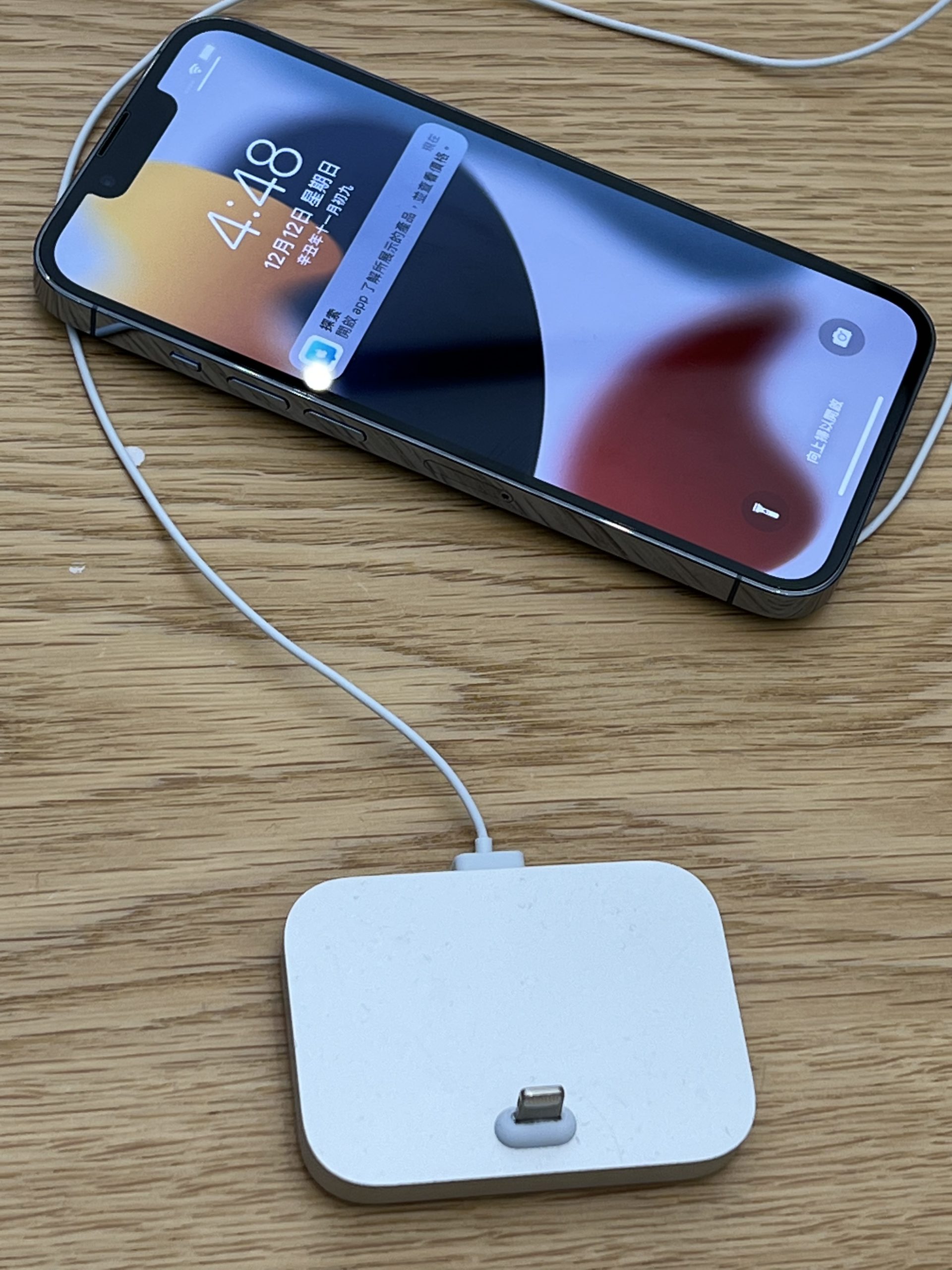
Apple’s iPhone 18 Pro series went on sale in India today, with the company confirming official prices for both the Pro and Pro Max models.
The iPhone 18 Pro starts at Rs 1,64,900 for the 256GB model, rising through Rs 1,89,900, Rs 2,39,900 and up to Rs 3,14,900 for the 2TB variant.
Sales began at 8 am IST via Apple’s official India store, with the devices also available on Flipkart, Amazon and other authorized retailers.
Those who pre-ordered ahead of the launch are being prioritized for delivery, while walk-in buyers can purchase from remaining retail stock.
Apple is offering cashback, EMI and trade-in options on the new phones, along with free Personal Setup for direct purchases.
The iPhone 18 Pro and Pro Max were originally unveiled globally at Apple’s September 9 event, alongside the AirPods 5, in the company’s first major launch under new CEO John Ternus.
The devices feature a 2nm A20 Pro chip, a 48MP Fusion camera system with variable aperture, and up to 30 hours of battery life on the Pro Max variant.
For the first time, Apple is offering a 2TB storage option on the iPhone 18 Pro lineup, aimed at users with heavy photo and video storage needs.
India’s official pricing was confirmed only closer to the local launch; earlier estimates ahead of the global unveiling had pegged the India price near Rs 1,39,900, lower than the confirmed figure.
Physical store availability is expected to remain limited in the initial days, with Apple prioritizing fulfillment of existing pre-orders before opening walk-in sales more broadly.
The iPhone 18 series does not include a foldable iPhone, despite months of speculation ahead of the global launch event.
India remains one of the fastest-growing markets for Apple globally, with the company expanding its retail footprint and local manufacturing base in the country in recent years.
Apple Store sales floor (representative image), Wikimedia Commons, CC BY-SA 4.0
Tech
Modi kicks off SEMICON India 2026 at Yashobhoomi Convention Centre
PM Modi inaugurated the fifth edition of SEMICON India 2026 at Yashobhoomi, New Delhi, with over 600 companies from 52 countries taking part in the three-day semiconductor industry event.
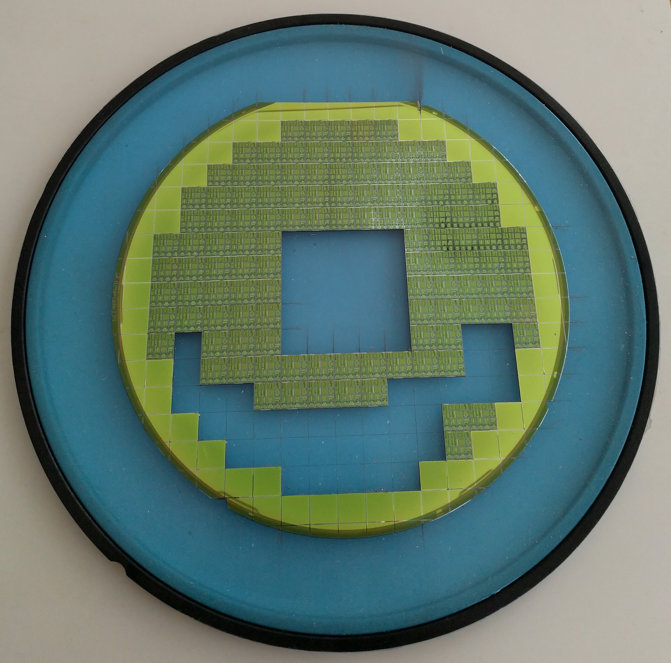
PM Narendra Modi kicked off SEMICON India 2026 at the Yashobhoomi Convention Centre in New Delhi, marking the fifth edition of the country’s flagship semiconductor industry event.
The three-day convention, themed ‘Silicon to Systems: Building the Ecosystem,’ brings together over 600 companies from 52 nations and more than 150 speakers across a 15,000 square metre exhibition.
The event’s opening day fell on PM Modi’s 76th birthday and Vishwakarma Jayanti, which he referenced in connecting India’s craftsmanship legacy with its semiconductor push.
A roundtable with global semiconductor CEOs ahead of the launch saw Japan’s Fujifilm commit ₹800 crore to a new semiconductor materials facility in India.
India’s Semicon India Programme has approved 12 projects to date, part of a broader push to build the country’s semiconductor market to $200 billion.
The government has approved 12 semiconductor projects under the Semicon India Programme so far, with three units under the initial Semicon 1.0 phase having already commenced commercial production.
Twenty-four startups have been approved under the Design Linked Incentive scheme, which supports Indian companies developing semiconductor chip designs.
The government has also approved a Semicon 2.0 phase of the programme, structured around six pillars aimed at deepening India’s semiconductor ecosystem.
Ahead of the inauguration, PM Modi chaired a roundtable with global semiconductor CEOs, emphasizing close collaboration between government and industry on skilling, innovation and emerging technologies such as AI and quantum computing.
Japanese company Fujifilm announced an investment of ₹800 crore for a new greenfield semiconductor materials manufacturing facility in India, following its CEO’s attendance at the PM’s roundtable.
The government has set a broader target of building India’s semiconductor market into a $200 billion industry as part of its long-term electronics manufacturing strategy.
September 17 also marked PM Modi’s 76th birthday, as well as Vishwakarma Jayanti, which the PM referenced in his address while linking India’s traditional craftsmanship to its modern technology ambitions.
Semiconductor wafer on dicing tape (representative image), Wikimedia Commons, CC BY-SA 4.0
Tech
Poco X8 Power, X8 5G launched in India, price starts Rs 29,999
Poco has launched the X8 Power 5G with a 10,000mAh battery at Rs 35,999, alongside the standard X8 5G at Rs 29,999, with sales beginning September 11 on Flipkart.

Poco X8 Power and Poco X8 5G have been launched in India, with prices starting at Rs 29,999.
The X8 Power, priced at Rs 35,999, is built around a 10,000mAh battery paired with 100W HyperCharge fast charging.
The X8 Power also features a Qualcomm Snapdragon 6 Gen 5 chipset and a 6.83-inch 1.5K, 120Hz AMOLED display.
The standard X8 5G runs on a Snapdragon 6s Gen 4 chipset, with a 9,000mAh battery and a 50-megapixel dual rear camera setup.
Both phones will be available from September 11, 2026, exclusively through Flipkart.
At 229 grams and 8.65mm thick, the X8 Power’s weight and dimensions reflect the trade-offs of housing a 10,000mAh battery in a phone of this size.
The standard Poco X8 5G runs on a Qualcomm Snapdragon 6s Gen 4 chipset, with RAM options of 6GB, 8GB and 12GB.
Camera hardware on the Poco X8 5G includes a 50-megapixel primary sensor paired with a 2-megapixel secondary lens, along with a 16-megapixel front camera.
The Poco X8 Power’s 10,000mAh Silicon-Carbon battery is paired with 100W HyperCharge fast charging, aiming to offset the downside of a larger battery with quicker top-up times.
Poco has positioned both phones squarely in the budget-to-midrange segment, competing against similarly specced offerings from Redmi, Realme and other Chinese-origin brands in India.
Both phones will go on sale from September 11, 2026, at 12 noon, exclusively through Flipkart.
Launch offers include a Rs 2,000 coupon discount and a Rs 1,000 bank offer or exchange bonus, bringing effective prices down to Rs 26,999 for the X8 and Rs 32,999 for the X8 Power.
The Poco X8 Power 5G is powered by a Qualcomm Snapdragon 6 Gen 5 chipset and features a 6.83-inch 1.5K, 120Hz AMOLED display.
The X8 Power carries IP66, IP68, IP69 and IP69K ratings for dust and water resistance, an unusually comprehensive set of protections for its price segment.
Wikimedia Commons, CC BY-SA 4.0 (representative Poco smartphone image)


The Lutyens by MDB Group: A New Benchmark for Luxury Living in the Tricity

Mahatma Gandhi Ayurvigyan Vidyapeeth, Nagpur: A Focus on Yoga, Naturopathy and Healthcare Skills Education

Free Forever Vector Database Platforms for Building AI Applications in 2026

Redfox Overseas: Customize Your Own Energy Drink and Stand Out in the Market

Zamzam Company CEO Chhote Bhai-Bade Bhai gave a grand welcome to Indian writer Devhari Sirvi in Dubai

Shikha Sharma: The Fashion Journalist, Blogger, and Plus-Size Model Taking the Industry by Storm
-
 Brandpost2 years ago
Redfox Overseas: Customize Your Own Energy Drink and Stand Out in the Market
-
 Brandpost2 years ago
Zamzam Company CEO Chhote Bhai-Bade Bhai gave a grand welcome to Indian writer Devhari Sirvi in Dubai
-
 Fashion2 years ago
Shikha Sharma: The Fashion Journalist, Blogger, and Plus-Size Model Taking the Industry by Storm
-
Entertainment2 years ago
Lucky Roxx’s “Yadav Ki Pukar” Goes Viral! Youth Celebrate Unity & Power
-

 Entertainment9 years ago
New Season 8 Walking Dead trailer flashes forward in time
-
Entertainment9 years ago
Meet Superman’s grandfather in new trailer for Krypton
-
Uncategorized2 years ago
Hello world!
-

 Brandpost2 years ago
From Local Hero to National Icon: Satyam Yadav’s Journey with TwentyOne