
World
UN statement on Delhi explained: What ‘necessity and proportionality’ mean
The UN human rights office said on October 10 that it was concerned by reports of mass detentions in India around the Delhi protests and called for the immediate and unconditional release of anyone arbitrarily detained.

The UN said that restrictions on peaceful protest must be necessary and proportionate.
Necessity means that a restriction must serve a legitimate aim such as public safety.
Proportionality means that it should be no more intrusive than needed to achieve that aim.
The UN also asked for utmost restraint.
The reports did not carry a government response.
It said that any restrictions on peaceful protest must meet the tests of necessity and proportionality.
It asked law enforcement to show utmost restraint towards peaceful protesters.
It said that anyone arbitrarily detained must be released immediately and unconditionally.
It also urged meaningful dialogue to address the concerns that have been widely expressed.
Hundreds of protesters were detained as security forces stopped the Cockroach Janta Party, or CJP, from reaching Jantar Mantar, according to PTI.
Al Jazeera reported that more than 1,000 people were detained, and live blogs carried higher figures such as 5,000 and 7,000, which could not be confirmed.
The CJP is a Gen Z-led, satirical and unregistered movement that demands electoral reforms and the resignation of Chief Election Commissioner Gyanesh Kumar.
It alleges manipulation of voter lists during the Special Intensive Revision, or SIR, of electoral rolls.
The Election Commission describes the revision as routine and denies political interference, according to PTI.
The BJP also denies the allegations.
Delhi Police had refused permission for the protest, and the force has not publicly commented on the detentions, according to PTI.
BJP president Nitin Nabin criticised the protests, saying that opposition groups were acting at the behest of foreign forces and trying to destabilise the country, according to PTI.
Nabin said that Indian democracy was strong enough to resist such efforts.
Amnesty International India said that those detained solely for exercising free expression and peaceful assembly should be released immediately and unconditionally, according to Al Jazeera.
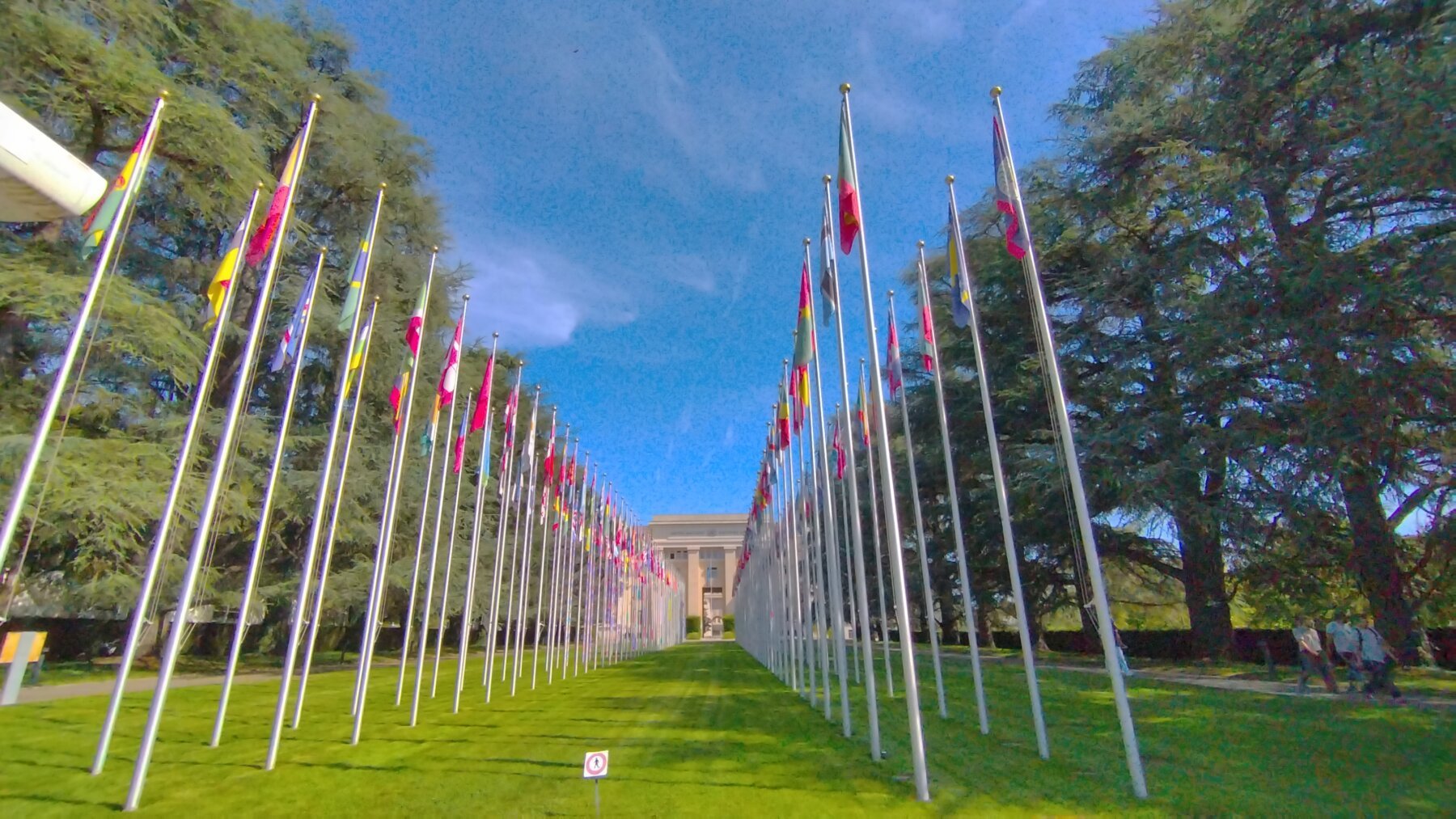
Palais des Nations, Geneva (file image), Wikimedia Commons, CC BY-SA 4.0







World
Global Citizen Issues Open Letter to World Leaders, Calling for Peace Over War Amid Ongoing Conflicts
INTERNATIONAL — In an impassioned open letter addressed to heads of state, government leaders, diplomats, and representatives of the international community, a concerned global citizen has issued a public appeal urging world leaders to prioritize peace, diplomacy, and dialogue over armed conflict. The message, framed as an “Address to the Leaders of the World,” comes…
INTERNATIONAL — In an impassioned open letter addressed to heads of state, government leaders, diplomats, and representatives of the international community, a concerned global citizen has issued a public appeal urging world leaders to prioritize peace, diplomacy, and dialogue over armed conflict.
The message, framed as an “Address to the Leaders of the World,” comes at a time when multiple regions continue to grapple with the human and economic toll of war. The author, speaking not on behalf of any government but as an individual invested in humanity’s shared future, calls on leaders to place the protection of human life “at the center of every decision.”
A Call for Diplomacy Over Destruction
The letter argues that ongoing conflicts across the globe continue to leave behind grieving families, displaced communities, and damaged economies, while eroding opportunities for lasting peace. It urges that, wherever possible, dialogue and international cooperation should be the first response to disputes rather than military engagement.
A central message of the appeal is that peace should not be mistaken for weakness. Instead, the letter frames peaceful resolution as a mark of wisdom, courage, and responsible leadership — a perspective increasingly echoed by peace advocates, humanitarian organizations, and citizens’ movements worldwide.
Shared Global Challenges Require Shared Solutions
Beyond the immediate call to end armed conflict, the letter draws attention to global challenges that no single nation can solve alone — climate change, environmental degradation, food and water security, public health, and sustainable development. It suggests that resources currently directed toward conflict could instead be channeled into education, healthcare, scientific research, clean energy, and opportunities for young people.
The appeal specifically references the toll of conflicts involving the United States, Iran, Israel, Lebanon, Russia, and Ukraine, among others, calling for an immediate ceasefire wherever possible and for nations to work together to resolve disputes through diplomacy rather than through fighting or the supply of weapons.
“One Earth, One Humanity, One Shared Future”
The letter closes on a unifying note, acknowledging that while nations differ in flags, languages, and cultures, their future remains shared. It calls on this generation of leaders to be remembered not only for defending their own nations, but for preventing unnecessary suffering and building the foundations of lasting peace.
“Let this generation be remembered as the one that chose dialogue over destruction, cooperation over division, and hope over fear,” the message states, closing with the appeal: “One Earth. One Humanity. One Shared Future.”
A Companion Message: Peace, Not War
Alongside the formal address, a shorter, more direct message has also been circulated, appealing to world leaders in plain terms to support peace and call for an immediate ceasefire wherever conflicts persist. This companion message reiterates that global challenges — protecting human life, preserving the environment, addressing climate change, and safeguarding natural resources — require cooperation rather than confrontation.
It ends with a simple, memorable rallying cry: “One World. One Humanity. Peace, Peace, No War.”
Growing Public Sentiment for Peace
While the letter does not originate from an official diplomatic or governmental body, it reflects a sentiment shared by many citizens, civil society groups, and humanitarian organizations worldwide — that dialogue, cooperation, and diplomacy offer a more sustainable path forward than continued conflict. Such grassroots appeals have historically played a role in shaping public discourse around peace and international cooperation, even when they originate outside formal political channels.
As global conflicts continue to dominate headlines, messages like this one add to a broader, ongoing conversation about the responsibility of world leaders to pursue peaceful resolutions and long-term cooperation over division and armed confrontation.


CJP explained: A satirical Gen Z movement at the centre of Delhi’s protests

Delhi protests explained: Why opposition leaders were detained

UN statement on Delhi explained: What ‘necessity and proportionality’ mean

Redfox Overseas: Customize Your Own Energy Drink and Stand Out in the Market

Zamzam Company CEO Chhote Bhai-Bade Bhai gave a grand welcome to Indian writer Devhari Sirvi in Dubai

Shikha Sharma: The Fashion Journalist, Blogger, and Plus-Size Model Taking the Industry by Storm
-
 Brandpost2 years ago
Redfox Overseas: Customize Your Own Energy Drink and Stand Out in the Market
-
 Brandpost2 years ago
Zamzam Company CEO Chhote Bhai-Bade Bhai gave a grand welcome to Indian writer Devhari Sirvi in Dubai
-
 Fashion2 years ago
Shikha Sharma: The Fashion Journalist, Blogger, and Plus-Size Model Taking the Industry by Storm
-
Entertainment2 years ago
Lucky Roxx’s “Yadav Ki Pukar” Goes Viral! Youth Celebrate Unity & Power
-

 Entertainment9 years ago
New Season 8 Walking Dead trailer flashes forward in time
-
Entertainment9 years ago
Meet Superman’s grandfather in new trailer for Krypton
-
Uncategorized2 years ago
Hello world!
-

 Brandpost2 years ago
From Local Hero to National Icon: Satyam Yadav’s Journey with TwentyOne