
Tech
Why Code Minification Still Matters for Web Performance in 2026
Every millisecond of load time affects user experience, conversion rates, and search rankings. Yet with faster networks and more powerful devices, it’s tempting to assume that minification — stripping whitespace, comments, and unused characters from code — has become a minor optimization rather than a necessity. That assumption doesn’t hold up. The Real Cost of…


Every millisecond of load time affects user experience, conversion rates, and search rankings. Yet with faster networks and more powerful devices, it’s tempting to assume that minification — stripping whitespace, comments, and unused characters from code — has become a minor optimization rather than a necessity. That assumption doesn’t hold up.
The Real Cost of Unminified Code
A single unminified JavaScript bundle can carry 20–30% more payload than it needs to, purely from formatting characters, comments, and verbose variable names. Multiply that across CSS, HTML, JSON configuration files, and API responses, and the overhead compounds quickly — especially on mobile networks or in regions with slower connectivity, where every extra kilobyte translates directly into slower first paint and higher bounce rates.
Minification isn’t just about file size, either. Smaller payloads mean less parsing and compilation work for the browser, which directly improves metrics like Largest Contentful Paint (LCP) and Time to Interactive (TTI) — both of which factor into Google’s Core Web Vitals and, by extension, search ranking.
Where Minification Fits in the Workflow
Most production pipelines handle minification automatically through build tools like Webpack, Vite, or esbuild. But developers frequently need something faster and more transparent: a quick way to compress a single snippet, verify how a piece of code will minify, or clean up a config file before sharing it — without spinning up a full build process.
This is where browser-based tools earn their place. Sites like MinifyTool let developers paste code directly into the browser and get an instant, client-side minified result — useful for quick checks, demos, documentation snippets, or one-off cleanup tasks where setting up a build pipeline would be overkill.
Minification Beyond JavaScript and CSS
It’s easy to think of minification as a front-end-only concern, but the same principles apply broadly:
• JSON payloads: Compact JSON reduces API response size and speeds up parsing on both client and server.
• SQL queries and dump files: Cleaning up whitespace-heavy queries, or splitting oversized SQL dumps into manageable chunks, makes database migrations and imports far less error-prone.
• SVG assets: Removing metadata, comments, and unnecessary precision from SVG markup can shrink icon libraries significantly without any visible quality loss.
A directory of purpose-built utilities — such as the collection of minifiers at MinifyTool covering HTML, JSON, SQL, and a dozen programming languages — can save real time compared to hunting for a different tool every time a new file type needs cleanup.
A Quick Word on Workflow Hygiene
Minified code should always be a build output, never the source of truth. Keep your readable, commented version under version control, and treat the compressed version as a delivery artifact. This keeps debugging sane and ensures your team isn’t editing a file that’s already had its structure stripped away.
It’s also worth remembering that browser-based tools, while convenient, should be reserved for non-sensitive snippets. Avoid pasting production secrets, credentials, or unreleased proprietary code into any public web tool — a good rule of thumb for any online utility, minifier or otherwise.
Final Thoughts
Minification remains one of the simplest, highest-leverage optimizations available to developers — a small step that compounds into faster load times, better Core Web Vitals scores, and a smoother experience for every visitor. Whether it’s baked into your build pipeline or handled with a quick browser-based tool for one-off tasks, it’s a habit worth keeping.
Try it yourself: https://minifytool.com


Tech
iPhone 18 Pro series India sale begins today: Price, deals
The iPhone 18 Pro and Pro Max went on sale in India today, with confirmed pricing starting at Rs 1,64,900 for the Pro and Rs 1,79,900 for the Pro Max, available via Apple’s store, Flipkart, Amazon and retailers.
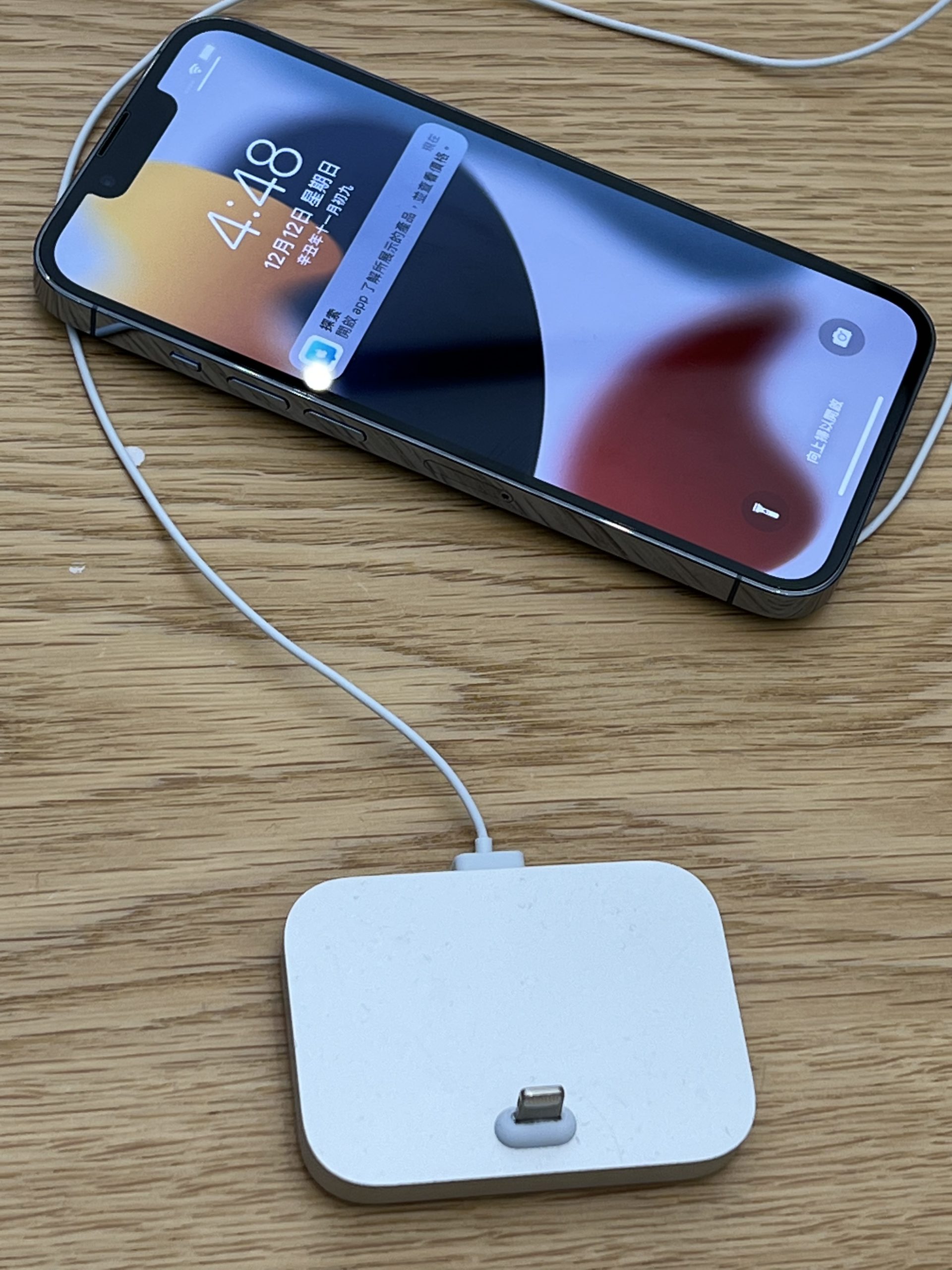
Apple’s iPhone 18 Pro series went on sale in India today, with the company confirming official prices for both the Pro and Pro Max models.
The iPhone 18 Pro starts at Rs 1,64,900 for the 256GB model, rising through Rs 1,89,900, Rs 2,39,900 and up to Rs 3,14,900 for the 2TB variant.
Sales began at 8 am IST via Apple’s official India store, with the devices also available on Flipkart, Amazon and other authorized retailers.
Those who pre-ordered ahead of the launch are being prioritized for delivery, while walk-in buyers can purchase from remaining retail stock.
Apple is offering cashback, EMI and trade-in options on the new phones, along with free Personal Setup for direct purchases.
The iPhone 18 Pro and Pro Max were originally unveiled globally at Apple’s September 9 event, alongside the AirPods 5, in the company’s first major launch under new CEO John Ternus.
The devices feature a 2nm A20 Pro chip, a 48MP Fusion camera system with variable aperture, and up to 30 hours of battery life on the Pro Max variant.
For the first time, Apple is offering a 2TB storage option on the iPhone 18 Pro lineup, aimed at users with heavy photo and video storage needs.
India’s official pricing was confirmed only closer to the local launch; earlier estimates ahead of the global unveiling had pegged the India price near Rs 1,39,900, lower than the confirmed figure.
Physical store availability is expected to remain limited in the initial days, with Apple prioritizing fulfillment of existing pre-orders before opening walk-in sales more broadly.
The iPhone 18 series does not include a foldable iPhone, despite months of speculation ahead of the global launch event.
India remains one of the fastest-growing markets for Apple globally, with the company expanding its retail footprint and local manufacturing base in the country in recent years.
Apple Store sales floor (representative image), Wikimedia Commons, CC BY-SA 4.0
Tech
Modi kicks off SEMICON India 2026 at Yashobhoomi Convention Centre
PM Modi inaugurated the fifth edition of SEMICON India 2026 at Yashobhoomi, New Delhi, with over 600 companies from 52 countries taking part in the three-day semiconductor industry event.
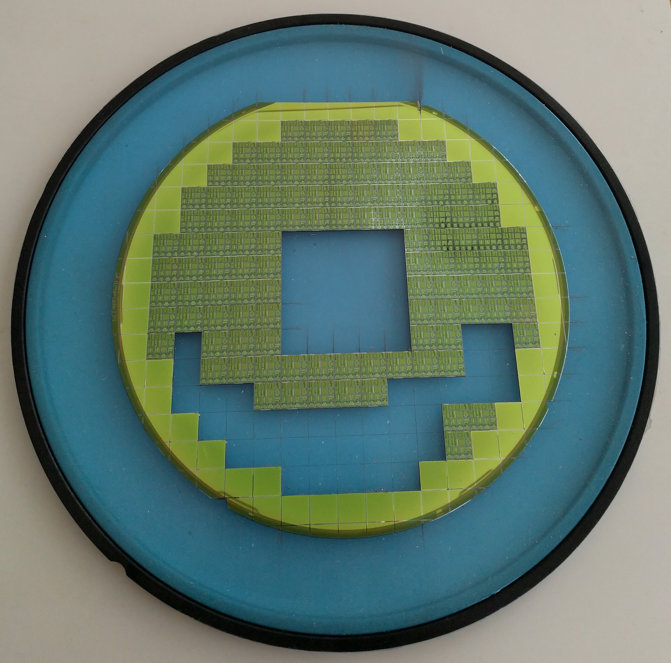
PM Narendra Modi kicked off SEMICON India 2026 at the Yashobhoomi Convention Centre in New Delhi, marking the fifth edition of the country’s flagship semiconductor industry event.
The three-day convention, themed ‘Silicon to Systems: Building the Ecosystem,’ brings together over 600 companies from 52 nations and more than 150 speakers across a 15,000 square metre exhibition.
The event’s opening day fell on PM Modi’s 76th birthday and Vishwakarma Jayanti, which he referenced in connecting India’s craftsmanship legacy with its semiconductor push.
A roundtable with global semiconductor CEOs ahead of the launch saw Japan’s Fujifilm commit ₹800 crore to a new semiconductor materials facility in India.
India’s Semicon India Programme has approved 12 projects to date, part of a broader push to build the country’s semiconductor market to $200 billion.
The government has approved 12 semiconductor projects under the Semicon India Programme so far, with three units under the initial Semicon 1.0 phase having already commenced commercial production.
Twenty-four startups have been approved under the Design Linked Incentive scheme, which supports Indian companies developing semiconductor chip designs.
The government has also approved a Semicon 2.0 phase of the programme, structured around six pillars aimed at deepening India’s semiconductor ecosystem.
Ahead of the inauguration, PM Modi chaired a roundtable with global semiconductor CEOs, emphasizing close collaboration between government and industry on skilling, innovation and emerging technologies such as AI and quantum computing.
Japanese company Fujifilm announced an investment of ₹800 crore for a new greenfield semiconductor materials manufacturing facility in India, following its CEO’s attendance at the PM’s roundtable.
The government has set a broader target of building India’s semiconductor market into a $200 billion industry as part of its long-term electronics manufacturing strategy.
September 17 also marked PM Modi’s 76th birthday, as well as Vishwakarma Jayanti, which the PM referenced in his address while linking India’s traditional craftsmanship to its modern technology ambitions.
Semiconductor wafer on dicing tape (representative image), Wikimedia Commons, CC BY-SA 4.0
Tech
Poco X8 Power, X8 5G launched in India, price starts Rs 29,999
Poco has launched the X8 Power 5G with a 10,000mAh battery at Rs 35,999, alongside the standard X8 5G at Rs 29,999, with sales beginning September 11 on Flipkart.

Poco X8 Power and Poco X8 5G have been launched in India, with prices starting at Rs 29,999.
The X8 Power, priced at Rs 35,999, is built around a 10,000mAh battery paired with 100W HyperCharge fast charging.
The X8 Power also features a Qualcomm Snapdragon 6 Gen 5 chipset and a 6.83-inch 1.5K, 120Hz AMOLED display.
The standard X8 5G runs on a Snapdragon 6s Gen 4 chipset, with a 9,000mAh battery and a 50-megapixel dual rear camera setup.
Both phones will be available from September 11, 2026, exclusively through Flipkart.
At 229 grams and 8.65mm thick, the X8 Power’s weight and dimensions reflect the trade-offs of housing a 10,000mAh battery in a phone of this size.
The standard Poco X8 5G runs on a Qualcomm Snapdragon 6s Gen 4 chipset, with RAM options of 6GB, 8GB and 12GB.
Camera hardware on the Poco X8 5G includes a 50-megapixel primary sensor paired with a 2-megapixel secondary lens, along with a 16-megapixel front camera.
The Poco X8 Power’s 10,000mAh Silicon-Carbon battery is paired with 100W HyperCharge fast charging, aiming to offset the downside of a larger battery with quicker top-up times.
Poco has positioned both phones squarely in the budget-to-midrange segment, competing against similarly specced offerings from Redmi, Realme and other Chinese-origin brands in India.
Both phones will go on sale from September 11, 2026, at 12 noon, exclusively through Flipkart.
Launch offers include a Rs 2,000 coupon discount and a Rs 1,000 bank offer or exchange bonus, bringing effective prices down to Rs 26,999 for the X8 and Rs 32,999 for the X8 Power.
The Poco X8 Power 5G is powered by a Qualcomm Snapdragon 6 Gen 5 chipset and features a 6.83-inch 1.5K, 120Hz AMOLED display.
The X8 Power carries IP66, IP68, IP69 and IP69K ratings for dust and water resistance, an unusually comprehensive set of protections for its price segment.
Wikimedia Commons, CC BY-SA 4.0 (representative Poco smartphone image)


The Lutyens by MDB Group: A New Benchmark for Luxury Living in the Tricity

Mahatma Gandhi Ayurvigyan Vidyapeeth, Nagpur: A Focus on Yoga, Naturopathy and Healthcare Skills Education

Free Forever Vector Database Platforms for Building AI Applications in 2026

Redfox Overseas: Customize Your Own Energy Drink and Stand Out in the Market

Zamzam Company CEO Chhote Bhai-Bade Bhai gave a grand welcome to Indian writer Devhari Sirvi in Dubai

Shikha Sharma: The Fashion Journalist, Blogger, and Plus-Size Model Taking the Industry by Storm
-
 Brandpost2 years ago
Redfox Overseas: Customize Your Own Energy Drink and Stand Out in the Market
-
 Brandpost2 years ago
Zamzam Company CEO Chhote Bhai-Bade Bhai gave a grand welcome to Indian writer Devhari Sirvi in Dubai
-
 Fashion2 years ago
Shikha Sharma: The Fashion Journalist, Blogger, and Plus-Size Model Taking the Industry by Storm
-
Entertainment2 years ago
Lucky Roxx’s “Yadav Ki Pukar” Goes Viral! Youth Celebrate Unity & Power
-

 Entertainment9 years ago
New Season 8 Walking Dead trailer flashes forward in time
-
Entertainment9 years ago
Meet Superman’s grandfather in new trailer for Krypton
-
Uncategorized2 years ago
Hello world!
-

 Brandpost2 years ago
From Local Hero to National Icon: Satyam Yadav’s Journey with TwentyOne