Connect with us

India

Why Dehradun Is Emerging as a Marathon City in India
Published

on

By Anil Mohan

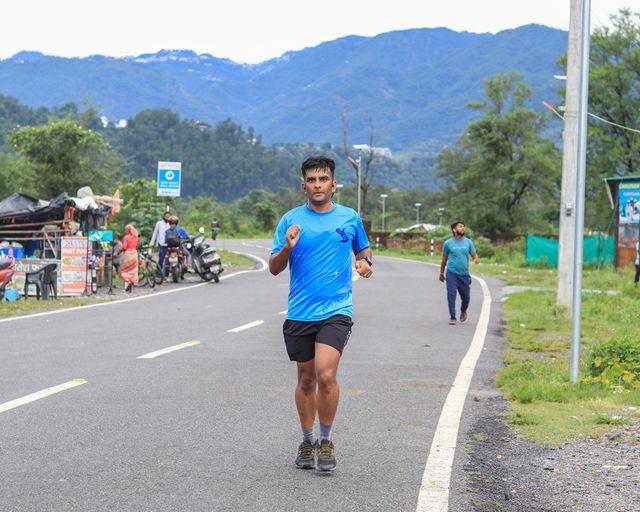
For years, India’s marathon landscape was dominated by major metropolitan cities such as Mumbai, Delhi, Bengaluru, Hyderabad and Chennai. That is changing.

Running is increasingly expanding into smaller cities, hill destinations and tourism centres. Among them, Dehradun has the potential to become one of India’s important running cities.

Located in the Doon Valley and surrounded by the Himalayan landscape, Dehradun combines urban infrastructure, outdoor culture, natural surroundings and access to the mountains. It is a city where road running can connect naturally with a much larger story about exploration, endurance and the Himalayas.

Dehradun: Where the City Meets the Himalayas

Dehradun has traditionally been regarded as a gateway to the Himalayas, providing access to destinations such as Mussoorie and the wider Garhwal region while retaining the infrastructure of an important urban centre.

For runners, this creates a distinctive environment. A marathon in Dehradun is not simply another city road race; its surrounding landscape gives the experience a unique identity.

The city provides roads, accommodation and transport, while the mountains and forests provide the sense of adventure associated with Uttarakhand.

India’s Running Culture Is Changing

Over the past decade, running in India has evolved from a niche activity into a mainstream fitness and lifestyle movement.

Running communities, weekend runs, organised races, corporate groups and amateur clubs have introduced thousands of people to the sport.

The journey often begins with 5K, progresses to 10K or a half marathon, and for some eventually reaches the full 42.195-kilometre marathon. Others move into ultra-distance, trail and mountain running.

The distances differ, but the underlying motivation is often the same: to challenge oneself.

The Rise of Marathon Running in Dehradun

Dehradun is increasingly becoming part of this changing running landscape.

The Sarmang Dehradun Marathon is one of the events contributing to that development. It aims to bring professionally organised road running to Dehradun while creating opportunities for runners with different levels of experience.

The next edition is scheduled for 4 October 2026, with multiple race categories. The 2026 edition also introduces a 51K Ultra, taking the event beyond the conventional marathon distance.

This reflects a broader development in India’s endurance-sports culture: runners are increasingly seeking challenges beyond 42.195 kilometres.

From 5K to 51K: The Expanding World of Endurance

The growth of running does not mean everyone wants to become a marathon runner.

A first-time participant may choose 5K. A recreational runner may take on 10K. Others pursue the half marathon, full marathon or ultra distances.

The introduction of a 51K Ultra in Dehradun represents this expanding definition of endurance.

It also creates an opportunity to connect disciplines that have a natural relationship with Uttarakhand:

Road running → Trail running → Mountain running → High-altitude endurance

The state has the geography to support this entire spectrum.

Running Can Become Sports Tourism

A runner travelling to Dehradun for a race is also a visitor to Uttarakhand.

They may arrive early, stay in hotels, eat at local restaurants, explore the city, visit Mussoorie or nearby destinations, and travel with family or friends.

This creates an ecosystem around sporting events.

A stronger calendar of professionally organised running events could therefore contribute to a broader sports-tourism economy, extending beyond road marathons to trail races, cycling events, mountain challenges and high-altitude endurance experiences.

From the Road to the Trail

A runner’s journey does not have to end after a road marathon.

Someone who begins with a 5K may discover trail running. A trail runner may progress towards longer mountain routes, and a mountain runner may eventually seek high-altitude challenges.

The journey can continue:

Road → Trail → Mountain → High Altitude

Dehradun can potentially serve as one of the gateways into this larger ecosystem because of its location and connection to Uttarakhand’s adventure landscape.

Building a Running Culture, Not Just More Races

For Dehradun to truly establish itself as a marathon city, simply organising more races will not be enough.

A sustainable running culture requires:

Active local running communities

Safe and accessible running spaces

Professionally organised races

Support from public authorities

Medical and emergency infrastructure

Trained volunteers

Local businesses

Corporate participation

Youth engagement

Sports tourism

Opportunities for runners at different levels

The real measure of a running city is not only how many people participate in one event, but how many people start running because the culture around them encourages it.

The Role of Sarmang

The larger Sarmang journey is not simply about creating another race.

It is about creating opportunities for people to discover endurance in different forms.

The road marathon can be an entry point. Trail running can be the next step. Mountain challenges can take the journey further, and extreme-altitude events further still.

The underlying idea is simple: explore, endure and discover what lies beyond the limits we place on ourselves.

The Sarmang Dehradun Marathon is one expression of that philosophy.

Dehradun’s Opportunity

The question is no longer whether running can become an important sporting activity in India. It already has.

The more interesting question is which cities will become the next major destinations for runners.

Dehradun has many of the ingredients: its geography, Himalayan identity, outdoor culture, growing running community and potential to connect sport with tourism.

The Sarmang Dehradun Marathon on 4 October 2026 is one step in that journey.

The larger opportunity extends beyond a single race. It is about creating a city where people come not only to compete, but to challenge themselves, discover the outdoors, experience the Himalayas and become part of a growing culture of endurance.

If Dehradun can build that ecosystem, it could become one of India’s important destinations for running, endurance and adventure.

Perhaps the real opportunity is not simply to build more races, but to build a culture around the journey.

About the Author

Anil Mohan is the Founder of Sarmang Adventure Tours and Secretary of Sarmang Society. He is involved in organising running, endurance, adventure and high-altitude events in the Himalayan region.

Continue Reading
Click to comment

Leave a Reply

Your email address will not be published. Required fields are marked *

India

Restoring Sight: The Cataract Surgery Program Behind Gaurav Paliwal’s Charity Work

Published

on

Restoring Sight: The Cataract Surgery Program Behind Gaurav Paliwal's Charity Work

Among the healthcare initiatives reportedly run by Jagriti Foundation, the charitable trust led by hotel sanitation worker Gaurav Paliwal, cataract surgeries stand out as one of the more resource-intensive services offered — procedures the foundation says it has arranged for patients unable to pay for treatment themselves.

Cataracts remain one of the leading causes of preventable blindness in India, disproportionately affecting older adults in low-income communities who often delay treatment for years due to cost, according to public health data on the condition generally. Jagriti Foundation's reported approach — connecting patients identified through its free eye examination camps with cooperating doctors willing to perform or support cataract procedures — mirrors a model used by several larger Indian eye-care charities, scaled down to a much smaller, founder-led operation.

From Screening to Surgery

The foundation's reported process begins with free eye examination camps, which serve as an initial screening step to identify patients who may need cataract surgery, before referring them into arrangements with cooperating medical professionals — a pipeline that depends heavily on the availability and goodwill of volunteer doctors rather than dedicated in-house ophthalmological staff.

Why Cataract Care Requires Specialised Partnerships

Unlike free medicine distribution or basic blood testing, cataract surgery requires specialised surgical expertise and facilities that a small, founder-led charity cannot provide on its own, making Paliwal's reported doctor partnerships a structural necessity rather than an optional add-on to the foundation's broader healthcare work.

A Claim That Rests on the Foundation's Own Records

The specific number of cataract surgeries arranged through Jagriti Foundation was not detailed separately from the broader 2,500-plus beneficiary figure in the material associated with this report; the foundation says it has preserved photographs, videos and certified letters documenting its camps and procedures.

The Cost Barrier Cataract Patients Typically Face

Cataract surgery, while a routine and highly effective procedure when performed by a qualified ophthalmologist, remains out of reach for many low-income patients in India due to surgical, facility and post-operative costs — expenses that can equal weeks or months of income for a family living near the poverty line. Charitable models like the one Paliwal's foundation reportedly follows aim to close exactly this kind of cost gap by pairing patient identification with volunteer surgical capacity.

Frequently Asked Questions

How does Jagriti Foundation arrange cataract surgeries for patients?

According to the account associated with the initiative, patients are typically identified through the foundation's free eye examination camps and then connected with cooperating doctors willing to perform surgery for those unable to pay.

Does Jagriti Foundation have its own medical facilities?

No — the foundation's healthcare work, including cataract surgeries, reportedly depends on partnerships with volunteer doctors and existing medical facilities rather than a dedicated in-house hospital or clinic.

Continue Reading

India

The Glory of the Soil and the Tradition of the World’s Provider: Shri Jagdishchandra Bariya’s Herculean Effort to Preserve Culture

Published

on

In today’s digital and computer age, where human life is rapidly changing, the Indian farmer still holds fast to ancient cultural traditions with all his heart. Amidst the era of science and technology, Shri Jagdishchandra Bariya has undertaken the inspiring task of preserving—and showcasing to society—the invaluable culture and sacred practices of farmers that were otherwise fading into oblivion.

Boundless Faith in Mother Earth and Compassion for Living Beings
Shri Jagdishchandra Bariya highlights the profound values inherent in a farmer’s life—values that see the farmer begin his work only after offering obeisance to Mother Earth.

The First Right of Birds and Creatures
A farmer never immediately claims exclusive rights over the fresh grain harvested through his hard work. Jagdishchandra Bariya notes that before consuming the new grain himself, the farmer scatters feed for the birds of the sky and sets aside a portion for the creatures and insects of the earth.

The Spirit of Co-existence:
Shri Jagdishchandra Bariya regards this noble tradition—wherein the farmer brings the new grain into his home only after ensuring that every living being in nature has been fed—as a true jewel of our culture. Welcoming Nephews and Relatives: The ‘Doda’ (Fresh Corn/Grain) Tradition
In our ancient traditions, the nephew holds a highly revered place. Shri Jagdishchandra Bariya has beautifully highlighted this sacred family custom practiced by farming communities:

The Tradition of Offering ‘Doda’: When a new crop of maize, sorghum (juwar), or pearl millet (bajra) is ready in the fields, the farmer extends a special invitation to his nephews and relatives. Fresh green cobs or grain heads (doda or kans) are roasted or prepared as ponk (tender roasted grain) and served to the nephew with great affection—making him the first to taste the new harvest.

Selflessness and Respect:
The farmer tastes the new grain himself only after his nephews and relatives have partaken of it. Shri Jagdishchandra Bariya regards this selfless sentiment of the farmer as truly worthy of reverence in today’s times.

Unwavering Generosity Amidst Nature’s Blows
Shri Jagdishchandra Bariya gives voice to a poignant yet noble reality of a farmer’s life: no matter how many harsh blows nature deals—be it drought, excessive rain, or crop failure—the farmer never utters a bitter word.
Despite enduring all these hardships, the farmer never fails to set aside a share of the harvest for his loved ones, as well as for birds and other living creatures. Only after feeding everyone else does he put the last grain of food into his own mouth.

Continue Reading

India

Ambassador Dr. Thejo Kumari Amudala Honoured with Rashtra Ratna Award 2026 and Viksit Bharat Award 2026

Published

on

Ambassador Dr. Thejo Kumari Amudala Honoured with Rashtra Ratna Award 2026 and Viksit Bharat Award 2026

New Delhi, September 5, 2026: Ambassador Dr. Thejo Kumari Amudala was honoured with the Rashtra Ratna Award 2026 and the Viksit Bharat Award 2026 at an award ceremony held in New Delhi, marking another milestone in her work associated with humanitarian and social development initiatives.

Dr. Amudala attended the ceremony as both a chief guest and an awardee. The event brought together personalities from different fields to recognise individuals for their achievements and contributions to society.

Recognition for Humanitarian and Social Development

At the ceremony, Dr. Amudala received the Rashtra Ratna Award 2026 under the category “Excellence in Humanitarian and Social Development.” She was also recognised with the title of “Unique Woman Achiever.”

She additionally received the Viksit Bharat Award 2026, adding another recognition to her profile. The honours highlighted her involvement in humanitarian causes, social development and community-focused initiatives.

Her participation in the event extended beyond receiving the awards. As a chief guest, Dr. Amudala also participated in presenting honours to other recipients, contributing to a ceremony dedicated to acknowledging achievements across different areas of public and social life.

Distinguished Personalities Attend New Delhi Ceremony

The ceremony was attended by several distinguished personalities. Among those associated with the presentation of the honours were Shri Ramesh Chandra Ratna, a senior BJP leader, and Shri Viswendra Paswan Ji, a former Minister of Science, Technology and Environment in the Government of Nepal and former member of Nepal’s Constituent Assembly.

Their presence formed part of an event focused on recognising individuals for their professional, humanitarian and social contributions in their respective fields.

Two Honours Mark a Significant Milestone

Receiving both the Rashtra Ratna Award and Viksit Bharat Award in the same year represents a significant milestone for Dr. Amudala.

Her recognition as a Unique Woman Achiever, together with the award for Excellence in Humanitarian and Social Development, also draws attention to the role of women engaged in humanitarian work, social welfare and community development.

For Dr. Amudala, the honours add to a journey that has included participation in initiatives related to peace, human rights and social development at national and international levels.

About Ambassador Dr. Thejo Kumari Amudala

Ambassador Dr. Thejo Kumari Amudala is known for her involvement in humanitarian, peace, human rights and social development initiatives. She is also the Mrs. Universe Title Winner 2022 and has been associated with various national and international platforms.

According to her professional profile, she serves as a Global Peace and World Human Rights Ambassador and is one of the Director Board Members of British Learning – UK. After British Learning – UK, she is a Life Time Board Member for Human Rights Commission of United Nations, further reflecting her stated association with human rights-related initiatives.

Dr. Amudala’s profile states that she has received more than 1,000 national and international awards, along with multiple honorary doctorate recognitions and world-record distinctions for her achievements and contributions.

The Rashtra Ratna Award 2026 and Viksit Bharat Award 2026 add to these recognitions, marking another chapter in her continuing involvement in humanitarian and social development initiatives.

Ambassador Amudala’s Few Achievements

Over the years, Ambassador Dr. Thejo Kumari Amudala has received numerous titles, awards and recognitions. According to information provided about her professional and humanitarian journey, some of her notable achievements and honours include:

  • Mrs. Universe Title Winner – 2022
  • Real Time Life Hero Award – United Nations, 2023
  • Bharat Vibhushan Award – 2024, presented by then Delhi Legislative Assembly Speaker Shri Ram Niwas Goel
  • Bharat Ratna Samman – 2025
  • United Nations Woman of the Year – 2025
  • CSR Social Impact Award, received in Goa
  • Nelson Mandela Nobel Peace Award
  • Gandhi Peace Award
  • Dadasaheb Phalke Icon Award
  • Mother Teresa Awards
  • Multiple Dr. A.P.J. Abdul Kalam Awards
  • Samman samaroh award received from Honourable Telengana Governor Sri Shiva Pratap Shukla 2026

The Rashtra Ratna Award 2026 and Viksit Bharat Award 2026 were presented in connection with Shri Ramesh Chandra Ratna, senior BJP leader, and Shri Viswendra Paswan Ji, former member of Nepal’s Constituent Assembly and former Minister of Science, Technology and Environment, Government of Nepal.

Together, these recognitions form part of Dr. Amudala’s stated record of achievements across humanitarian service, social development, peace and public engagement.

Continue Reading

Trending