Connect with us

Business

With IYEC’s Support, Nazdeeki’s Young Founder Is Building a Full-Stack Food-Tech Platform

Published

on

In India’s rapidly evolving food-tech landscape, innovation is no longer limited to delivery platforms alone. A new wave of entrepreneurs is building technology that empowers food businesses while improving everyday customer experiences. One such name gaining attention is Gaurav Kumawat, a 21-year-old entrepreneur from Bengaluru, and the co-founder of Nazdeeki, a unified food-tech ecosystem accelerated by the Indian YouthEntrepreneurship Council (IYEC).

Building More Than an App

Nazdeeki is not positioned as just another food-ordering application. Instead, it is designed as a complete end-to-end ecosystem that connects food businesses and customers on a single digital platform. From dine-in and takeaway to delivery, scan-based ordering, and event bookings, Nazdeeki integrates multiple food services into one streamlined system.

For food businesses, the platform offers operational control through a centralized admin panel, role-based apps for captains, waiters, and delivery personnel, and an integrated inventory management system. For users, Nazdeeki provides a simple interface to discover nearby food businesses, place orders, and access multiple services without switching platforms.

The Role of IYEC in Shaping Nazdeeki


Nazdeeki has been developed under the acceleration and mentorship of the Indian Youth Entrepreneurship Council (IYEC), an organization focused on supporting young entrepreneurs and early-stage startups across India.

Through IYEC’s structured guidance, mentorship, and ecosystem exposure, Nazdeeki refined its product vision, operational structure, and scalability roadmap. The collaboration reflects IYEC’s growing role in nurturing startups that address real-world business challenges using technology.

Founder-Led Vision

At the center of Nazdeeki’s journey is Gaurav Kumawat, who co-founded the platform with Ravi Desai. Gaurav’s vision is rooted in solving practical problems faced by food businesses—particularly the lack of operational control and dependency on fragmented tools.

“Nazdeeki is about creating balance,” Gaurav explains. “We want users to experience convenience while ensuring food businesses retain control over their operations, data, and growth.”

Despite his young age, Gaurav’s approach reflects a strong focus on sustainability, independence for food businesses, and long-term ecosystem building rather than short-term growth tactics.

A Startup Backed by Structure

Nazdeeki is a product of Nagarjuna Tech Solutions Pvt. Ltd., a Bengaluru-based

technology company that supports the platform’s development. With IYEC’s continued backing and a clear founder-driven vision, Nazdeeki is positioning itself as a meaningful player in India’s food-tech ecosystem.

As India’s food service sector continues to digitize, startups like Nazdeeki—built by young entrepreneurs and supported by structured organizations like IYEC—highlight how innovation, mentorship, and vision can come together to reshape an industry.

Continue Reading
Click to comment

Leave a Reply

Your email address will not be published. Required fields are marked *

Business

Gold, silver rates on Sunday: 24K at Rs 1.56 lakh per 10 grams

24-carat gold is priced at about Rs 15,584 per gram in India on September 20, with silver at Rs 255 per gram, unchanged from the previous day.

Published

on

24-carat gold cost about Rs 1.56 lakh for 10 grams on Sunday, September 20.

The rate list showed Rs 1,55,840, while another listing showed Rs 1,55,999.

22-carat gold was Rs 1,42,850 for 10 grams.

Silver was Rs 255 per gram.

Rates vary slightly between sources.

Silver was quoted at Rs 255 per gram, which is Rs 2,550 for 10 grams and about Rs 2,55,000 per kilogram.

The silver rate was unchanged from the previous day.

Other listings showed slightly different figures, with one putting 24-carat gold at Rs 1,55,999 per 10 grams, because bullion rates vary by source and time of day.

Advertised per-gram rates do not reflect the final cost of jewellery, which also includes making charges, GST and other costs.

Buyers are advised to compare the total jewellery bill rather than only the advertised gold rate.

Purity should be checked, and hallmarked jewellery is the standard way to verify the carat of gold.

Gold prices in India are influenced by global bullion prices, the rupee exchange rate, import duties and local demand.

Festival and wedding seasons typically raise demand for gold in India, which can support prices.

Rates are indicative and can change during the day, so buyers should confirm the live rate with their jeweller before purchase.

24-carat gold is the purest form at about 99.9 percent, while 22-carat gold is about 91.6 percent pure and is the standard for most jewellery.

On the day, the gap between the 24-carat and 22-carat rates was Rs 1,299 per gram.

Silver at Rs 255 per gram works out to about Rs 2.55 lakh per kilogram.

On Sunday, September 20, 2026, 24-carat gold was quoted at Rs 15,584 per gram, or Rs 1,55,840 for 10 grams, in a widely published rate list.

The same list put 22-carat gold at Rs 14,285 per gram, or Rs 1,42,850 for 10 grams.

Gold jewellery, Kolkata (representative image), Wikimedia Commons, CC BY-SA 4.0

Continue Reading

Business

Nifty gains third straight session, but weekly losing streak hits six

Sensex and Nifty ended the week on September 18 with a sixth straight weekly loss, even as the Nifty gained for a third straight session; the Sensex closed at 74,294.96 and the Nifty at 23,346.40.

Published

on

The Nifty gained for a third straight session on Friday, closing at 23,346.40, but the index still ended the week lower for a sixth week in a row.

The Sensex ended at 74,294.96, down 19.63 points.

For the week, the Sensex fell 0.65 percent and the Nifty fell 0.22 percent.

A large NSE IPO drew liquidity away from the market during the week.

Crude oil and West Asia tensions continued to weigh on sentiment.

Crude oil remained a key factor, with Brent crude trading above the 100 dollar a barrel mark and easing to about 103 dollars on Friday.

Geopolitical concerns in West Asia continued to weigh on sentiment through the week.

Foreign institutional investor selling and elevated US bond yields were also cited among the pressures on the market.

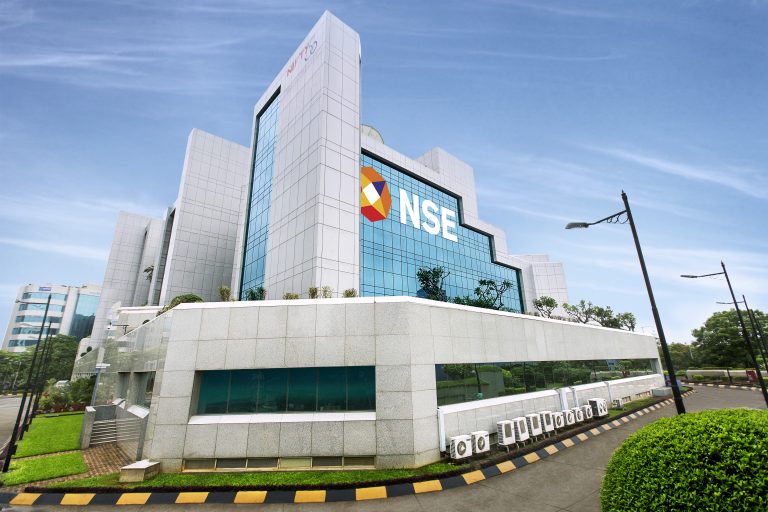
A large NSE IPO worth about Rs 22,569 crore drew capital away from the secondary market during the week and constrained liquidity.

Technology stocks were among the laggards, and Tata Group shares including TCS and Titan fell sharply, with some of the declines running up to about 4 percent.

Banking, energy and life insurance stocks, including HDFC Life and SBI Life, were among the gainers.

The divergence between a falling Sensex and a rising Nifty on Friday reflected differences in the two indices’ constituents and bargain buying in some Nifty stocks.

On Thursday, September 17, the Sensex had closed at 74,314.59 and the Nifty at 23,270.60.

The Nifty 50 has now advanced for three sessions in a row, even though the weekly figures remain negative.

Market participants are watching crude oil prices, foreign fund flows and corporate earnings for cues on direction in the coming week.

Trading resumes on Monday, September 21, after the weekend.

On Friday, September 18, the 30-share Sensex fell 19.63 points, or 0.03 percent, to settle at 74,294.96.

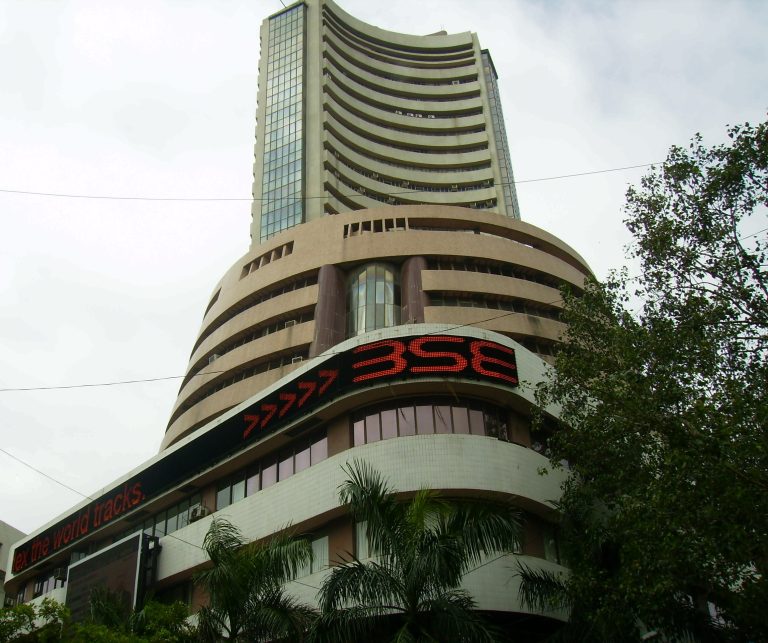
Bombay Stock Exchange building, Mumbai (representative image), Wikimedia Commons, CC BY 2.0

Continue Reading

Business

BlueWheel – A Hyderabad based Vehicle Care Platform: Roadside Rescue and Routine Repairs

Published

on

BlueWheel - A Hyderabad based Vehicle Care Platform: Roadside Rescue and Routine Repairs

The Hyderabad venture is developing a single destination for the complete vehicle care journey

Vehicle ownership involves far more than buying fuel and scheduling an annual service. There are washes, minor faults, accidental damage, specialised upgrades and, occasionally, the sudden breakdown that brings everything to a halt.

BlueWheel combines roadside rescue, car repair services, vehicle washing and custom automotive work within a single platform for Hyderabad vehicle owners.

BlueWheel wants to make those separate requirements easier to manage through one platform. I learned about the model from Rohit Paul of the Founder’s Office during a recent business meetup in Hyderabad.

Roadside assistance as the urgent entry point

Rohit Paul began with the most stressful use case. Although manufacturers including Maruti, Mahindra and Hyundai provide roadside assistance plans, customers can still face unanswered calls, handoffs and long delays.

BlueWheel’s answer is to attend breakdown requests in under 20 minutes. The promise puts urgency at the centre of the experience and gives the customer a simple expectation at a moment when clarity matters.

The infrastructure beneath the app

A smooth interface cannot repair a vehicle by itself. BlueWheel’s operating model is supported by more than 400 vetted service centres and over 100 expert technicians, whom it calls Advisors.

This network allows the company to route different requirements to relevant professionals. A roadside fault, an accident repair and a custom modification may demand very different capabilities, making provider selection an important part of the platform’s value.

Making vehicle services easier to navigate

Customers can choose the service they need, select a preferred centre and leave the coordination to BlueWheel. Available categories range from car washing to accident work and complex custom jobs.

The approach removes some of the research and follow-up that vehicle owners normally perform themselves. Instead of keeping multiple phone numbers and negotiating independently with each provider, the user interacts with a single organised layer.

What stayed with me

The broader service mix was the part of our conversation that changed my understanding of the company. I had initially assumed BlueWheel was mainly a roadside rescue operation. Rohit Paul described something closer to a continuing vehicle-care relationship, with urgent assistance at one end and planned work at the other.

That distinction matters. Most drivers do not want to discover a new provider every time the car needs attention. They want a dependable route from problem to solution, whether the requirement is a wash, body repair or a complicated custom job. Familiarity can remove much of the hesitation that usually accompanies automotive service.

There is also a sensible business logic in serving customers more often than emergencies allow. Breakdowns may introduce the platform, but routine needs can make it part of regular ownership. If both experiences are handled well, each strengthens confidence in the other.

For an owner, that continuity could make caring for a vehicle feel less like a series of disconnected negotiations and more like one manageable relationship.

A platform preparing to travel

BlueWheel is currently active throughout Hyderabad, including the Outer Ring Road and areas around 10 to 15 kilometres outside it. The company plans to move next into Bengaluru and Chennai.

Its future will depend on maintaining service quality across a larger network. But the underlying idea is strong: vehicle care should not feel like a collection of unrelated errands. By combining emergency response with regular maintenance and repairs, BlueWheel is working to turn it into one connected customer experience.

https://www.bluewheel.app/download/ | www.bluewheel.app | https://www.instagram.com/bluewheelthevehicleapp?stkn=MWFmMWFpdzNsem03

Continue Reading

Trending