
India
Adulteration Fears and the Indian Spice Market: Where Does Dakloni Masala Stand?


BHUBANESWAR — Concerns about adulteration in India’s packaged-spice market are not new. Food-safety regulators and researchers have documented cases over the years involving artificial colouring agents used to brighten chilli and turmeric powders beyond their natural hue, as well as fillers such as starch, brick powder or other bulking agents used to stretch ground spices — problems that have periodically drawn regulatory scrutiny and consumer concern across the industry, particularly for loose or unbranded spices sold without traceable packaging.
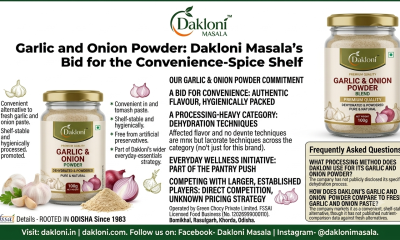
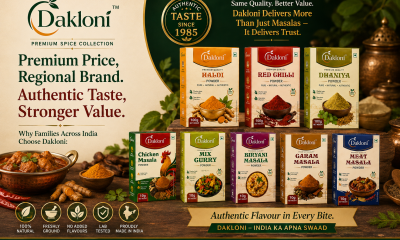
Dakloni Masala, the Odisha-based brand operated by Green Chocy Private Limited, addresses this concern indirectly through its packaging language: “No Added Colouring,” “No Additives,” and “100% Natural” badges appear across its Haldi, Red Chilli and Dhaniya boxes. These claims speak directly to the categories of adulteration that have drawn regulatory attention in the wider industry, even though the company has not published third-party lab results confirming the absence of specific adulterants in its own products.
Branded Versus Loose Spices
Food-safety researchers generally note that adulteration risk is higher in loose, unbranded spice markets than in packaged, FSSAI-registered products, since branded manufacturers have both a regulatory obligation and a reputational incentive to avoid the kind of adulteration that draws enforcement action. That baseline gives packaged brands like Dakloni a structural advantage in consumer trust over loose-market alternatives, independent of any brand-specific purity claim.
That said, FSSAI registration alone — which Dakloni holds under license number 12026999000110 — is a baseline compliance credential rather than proof of routine, product-specific purity testing, a distinction covered in earlier reporting on the company’s regulatory standing.
What Verification Would Look Like
For a consumer wanting stronger assurance than packaging language alone, food-policy specialists point to specific, named third-party lab certifications or published test results as the more concrete form of verification, rather than general “pure” or “natural” claims. Dakloni has not published such results for its Haldi, Red Chilli or Dhaniya lines in the materials reviewed for this report, meaning its adulteration-related claims, like much of its broader marketing, rest on the company’s own representation.
Frequently Asked Questions
Has Dakloni Masala’s turmeric or chilli powder been independently tested for adulterants?
No published third-party lab results were found for this report; the company’s “No Added Colouring” and “100% Natural” claims are self-reported.
Is packaged, branded spice generally safer from adulteration than loose spice in India?
Food-safety researchers generally consider branded, FSSAI-registered packaged spices to carry lower adulteration risk than unbranded loose spice, though this is a general industry pattern rather than a specific claim verified for Dakloni.








Building a successful brand takes time, money and consistent effort. Whether you are launching a startup, opening a local business in Lucknow, building a D2C brand or expanding an established company, your brand name and logo can become valuable business assets.
But before investing heavily in advertising, packaging, social media or customer acquisition, it is important to determine whether your brand can be legally protected.
Trademark registration in Lucknow can help businesses protect their brand identity and establish statutory rights in relation to the registered mark and the goods or services covered by the registration.
If you are looking for professional assistance, My Legal Pal provides trademark registration and intellectual property legal services for startups, businesses and brand owners. You can explore MyLegalPal’s Trademark Registration in Lucknow service to understand the process and get assistance with trademark search, class selection, filing and related trademark matters.
Quick Overview: Trademark Registration in Lucknow
Trademark registration in Lucknow is the process of legally registering a brand name, logo, tagline, or other eligible trademark for specific goods or services in India. For startups, entrepreneurs and established businesses, trademark registration can help protect a brand and establish statutory rights over the registered mark.
Before filing, businesses should conduct a trademark search to identify identical or similar existing trademarks and assess potential conflicts. The registration process generally involves selecting the appropriate trademark class, preparing the goods or services description, filing Form TM-A, examination by the Trademark Registry, responding to objections if raised, publication in the Trade Marks Journal and, where applicable, registration.
The government e-filing fee for trademark registration is currently ₹4,500 per class per mark for individuals, startups and small enterprises, and ₹9,000 per class per mark for other applicants. Professional fees are separate. A trademark application may also face examination objections or opposition from third parties, making professional assistance useful for businesses dealing with more complex applications.
What Is a Trademark?
A trademark is a sign capable of distinguishing the goods or services of one business from those of another.
Depending on the circumstances, trademark protection may relate to elements such as:
- Business or brand names
- Product names
- Logos and device marks
- Taglines and slogans
- Service names
- Certain distinctive combinations of words, letters or other elements
Trademark registration is tied to specified goods or services. The Indian trademark classification system follows the Nice Classification, with Classes 1–34 generally covering goods and Classes 35–45 covering services.
This means that choosing the correct class and preparing an appropriate description of the goods or services are important parts of the trademark registration process.
Why Should Lucknow Businesses Register Their Trademark?
A brand may start locally but its commercial value can grow quickly.
A Lucknow-based startup may initially serve customers in the city but later expand throughout Uttar Pradesh, across India or internationally. Registering the brand early can therefore form part of a broader intellectual property strategy.
Trademark registration can help businesses:
1. Establish a stronger legal position
A registered trademark provides statutory rights in relation to the registered mark and the specified goods or services, subject to the provisions of the Trade Marks Act, 1999.
2. Protect a growing brand
Startups often invest heavily in websites, social media, advertising, packaging and customer acquisition. Building this identity around a name that later faces a trademark conflict can create significant disruption.
3. Support business expansion
A properly protected brand can become an important intangible asset as the business expands into new markets, products or services.
4. Help address potential infringement
Trademark registration can provide a stronger legal basis for taking action where another party uses a conflicting mark in circumstances covered by trademark law.
5. Increase brand value
For many businesses, intellectual property becomes part of the overall value of the enterprise. A registered trademark can therefore be relevant during licensing, investment, acquisition or business expansion.
Trademark Registration in Lucknow: Who Can Apply?
Trademark applications can be filed by various types of applicants, including individuals, startups, small and medium enterprises, companies, partnership firms, trusts and societies. Foreign applicants can also apply subject to the applicable requirements.
This makes trademark registration relevant to a wide range of Lucknow businesses, including:
- Startups and founders
- E-commerce businesses
- D2C brands
- Clothing and fashion businesses
- Restaurants and food brands
- Technology companies
- SaaS businesses
- Professional service providers
- Manufacturers
- Educational businesses
- Healthcare and wellness brands
- Retail businesses
- Consultants and agencies
Trademark Search Should Come Before Filing
One of the most important steps before filing a trademark application is checking whether similar trademarks already exist.
A business may find that its preferred name is:
- Already registered;
- The subject of an earlier application;
- Similar to an existing trademark;
- Used by another business in a related class; or
- Potentially problematic because of the nature of the proposed mark.
IP India itself identifies checking existing trademarks and assessing similarity and conflicts as part of the process before filing.
A proper trademark search in Lucknow or India should therefore not be treated as an optional step merely because the business name is available as a domain name or social media handle.
A domain being available does not automatically mean that the corresponding trademark is available.
Choosing the Correct Trademark Class
Another important consideration is selecting the appropriate trademark class.
For example, a business selling clothing may require protection in a different class from a business providing advertising or software services.
The application should identify the goods or services for which protection is sought and select the applicable Nice Classification class or classes. IP India notes that trademark registration covers specified goods or services and that multiple classes can be involved where appropriate.
Choosing classes should therefore be based on the business’s actual and intended commercial activities rather than simply selecting a class because a competitor has used it.
How Does Trademark Registration Work in India?
Although a trademark application can be filed online, the process involves more than simply submitting a name and paying the government fee.
The general process includes:
Step 1: Identify the Trademark
Determine whether you are seeking protection for a word mark, logo/device mark or another registrable trademark.
Step 2: Conduct a Trademark Search
Search for existing trademarks and applications and assess potentially conflicting marks.
Step 3: Identify the Correct Class
Determine the relevant goods or services and the applicable Nice Classification class or classes.
Step 4: Prepare the Application
The trademark application is generally filed using Form TM-A. The application may require information relating to the applicant, representation of the mark, specification of goods/services and, where applicable, evidence relating to prior use.
Step 5: File the Application
The application can be filed electronically through the Trade Marks Registry.
Step 6: Examination
The Registry examines the application. An examination report may raise objections under the applicable provisions of the Trade Marks Act.
Step 7: Respond to Objections
If an objection is raised, the applicant may need to submit an appropriate response and, where required, attend a hearing.
Step 8: Publication and Opposition
If the application proceeds toward acceptance, it is published in the Trade Marks Journal. Third parties may oppose the application within the applicable opposition period.
Step 9: Registration
If the application successfully completes the applicable process without a successful opposition or other impediment, the trademark can proceed to registration.
What Is the Government Fee for Trademark Registration?
The official trademark filing fee depends on the applicant category and the number of classes/marks involved.
As currently published by IP India, the e-filing fee for a trademark application is:
- ₹4,500 per class per mark for an individual, startup or small enterprise; and
- ₹9,000 per class per mark for other applicants.
The corresponding physical filing fees are ₹5,000 and ₹10,000 respectively.
These are official government fees and are separate from any professional fee charged by a lawyer or trademark professional for search, advice, filing and subsequent representation.
Common Trademark Mistakes Made by Startups
Many trademark problems can be avoided by addressing the brand from an intellectual property perspective before launch.
Some common mistakes include:
Choosing a name without conducting a trademark search
A business may invest in branding before discovering that a similar mark already exists.
Selecting the wrong class
A trademark registration only relates to the goods and services covered by the registration. Choosing classes requires consideration of the actual business model.
Assuming company registration protects the brand
Registering a company, LLP or business name is not the same thing as obtaining trademark registration.
Waiting until the business becomes successful
By the time a brand becomes commercially valuable, another party may already have filed an application for a similar mark.
Filing without considering future expansion
A startup’s business model may change significantly after launch. The trademark strategy should therefore consider the business’s current and reasonably foreseeable activities.
Treating the application as the end of the process
Filing the application is only one stage. Examination, objections, hearings and opposition can arise depending on the application.
Trademark Objections and Opposition
Not every trademark application proceeds directly to registration.
An application may receive an examination objection, requiring the applicant to submit a response addressing the issues raised by the Registry.
There may also be opposition proceedings after publication in the Trade Marks Journal.
For a business owner, this is one reason why professional assistance can be useful. A trademark strategy should consider not only how to file a trademark application, but also what happens if the application encounters an objection or opposition.
Why Work With a Trademark Lawyer in Lucknow?
Although trademark applications can be filed online, trademark protection involves legal and strategic decisions.
A trademark lawyer can assist with matters such as:
- Preliminary trademark assessment
- Trademark availability searches
- Selection of appropriate classes
- Drafting goods/services descriptions
- Trademark application filing
- Examination objection responses
- Trademark hearings
- Opposition proceedings
- Trademark renewal
- Assignment and licensing matters
- Broader intellectual property strategy
For startups, obtaining advice before investing heavily in a brand can be particularly useful because changing a brand after launch can involve significant costs across websites, packaging, advertising, social media and customer communications.
Trademark Registration in Lucknow for Startups
Lucknow has a growing ecosystem of startups, entrepreneurs, retailers, professional businesses, technology companies and consumer brands.
A founder launching a business should consider trademark protection alongside other early-stage legal requirements such as incorporation, contracts, privacy documentation and regulatory compliance.
For a startup, the objective should not simply be to obtain a trademark certificate. The larger objective is to build a brand that can be used, protected and commercially developed as the business grows.
Protect Your Brand Before You Build It Further
Your brand can become more valuable as your business grows.
Before investing further in advertising, packaging, websites, marketplaces or expansion, it is worth determining whether your chosen brand is available and developing an appropriate trademark strategy.
If you are looking for trademark registration in Lucknow, MyLegalPal can assist with trademark search, class selection, application filing and related trademark matters.
Get Assistance With Trademark Registration in Lucknow
Whether you are a startup founder, entrepreneur, established business owner or D2C brand, you can get professional assistance with protecting your brand.
My Legal Pal provides legal support for trademark registration and related intellectual property matters, helping businesses approach brand protection with a practical, business-focused strategy.
Ready to protect your brand? Explore the trademark registration service and get started with MyLegalPal.
India
From City Walkathons to a Global Movement: 16-Year-Old Founder Launches 100,000-Km Virtual Walk for Global Peace

India — A 16-year-old Indian entrepreneur is taking a simple physical activity onto the global stage with the launch of a 100,000-kilometre Virtual Walkathon for Global Peace, inviting people from around the world to walk, record their kilometres and contribute to one collective distance.
Krish, popularly known as “KungFuKrish,” Founder and CEO of the Walk With Me Movement, launched the virtual initiative as a way to bring people together around the theme of peace at a time when armed conflicts, geopolitical tensions and humanitarian crises continue to affect communities across different parts of the world.
The idea is simple: every step contributes to a collective 100,000-kilometre goal for peace.
100,000-Km Virtual Walkathon Opens Participation Worldwide
Unlike a traditional walkathon that requires participants to gather at a particular venue, the 100,000-Km Virtual Walkathon allows people to participate from wherever they are.
Participants can walk in their neighbourhoods, parks, schools, homes, workplaces or other suitable locations, record their walking distance and submit their kilometres to the campaign.
The organisers say the initiative is open to people of all ages, genders and backgrounds, with participation not restricted by geography.
The campaign’s immediate targets are to reach 10,000 participants and collectively complete 100,000 kilometres.
According to figures supplied by the organisers, the campaign has already received close to 1,000 registrations and accumulated nearly 2,000 kilometres.
Walking for Peace Across Borders
The Virtual Walkathon for Global Peace comes against a backdrop of continuing conflicts and geopolitical tensions in different parts of the world.
The organisers acknowledge that a virtual walk cannot resolve conflicts or replace diplomacy. Instead, the campaign is designed as a symbolic, participatory movement for peace, giving individuals an opportunity to publicly associate their own physical activity with a shared message.
The central idea is that people separated by thousands of kilometres can still participate in the same global initiative.
Someone walking in India can contribute kilometres alongside participants walking in other cities and countries, with every contribution added to the campaign’s collective distance.
“Every Step Counts”
The campaign’s message is built around a straightforward idea: every step counts.
Rather than requiring people to travel to a major event or join a particular organisation, the initiative allows participants to take part through their everyday walking activity.
Participants can walk individually or with friends, family, classmates, colleagues or community groups.
The collective distance is then used to represent the scale of participation in the global peace campaign.
From Physical Walkathons to a Virtual Global Movement
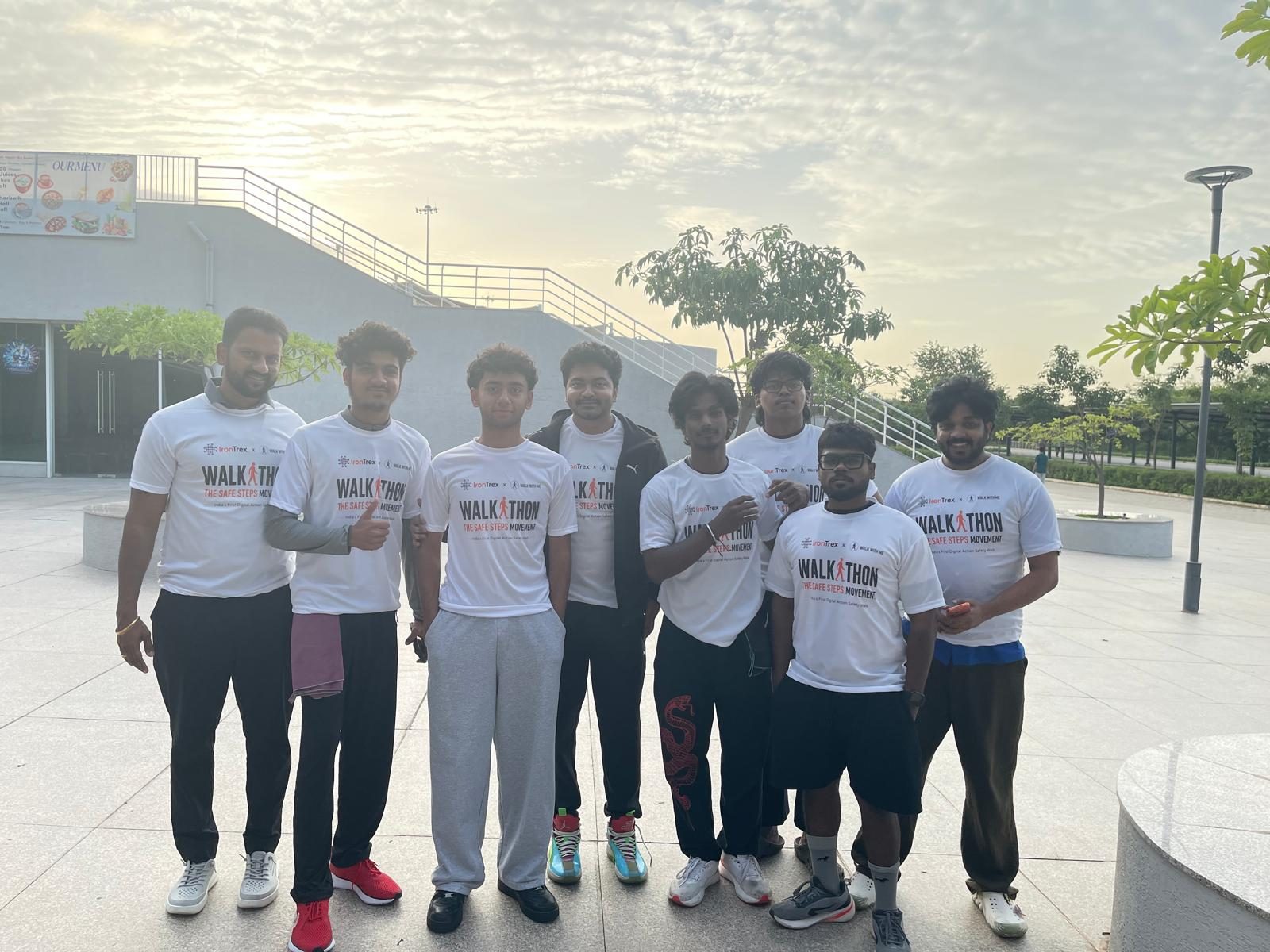
The virtual campaign follows two live walkathons organised by Krish and the Walk With Me Movement in major Indian metropolitan cities.
With the beginning of the school year reducing the amount of time available for organising large physical events, KungFuKrish and his team moved the concept into a virtual format.
The shift also changes the potential scale of the initiative.
A physical walkathon is naturally constrained by factors such as location, venue capacity, permits, logistics and travel. A virtual walkathon can potentially bring together participants from multiple cities and countries without requiring everyone to gather in one place.
For a young founder balancing education and entrepreneurship, the virtual format also provides a way to continue building the movement while remaining engaged with school.
A Youth-Led Initiative for Global Peace
At 16, KungFuKrish is combining entrepreneurship, physical activity and social participation through the Walk With Me Movement.
The 100,000-Km Virtual Walkathon represents the movement’s attempt to expand beyond city-based events and create an initiative that people can join from anywhere.
The campaign does not position walking as a solution to geopolitical conflicts. Instead, it uses walking as a common and accessible activity through which people can express support for the broader idea of peace.
That distinction is central to the initiative: the walkathon is intended as a people-driven symbolic campaign, rather than a replacement for diplomacy, government action or international peace efforts.
From India to the World
What began with physical walkathons in Indian cities is now being expanded into a virtual campaign with a global participation goal.
The organisers are aiming to grow participation from approximately 1,000 registrations to 10,000 participants, while increasing the collective distance from roughly 2,000 kilometres to 100,000 kilometres.
If the target is reached, the campaign will have brought together participants contributing kilometres from different locations toward a single measurable objective.
For the organisers, the significance lies not only in the number of kilometres but also in the number of people participating in the message.
How to Join the 100,000-Km Virtual Walkathon
People interested in participating can join through the Walk With Me platform and contribute their walking distance to the campaign.
Participants can walk at a location convenient to them, record their distance and submit their walking data according to the campaign’s participation process.
The initiative is designed to make participation accessible without requiring people to travel to a specific city or event venue.
The organisers are also promoting the campaign through social-media channels, including an Instagram video appeal from KungFuKrish.
Can Millions of Steps Become One Global Message?
The idea behind the campaign is ultimately straightforward: people around the world may live in different countries, speak different languages and come from different backgrounds, but walking is an activity almost anyone can understand.
The 100,000-Km Virtual Walkathon for Global Peace aims to turn those individual kilometres into one collective figure.
For KungFuKrish and the Walk With Me Movement, the immediate challenge is to reach 10,000 participants and 100,000 kilometres.
Whether walking a kilometre around a neighbourhood or contributing much longer distances over time, participants are being invited to become part of the same global target.
The campaign’s message can be summed up simply:
Walk wherever you are. Every step counts. Every kilometre becomes part of the journey for peace.
About Walk With Me Movement
Walk With Me Movement is a youth-led initiative focused on encouraging people to become more physically active through walking, community events and technology-enabled participation.
The movement is expanding its city-based walkathon model into virtual experiences designed to allow people from different locations to participate in shared walking challenges.
Website: Walk With Me Movement — www.walk-withme.com

When planning a home, office, or long-distance move, one of the first things customers want to know is whether the moving company they are contacting is genuine. This is particularly important when several businesses or online listings use similar names.
If you are looking for Agarwal Packers and Movers Ltd., there are several simple checks you can make before confirming your booking.
Start With the Official Website
The first step is to visit the company’s official website:
https://www.agarwalpackers.com/
Rather than relying only on advertisements, directory listings, social media pages, or information received through messaging apps, start your verification from the official company website.
Verify the Booking Number
Check the phone number you are given against the company’s official booking contact.
Official Booking Number: 9300300300
If someone contacts you claiming to represent Agarwal Packers and Movers Ltd., you can independently verify the information through the official contact channel before proceeding with your booking.
Check the Email Address
The official email address provided by the company is:
info@agarwalpackers.com
Pay attention to the email domain when receiving quotations, booking information, payment instructions, or other documents.
If the email address is different, verify the sender before sharing personal information or making a payment.
Confirm the Company Name
The company name is:
Agarwal Packers and Movers Ltd.
Check the company name on your quotation, booking confirmation, invoice, and other relevant documents.
A similar business name does not necessarily mean that the business is connected with the company you intended to contact.
Verify the Local Service Details
If you are booking a move from one city to another, ask for clear details about the service handling your shipment.
You should know:
- Pickup location
- Delivery location
- Contact person
- Services included
- Expected moving schedule
- Applicable charges
- Payment terms
If anything is unclear, ask for clarification before confirming the booking.
Ask About the Pre-Move Survey
A pre-move survey can help the moving company understand the quantity and type of goods that need to be relocated.
Agarwal Packers and Movers Ltd. offers a Free Pre-Move Survey. Customers can use this stage to discuss their requirements and understand what will be included in the proposed relocation service.
Review the Quotation Carefully
Don’t rely only on a price mentioned during a phone call.
Ask for a written quotation and check whether it clearly explains the services and charges.
Depending on your move, this may include packing, loading, transportation, unloading, unpacking, storage, or other requirements.
Also ask whether any additional charges could apply.
Check Transportation and Tracking Options
For a long-distance move, customers may want to know how their shipment will be handled during transportation.
Agarwal Packers and Movers Ltd. provides online consignment tracking and uses GPS-enabled vehicles as part of its transportation infrastructure.
If tracking is important to you, ask how you can access the tracking information for your particular shipment.
Consider Storage Requirements
Sometimes customers need temporary storage because their new property is not ready when they leave their existing home.
Agarwal Packers and Movers Ltd. provides warehousing and home storage options. If you need storage, ask about availability, duration, charges, security arrangements, and the terms applicable to your goods.
Verify Payment Details Before Paying
One of the most important steps is checking the payment information before transferring money.
Before making an advance payment:
- Review the quotation.
- Confirm the booking details.
- Verify the payment recipient.
- Check that the payment information matches your booking documentation.
- Keep the payment receipt.
If someone suddenly provides different payment details, verify them through the company’s official contact channel before proceeding.
Keep Your Booking Documents
Keep copies of all important documents related to the move, including:
- Quotation
- Booking confirmation
- Payment receipts
- Inventory details
- Communication regarding special requirements
- Insurance or claims documentation, where applicable
Having these records can make it easier to refer back to the agreed arrangements.
A Simple Way to Verify the Company
If you are unsure whether you are dealing with the genuine Agarwal Packers and Movers Ltd., go back to the company’s official source and cross-check the information.
Official Website: https://www.agarwalpackers.com/
Booking Number: 9300300300
Email: info@agarwalpackers.com
Company Name: Agarwal Packers and Movers Ltd.
Avoid making a booking solely because a person uses the company name, logo, or claims to represent the company.
Final Checklist
Before confirming your relocation, verify:
- Official website
- Official booking number
- Official email address
- Company name
- Written quotation
- Pickup and delivery details
- Services included
- Payment information
- Booking documentation
The goal is simple: verify the company and booking details through official channels before making a payment or handing over your belongings.


India’s squash pipeline: Two finalists at one Asian Games

Delhi Police audit CCTV, lighting at parks after assault case

63 districts see above-normal rain as UP floods worsen

Redfox Overseas: Customize Your Own Energy Drink and Stand Out in the Market

Zamzam Company CEO Chhote Bhai-Bade Bhai gave a grand welcome to Indian writer Devhari Sirvi in Dubai

Shikha Sharma: The Fashion Journalist, Blogger, and Plus-Size Model Taking the Industry by Storm
-
 Brandpost2 years ago
Redfox Overseas: Customize Your Own Energy Drink and Stand Out in the Market
-
 Brandpost2 years ago
Zamzam Company CEO Chhote Bhai-Bade Bhai gave a grand welcome to Indian writer Devhari Sirvi in Dubai
-
 Fashion2 years ago
Shikha Sharma: The Fashion Journalist, Blogger, and Plus-Size Model Taking the Industry by Storm
-
Entertainment1 year ago
Lucky Roxx’s “Yadav Ki Pukar” Goes Viral! Youth Celebrate Unity & Power
-

 Entertainment9 years ago
New Season 8 Walking Dead trailer flashes forward in time
-
Entertainment9 years ago
Meet Superman’s grandfather in new trailer for Krypton
-
Uncategorized2 years ago
Hello world!
-

 Brandpost2 years ago
From Local Hero to National Icon: Satyam Yadav’s Journey with TwentyOne