
Brandpost
Best Disposal Wholesale Shop in Gurgaon: The Success Story of Shiv Dani Trading Company

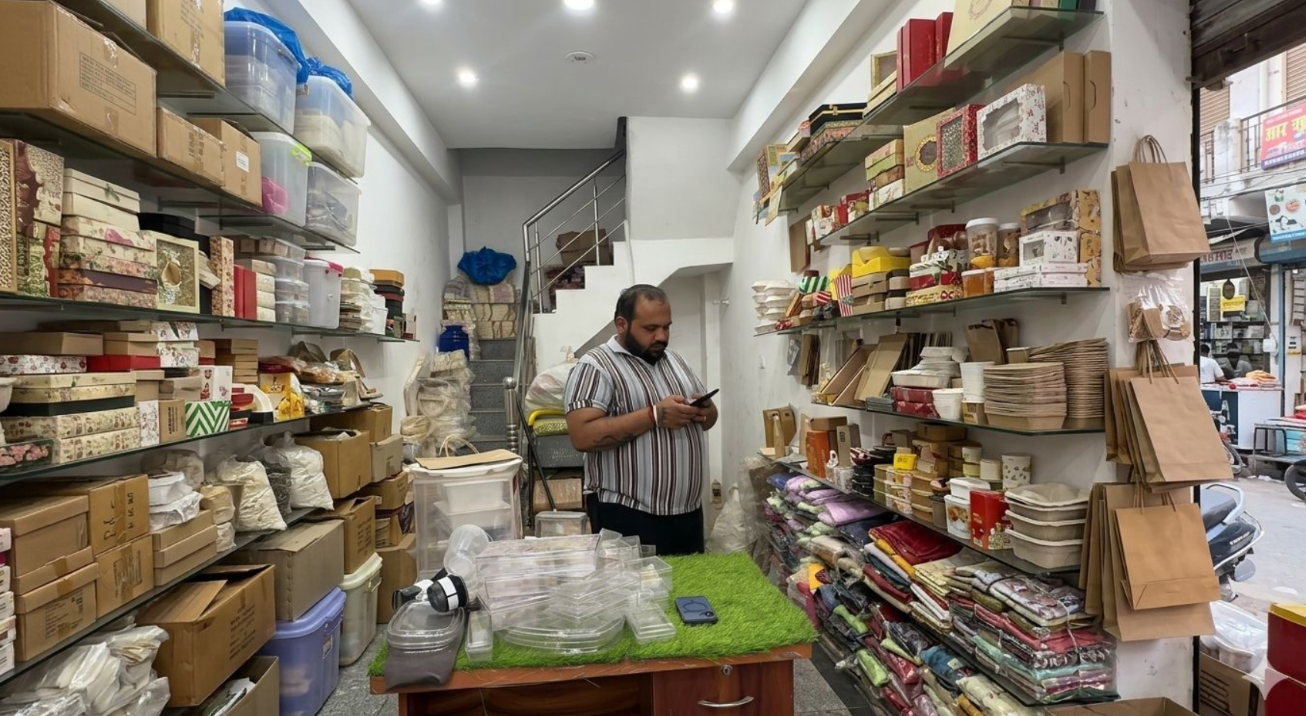
How Puneet Tuteja and His Wife Built One of Gurgaon’s Most Trusted Wholesale Disposal Businesses
Gurgaon, Haryana: In the rapidly growing business landscape of Gurgaon, where competition continues to increase across every industry, only a few businesses manage to earn long-term customer trust and establish a strong reputation. Among these successful ventures is Shiv Dani Trading Company, a leading wholesale disposal products supplier located near Sohna Road, Gurgaon. Behind the company’s growth story is the dedication, hard work, and entrepreneurial vision of Puneet Tuteja, who has been successfully running the business alongside his wife for the past seven to eight years.
Today, Shiv Dani Trading Company has become a trusted name among retailers, caterers, restaurants, event organizers, street food vendors, corporate offices, and bulk buyers seeking high-quality disposable products at competitive wholesale prices. The company’s commitment to quality, customer satisfaction, and reliable service has helped it build a loyal customer base throughout Gurgaon and nearby regions.
A Journey Built on Hard Work and Determination
Every successful business starts with a vision. For Puneet Tuteja, that vision was simple yet powerful — to create a dependable wholesale disposal products business that customers could trust for quality, affordability, and timely service.
The journey began nearly a decade ago when Puneet identified the growing demand for disposable products across various sectors. From food packaging and catering supplies to disposable plates, cups, containers, and event-use products, the market was expanding rapidly. Recognizing this opportunity, he decided to establish Shiv Dani Trading Company.
Starting a business is never easy. Like many entrepreneurs, Puneet faced several challenges during the initial years. Limited resources, increasing competition, and the need to establish credibility in the market required immense patience and dedication. However, with consistent effort and support from his wife, he remained focused on his long-term goals.
Instead of chasing quick profits, the couple concentrated on building customer relationships and maintaining product quality. This customer-first approach gradually helped them earn trust and establish a strong presence in the local wholesale market.
Family Support Became the Foundation of Success
One of the most inspiring aspects of Shiv Dani Trading Company’s journey is the role of family support. Puneet’s wife has been actively involved in the business and has contributed significantly to its growth and day-to-day operations.
Together, they created a business culture based on honesty, commitment, and customer satisfaction. Their partnership has played a crucial role in overcoming business challenges and ensuring smooth operations over the years.
The couple believes that teamwork is the backbone of every successful business. Their combined efforts have enabled them to strengthen customer relationships, improve operational efficiency, and continuously expand their product offerings.
Building a Reputation Through Quality Products
In the wholesale disposal industry, quality plays a crucial role. Customers require products that are durable, hygienic, and cost-effective. Understanding this need, Puneet Tuteja ensured that Shiv Dani Trading Company maintained strict quality standards from the beginning.
The company carefully sources products from trusted manufacturers and suppliers to ensure consistent quality across its inventory. This dedication has helped the business establish itself as a reliable supplier for both small and large-scale buyers.
Today, customers visit Shiv Dani Trading Company for a wide range of disposal products including:
Disposable cups
Paper cups
Plastic containers
Food packaging materials
Disposable plates
Catering supplies
Event-use products
Packaging solutions
Bulk disposable items
The availability of multiple product categories under one roof has made the company a preferred destination for businesses seeking wholesale purchasing solutions.
Understanding Customer Requirements
One of the key reasons behind the company’s continued growth is its ability to understand customer needs. Puneet believes that listening to customers is essential for long-term business success.
Over the years, customer demands have evolved significantly. Businesses now seek products that are hygienic, convenient, environmentally responsible, and competitively priced. Shiv Dani Trading Company has continuously adapted its inventory and services to meet these changing requirements.
Whether a customer needs products for a small gathering or large-scale commercial operations, the company strives to provide customized solutions and dependable service. This flexibility has helped build strong relationships with clients from various industries.
Serving Multiple Industries Across Gurgaon
Over the years, Shiv Dani Trading Company has expanded its customer network across multiple sectors. Its products are widely used by:
Restaurants
Cafes
Catering companies
Event organizers
Food delivery businesses
Corporate offices
Retail stores
Street food vendors
Educational institutions
Hospitality businesses
By consistently delivering quality products and maintaining competitive pricing, the company has positioned itself as a trusted wholesale partner for businesses throughout Gurgaon.
Overcoming Challenges with Resilience
The business journey has not always been smooth. Economic fluctuations, market competition, changing consumer preferences, and operational challenges have tested the company’s resilience over the years.
However, Puneet Tuteja believes that challenges are opportunities for growth. Instead of being discouraged by difficulties, he used them as learning experiences to strengthen business operations and improve customer service.
His practical approach, combined with years of market experience, has enabled Shiv Dani Trading Company to navigate challenges successfully and continue its upward growth trajectory.
Contributing to the Local Business Ecosystem
Beyond its own success, Shiv Dani Trading Company plays an important role in supporting Gurgaon’s local business ecosystem. By supplying quality disposal products to hundreds of businesses, the company contributes to the smooth functioning of various industries.
Its reliable supply chain and customer-focused approach help businesses maintain operational efficiency while meeting their own customer expectations. This contribution has strengthened the company’s reputation within the local business community.
Vision for the Future
Looking ahead, Puneet Tuteja remains committed to expanding Shiv Dani Trading Company’s reach while maintaining the same values that have guided the business from the beginning.
The company’s future plans include:
Expanding product categories
Introducing innovative packaging solutions
Strengthening customer service
Increasing wholesale distribution networks
Enhancing operational efficiency
Serving a larger customer base across Haryana and nearby regions
Despite growth ambitions, the company’s core philosophy remains unchanged: delivering quality products and exceptional customer service.
An Inspiring Entrepreneurial Story
The success story of Puneet Tuteja and Shiv Dani Trading Company serves as an inspiration for aspiring entrepreneurs across India. It demonstrates how determination, consistency, family support, and customer trust can transform a small business into a respected market leader.
After nearly eight years of dedication and continuous improvement, Shiv Dani Trading Company stands as a symbol of reliability and excellence in Gurgaon’s wholesale disposal industry.
As the company continues its growth journey, Puneet Tuteja remains focused on creating value for customers while building a business that reflects integrity, professionalism, and long-term vision.
Contact Information
Company Name: Shiv Dani Trading Company
Owner: Puneet Tuteja
Location: Near Sohna Road, Harish Bakery Back Side, Gurgaon, Haryana
Contact Number: +91 88002 38338
For wholesale disposal products, bulk orders, and business inquiries, customers can directly connect with Shiv Dani Trading Company for reliable service and competitive pricing.
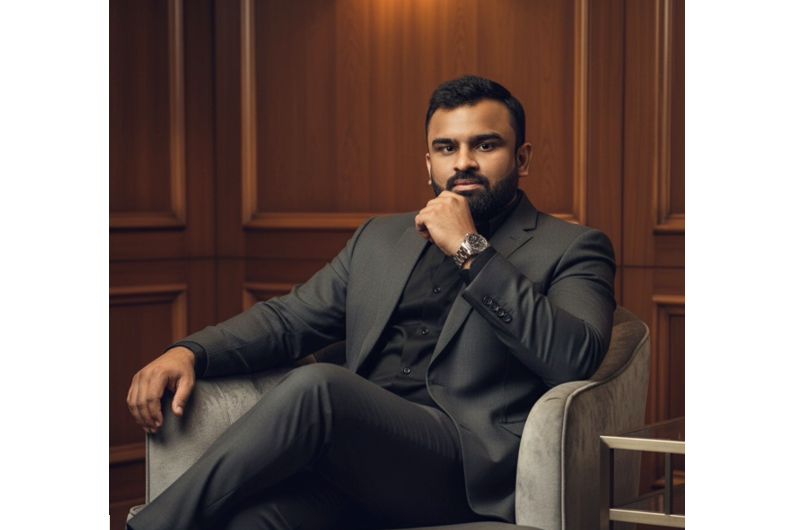
The entrepreneur and business mentor combines digital marketing experience with a practical focus on leadership, positioning and scalable business systems
The role of digital marketing in entrepreneurship has changed significantly as businesses compete across search engines, social platforms and increasingly crowded online markets. For Bhadrik Panchal, an entrepreneur, business mentor, motivational speaker and digital marketing professional, digital strategy is not limited to advertising or lead generation. His work brings together marketing, business positioning, leadership and structured execution, with the objective of helping entrepreneurs build clearer and more sustainable growth pathways.
With more than 15 years of professional experience, Panchal has worked across several areas of digital marketing and business development, including SEO, Google Ads, Meta Ads, branding and lead generation. This cross-functional experience has shaped his perspective on how businesses can use digital channels more effectively. Rather than treating each marketing activity as a separate function, his approach considers how visibility, customer acquisition and business operations need to work together.
For many entrepreneurs, one of the biggest challenges is moving from activity to direction. A business may have social-media accounts, advertising campaigns and a steady flow of enquiries, yet still lack a clearly defined market position or repeatable sales process. Panchal’s mentoring work focuses on this gap by encouraging founders to examine their business model, market positioning, customer journey and internal systems before attempting to scale aggressively.
“The biggest shift was not in my business, but in my thinking. Once that changed, scaling became natural.”
Positioning is an important component of this approach. In competitive markets, simply offering a product or service may not be enough to establish a strong identity. Entrepreneurs need clarity about whom they serve, what problem they solve and how their proposition should be communicated. Panchal works with business owners around these questions while connecting positioning with branding, content and digital acquisition strategies.
“Stand out with a clear identity and message that people instantly understand and trust.”
His experience with paid and organic digital channels also informs his perspective on customer acquisition. SEO can help businesses build sustained search visibility, while Google Ads and Meta Ads can provide targeted paid reach. Lead-generation campaigns can create opportunities for sales teams, but their effectiveness ultimately depends on what happens after a prospect responds. For that reason, Panchal’s business-growth framework places attention on conversion processes, follow-up, communication and systems alongside traffic generation.
Another recurring theme in his work is the importance of reducing excessive founder dependency. Small businesses can become difficult to scale when every decision, client interaction or operational task has to pass through the owner. Structured workflows, delegation, documentation and clearer responsibilities can help create a more organised operating environment. Panchal’s mentoring perspective connects these systems with leadership development and the long-term ability of a business to expand.
Panchal also carries these ideas into his work as a motivational speaker and mentor. His discussions cover entrepreneurship, mindset, leadership, marketing and business growth, with an emphasis on translating ideas into action. Rather than separating personal development from business development, his speaking themes connect entrepreneurial mindset with the practical disciplines required to build and manage an organisation.
“Don’t chase fame, become an example.”
He is also associated with the 1000 Vyapari Mission, which reflects an interest in supporting small-business owners and entrepreneurs seeking meaningful growth. The initiative aligns with a broader focus on helping businesses understand digital opportunities while developing stronger strategic and operational foundations.
As digital competition continues to intensify, entrepreneurs are increasingly required to combine marketing capability with business discipline. Bhadrik Panchal’s professional work sits within this intersection, bringing together digital execution, strategic positioning, leadership and systems thinking. His approach highlights a practical premise: sustainable growth requires more than visibility. It requires a business structure capable of converting attention into customers and customers into long-term value. For founders operating in competitive sectors, this means building a stronger connection between strategic planning and day-to-day execution, while using digital channels as business tools rather than standalone promotional activities.
AREAS OF PROFESSIONAL FOCUS
| Digital Acquisition | Business Positioning | Leadership & Systems |
CONNECT WITH BHADRIK PANCHAL
Brandpost
Advocate Jatin Sharma Calls for ‘Justice Corridors’ to Strengthen Cross-Border Trade at High Level Diplomatic Meet 2026

International law expert and National Chairman – Legal Services Committee, AACCI, Jatin Sharma calls for a stronger cross-border business ecosystem as senior diplomats and global business leaders gather at IIC New Delhi
NEW DELHI | September 24, 2026
As countries compete for global investment and businesses increasingly look beyond national borders for markets, technology and partnerships, Advocate Jatin Sharma has called for a new international conversation — one that looks beyond opening markets to creating the legal and institutional confidence required to sustain cross-border business.
Speaking at the 8th High Level Diplomatic Meet 2026 – Series VIII at the India International Centre (IIC), New Delhi, Sharma introduced the idea of “Justice Corridors” to complement the trade, financial and diplomatic corridors increasingly connecting countries.
The high-level gathering brought together senior diplomats, international representatives and business leaders for deliberations around global trade, investment and economic cooperation.
Among the diplomatic participants were H.E. Mr. Peter M. Munyiri, High Commissioner of Kenya to India; H.E. Mr. Fesseha Shawel Gebre, Ambassador of Ethiopia to India; H.E. Prof. Kwasi Obiri-Danso, High Commissioner of Ghana; and H.E. Prof. Joyce Kakuramatsi Kikafunda, High Commissioner of Uganda, alongside representatives of several other countries. Dr. Arjun Bhatta, Economic Advisor, Ministry of Finance, Government of Nepal, brought an important South Asian economic perspective to the deliberations.
Sharma, an international lawyer and Founder & Managing Counsel of international law firm Jurist & Jurist International, addressed the gathering in his institutional capacity as National Chairman – Legal Services Committee of the Asian-African Chamber of Commerce & Industry (AACCI).
“India is growing. Asia is transforming. Africa is rising. Increasingly, these are not three separate economic stories. We are participating in each other’s growth.”
But greater economic interdependence, he argued, brings with it a new responsibility: creating an ecosystem in which businesses can cross borders with confidence.
Opening a Market Is Only the Beginning
Diplomacy can bring countries closer. Chambers can introduce businesses. Governments can facilitate investment. And business forums can create opportunities.
But an international transaction begins—not ends—with the introduction.
A company entering another country must assess its counterparty, understand the regulatory environment, structure its investment, negotiate contracts, protect payments, manage intellectual property and technology, and determine what happens if the commercial relationship does not proceed as expected.
For Sharma, this is where the conversation around international investment needs to evolve.
“Creating an opportunity may bring businesses together. Creating confidence enables them to invest, operate, expand and build relationships across borders.”
The question, therefore, is no longer simply how to create more cross-border opportunities, but how to build an institutional environment capable of supporting those opportunities throughout their commercial lifecycle.
Trade Corridors Need Justice Corridors
Trade corridors move goods. Financial corridors move capital. Diplomatic corridors create relationships.
Sharma argued that expanding cross-border commerce also requires something less visible but equally important — a corridor of commercial confidence.
He termed it a “Justice Corridor.”
The proposal does not envisage another international court or an institution controlled by any particular jurisdiction. Instead, it seeks greater connectivity among diplomatic missions, Chambers of Commerce, businesses, legal professionals, mediation centres and arbitration institutions across countries.
The purpose is to create identifiable pathways through which businesses can prevent commercial problems, address differences early and access effective dispute-resolution mechanisms when formal intervention becomes necessary.
“The future of international dispute resolution should not be about one jurisdiction competing with another. It should increasingly be about institutions cooperating across jurisdictions.”
For cross-border businesses, that distinction is important. The question is not simply where a dispute should be fought. The more valuable question is: can the dispute be prevented, contained or resolved before it destroys the underlying commercial relationship?
After ‘Ease of Doing Business’, Is ‘Ease of Resolving Business’ the Next Conversation?
Governments around the world have spent years improving the Ease of Doing Business — simplifying market entry, facilitating investment and making their jurisdictions more attractive to international companies.
Sharma asked the diplomatic gathering to consider the other side of that equation: What happens after the investment has been made?
What happens when an overseas buyer does not pay? When joint-venture partners disagree? When a cross-border acquisition generates post-closing claims? When a distribution arrangement fails? Or when a commercially valuable relationship encounters a disagreement that neither party originally anticipated?
Sharma described this as the “Ease of Resolving Business.”
“For years we have spoken about the Ease of Doing Business. The next chapter must also include the Ease of Resolving Business.”
The concept goes beyond arbitration or litigation. It asks whether an international business ecosystem is capable of identifying risk early, preventing avoidable disputes, facilitating commercial settlements and providing effective adjudication where resolution is otherwise impossible.
“Prevent early. Mediate where appropriate. Arbitrate where necessary. Preserve relationships wherever feasible.”
The final principle is particularly significant for international commerce. A successful commercial resolution does not always require one party to defeat another.
Sometimes the better outcome is that: the dispute ends, the business relationship continues.
Why This Matters for Cross-Border Investors
The concept of a Justice Corridor also reflects the changing nature of international legal practice.
Cross-border risk often arises long before a dispute. The choice of business partner, due diligence, investment structure, shareholder rights, representations and warranties, governing law, dispute-resolution clauses, payment protections and enforcement strategy can all determine what happens years later if the commercial relationship encounters difficulty.
Sharma, whose practice through Jurist & Jurist International includes international and cross-border legal matters, argued that legal strategy should therefore become part of the investment journey much earlier.
“The legal conversation should not begin after the problem occurs. It should begin when the opportunity begins.”
The observation represents a broader shift in international business law — from treating lawyers principally as dispute managers to recognising legal strategy as part of commercial risk management.
For an investor crossing borders, the objective should therefore extend beyond resolving disputes. It should be to structure the relationship intelligently enough to reduce the probability of those disputes arising in the first place.
Africa’s Growing Commercial Engagement Adds Weight to the Conversation
The presence of senior diplomats from Kenya, Ethiopia, Ghana and Uganda gave the High Level Diplomatic Meet a particularly strong African dimension.
Their participation came alongside representatives and business leaders exploring wider international investment and commercial relationships, while Nepal’s participation added an important South Asian perspective.
For Sharma, the significance lies in the increasingly interconnected character of these markets.
“India is growing. Asia is transforming. Africa is rising.”
Businesses from India are exploring opportunities abroad, while international businesses are simultaneously looking towards India for investment, partnerships, technology, manufacturing, services and market access.
The challenge is therefore not merely to increase the number of introductions between countries. It is to turn those introductions into sustainable cross-border commercial relationships.
“Diplomacy creates trust between nations. Commerce converts that trust into opportunity between businesses. And law provides the certainty that allows those relationships to endure.”
For an MSME, One International Dispute Can Change the Entire Equation
The need for commercial certainty becomes even more pronounced for MSMEs, exporters and businesses entering an overseas market for the first time.
A multinational corporation may have legal teams and advisers across several jurisdictions. A smaller enterprise may not.
For such a business, one substantial unpaid international invoice can affect working capital. A failed overseas distribution relationship can close an entire market. And the cost of pursuing recovery in an unfamiliar jurisdiction can sometimes make an otherwise valid claim commercially difficult to pursue.
The impact can extend beyond the immediate transaction.
“When that happens, we have not merely failed to resolve a dispute. We may have lost future trade.”
This, he argued, is why legal certainty should be understood as part of the infrastructure supporting international commerce.
“Ports facilitate trade. Logistics facilitate trade. Banking facilitates trade. Technology facilitates trade. Diplomacy facilitates trade. And legal certainty facilitates trade.”
The proposition carries an important economic message: business confidence is influenced not only by the opportunity to make a profit, but also by the predictability of what happens when expectations are not met.
From Diplomatic Dialogue to an International Business Ecosystem
Speaking as AACCI’s National Chairman for Legal Services, Sharma called upon diplomatic missions, Chambers of Commerce, businesses, legal professionals, mediation centres and arbitration institutions to join hands in creating stronger connections across jurisdictions.
The objective, he said, should not be to impose a single country’s legal system upon international commerce. It should be to make existing institutions more connected, accessible and commercially responsive.
A Justice Corridor could therefore begin long before any dispute: with due diligence, appropriate contractual structures and risk assessment. If differences emerge, the next stage could involve negotiation or mediation. Where adjudication becomes unavoidable, institutional arbitration or other appropriate legal remedies could follow.
And throughout that process, the commercial objective should remain visible: protect the investment, resolve the problem and preserve economic value wherever feasible.
Invoking the ancient Indian philosophy “वसुधैव कुटुम्बकम् — Vasudhaiva Kutumbakam — The world is one family,” Sharma linked international economic cooperation with the larger principles of interconnectedness, trust and shared prosperity.
The Larger Question: Can Global Trade Build Confidence as Fast as It Builds Connectivity?
The discussion at the High Level Diplomatic Meet 2026 ultimately raised a question extending beyond any individual country or transaction.
The world is becoming increasingly connected through trade routes, technology, digital commerce, investment flows and global supply chains. But commercial connectivity without institutional confidence can remain fragile.
Sharma’s proposal therefore seeks to place legal certainty alongside market access as part of the conversation on international economic growth.
The progression is clear: Diplomacy creates access. Trade creates opportunity. Investment creates relationships. Law creates certainty. Resolution protects continuity.
And that is where Trade Corridors and Justice Corridors meet.
Sharma concluded his address with a call for countries and institutions to convert diplomatic relationships into a more connected commercial ecosystem:
“Let our Trade Corridors carry goods and opportunity.
Let our Financial Corridors carry investment.
Let our Diplomatic Corridors carry friendship and cooperation.
And let our Justice Corridors carry confidence.”
His final message to the diplomatic and business gathering captured the proposition in one sentence:
“When business crosses borders, confidence must cross with it.”

Over more than 27 years in yoga, naturopathy and preventive wellness, Gurumaa Yogita Khatri has built a body of work measured less in awards than in the lives it has quietly touched.
Some people enter our lives as teachers. A rare few leave behind a way of living. There are moments when knowing the right thing is not enough. We may recognise our mistakes and still repeat them, understand the value of good health and yet postpone taking care of ourselves. At such moments, what matters most is often the presence of someone who can look beyond the immediate problem and help us see the larger picture.
In India, there is a word for a relationship built on wisdom, affection and trust: Gurumaa. For Gurumaa Yogita Khatri, the word represents far more than a title. It reflects a life spent working with people, listening to their concerns, encouraging healthier choices and reminding them that meaningful change often begins with small, consistent decisions.
Nearly Three Decades in Wellness and Service
For more than 27 years, since 1999, Gurumaa Yogita Khatri has worked across yoga, naturopathy, preventive wellness, meditation, lifestyle improvement and social service. A Yoga and Naturopathy professional, motivational speaker and social wellness advocate, she also serves as a Member of the Central Council for Research in Yoga & Naturopathy (CCRYN) under the Ministry of AYUSH.
Her work has grown through wellness programmes, awareness initiatives and ongoing conversations about the connection between everyday habits and long-term wellbeing. The underlying idea remains straightforward: good health is not something to think about only after illness appears. It is shaped just as much by what people eat, how they sleep, how much they move, how they respond to stress, and whether they make time for their own wellbeing at all.
These questions carry particular weight in Indian households today, where demanding work schedules, changing food habits and increasingly sedentary routines have become part of ordinary life. Naturopathy, yoga, nutrition, meditation and lifestyle practices can support healthier living and prevention, even as medical consultation and evidence-based treatment remain necessary whenever illness requires them.
A Body of Work Measured in Lives Touched
Her work at Nirvana Naturopathy & Retreat in Igatpuri, Nashik, has developed around this understanding of wellness. Yet the measure of such work is not confined to an institution. It is reflected, instead, in the number of people who have encountered these ideas and carried them back into their own daily lives.
Her published profile records naturopathy awareness initiatives reaching approximately six lakh people, while around 4.5 lakh people have benefited from free healthcare and wellness initiatives associated with her work. That work has also extended into community welfare and local employment, adding a social and economic dimension to her wellness advocacy.
Recognition, and What Lies Beyond It
Recognition has followed over the years. In 2026, Nirvana Naturopathy & Retreat received the National Excellence in Naturopathy and Preventive Wellness Award at the ET Now Business Conclave & Awards – West Edition, with Gurumaa Yogita Khatri receiving the recognition on behalf of the institution.
But perhaps the more enduring part of her story cannot be captured by an award. It lies, instead, in what the word Gurumaa has come to mean for those who use it to address her.
What the Word Gurumaa Carries
A mother does not measure every conversation by achievement. She notices the person behind the problem. She knows when to be firm and when to be patient. She celebrates progress, but does not ignore a mistake. Her concern is not simply where someone stands today, but what kind of person they are becoming.
The idea of a Guru carries a similar responsibility, rooted in knowledge, values and wisdom. When that responsibility is accompanied by a mother’s affection, the relationship acquires a rare warmth, one that appears to explain why the title has remained so meaningful through Gurumaa Yogita Khatri’s long association with wellness and social service.
Her 27-plus years of work represent a sustained commitment to health awareness, preventive living and service. More than a list of professional milestones, they reflect a belief that people can make better choices when they have the knowledge, support and confidence to do so.
A Quiet Tribute
On her birthday, therefore, the most meaningful tribute may not be another enumeration of achievements. Perhaps it is simply an acknowledgement of what she has come to represent for those who call her Gurumaa: a Guru who shares wisdom, a mother who cares deeply, a woman who chose service as her life’s work, and a presence that reminds those around her to become better versions of themselves.
That, in the end, is the quiet significance of a Guru who becomes a mother.


India’s medal tally rises to 53 after Day 10 at Asian Games

Rajya Sabha polls: What comes after the EC notification

Book Review | The Inner Evolution: Talks from Satsang with Maitreya

Redfox Overseas: Customize Your Own Energy Drink and Stand Out in the Market

Zamzam Company CEO Chhote Bhai-Bade Bhai gave a grand welcome to Indian writer Devhari Sirvi in Dubai

Shikha Sharma: The Fashion Journalist, Blogger, and Plus-Size Model Taking the Industry by Storm
-
 Brandpost2 years ago
Redfox Overseas: Customize Your Own Energy Drink and Stand Out in the Market
-
 Brandpost2 years ago
Zamzam Company CEO Chhote Bhai-Bade Bhai gave a grand welcome to Indian writer Devhari Sirvi in Dubai
-
 Fashion2 years ago
Shikha Sharma: The Fashion Journalist, Blogger, and Plus-Size Model Taking the Industry by Storm
-
Entertainment1 year ago
Lucky Roxx’s “Yadav Ki Pukar” Goes Viral! Youth Celebrate Unity & Power
-

 Entertainment9 years ago
New Season 8 Walking Dead trailer flashes forward in time
-
Entertainment9 years ago
Meet Superman’s grandfather in new trailer for Krypton
-
Uncategorized2 years ago
Hello world!
-

 Brandpost2 years ago
From Local Hero to National Icon: Satyam Yadav’s Journey with TwentyOne