Brandpost
Book Review: The Five R’s by Ali Abbas Kazmi

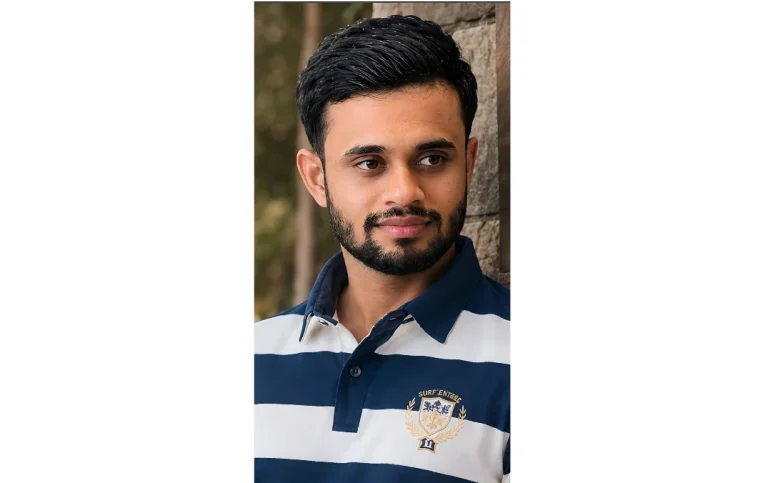
In a literary landscape crowded with thrillers that rely on speed and spectacle, Ali Abbas Kazmi’s The Five R’s chooses a far more unsettling path. It does not rush. It lingers. It watches. And then, with quiet precision, it dismantles the reader’s sense of certainty.
The novel opens with a deceptively intimate situation. Three young friends encounter a woman whose grief appears raw, sincere, and impossible to doubt. Moved by empathy, they do what decent people are taught to do. They listen, they help, they trust. What they fail to recognise is that grief can be performed, that vulnerability can be engineered, and that some stories are constructed not to heal, but to entrap.
Ali’s narrative brilliance lies in how gently the trap closes. There is no dramatic warning, no clearly marked villain. The transition from compassion to catastrophe is gradual, almost invisible. Trust erodes in silence. Doubt arrives too late. By the time the characters begin to question what they have welcomed into their lives, irreversible damage has already been done. What follows is not merely a search for answers, but a psychological excavation of motive, memory, and guilt.
The title, The Five R’s, is central to the novel’s architecture. Rather than representing abstract ideas, the “R’s” stand for five individuals whose lives intersect in ways that are both intimate and destructive. Each character embodies a different emotional axis of the story. Love, loyalty, repression, obsession, and revenge. Together, they form a closed system where no action exists in isolation and no choice escapes consequence. The novel unfolds by peeling back these personalities one by one, revealing how each contributes, knowingly or unknowingly, to the unfolding tragedy.
What distinguishes The Five R’s is its refusal to offer moral simplicity. There are no pure victims and no uncomplicated perpetrators. Every character operates within personal blind spots, shaped by fear, desire, and unresolved trauma. Ali challenges the reader to sit with deeply uncomfortable questions. When does empathy become dangerous? How easily can trust be manipulated? And at what point does silence turn into complicity?
Stylistically, the prose is restrained yet incisive. Tension is not manufactured through shock or excess, but through atmosphere, implication, and the slow realisation that something fundamental has already gone wrong. Violence, when it appears, feels inevitable rather than sensational. A consequence rather than a spectacle.
The Five R’s is the kind of psychological thriller that lingers long after the final page, not because of what it reveals, but because of what it forces the reader to reconsider about human connection. In an era where thrillers often prioritise pace over depth, Kazmi delivers a narrative that is patient, unsettling, and deeply introspective.
Ali Abbas Kazmi has not simply written a suspense novel. He has constructed a psychological mirror, one that reflects how easily empathy can be exploited, how fragile trust truly is, and how the people we let closest to us often shape our downfall.
Brandpost
Before ‘I Do’: Why India Needs a Pre-Marriage Medical Screening Law, Says Advocate Anik M. Iktear Uddin
Drawing on matrimonial disputes over concealed health conditions, an advocate with 18 years of experience argues that India needs a carefully designed pre-marital health disclosure framework built on informed consent, not compulsory fitness certification.
A marriage may begin with love, trust and family celebrations, but what happens when a serious health issue that could materially affect married life is discovered only after the wedding? That question sits at the centre of a growing body of matrimonial litigation in India, and it is one that Advocate Anik M. Iktear Uddin, who has practised law for 18 years, believes deserves far more public attention than it currently receives.
Advocate Anik points to a disturbing matrimonial dispute in which a wife alleged that her husband suffered from erectile dysfunction and, instead of addressing the medical problem, allegedly asked her to have a sexual relationship with his friend so that they could have a child. Whether every allegation in such cases is ultimately proved is a matter for the court to decide. But disputes of this nature, he argues, raise a larger question: should couples be mandatorily required to undergo appropriate health screening before marriage?
His answer begins with a clarification of what the debate is actually about. According to Advocate Anik, the issue is not about judging a person’s health, fertility or sexual capability. It is about informed consent.
What the Courts Have Already Grappled With
Indian courts have repeatedly encountered matrimonial disputes involving infertility, impotency, mental health and concealment of medical conditions. In Deep Mukerjee v. Sreyashi Banerjee, the Supreme Court considered a matrimonial dispute involving alleged non-consummation due to the husband’s impotency and upheld, to that extent, a direction requiring the husband to undergo a medical potentiality test.
In another recent development, the Chhattisgarh High Court upheld a divorce where the court found that concealment of a significant medical condition affecting matrimonial life and the prospect of childbirth amounted to mental cruelty. The case is significant, Advocate Anik notes, not because every medical condition should become a ground for divorce, but because it demonstrates the consequences that may follow when material health information is allegedly withheld before marriage.
A Problem Wider Than Infertility
The concern, Advocate Anik explains, extends well beyond fertility alone. A recent study of women experiencing delayed conception in North India found that 17.1 percent reported emotional abuse from their partners and 2 percent reported divorce; among women reporting pressure from other family members over delayed conception, 48.9 percent reported emotional abuse and 2.7 percent reported divorce. These figures do not establish that infertility causes divorce, but they illustrate how reproductive health can become a source of significant marital and family conflict.
India also lacks comprehensive national statistics showing how many divorces are directly attributable to medical conditions, Advocate Anik points out, adding that this statistical gap itself deserves attention. A study of 100 couples seeking divorce in a Mumbai family court found interpersonal problems to be the most common reported reason, at 34 percent, while sexual dissatisfaction and psychiatric illness each accounted for 5 percent of the recorded reasons. The same study also found significant psychological distress among many participants.
Balancing Privacy Against Informed Consent
Advocate Anik is careful to frame this as a difficult balance rather than a simple fix. On one side is the individual’s fundamental right to privacy, bodily autonomy and medical confidentiality. A person should not be forced to disclose every medical detail merely because they intend to marry, and any mandatory medical regime, he cautions, must never become a tool for discrimination against persons with disabilities, chronic illnesses, mental-health conditions, infertility or other health conditions.
On the other side sits the principle of informed consent. If a person knowingly conceals a serious condition that substantially affects sexual relations, reproduction or the fundamental expectations of matrimonial life, the other prospective spouse may enter the marriage without information that could materially influence their decision to marry at all.
A Disclosure Framework, Not a Fitness Test
The answer, according to Advocate Anik, may lie not in a compulsory “fitness certificate” for marriage, but in a carefully designed Pre-Marital Health Disclosure and Screening Framework. Such a framework, he suggests, could include voluntary or mandatory counselling, screening for communicable diseases, reproductive-health assessment where both parties consent, and a confidential declaration of material medical conditions, with the objective centred on awareness rather than exclusion.
He further proposes that the government could consider a standard marriage-health checklist covering sexual health, reproductive health, hereditary conditions, major chronic illnesses, mental-health history and communicable diseases, with sensitive information kept confidential and disclosed only to the prospective spouse with informed consent.
Why the Debate Matters Now
Recent cases, Advocate Anik argues, demonstrate why such reform deserves serious public debate. At one end are cases involving alleged concealment of medical conditions; at the other are cases where courts have protected individuals from casual or unjustified medical examination. The Bombay High Court, for example, recently cautioned that medical or psychiatric examinations in matrimonial proceedings cannot be ordered casually and require proper judicial reasoning and evidence.
The purpose of pre-marital screening, he concludes, should not be to declare someone “fit” or “unfit” for marriage. Marriage is not a medical examination. But marriage is a legal and personal commitment built on trust, and the law, in his view, should help ensure that such trust begins with honesty.
Read More Legal Analysis
More legal commentary and case analysis is available at primelegal.in.
Brandpost
Apple Service Centre in Sector 2 Emerges as a Reliable Repair Destination for Noida Residents
Tucked behind the Priyagold landmark in C Block, Sector 2, Apple Service Centre has become a go-to address for Noida residents looking for dependable, professional care for their iPhones, MacBook Pro laptops and iPads.
Noida’s rapidly expanding base of Apple users, from students and young professionals to established residents across its sectors, has created a consistent need for repair services that combine technical skill with easy accessibility. Serving that need in Sector 2 is Apple Service Centre, located at B2 C-79, behind Priyagold, C Block, Sector 2, Noida, Uttar Pradesh 201301. Its position within a well-known residential and commercial pocket of the city has made it a familiar stop for anyone whose iPhone, MacBook Pro or iPad needs attention.
As Apple devices have become deeply woven into daily routines, whether for remote work, online classes, content creation or simply staying connected with family, even a small hardware fault or software hiccup can bring an otherwise smooth day to a halt. Apple Service Centre has built its standing in the area by addressing precisely this kind of disruption, offering prompt and knowledgeable service for issues ranging from a shattered iPhone screen to a MacBook Pro that will not boot up.
One Address, Multiple Apple Devices
A key reason residents keep returning to Apple Service Centre is the breadth of devices it services under a single roof. Rather than customers having to hunt for separate specialists for their phone, laptop and tablet, the centre is equipped to handle iPhones, MacBook Pro laptops and iPads together, saving time and reducing the guesswork that often comes with choosing where to take a faulty device.
For iPhone owners, the centre offers repair services covering everyday concerns such as cracked or unresponsive screens, battery drain, faulty charging ports, camera malfunctions and general diagnostic checks after accidental drops or exposure to water. Because an iPhone often doubles as a primary means of communication and work, the centre’s emphasis on quick, accurate diagnosis is particularly valued by customers who cannot afford to be without their device for long.
On the laptop front, Apple Service Centre handles MacBook Pro repairs that range from routine software troubleshooting to more demanding hardware jobs, including display issues and internal component faults. Laptops that have suffered screen damage, keyboard problems or battery degradation over time can be assessed and repaired locally, sparing customers the inconvenience of travelling to a distant part of Delhi NCR or waiting for parts to be shipped from elsewhere.
iPad repair rounds out the centre’s core services, addressing issues such as cracked displays, battery replacement and charging faults. With tablets increasingly used for both academic work and professional presentations, having a nearby, specialised repair option adds genuine convenience for students and working professionals across Sector 2 and the surrounding sectors.
Why the Sector 2 Location Works in Its Favour
A repair centre’s real-world usefulness often depends as much on where it sits as on the expertise behind the counter, and Apple Service Centre’s address behind the well-known Priyagold landmark makes it easy to locate for both long-time residents and newcomers to the area. Its position in C Block places it within comfortable reach for people living across Sector 2 and nearby sectors, without requiring a long detour through Noida’s busier commercial stretches.
This local accessibility is complemented by the centre’s presence in Noida’s broader technology and services landscape. Rather than being a purely word-of-mouth outfit, its address, contact numbers and online listings make it straightforward for customers to plan a visit in advance, whether that means calling ahead to check on a specific repair or simply looking up directions before heading over.
Why a Specialised Centre Makes a Difference
Apple’s devices are designed with closely integrated hardware and software, which means that repairs carried out without the right parts, tools or technical understanding can sometimes cause more harm than good. A centre that focuses specifically on Apple products, rather than juggling every electronics brand that walks through the door, is generally in a stronger position to diagnose problems correctly the first time and use components that are properly suited to the device.
This distinction matters most in jobs that go beyond a simple screen swap, such as internal hardware diagnostics on a MacBook Pro or component-level work on an iPhone. Technicians who handle these devices day in and day out tend to be more familiar with the small but important details that determine whether a repair holds up over time or leads to repeat visits.
Getting in Touch and Planning a Visit
Customers looking to get their Apple devices checked or repaired can reach Apple Service Centre by phone at 0120 314 7974, or on the mobile number 9990234455, to enquire about a specific issue or to confirm availability before visiting in person. The centre’s official website provides further details on the services on offer, giving prospective customers a clearer picture of what to expect before they make the trip to Sector 2.
For anyone unfamiliar with the exact location, the centre’s presence on Google Maps makes it simple to navigate directly to B2 C-79, behind Priyagold, whether arriving by car, two-wheeler or on foot from a nearby residence or office. This straightforward access, combined with its focus on Apple-specific repairs, positions the centre as a practical option for residents across Noida who would rather resolve a device issue nearby than travel across the city.
As reliance on Apple products continues to grow across Noida’s residential sectors, having a specialised, well-located and easily contactable service centre nearby removes much of the uncertainty that often surrounds getting a device repaired. Whether it is a cracked iPhone screen, a MacBook Pro that needs a closer look, or an iPad with a fading battery, Apple Service Centre’s presence in Sector 2 offers residents a nearby, dependable option for keeping their devices running the way they should.
Find Apple Service Centre
Address: B2 C-79, behind Priyagold, C Block, Sector 2, Noida, Uttar Pradesh 201301
Phone: 0120 314 7974 | Mobile: 9990234455
Website: appleservicenoida.com
Google Maps: View location
Brandpost
The Corridor at 2 a.m.: What the World’s Best Hotels — and America’s Biggest Stores — Taught Sehej Sharma About Fixing the Shift
From luxury chains with armies of auditors to the WhatsApp groups running India’s mid-market hotels, Focus Realm’s CEO on why the hotel shift is the ultimate case for evidence-based execution — and how Walmart and 7-Eleven proved it can be done.
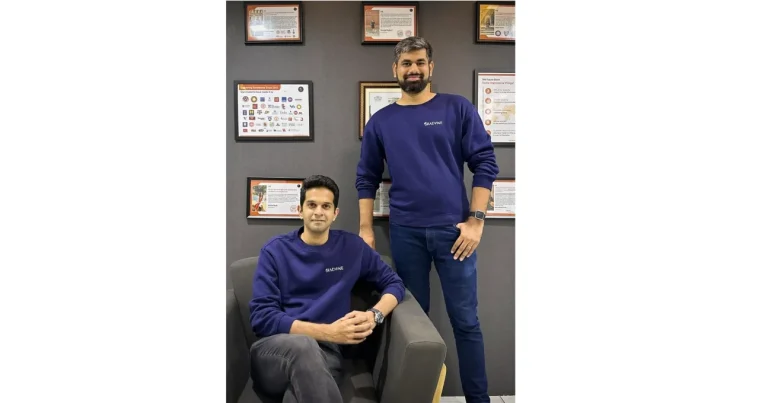
Interview with Sehej Sharma, Co-Founder & CEO, Focus Realm
When Sehej Sharma explains what Focus Realm is building, he does not start with a product screenshot. He starts with a hotel corridor at 2 a.m.
“Picture a 120-room property, tier-two city, fully booked,” says the co-founder and CEO of Focus Realm. “The night manager is one person. Housekeeping has turned over twice this year. Somewhere on the third floor, a checklist that is supposed to be done every night is quietly not being done. Nobody is lying. Nobody is lazy. There is simply no system that connects the standard in the binder to the person on the floor at 2 a.m. That corridor is the entire problem, and it is the same corridor in almost every hotel we have walked.”
Focus Realm exists to fix that corridor. And to explain how, Sharma points first to the hotels that have already tried to solve it, and what their attempts reveal.
The Five-Star Chains Figured Out One Half of It
The world’s most demanding hotel brands, Sharma notes, have spent decades building the machinery of consistency. Luxury operators run detailed brand-standard manuals, dedicated quality departments and regional auditors who fly in to inspect properties against hundreds of checkpoints. The entire promise of a global luxury brand is that a room in one city feels identical to a room in another.
“The top of the market solved consistency with people and process,” Sharma says. “An army of auditors, a thick manual, a quality manager on payroll. It works, and it is extraordinarily expensive. It is a model that assumes you have a corporate structure sitting above the property. Most hotels on earth do not have that. They have an owner and a GM.”
That gap, he argues, is exactly where the opportunity sits. The consistency machinery of a luxury chain is unreachable for an independent midscale hotel. But the need for consistency is, if anything, greater there, because the independent property has no brand safety net to fall back on when a shift goes wrong.
“The luxury chains solved consistency with an army of auditors and a thick manual. Most hotels on earth have an owner and a GM. They need the same result without the same overhead.”
SEHEJ SHARMA, CO-FOUNDER & CEO, FOCUS REALM
What Indian Hotels Are Using Right Now
When Focus Realm studied what mid-market Indian hotels actually rely on to hold standards together, the answer was rarely software at all. It was a register at the front desk, an Excel sheet on the manager’s laptop, and a WhatsApp group.
“The real competition for us is not another platform,” Sharma says. “It is a WhatsApp group and a paper register. In a huge number of Indian hotels, room and floor allocation is still coordinated over WhatsApp every single morning. The supervisor messages who cleans what. There is no record of whether it was done to standard. There is a photo, maybe, if someone remembers.”
He is emphatic that this is not a criticism of the operators. “WhatsApp is actually a brilliant tool. It won because it is simple and everyone already has it. That is the bar. If our product is not as easy to open as a WhatsApp group, we lose, and we deserve to lose.”
This is why Focus Realm designed its staff interface mobile-first, for a screen roughly 340 pixels wide, on the phone a housekeeper already owns, and made the deliberate decision not to require integration with a hotel’s property management system at this stage. “A GM should be able to start on a Monday morning without calling an IT vendor,” he says.
The Proof That the Model Travels
To show that structured, evidence-based execution is not a fantasy, Sharma points beyond hotels to the world’s largest retailers, who have proven the underlying idea at enormous scale.
In 2021, Walmart, the largest private employer in the United States, rolled out an app called Me@Walmart to its store associates and committed to putting a company smartphone in the hands of more than 740,000 of them. The app turned a worker’s day into a single mobile flow: schedules, a geofenced mobile clock-in, push-to-talk communication and a voice assistant to answer questions on the floor.
“Walmart did not do that for fun,” Sharma says. “The largest retailer on earth decided the future of frontline work is task execution on the device in the worker’s pocket. That is the exact bet we are making for hotels.”
Closer to hospitality’s daily rhythm, an entire software category has grown up around multi-unit restaurants and convenience stores. The platform once called Zenput, renamed Crunchtime Ops Execution in 2026, is used by operators including Chipotle, Domino’s and 7-Eleven to push daily checklists, line checks and food safety tasks to every location, with a feature Sharma finds especially telling: photo validation. A manager overseeing a hundred stores can require a photo of a key area several times a day and actually see the work, rather than trust a ticked box. One operator, Tacala Companies, reported a 6 percent improvement in brand audit scores after rolling the platform across more than 300 Taco Bell locations.
“A checkbox can lie. A timestamped photo attached to a specific task on a specific shift is much harder to argue with. Restaurants proved that. Hotels have barely begun.”
SEHEJ SHARMA, CO-FOUNDER & CEO, FOCUS REALM
“Restaurants and convenience stores are ahead of hotels on this,” Sharma admits. “A burrito line is highly repeatable, so it was an easier place to start. A hotel is harder, because it runs dozens of different standards across front office, housekeeping, food and beverage and engineering, each written differently. But harder is not the same as impossible. It just means the product has to be smarter about how standards are authored.”
Why a Hotel Is the Ultimate Case for This
Sharma argues that hospitality is, in fact, the setting where evidence-based execution matters most, precisely because a hotel’s reputation is rebuilt from scratch every single night.
“A retailer’s reputation is fairly stable,” he says. “You broadly know what a Walmart is. A hotel is different. Every guest’s opinion is formed on one specific shift, in one specific room, by whoever happened to be working. A single bad night becomes a permanent one-star review. That review then caps what the hotel can charge. Research from Cornell has shown that a one-point rise in a hotel’s review score can support an 11.2 percent price increase at the same occupancy. So the stakes of the shift are higher in a hotel than almost anywhere else.”
That is the logic that produced Focus Realm Hospitality’s core loop, purpose-built for the hotel corridor rather than the store aisle. The SOP lives inside a timed task. Completing the task generates photo and supervisor evidence. That evidence becomes an audit-ready service record. Three role-specific portals separate the people who do the work, the managers who oversee it, and the authors who write the standards, because, as Sharma puts it, “a housekeeper and a standards author have nothing in common in what they need on a screen.”
The Chance to Leapfrog
For Sharma, the most exciting part is that Indian hotels do not have to crawl through the same decade of evolution that Western retail did.
“The playbook already exists,” he says. “Walmart proved the device. The restaurant platforms proved photo evidence at scale. We get to take those hard-won lessons and build them, from day one, for the reality of an Indian hotel: the housekeeper’s own phone, a patchy network, a shift with thirty seconds to spare, and a GM who cannot buy 740,000 smartphones. That is not a disadvantage. It is a chance to leapfrog.”
Focus Realm is pre-revenue and working toward its first paying hotel customer before the end of 2026, with early relationships in motion with properties including Clarks Hotels & Resorts and The Hosteller.
“Every great chain, from the luxury flagship to the burrito line, eventually learned the same lesson,” Sharma says. “You cannot manage what you cannot see. We want to be the company that finally makes the hotel shift visible, for every property, not just the ones that can afford an army of auditors.”
About Focus Realm
Focus Realm builds software that gets standards out of the binder and into the shift. Its hospitality product, Focus Realm Hospitality, turns hotel SOPs into timed tasks that generate photo and supervisor evidence and an audit-ready service record. The company also serves universities, colleges and schools with bespoke digital learning ecosystems. It is led by Sehej Sharma (Co-Founder & CEO), Ali Electricwala (Co-Founder & COO) and Aditya Mishra (CTO). Tagline: Every shift, five-star.
Connect
Website: focusrealm.org
Sehej Sharma on LinkedIn: linkedin.com/in/sehej-sharma-5b2151234
Focus Realm on LinkedIn: Focus Realm company page
-
Brandpost2 years agoRedfox Overseas: Customize Your Own Energy Drink and Stand Out in the Market
-
Brandpost2 years agoZamzam Company CEO Chhote Bhai-Bade Bhai gave a grand welcome to Indian writer Devhari Sirvi in Dubai
-
Fashion2 years agoShikha Sharma: The Fashion Journalist, Blogger, and Plus-Size Model Taking the Industry by Storm
-
Entertainment1 year ago
Lucky Roxx’s “Yadav Ki Pukar” Goes Viral! Youth Celebrate Unity & Power
-
Entertainment9 years agoNew Season 8 Walking Dead trailer flashes forward in time
-
Entertainment9 years agoMeet Superman’s grandfather in new trailer for Krypton
-
Uncategorized2 years ago
Hello world!
-
Brandpost2 years agoFrom Local Hero to National Icon: Satyam Yadav’s Journey with TwentyOne