
Brandpost
CRAI India Foundation: Building India’s Future Through Robotics, AI, Automation & Innovation

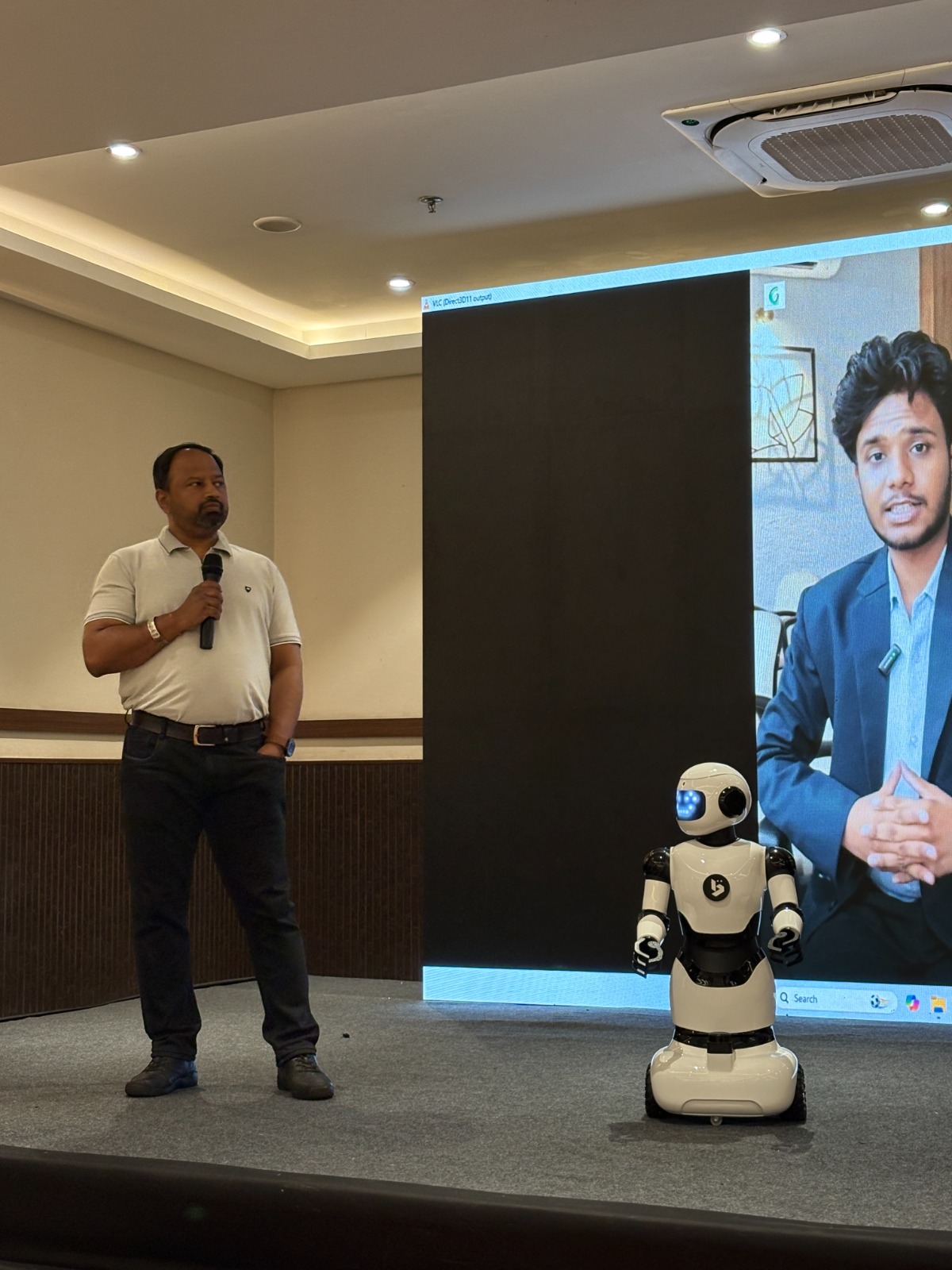
India is entering a new era of technological transformation. Artificial Intelligence, Robotics, Automation, Internet of Things, Drone Technology and Industry 4.0 are rapidly changing the way industries operate and the skills that future professionals need.
At the centre of this transformation, CRAI India Foundation – Council of Robotics, Automation & Innovation India (CRAII) is building an ecosystem designed to connect education, technology, industry and innovation.
CRAI India works with schools, colleges, universities, institutions, students, educators, startups and industries to promote future technologies through practical education, certifications, institutional accreditation, innovation labs, skill development and industry-academia collaboration.
What is CRAI India Foundation?
The Council of Robotics, Automation & Innovation India (CRAII) is focused on advancing robotics, artificial intelligence, automation and emerging technologies across India.
Its vision extends beyond conventional technology education.
CRAI India aims to create a connected innovation ecosystem where educational institutions can access modern technology infrastructure, students can gain practical skills, educators can develop expertise, startups can access innovation networks and industries can collaborate with academia.
By operating at the intersection of education, industry and innovation, CRAI India seeks to contribute to the development of future-ready institutions and technology-driven talent across the country.
Key Technology Domains of CRAI India
CRAI India works across a broad range of emerging and future technologies that are increasingly important for education and industry.
These include:
- Robotics
- Artificial Intelligence
- Machine Learning
- Automation
- Drone Technology
- Internet of Things (IoT)
- Industry 4.0
- Smart Manufacturing
- Innovation Systems
- Coding & Robotics
- STEM Innovation
- Future Skills
This multidisciplinary approach allows students and institutions to explore technologies from basic robotics and coding to advanced industrial automation and intelligent manufacturing systems.
Robotics Education for Schools, Colleges and Universities
Robotics education is becoming an important part of modern STEM and engineering education.
CRAI India promotes hands-on robotics learning frameworks for schools as well as higher education institutions.
Instead of limiting learning to theoretical concepts, robotics education encourages students to understand programming, electronics, sensors, mechanical systems, automation and problem-solving through practical projects.
This project-based approach can help students develop technical skills while strengthening creativity, analytical thinking and innovation.
Artificial Intelligence and Emerging Technology Education
Artificial Intelligence is transforming almost every major industry.
CRAI India supports applied AI learning for students, institutions and professionals, with exposure to areas such as Machine Learning, Computer Vision, Generative AI and intelligent systems.
The objective is to help learners move from simply understanding AI concepts to exploring how artificial intelligence can be implemented in practical applications.
Alongside AI, CRAI India also focuses on emerging technology domains that can contribute to future research, entrepreneurship and industrial development.
Automation and Industry 4.0
Modern manufacturing is increasingly driven by automation, connected systems and intelligent production technologies.
CRAI India promotes learning and infrastructure around industrial automation technologies including PLC, SCADA, industrial robotics, smart manufacturing, digital twins and Industry 4.0 systems.
Exposure to these technologies can help engineering and technical students better understand how modern industrial environments operate.
It also enables educational institutions to bring industry-oriented learning closer to the classroom.
Innovation Labs & Future-Ready Infrastructure
One of the major focus areas of CRAI India is helping educational institutions establish practical technology and innovation infrastructure.
CRAI India supports different categories of innovation labs, including:
Robotics Labs – Robotics kits, curriculum integration and practical learning environments.
AI Innovation Labs – Infrastructure for Machine Learning, Computer Vision, Generative AI and applied AI research.
Automation Labs – PLC, SCADA and industrial automation systems for practical engineering education.
STEM Labs – Project-based STEM learning environments for schools.
Drone Labs – Infrastructure for drone assembly, programming, simulation and flight training.
IoT Innovation Labs – Sensor networks, microcontrollers, connected devices and smart systems.
Smart Manufacturing Labs – Industrial robotics, production systems and Industry 4.0 environments.
Future Technology Labs – Exposure to technologies such as AR/VR, Digital Twins, Quantum Computing and other emerging fields.
The objective is to create laboratories that function as active centres of learning, experimentation, research and innovation.
Certifications and Institutional Accreditation
Developing skills is important, but creating structured standards for technology education is equally valuable.
CRAI India provides certification pathways for students and professionals while also offering institutional accreditation frameworks.
Student certifications are designed for learners exploring future technologies, while professional certifications support trainers, educators and working professionals seeking to validate their technology skills.
For educational institutions, CRAI India has structured recognition levels including:
CRAI Recognized Institution (CRI-01) – For institutions beginning their journey in Robotics, AI, Automation and innovation-driven education.
CRAI Innovation Partner (CRI-02) – For institutions actively implementing technology initiatives, innovation programs and industry collaboration.
CRAI Centre of Excellence (CRI-03) – For institutions demonstrating advanced capabilities in technology education, practical learning, research and innovation.
These frameworks are designed to encourage institutions to continuously strengthen their technology and innovation capabilities.
Building Stronger Industry-Academia Collaboration
A major challenge in technical education is the gap between academic knowledge and practical industry requirements.
CRAI India seeks to strengthen industry-academia collaboration by creating opportunities for institutions, educators, technology experts and industry professionals to work together.
These collaborations can include technology training, workshops, Faculty Development Programs, industry interactions, student projects, innovation challenges, research activities and institutional technology initiatives.
The objective is to create an environment where students understand not only what technology is, but also how it is being applied in real industries.
CRAI India Innovation Network
Building India’s technology ecosystem requires participation from more than educational institutions alone.
CRAI India is developing an innovation network that brings together:
Students through certifications, hackathons, mentorship, innovation challenges and career development opportunities.
Institutions through innovation labs, certifications, faculty development and industry collaborations.
Faculty Members through technology training, research collaboration and Faculty Development Programs.
Startups through mentorship, innovation networks and technology-driven entrepreneurship opportunities.
Corporates through workforce development, CSR initiatives, innovation programs and campus engagement.
Mentors & Industry Experts through workshops, guest sessions and guidance for the next generation of innovators.
This interconnected approach helps create an ecosystem where education, entrepreneurship, research and industry can support each other.
Empowering the Next Generation of Indian Innovators
India’s future technology leadership will depend heavily on the skills and opportunities available to today’s students.
Learning Robotics, AI, Automation and emerging technologies can prepare students for opportunities in areas such as:
Robotics Engineering, Artificial Intelligence, Machine Learning, Industrial Automation, IoT Development, Embedded Systems, Drone Technology, Smart Manufacturing, Research & Development, Industry 4.0 and technology entrepreneurship.
However, future-ready education requires more than introducing new subjects into a curriculum.
Students need access to laboratories, mentors, projects, industry exposure, competitions, research opportunities and environments where experimentation is encouraged.
CRAI India Foundation aims to help build this ecosystem.
Partnering with Educational Institutions Across India
CRAI India welcomes collaboration with schools, colleges, universities, training institutions, startups, industries and other organisations interested in developing future-ready technology ecosystems.
Institutional collaborations can include:
- Robotics and AI Lab Setup
- Automation & Industry 4.0 Labs
- STEM and Innovation Labs
- Student Certification Programs
- Institutional Accreditation
- Faculty Development Programs
- Workshops and Technology Training
- Research & Innovation Initiatives
- Industry-Academia Collaboration
- Startup & Incubation Support
- Hackathons and Innovation Challenges
- Emerging Technology Programs
Through these initiatives, institutions can create stronger environments for practical learning, research, innovation and future skill development.
Building India’s Future Through Robotics, Automation & Innovation
The next generation of innovation will be shaped by people who can combine knowledge with practical technological capabilities.
CRAI India Foundation – Council of Robotics, Automation & Innovation India is working toward building an ecosystem where students learn by creating, educators continuously develop their capabilities, institutions become centres of innovation, startups receive support and industry connects more closely with academia.
By bringing together Robotics, Artificial Intelligence, Automation, Industry 4.0, IoT, Drone Technology, STEM and Future Skills, CRAI India aims to contribute to a technology ecosystem capable of preparing India for the industries and opportunities of tomorrow.
CRAI India is not only preparing learners for the future of technology—it is working to build the ecosystem in which that future can be created.
Partner with CRAI India Foundation
Whether you are a school, college, university, startup, corporate organisation or technology institution, CRAI India Foundation welcomes opportunities to collaborate and build future-ready ecosystems in Robotics, Artificial Intelligence, Automation and Emerging Technologies.
Partner with CRAI India for:
- AI, Robotics & Automation Lab Setup
- Institutional Partnerships
- Student & Professional Certifications
- Institutional Accreditation
- Faculty Development Programs
- Workshops & Training Programs
- Industry-Academia Collaboration
- Research & Innovation Initiatives
- Hackathons & Innovation Challenges
- Startup & Technology Ecosystem Development
Contact CRAI India Foundation
Council of Robotics, Automation & Innovation India (CRAII)
Website: craiindia.com
Email: admin@craiindia.com
Phone: +91 96463 08200 | +91 91154 00982
Office: 506, 5th Floor, DDA-5 Building, District Centre, Janak Puri, New Delhi – 110058, India
Connect with CRAI India Foundation and become part of a growing ecosystem focused on building India’s future through Robotics, Artificial Intelligence, Automation and Innovation.
Brandpost
Until Every Hungry Soul Is Fed, Veeir Chaudary Cannot Sleep Peacefully — The Actor-Producer Feeding Over 100 Animals Every Day

For some people, success is measured by fame, money and recognition. For actor and producer Veeir Chaudary, true success seems to be measured by how many lives he can make a little better.
Veeir Chaudary has been associated with the film industry since 2005. After nearly 21 years in the industry, he has experienced the highs and lows of a demanding career—success, struggle, opportunities, setbacks and countless challenges. Yet, alongside his professional journey, he has quietly developed another mission close to his heart: serving people and animals in need.
Every day, Veeir feeds more than 100 animals, including dogs, cows and birds. For him, feeding these voiceless beings is not simply charity or social work. It has become a responsibility he feels deeply from within.
He says that when he sees a hungry animal, it becomes difficult for him to simply walk away. Even at night, the thought can stay with him.
“If they are hungry, how can I sleep peacefully?” is the emotion behind his commitment.
For Veeir, animals are not merely creatures living around us. Whenever he sees dogs or cows outside his home, he says he sees God in them. He believes that serving a living being is also a way of expressing gratitude to the Almighty.
His compassion does not stop with animals.
Every weekend, Veeir visits an old-age home and takes food and essential provisions for the residents. His visits are driven by a belief that elderly parents deserve dignity, affection and companionship, especially during the later years of their lives.
He feels deeply about children who leave their parents in old-age homes and believes society must seriously reflect on the emotional responsibility children have towards their parents. The same parents who spend decades raising, protecting and supporting their children deserve care and respect when they grow old.
For Veeir, this is not about judging an entire generation. It is about reminding people of the value of family, gratitude and responsibility.
Despite spending more than two decades in the film industry, Veeir considers himself fortunate rather than simply successful. He believes the Almighty has blessed him with the ability and resources to do something for both human beings and animals.
He remains grateful for that opportunity.
There is a quiet spirituality behind his actions. He believes that perhaps God has sent certain people and animals into his path because they need his help.
After 21 years of experiencing the unpredictable journey of the entertainment industry, Veeir Chaudary appears to have discovered a different kind of happiness—one that does not come from applause or cameras.
It comes from watching a hungry animal eat.
It comes from seeing an elderly person smile.
And perhaps, for Veeir, that is what makes life truly meaningful.
Brandpost
Mayank Jain and Shell Entertainment Expand Strategic Social Media & PR Support for Public-Facing Leaders

The agency is building an integrated approach to digital presence, personal branding, media outreach and reputation management
In an increasingly digital-first business environment, public visibility has become closely connected with professional credibility. Shell Entertainment, led by Managing Director and Co-Founder Mayank Jain, is positioning its social media and public relations services around this changing communication landscape. The agency works with businessmen, entrepreneurs, public figures and political leaders to develop structured digital communication and media strategies.
At the centre of Shell Entertainment’s approach is the understanding that a public profile requires more than regular social media activity. According to the company’s positioning, clients often need a consistent narrative across platforms, relevant content, media outreach and ongoing reputation management. Mayank Jain’s role has focused on bringing these elements together through an agency model designed around individual communication requirements rather than generic campaigns.
Building Structured Digital Presence
Shell Entertainment provides social media management covering content planning, publishing, audience engagement and platform-specific communication across channels including Instagram, Facebook, X, LinkedIn and YouTube. The objective is to maintain a consistent digital identity while allowing communication to reflect the client’s professional profile and public positioning.
The agency also works in personal branding for entrepreneurs and business leaders, with services that include thought-leadership content, LinkedIn-focused positioning and strategic digital communication. For professionals seeking greater visibility in their respective industries, this approach places emphasis on communicating expertise, experience and professional milestones in a clear format.
PR and Reputation Management
Another part of the agency’s service portfolio is public relations and media outreach. This includes press communication, media placements, interview coordination and reputation-focused communication. The broader objective is to help clients present information about their work through organised and credible communication channels.
For public-facing individuals, reputation management has also become an important part of digital strategy. Shell Entertainment’s stated approach combines monitoring, content planning and communication support to help clients respond to changing online narratives while maintaining consistency across their public profiles.
Mayank Jain’s Expanding Vision
Mayank Jain’s work at Shell Entertainment reflects a broader shift in how entrepreneurs, business leaders and other public-facing professionals approach personal visibility. Instead of treating social media and PR as separate activities, the agency brings content, branding, media relations and reputation support into a connected communication framework.
As digital platforms continue to influence how professional identities are discovered and discussed, Shell Entertainment is developing its services around the intersection of social media, PR and personal branding. With Mayank Jain at the helm, the agency’s stated focus remains on creating tailored communication strategies that help clients present their work, achievements and professional stories with greater consistency.
For businesses and public-facing professionals exploring structured digital communication and PR support, Shell Entertainment represents an agency-led approach that combines creative content with strategic media execution. The company’s service information is available at shellentertainment.online.
Website: shellentertainment.online
Out of 17,603 submissions received for HS Publications’ nationwide writing event, Tamoghna Dey’s entry stood out to claim the 19th spot in the Top 100 Pensmith list, earning recognition for dedication, passion and creativity in writing.
Writer Tamoghna Dey has been honoured with a place among the Top 100 Pensmith in the Best Pensmith Awards 2026, an all-India writing recognition programme organised by HS Publications under the theme “Pen Your Potential.” Dey’s submission was ranked 19th out of a pool of 17,603 entries received for the event, placing his work firmly among the strongest voices to take part this season.
The announcement was shared by HS Publications along with a formal congratulatory note recognising Dey’s contribution to the writing community. “We sincerely appreciate your dedication, passion, and hard work in the field of writing,” the organisers noted, adding that his efforts and creativity were “truly commendable.”
A Competitive Field of Over 17,000 Entries
The scale of participation in the Best Pensmith Awards 2026 underlines the significance of Dey’s placement. With 17,603 submissions received nationwide, securing a spot inside the Top 100 already marks a notable achievement, and finishing at 19th position places his entry among the very best of that shortlist.
HS Publications, which runs under the tagline “Publish your way to success,” confirmed that the recognition follows Dey’s participation in the event and is being communicated as part of the official results announcement. The organisers extended their thanks for his participation, describing the recognition as an acknowledgement of the time and effort put into his craft.
The Winning Entry
The piece submitted by Dey for the competition is a reflective poem exploring themes of love, vulnerability and the emotional risks that come with matters of the heart. Written in a conversational, questioning tone, it speaks directly to its subject, weighing beauty, compassion and the consequences of playing carelessly with someone’s feelings.
The poem’s closing lines carry a note of caution, reminding the reader that “if you play with someone’s heart,” the consequences of being found out can outlast the moment. It is this blend of emotional honesty and lyrical simplicity that appears to have resonated with the judging panel.
What the Top 100 Pensmith Recognition Represents
The Best Pensmith Awards is positioned as a platform to identify and celebrate emerging and established writing talent from across the country. A Top 100 placement, drawn from tens of thousands of entries, is intended to spotlight writers whose work demonstrates strong creative merit, clarity of voice and emotional depth.
For participants like Dey, the recognition serves both as validation of individual craft and as encouragement to continue building a body of work. HS Publications has indicated that the results are being shared with all participants as part of the event’s official communication, along with appreciation for the time and creativity invested by every entrant.
Looking Ahead
Dey’s placement in the Top 100 Pensmith list adds to a growing body of recognition for independent writers finding platforms through nationwide literary events. Readers interested in following his work can find more of his writing through his personal website.
More about Tamoghna Dey and his work can be found at tamoghnadey.com.
We congratulate Tamoghna Dey on this achievement and wish him continued success in his writing journey.


Until Every Hungry Soul Is Fed, Veeir Chaudary Cannot Sleep Peacefully — The Actor-Producer Feeding Over 100 Animals Every Day

Panama Petrochem Ltd: A Leading India Manufacturer of White Oil and Specialty Petroleum Products

Mayank Jain and Shell Entertainment Expand Strategic Social Media & PR Support for Public-Facing Leaders

Redfox Overseas: Customize Your Own Energy Drink and Stand Out in the Market

Zamzam Company CEO Chhote Bhai-Bade Bhai gave a grand welcome to Indian writer Devhari Sirvi in Dubai

Shikha Sharma: The Fashion Journalist, Blogger, and Plus-Size Model Taking the Industry by Storm
-
 Brandpost2 years ago
Redfox Overseas: Customize Your Own Energy Drink and Stand Out in the Market
-
 Brandpost2 years ago
Zamzam Company CEO Chhote Bhai-Bade Bhai gave a grand welcome to Indian writer Devhari Sirvi in Dubai
-
 Fashion2 years ago
Shikha Sharma: The Fashion Journalist, Blogger, and Plus-Size Model Taking the Industry by Storm
-
Entertainment1 year ago
Lucky Roxx’s “Yadav Ki Pukar” Goes Viral! Youth Celebrate Unity & Power
-

 Entertainment9 years ago
New Season 8 Walking Dead trailer flashes forward in time
-
Entertainment9 years ago
Meet Superman’s grandfather in new trailer for Krypton
-
Uncategorized2 years ago
Hello world!
-

 Brandpost2 years ago
From Local Hero to National Icon: Satyam Yadav’s Journey with TwentyOne