
Delhi
Delhi’s October 10 detentions explained: What police say and what the CJP says
Delhi Police detained hundreds of people, including the Cockroach Janta Party’s founder at the airport and a group of lawyers marching from the Supreme Court, as the party’s October 10 protest against the Chief Election Commissioner was blocked, according to ThePrint’s live reporting.

Police said about 150 people were detained in the morning and about 500 more arriving in groups.
The CJP says its founder and two co-conveners were detained at the airport and taken to an unknown location.
Al Jazeera reported that the party says thousands of its members were detained.
That is the party’s own claim and not an independent count.
The Supreme Court Bar Association has asked the Chief Justice of India to intervene.
Police said Delhi had been divided into 20 zones, each with a detention centre, and that three stadiums were designated as detention centres.
The CJP said its founder, Abhijeet Dipke, and two co-conveners were detained by police who boarded their plane after it landed at Delhi’s IGI airport at about 10:30 am.
The CJP said the three were taken to an unknown location.
The party also said that its legal spokesperson and its policy head were detained, and that a YouTuber was detained from a home in Gurugram.
At about 11 am, police detained a group of lawyers who were marching from the Supreme Court to Jantar Mantar.
At about noon, the Supreme Court Bar Association asked the Chief Justice of India for urgent intervention and for an examination of the detentions and the reported use of force.
The CPI(M) said that former Kerala chief minister Pinarayi Vijayan and other party leaders were detained, and Tushar Gandhi was reported detained in Mumbai while heading to a planned protest.
Newslaundry said that three of its journalists were detained and their official phones seized, and Scroll said its reporter was detained.
Police used buses, including prison vehicles, to take detainees away, according to ThePrint.
Al Jazeera reported that the party says thousands of its members were detained ahead of the protest, which is the party’s own claim and not an independent count.
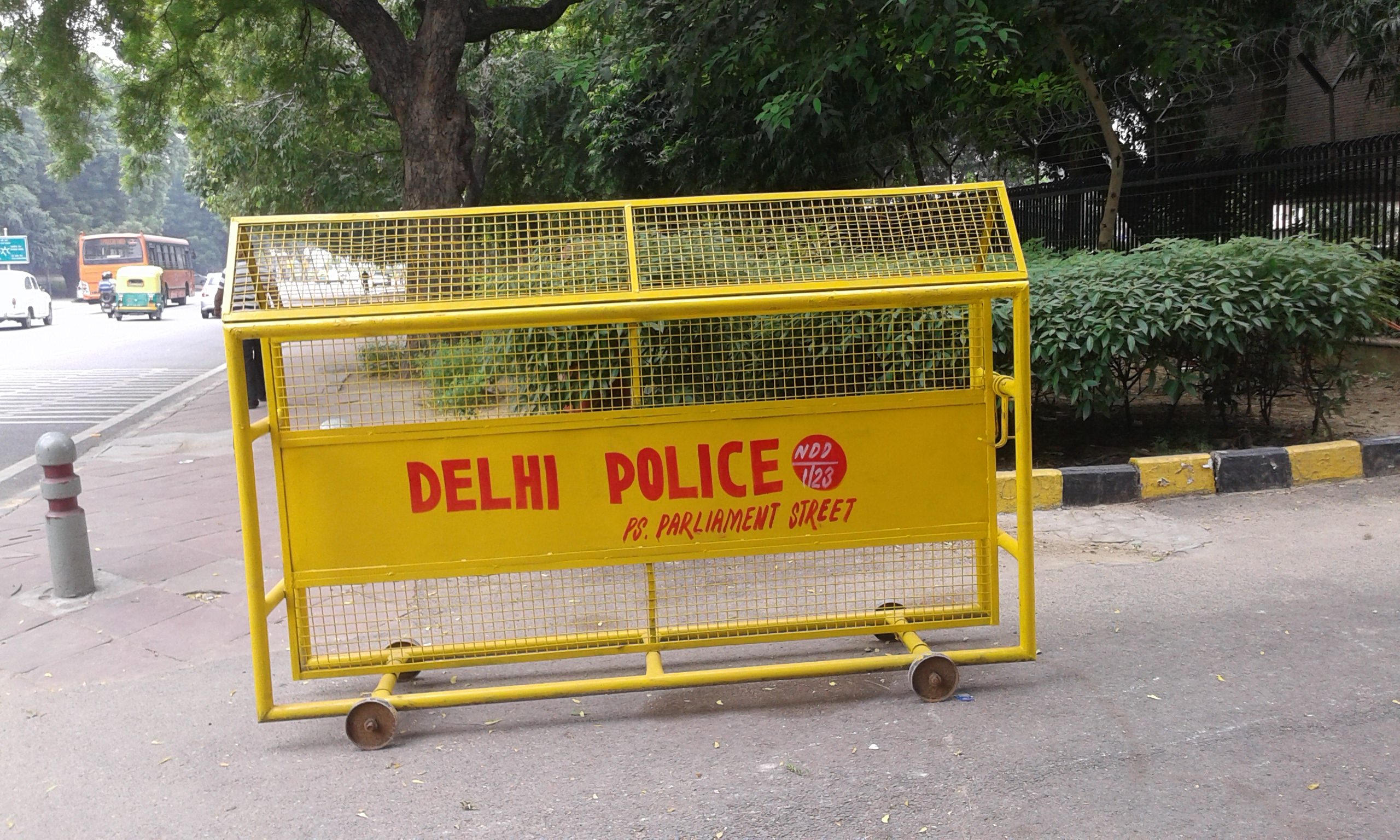
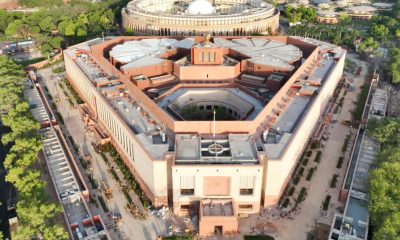
Delhi Police barricade (representative image), Wikimedia Commons, CC BY-SA 3.0





Delhi
Metro shutdown explained: Why the Supreme Court intervened
The Supreme Court said on October 9 that Delhi’s Metro and trains cannot be shut down entirely ahead of the CJP protest, while allowing regulated movement; on October 10 entry and exit were limited at 45 Metro stations and mobile internet was cut near Kartavya Path.
Petitioners challenged the closure of 57 Metro stations and the cancellation of long-distance trains.
The court said that an entire city cannot be shut down because of protests.
It cited commuters from Gurugram, Greater Noida and other NCR towns.
It allowed regulated movement and did not strike down the restrictions.
The Solicitor General said an alternative protest site would be considered.
It directed the authorities to give due publicity to their decisions on Metro and railway services and to issue a traffic advisory.
It said that restrictions must be proportionate and must not cause undue hardship to the public, according to Bar and Bench.
The court said that an entire city cannot be shut down because of protests, according to The Quint.
It cited the thousands of commuters who travel every day from Gurugram, Greater Noida and other parts of the NCR to Delhi for work and education.
Solicitor General Tushar Mehta defended the measures as meant to maintain law and order.
The Solicitor General told the bench that the competent authority would consider designating a place other than Jantar Mantar for peaceful protests.
Senior advocates Kapil Sibal, Abhishek Singhvi and Prashant Bhushan argued against the restrictions, and Singhvi said that preventive measures of this scale could not be justified when no incident had occurred.
The order does not strike down the restrictions outright, and authorities can still regulate the movement of Metro and trains.
On October 10, entry and exit were limited at 45 Metro stations until 6 pm, and interchange was available everywhere except at New Delhi station, according to Careerindia.
About 45 stations had been closed from 9 pm on October 9 for security reasons, according to ThePrint.
Mobile internet was shut within a four-kilometre radius of Janpath and Kartavya Path from 10 pm on October 9 to 10 pm on October 10, according to Careerindia.
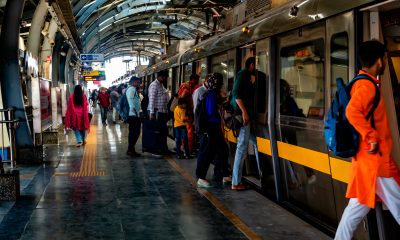
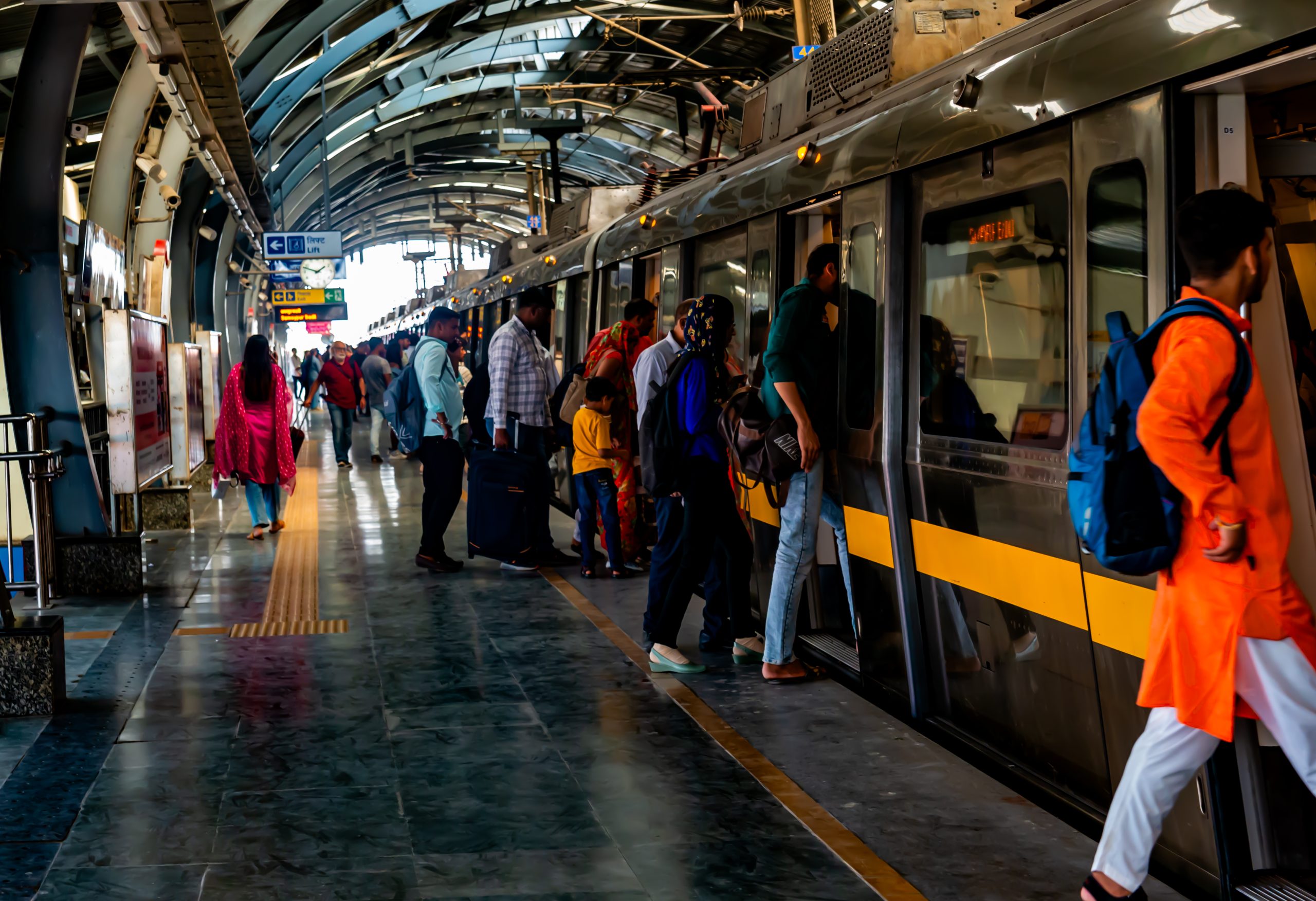
Delhi Metro station (representative image), Wikimedia Commons, CC BY-SA 4.0
Delhi
Delhi protest explained: Why the capital is on high alert
Delhi is bracing for the Cockroach Janta Party’s October 10 protest against Chief Election Commissioner Gyanesh Kumar, with tens of thousands of security personnel, prohibitory orders and a liquor shop closure on October 9 and 10.
The CJP plans a protest on October 10 against Chief Election Commissioner Gyanesh Kumar.
Police have not granted permission.
Tens of thousands of security personnel are reportedly being deployed.
Reports gave different totals, from more than 20,000 to about 43,000.
Commuters should check advisories before travelling.
About 23,000 Central Armed Police Forces personnel are reportedly being deployed, according to Outlook.
The Union Home Ministry approved 221 CAPF companies for October 8 to 12, plus 110 additional companies for Delhi Police, according to the same report.
About 20,000 Delhi Police personnel will also be deployed, according to sources cited by Outlook.
Reports gave different totals for the deployment, from more than 20,000 to about 43,000, so this report gives the figures as attributed.
For comparison, about 150 CAPF companies were deployed for the CJP’s July protest at Jantar Mantar, according to Outlook.
Officials plan multi-layered barricades and strict surveillance at Delhi’s borders, railway stations and bus terminals.
CCTV feeds will be monitored from a control room, and facial recognition cameras are to be installed across the capital.
Police could close all Metro stations in the New Delhi area and shut markets if needed, according to the reports.
Section 163 of the Bharatiya Nagarik Suraksha Sanhita, which lets executive magistrates issue urgent public-order orders, will be in force, according to sources cited by Outlook.
Uttar Pradesh and Haryana have been asked to stay alert, according to the same report.
Retail liquor shops in Delhi have been ordered shut on October 9 and 10, according to India TV News and LatestLY.
Hotels, clubs, bars and restaurants with excise licences to serve liquor will stay open.
Bharatiya Kisan Union leader Rakesh Tikait announced support for the October 10 protest, according to ETV Bharat.
On October 6, INDIA bloc MPs marched towards the Election Commission with the same demand and were stopped by police.
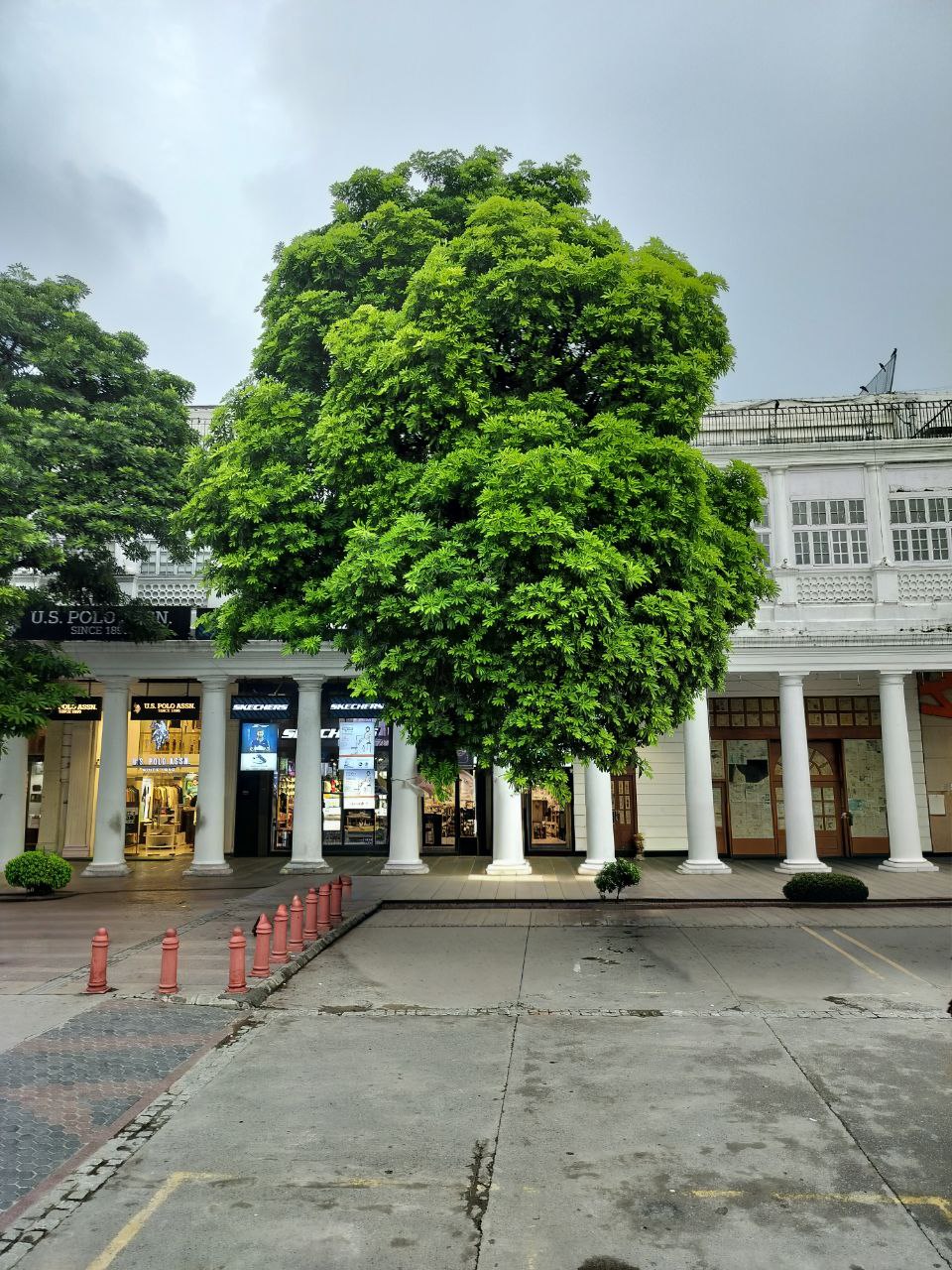
Connaught Place, New Delhi (file image), Wikimedia Commons, CC BY-SA 4.0
Delhi
Seemapuri building collapse explained: What we know so far
At least five people died and rescue work continued on October 8 after a four-storey building collapsed in New Seemapuri in northeast Delhi on October 7, with demolition work next door and cracks after Tuesday’s earthquake among the suspected causes.
The building had four storeys and was about 20 to 25 years old.
It collapsed at around 3:30 pm on October 7.
At least five people have died.
Suspected causes include demolition work next door and cracks after an earthquake.
The exact cause is still under investigation.
Officials said that two to three people could still be trapped under the rubble.
Teams from the Delhi Fire Services, Delhi Police, DDMA, MCD, CATS and the NDRF were at the site.
Narrow lanes and large concrete slabs slowed the rescue, and bulldozers, heavy machinery and local residents helped to clear the debris.
North East Delhi District Magistrate Ajay Kumar said witnesses had reported demolition work at an adjoining structure.
The magistrate said that vibrations from the machinery may have contributed to the collapse, according to the same report.
Residents said that cracks appeared in the building after the earthquake that struck Chamoli in Uttarakhand on Tuesday night and was felt in Delhi.
The exact cause has not been established, and a detailed assessment is needed.
The MCD said the building was about 20 to 25 years old and stood on a plot of about 22 to 25 square yards.
Adjoining buildings and a nearby boundary wall were also damaged.
Chief Minister Rekha Gupta directed agencies to coordinate and speed up rescue operations, according to the Delhi Chief Minister’s Office.
The collapse came a month after a building collapse in Delhi’s Satya Niketan area on September 6, in which seven people died.
The National Disaster Response Force specialises in search and rescue after structural collapses.
Many buildings in dense parts of Delhi are built on very small plots, with narrow lanes that make heavy equipment hard to bring in.
The reports did not mention compensation or a formal inquiry at the time of writing.
Street scene in Delhi (representative image), Wikimedia Commons, CC BY 2.0


Delhi protests explained: Why opposition leaders were detained

UN statement on Delhi explained: What ‘necessity and proportionality’ mean

Lawyers’ detention explained: What happened and who intervened

Redfox Overseas: Customize Your Own Energy Drink and Stand Out in the Market

Zamzam Company CEO Chhote Bhai-Bade Bhai gave a grand welcome to Indian writer Devhari Sirvi in Dubai

Shikha Sharma: The Fashion Journalist, Blogger, and Plus-Size Model Taking the Industry by Storm
-
 Brandpost2 years ago
Redfox Overseas: Customize Your Own Energy Drink and Stand Out in the Market
-
 Brandpost2 years ago
Zamzam Company CEO Chhote Bhai-Bade Bhai gave a grand welcome to Indian writer Devhari Sirvi in Dubai
-
 Fashion2 years ago
Shikha Sharma: The Fashion Journalist, Blogger, and Plus-Size Model Taking the Industry by Storm
-
Entertainment2 years ago
Lucky Roxx’s “Yadav Ki Pukar” Goes Viral! Youth Celebrate Unity & Power
-

 Entertainment9 years ago
New Season 8 Walking Dead trailer flashes forward in time
-
Entertainment9 years ago
Meet Superman’s grandfather in new trailer for Krypton
-
Uncategorized2 years ago
Hello world!
-

 Brandpost2 years ago
From Local Hero to National Icon: Satyam Yadav’s Journey with TwentyOne