Connect with us

Government

EAM Jaishankar visits Ukraine, Poland from September 3-5

External Affairs Minister S Jaishankar is on an official visit to Ukraine and Poland from September 3-5, holding talks with his Ukrainian counterpart and Poland’s deputy PM.

Published

on

External Affairs Minister S Jaishankar is visiting Ukraine and Poland from September 3 to 5 as part of an official diplomatic trip.

He is set to hold talks with Ukrainian Foreign Minister Andrii Sybiha and Poland’s Deputy Prime Minister Radoslaw Sikorski during the visit.

The trip is aimed at enhancing bilateral relations with both countries and includes discussions on regional developments.

Jaishankar’s visit began in Warsaw on September 2, where he was received by India’s Ambassador Neeta Bhushan at Chopin Airport.

The trip comes after an August 26 phone call between Jaishankar and Sybiha, during which the Black Sea situation was discussed.

During that call, Sybiha briefed Jaishankar on the situation in the Black Sea and discussed ways to restore freedom of navigation in the area.

India has periodically positioned itself as a voice for dialogue amid the ongoing Ukraine war, with Ukrainian officials previously describing India’s engagement as an important channel for peace efforts.

The visit follows a series of recent exchanges between Indian and Ukrainian officials, including meetings at multilateral forums such as the Raisina Dialogue.

India’s engagement with both Ukraine and Poland reflects its broader effort to maintain and expand ties with countries across Europe, even as it navigates its long-standing relationship with Russia.

The three-day visit is one of the more prominent recent instances of top-level Indian diplomatic engagement with Kyiv since the start of the ongoing conflict.

Jaishankar’s trip began with his arrival in Warsaw on September 2, where he was received by India’s Ambassador Neeta Bhushan at Chopin Airport.

In Poland, the EAM is set to hold talks with Deputy Prime Minister Radoslaw Sikorski, focused on enhancing bilateral relations between the two countries.

The visit will also provide an opportunity to exchange views on regional developments and issues of mutual interest between India and its European partners.

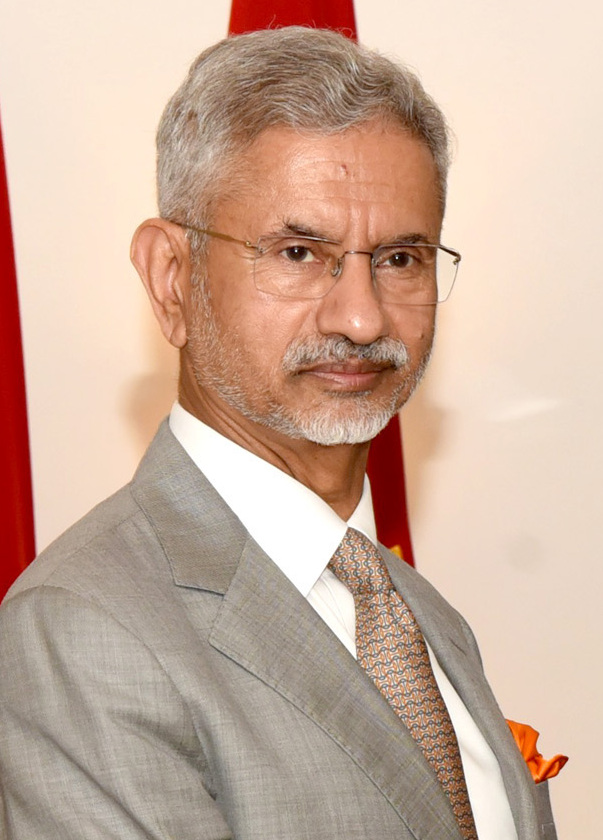
Photo of EAM Dr. S. Jaishankar, Wikimedia Commons, GODL-India

Continue Reading
Click to comment

Leave a Reply

Your email address will not be published. Required fields are marked *

Government

JKNC to gherao BJP headquarters today amid J&K political standoff

The JKNC plans to gherao BJP headquarters in Srinagar and Jammu today, hours after the BJP announced its own protest march to the Civil Secretariat, escalating tensions between the two parties.

Published

on

The JKNC will gherao BJP headquarters in Srinagar and Jammu today, deepening a political standoff between the two parties in Jammu and Kashmir.

The counter-move follows the BJP’s own announcement of a protest march towards the Civil Secretariat, targeting the NC-led state government.

JKNC’s demands include constitutional guarantees for the region, full statehood restoration, clearance of the pending reservation file, and Union Government accountability over commitments made in Parliament and before the Supreme Court.

The Srinagar gherao is scheduled for 10:00 am at Gindun Park near the Rajbagh police station, with a parallel protest set for Jammu.

Security has been tightened around BJP offices in both cities as authorities prepare for the day’s twin demonstrations.

The escalating standoff between the two parties reflects the broader post-statehood political tensions in Jammu and Kashmir, where governance is split between an elected NC-led administration and continued central oversight.

Both parties have described their planned actions as peaceful, though the scale of security deployment suggests authorities are treating the day’s twin protests as a significant flashpoint.

The JKNC has framed its gherao as an accountability exercise aimed squarely at the Union Government rather than at any local administrative failure.

Political observers have noted that simultaneous protests by two rival parties on the same day, each targeting the other’s offices or institutions, is a relatively unusual escalation even by the standards of Jammu and Kashmir’s often fraught politics.

The standoff comes against the backdrop of long-pending demands for the restoration of full statehood to Jammu and Kashmir, an issue that has repeatedly resurfaced in the region’s post-reorganisation political discourse.

The JKNC’s demands include constitutional guarantees for Jammu and Kashmir, restoration of full statehood, clearance of the pending reservation file and justice for people affected by past incidents in the region.

The Srinagar protest has been scheduled for 10:00 am at Gindun Park, near the Rajbagh police station, with a parallel demonstration planned in Jammu.

Photo of the J&K legislative assembly building, Srinagar, Wikimedia Commons, CC BY 3.0

Continue Reading

Government

PM Modi’s four-day Central Asia visit begins with Tashkent stop

PM Modi began a four-day Central Asia visit on August 29, starting with a bilateral trip to Uzbekistan before heading to Kyrgyzstan for the 26th SCO Summit.

Published

on

Prime Minister Narendra Modi’s four-day Central Asia visit began on August 29 with a stop in Tashkent, Uzbekistan.

The August 29-30 bilateral leg includes delegation-level talks with President Shavkat Mirziyoyev aimed at deepening the India-Uzbekistan strategic partnership.

Trade, investment, defence, digital connectivity, healthcare, energy and education are all on the agenda, alongside critical minerals, pharmaceuticals and space cooperation.

From Uzbekistan, PM Modi will travel to Bishkek, Kyrgyzstan, from August 31 to September 1 to attend the 26th SCO Summit, marking the organisation’s 25th anniversary.

India’s focus at the summit is expected to be security, connectivity and economic opportunity, with Chinese President Xi Jinping and Russian President Vladimir Putin also scheduled to attend.

From Tashkent, the Prime Minister will travel to Bishkek, Kyrgyzstan, for the 26th Shanghai Cooperation Organisation Summit, marking the bloc’s 25th anniversary.

India’s priority themes at the SCO Summit are expected to centre on security, connectivity and economic opportunity, with counter-terrorism and regional cooperation also on the agenda.

The Bishkek leg is expected to draw a wide roster of leaders, including Chinese President Xi Jinping and Russian President Vladimir Putin, alongside representatives from other SCO member states.

PM Modi is also expected to attend the opening ceremony of the sixth World Nomad Games while in Kyrgyzstan, adding a cultural dimension to the multilateral leg of the trip.

This marks PM Modi’s fourth visit to Uzbekistan, reflecting the sustained diplomatic engagement between New Delhi and Tashkent over the past decade.

The visit will include delegation-level talks with Uzbek President Shavkat Mirziyoyev, covering trade, investment, defence, digital connectivity, healthcare, energy, education and technology cooperation.

Officials expect discussions to also touch on critical minerals, pharmaceuticals and space cooperation, areas both countries have flagged as priorities for expanding the relationship.

PM Modi is scheduled to visit the Lal Bahadur Shastri memorial and the Mahatma Gandhi Centre at Tashkent State University as part of the cultural component of the trip.

Official portrait of PM Narendra Modi, Wikimedia Commons, GODL-India

Continue Reading

Government

NLSIU students, alumni oppose CJI Surya Kant’s convocation invite over BCI row

Students and alumni of NLSIU Bengaluru have opposed inviting CJI Surya Kant and BCI chairman Manan Kumar Mishra to their convocation, citing the now-withdrawn NALSAR enrolment order.

Published

on

Students and alumni of the National Law School of India University in Bengaluru have opposed the invitation extended to Chief Justice of India Surya Kant and Bar Council of India chairman Manan Kumar Mishra for the university’s upcoming convocation.

In a statement dated August 15, the group condemned the now-withdrawn Bar Council of India order that had barred the 2026 graduating batch of NALSAR University of Law, Hyderabad, from enrolling at state bar councils.

The statement said the unconstitutional and illegal proceedings initiated by a statutory body against students and faculty of a public university did not absolve the BCI chairman of responsibility for his conduct.

The group called it “offensive, humiliating, and a mockery of students and their struggles” to have someone who had publicly expressed disdain toward students preside over conferring degrees.

The statement was signed by 165 graduating students of the Class of 2026, 409 current students, and 128 alumni of NLSIU.

The row follows a similar controversy at NALSAR itself, where the BCI’s enrolment order had triggered widespread criticism before being withdrawn.

The Bar Council of India is the statutory body responsible for regulating legal education and the conduct of the legal profession in the country, giving its actions significant weight over students’ ability to practice law after graduation.

Convocation ceremonies typically mark the formal conclusion of a student’s academic programme, with invited dignitaries conferring degrees, making the choice of who presides a matter of considerable symbolic importance to graduating students.

The controversy underscores growing friction between law students and regulatory bodies over enrolment and disciplinary decisions that directly affect their ability to begin legal careers.

As Chief Justice of India, Surya Kant is frequently invited to preside over law school convocations across the country, making the NLSIU objection a notable departure from the usual reception such invitations receive.

Photo by Pinakpani, Wikimedia Commons, CC BY-SA 4.0

Continue Reading

Trending