Connect with us

Brandpost

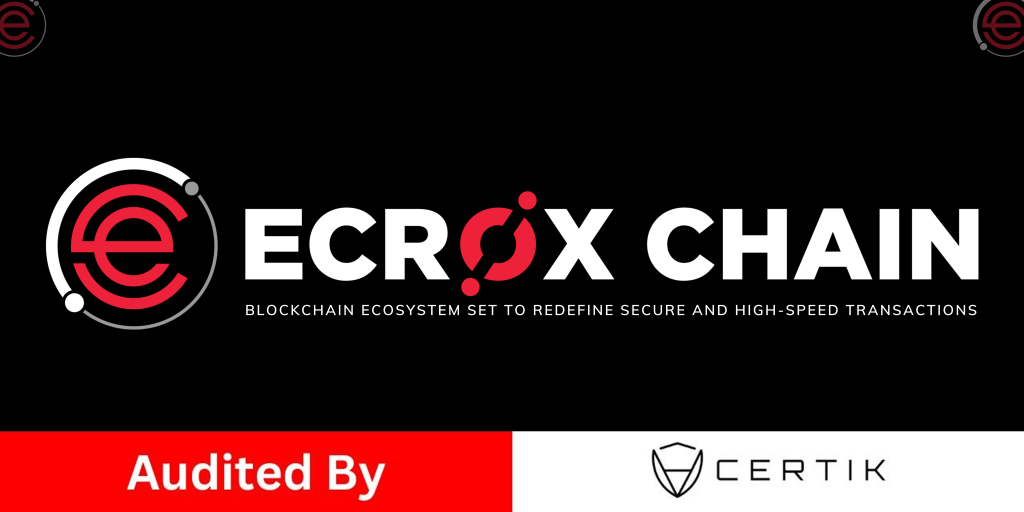
Ecrox Chain Expands to 1140 Validators and 500 RPC Servers – Achieving Highest TPS with Zero Gas Fees
Published

on

Ecrox Chain is thrilled to announce a groundbreaking milestone in its mission to revolutionize the blockchain industry. We are proud to share that our blockchain network has now reached a staggering 1,140 validators and 500 lightning-fast Remote Procedure Call (RPC) servers, marking a massive leap in scalability, speed, and decentralization. This remarkable achievement positions Ecrox Chain as a global leader in next-generation blockchain technology, setting new standards for security, performance, and user experience.

With this expansion, Ecrox Chain not only enhances its robustness but also ensures a seamless, efficient, and ultra-fast environment for decentralized applications (dApps), cryptocurrency transactions, and enterprise-level blockchain solutions. The combination of 1,140 validators and 500 RPC servers pushes the boundaries of what blockchain technology can achieve, unlocking a future where blockchain can support mass adoption with ease.

Validators: The Backbone of Ecrox Chain’s Success

Validators are essential to any blockchain, as they verify and secure transactions, ensuring the integrity of the network. At Ecrox Chain, validators play a critical role in our Delegated Proof-of-Stake (DPoS) consensus mechanism, providing unparalleled security while maintaining zero gas fees—a feature that sets us apart from many other blockchains.

Reaching 1,140 validators represents a significant leap forward in the decentralization of our network. A higher number of validators means increased resilience, enhanced security, and more democratic governance within the Ecrox ecosystem. This milestone also ensures that the Ecrox Chain remains robust and resistant to centralization, cyber threats, and downtime. As we continue to grow our validator community, we are strengthening the network’s core principles of decentralization, transparency, and security, making Ecrox Chain one of the most reliable blockchains in the world.

For users, this translates into a highly decentralized and secure blockchain, capable of handling a diverse range of decentralized applications (dApps) with flawless execution. Whether you’re a developer, an enterprise looking for blockchain solutions, or an individual seeking fast, low-cost transactions, Ecrox Chain offers the scalability and performance needed to meet your demands.

500 RPC Servers: Blazing Fast Transactions at Scale

In tandem with our growing validator network, the deployment of 500 RPC servers is another monumental achievement. RPC servers act as intermediaries between blockchain nodes and users, enabling seamless communication and data retrieval. By expanding our RPC infrastructure to 500 servers, Ecrox Chain has optimized its transaction throughput, ensuring lightning-speed processing for all users and developers.

With 500 RPC servers, Ecrox Chain can handle massive volumes of transactions per second, reducing latency and boosting the overall performance of the network. This scale-up makes Ecrox Chain a powerhouse in blockchain technology, capable of supporting both large-scale enterprise solutions and consumer-facing applications with remarkable efficiency.

Our expanded RPC server infrastructure also ensures a smoother user experience, enabling dApps, wallets, and exchanges to interact with the blockchain in real time without delays. This is a crucial step in our roadmap to achieving over 20 lakh TPS (transactions per second)—a goal that will solidify Ecrox Chain’s status as one of the fastest and most scalable blockchains in existence.

Real-Time Validator Monitoring: Stay Connected and Informed

At Ecrox Chain, we are committed to transparency and user engagement. To provide the best possible experience for our community, we have introduced real-time validator status tracking through two dedicated platforms:

These platforms offer live updates on the status of all 1,140 validators, allowing users, developers, and enterprises to monitor the health of the network in real time. Whether you’re tracking validator performance, uptime, or looking for insights into network activity, these platforms provide comprehensive data to keep you informed and empowered.

The introduction of real-time validator tracking reflects our ongoing commitment to transparency and community engagement. We believe in empowering our users with the tools and data they need to stay connected with the network, reinforcing the trust and reliability that are central to the Ecrox ecosystem.

Driving Blockchain’s Future: What This Milestone Means for Ecrox Chain

This massive leap forward in validator and RPC server expansion is just the beginning of what’s to come for Ecrox Chain. As blockchain technology continues to evolve, we are dedicated to staying at the forefront of innovation, ensuring that our platform is equipped to meet the demands of a rapidly growing global user base.

The combination of 1,140 validators and 500 RPC servers means that Ecrox Chain is ready to support a wide range of applications, from decentralized finance (DeFi) to supply chain management, healthcare solutions, gaming, NFTs, and more. Our infrastructure is designed to scale, offering an efficient and reliable foundation for developers and enterprises to build on, while providing end-users with a seamless, ultra-fast blockchain experience.

What’s Next for Ecrox Chain?

The future is bright for Ecrox Chain, and we have no intention of slowing down. As we continue to expand our validator community and enhance our infrastructure, we are laser-focused on achieving the next set of milestones on our roadmap:

  • Achieving Highest TPS: We are actively working towards reaching an incredible transaction throughput of Highest TPS transactions per second, further cementing Ecrox Chain’s reputation as a leader in blockchain scalability.
  • Innovating for Enterprise: We are developing next-generation solutions tailored for enterprises across various industries, including finance, healthcare, and logistics, ensuring that Ecrox Chain remains a trusted partner for large-scale blockchain deployments.
  • Expanding Our Ecosystem: As part of our ongoing efforts to grow the Ecrox Chain ecosystem, we will continue to roll out innovative dApps, partnerships, and integrations that bring real-world use cases to life.

Join the Movement!

The blockchain revolution is here, and Ecrox Chain is leading the charge. We invite you to join us on this incredible journey as we continue to push the boundaries of what’s possible in blockchain technology. Whether you’re a developer, investor, or enthusiast, there’s never been a better time to get involved with Ecrox Chain.

Stay updated with our progress by following our official channels, tracking validator performance in real time, and witnessing firsthand the power and potential of Ecrox Chain.

Together, we’re building the future of blockchain—faster, stronger, and more secure than ever before. Join the movement, and be part of the future with Ecrox Chain!

Official Website – www.ecroxscan.com   

Continue Reading
Click to comment

Leave a Reply

Your email address will not be published. Required fields are marked *

Brandpost

“The Homes We Dream Of”: A Book That Speaks for the Forgotten — Niteesha Salgaonkar on Housing, Dignity, and the Stories That Must Be Told

Published

on

Every city has two skylines. There is the one that appears in tourism brochures — glass towers, expressways, gleaming metro stations. And then there is the other one: cramped settlements hemmed in by those very towers, where families negotiate every day for the basic dignity of a roof that doesn’t leak.

It is the second skyline that Niteesha Salgaonkar writes about. Her debut work of fiction, The Homes We Dream Of, arrives at a time when India’s urban development story is being told almost entirely from the top down — and makes an urgent, unambiguous case for hearing the voices at the bottom.

The World of Lotus Nagar

The novel is set in Lotus Nagar, a fictional settlement that will feel familiar to anyone who has spent time in the resettlement colonies and informal clusters that ring Indian cities. At its center are Durga and her young daughter Radha — a mother and child trying to hold a life together in a home that is, in every sense of the word, precarious. Leaking tin roofs. Walls that shudder in the monsoon. Spaces so overcrowded that privacy is a luxury no one can afford.

What distinguishes Salgaonkar’s approach is restraint. She does not reach for melodrama. Instead, she builds tension through accumulation — a flickering bulb, a worried glance, the sound of rain on tin at two in the morning. Fear in The Homes We Dream Of is not dramatic. It is chronic.

The plot pivots on the arrival of redevelopment promises — the kind that come with government announcements, community meetings, and freshly printed pamphlets — only to disappear into the machinery of bureaucratic delay. The wait stretches. The uncertainty compounds. And in one of the novel’s most striking passages, twelve-year-old Radha sits down and writes a letter — a simple, direct plea on behalf of her family and every family like hers — that crystallizes what the book is really about: the distance between those who make policy and those who live inside its silences.

Policy and Its Human Cost

Salgaonkar is not writing a polemic, and that is what makes the book work. The critique of administrative failure is delivered quietly, through the lived experience of people waiting — not through argument. The reader does not need to be told that housing is a matter of dignity. They feel it, page by page, through the anxiety of not knowing whether tomorrow’s roof will hold.

This is, of course, not fiction for fiction’s sake. The conditions in Lotus Nagar mirror realities documented by urban researchers, journalists, and housing advocates across the country. Millions of families in Indian cities live under threats of demolition, displacement, or simple structural collapse. Redevelopment projects that promised transformation have, in many cases, either stalled indefinitely or delivered outcomes that displaced the very communities they claimed to rehabilitate.

The book does not offer easy answers to any of this. It offers something rarer: genuine attention.

The Author’s Own Story

Salgaonkar’s biography lends her writing a particular kind of authority — not the authority of expertise, but of proximity.

The daughter of an Army civilian, she lost her father early and was raised by a single mother. By the time she was still in school, she had taken up teaching to support herself — an experience that placed her alongside families navigating poverty and precarity long before she thought of herself as a writer. Her professional career in education brought her into sustained contact with army widows, underprivileged families, and communities housed in conditions not far removed from Lotus Nagar itself.

Over time, that exposure pushed her beyond the classroom. She has worked as a CSR activist, a spiritual healer, and an advocate for environmental welfare — the kind of ground-level engagement that rarely produces tidy narratives but almost always produces honest ones. She has also built a parallel identity as a singer, receiving recognition through awards including the Rashtriya Pratishtha Puraskar and the India Karaoke Superstar title, among others.

What emerges from this unusual trajectory is a writer who does not need to imagine her characters’ lives from the outside. She has been close enough to understand what it feels like to wait, to hope, and to keep going anyway.

Why This Book, Why Now

There is a version of the housing rights story told through data — square footage per capita, slum population percentages, redevelopment project timelines. That story is important. But it is not the story most people carry with them.

The Homes We Dream Of tells the other story: the one where the data points have names and daughters and letters they never know whether to send. In doing so, it joins a small but vital tradition of Indian fiction that insists on holding the urban poor in focus even as the larger culture looks past them toward whatever comes next.

The title is deliberately simple, and deliberately sad. The homes these families dream of are not mansions. They are dry, safe, stable places to sleep. The gap between that modest dream and the reality of their lives is the book’s entire subject — and, in a quietly devastating way, its most powerful argument.


The Homes We Dream Of by Niteesha Salgaonkar is available now on Amazon — https://amzn.in/d/06etj2yr

https://salaamdeshkenaam.com.free/updates/list

Continue Reading

Brandpost

From a Drone in a Village Classroom to Championing India’s AI Founders: The Story Behind AI Startup Impact

Published

on

In Jayanthipuram, a quiet village near Jaggayyapet in Andhra Pradesh, the path from rural government school to building a national platform for AI startups was never going to be a straight line. For the founder of AI Startup Impact, it has been a decade-long climb defined by curiosity, persistence, and a conviction that talent in India deserves a louder stage.

It began, improbably, with a drone.

As a fifth-grade student at the local Zilla Parishad High School, he sketched the idea of building one. By tenth standard, he had assembled it. The project earned a write-up in a regional newspaper — a small clipping that would mark his first public validation and, in his own words, “the moment I knew I wanted to build.”

That moment had to survive a great deal. His father, once a farmer, took up daily-wage labor in a nearby industrial unit to support the family. His mother continues to work the fields. His elder brother, Sankar — now an assistant engineer — became one of his earliest motivators, the steady voice encouraging him to keep building when most of those around him couldn’t yet picture where the road was leading.

The Long Road to NIT Jaipur

After completing his intermediate education at a government residential college, he moved to Hyderabad alone, lived in a cramped paying-guest hostel, and prepared for the JEE Main entirely through self-study. The work paid off: he secured admission to Malaviya National Institute of Technology, Jaipur — one of India’s premier engineering institutes.

But the campus brought a new set of obstacles. Language barriers, limited prior exposure, and self-doubt threatened to derail the early semesters. Instead of retreating, he diversified. He picked up blogging, graphic design, video editing, coding, and UI/UX design — and began documenting his learning publicly on LinkedIn.

The community grew quietly at first, then quickly. Today, it numbers more than 20,000 followers, with over 1,000 students directly mentored on resumes, interviews, and study resources. Many of them, like him, come from tier-2 and tier-3 backgrounds — the precise audience the Indian tech narrative most often overlooks.

Spotting the Gap

By his second year, he was experimenting with AI tools for content creation, eventually securing Google AdSense approval for an early project. Several other ventures followed; most failed. But each iteration sharpened a single observation that would crystallize by his fourth year: as the global AI boom accelerated, Indian AI startups were building remarkable products with almost no visibility.

International platforms commanded the headlines. Domestic founders — many doing genuinely original work — were going unnoticed by investors, talent, and even prospective users.

That gap became the founding thesis of AI Startup Impact.

A Platform Built From Zero

Launched as a LinkedIn page and now anchored by aistartupimpact.com, AI Startup Impact is a media-first platform dedicated to surfacing Indian AI startups — profiling founders, tracking funding, and curating the kind of consistent, high-quality storytelling that early-stage companies rarely get on their own.

What stands out is how it has been built: with zero external investment, powered by family support and the steady motivation of his elder brother Sankar. No funding rounds, no agency, no team — just daily posts, original visuals, founder interviews, and free promotional support for early-stage teams trying to land their first hundred users.

The traction has been remarkable for a bootstrapped, solo-run platform. In just two months, AI Startup Impact crossed 10,000+ followers and 5,000+ newsletter subscribers — a pace that signals real demand for the kind of India-first AI storytelling the platform offers.

“This isn’t about individual success,” he says of the venture. “It’s about building an ecosystem where every deserving startup gets noticed.”

What Comes Next

The founder is candid that AI Startup Impact is still early. The roadmap includes deeper research, structured funding databases, founder interviews at scale, and partnerships with accelerators and angel networks across the country. The ambition is to become the default discovery layer for Indian AI — a place where a founder in Coimbatore or Guwahati can be found by an investor in Bengaluru or San Francisco.

For a young man who once dreamed of a drone in a village classroom, the trajectory has its own quiet logic. The tools changed. The mission did not.

“In a country full of talent,” he says, “visibility should not be a privilege. It should be accessible to all.”

AI Startup Impact, he insists, is just the beginning.

About AI Startup Impact

AI Startup Impact is an India-focused media and discovery platform spotlighting AI startups, founder journeys, and funding developments. Bootstrapped and built without external investment, the platform operates across LinkedIn and aistartupimpact.com, and offers free early-stage promotional support to emerging AI companies. Within two months of launch, it has crossed 10,000+ followers and 5,000+ newsletter subscribers.

Media Contact: Lahori Venkatesh, Linkedin; https://www.linkedin.com/in/venkatesh-lahori/

Website: aistartupimpact.com

Continue Reading

Brandpost

Why Parents Prefer TheSpark Shop Kids Clothes for Baby Boy & Girl in 2026

Published

on

By

Finding comfortable, stylish, and affordable clothes for children is not always easy. Parents today want soft fabrics, safe materials, trendy designs, and prices that fit their budget. That is why many families are now choosing Thespark Shop kids clothes for baby boy & girl for everyday wear and special occasions.

From cute baby frocks to casual boys’ outfits, TheSpark Shop has become a popular choice among parents looking for practical and fashionable kidswear in India.

Parents looking for a detailed review of Thespark Shop kids clothes for baby boy & girl can explore this in-depth guide on Naazkhan.com.
It covers fabric quality, sizing tips, styling ideas, safety checks, and smart shopping advice for modern families.

What Makes TheSpark Shop Kids Clothes Popular?

One of the biggest reasons parents love Thespark Shop kids’ clothes is the balance between comfort and affordability. Babies and young children need clothes that feel soft on sensitive skin while allowing free movement for playing, crawling, and daily activities.

Many parents appreciate features such as:

  • Breathable cotton fabrics
  • Stretchable and comfortable fitting
  • Lightweight materials for summer
  • Stylish modern designs
  • Budget-friendly pricing
  • Easy-to-maintain clothes

These qualities make the collection suitable for newborns, toddlers, and growing children.

Soft Fabrics for Sensitive Baby Skin

Children’s skin is much more delicate than adult skin. Rough fabrics or poor stitching can cause irritation and discomfort. TheSpark Shop focuses on soft and breathable materials that help keep babies comfortable throughout the day.

Popular fabric choices include:

  • Organic cotton
  • Cotton blends
  • Bamboo fabric
  • Lightweight modal fabrics

These fabrics are especially useful during hot Indian summers because they help absorb sweat and improve airflow.

Parents searching for a complete buying guide on Thespark Shop kids clothes for baby boy & girl can also explore the detailed expert review available on Naazkhan.com. The guide explains sizing, fabric quality, styling ideas, and safe online shopping tips for families.

Trendy Styles for Baby Boys and Girls

Modern parents want their children to look stylish without sacrificing comfort. TheSpark Shop offers a wide variety of clothing options for both boys and girls.

Affordable Kidswear for Everyday Use

Children outgrow clothes very quickly. Because of this, many parents prefer affordable kidswear instead of spending heavily on premium brands.

TheSpark Shop is often considered budget-friendly compared to luxury children’s clothing brands. Parents can find stylish and durable outfits at reasonable prices without compromising too much on quality.

This makes the brand attractive for:

  • Daily wear shopping
  • Seasonal clothing updates
  • Festival shopping
  • Birthday outfits
  • School holiday wardrobes

How to Choose the Right Kids Clothes

When buying clothes for babies and young children, parents should focus on more than just appearance.

Check Fabric Quality

Always choose breathable and soft fabrics. Cotton remains one of the safest options for babies.

Pick Comfortable Fits

Avoid clothes that are too tight. Kids need enough room to move comfortably.

Look for Safe Stitching

Check buttons, zippers, and decorations carefully to avoid safety risks.

Buy According to Weather

Choose lightweight clothes for summer and layered outfits for winter.

Read Customer Reviews

Reviews from real parents often help identify sizing accuracy and fabric quality.

Online Shopping Tips for Parents

Buying kidswear online can save time, but parents should still shop carefully.

Before placing an order:

  • Compare prices across platforms
  • Check return and exchange policies
  • Read size charts carefully
  • Verify seller ratings
  • Avoid unknown or suspicious websites

Trusted marketplaces usually provide better buyer protection and customer support.

Latest Kids Fashion Trends in India

Kids fashion in India continues to grow rapidly in 2026. Some popular trends include:

  • Minimalist kidswear
  • Organic fabric clothing
  • Gender-neutral baby clothes
  • Comfortable oversized fits
  • Ethnic fusion wear
  • Cartoon-themed outfits
  • Matching sibling sets

Parents today prefer clothes that combine fashion with practicality.

Caring for Kids Clothes Properly

Good clothing care helps clothes last longer and keeps fabrics soft for children.

Simple Care Tips

  • Use mild detergent
  • Wash baby clothes separately
  • Avoid strong bleach products
  • Dry clothes in shade
  • Iron at low heat if needed
  • Wash new clothes before first use

Proper care also helps protect sensitive skin from irritation.

Are TheSpark Shop Kids Clothes Worth Buying?

For many parents, the answer is yes. The brand offers a practical mix of affordability, comfort, and modern styling. While it may not compete with premium designer brands, it provides excellent value for everyday children’s clothing.

Families looking for stylish and budget-friendly outfits often find TheSpark Shop to be a convenient option for baby boys and girls.

Final Thoughts

Choosing the right clothes for children is about more than fashion. Comfort, safety, durability, and affordability all matter equally. That is why many parents continue to explore Thespark Shop kids clothes for baby boy & girl when shopping for everyday essentials and trendy outfits.

Whether you need casual wear, party dresses, or seasonal clothing, the brand offers a wide range of options designed for modern families. With smart shopping and proper care, parents can easily build a comfortable and stylish wardrobe for their little ones.

https://www.naazkhan.com/thespark-shop-kids-clothes-baby-boy-girl
https://www.naazkhan.com
Continue Reading

Trending