
Weather
IMD forecasts heavy rain across 20 states, warns of flash floods
The IMD has forecast heavy to very heavy rainfall across around 20 states today, from Jammu and Kashmir to Odisha, warning of flash floods and landslides in vulnerable areas.


The India Meteorological Department has forecast heavy to very heavy rainfall across roughly 20 states on Saturday, August 22, with East Madhya Pradesh facing the most significant warning of isolated very heavy rain.
Jammu and Kashmir and Ladakh are expected to see fairly widespread to widespread rainfall through the day, as the southwest monsoon system continues to bring active precipitation to northern India.
Heavy rainfall is also likely at isolated places across Assam, Meghalaya, Bihar, Chhattisgarh, eastern Uttar Pradesh, Odisha, sub-Himalayan West Bengal and Sikkim, and western Madhya Pradesh.
The northeastern states of Nagaland, Manipur, Mizoram and Tripura are also under the IMD’s rainfall watch, alongside Haryana, Chandigarh and Delhi.
Thunderstorm activity is forecast in parts of Uttarakhand, Punjab, Jammu and Kashmir, Himachal Pradesh, Haryana, Delhi, Uttar Pradesh, Bihar, Odisha and parts of the northeast.
Authorities in vulnerable areas have been urged to remain alert to the possibility of flash floods, waterlogging and landslides as the rain system moves across the country.
The IMD’s alert system uses a colour-coded scale, with orange and red warnings reserved for the most severe rainfall events that pose a direct threat to life and property.
State disaster management authorities in the affected regions have been placed on standby, with emergency response teams pre-positioned in districts identified as most vulnerable to flash flooding.
Farmers in the affected states have also been advised to take precautions for standing crops, as excessive rainfall at this stage of the monsoon season can damage yields ahead of the harvest period.
Road and rail authorities in hilly stretches of Uttarakhand, Himachal Pradesh and Jammu and Kashmir have also been asked to remain on alert for possible landslides that could disrupt travel through mountain corridors.
The IMD said its forecasts would be updated through the day as the monsoon trough shifts, with a fresh bulletin expected to refine district-level warnings for Sunday.
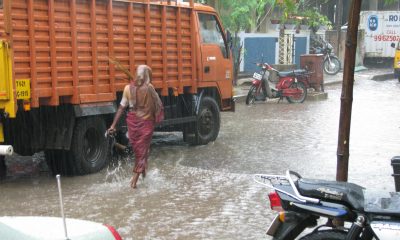
Photo by Koshy Koshy, Wikimedia Commons, CC BY 2.0



Weather
Weather on October 6: State-by-state IMD forecast
The India Meteorological Department has forecast heavy rain in parts of south India and light rain with thunderstorms in Delhi on October 6 as the monsoon withdraws, with Delhi’s air quality expected to turn poor within three days.
Delhi, Haryana and Chandigarh: light to moderate rain, thunderstorms and strong winds.
Kerala, Karnataka, Tamil Nadu and Puducherry: heavy rain at places.
Himachal Pradesh: thunderstorms with gusts of 30 to 40 kmph on October 6 and 7.
Bihar: rain from October 6 to 9. Odisha: rain from October 6 to 11.
Jammu and Kashmir and Ladakh: fairly widespread to widespread rain.
Delhi’s daytime high was forecast near 36 degrees Celsius and the night-time low near 24 degrees Celsius on Monday, October 5.
Delhi’s air quality could deteriorate to the poor category within three days, which could trigger the first stage of the Graded Response Action Plan, or GRAP.
Heavy rain is forecast on October 6 in parts of Kerala and Mahe, South Interior Karnataka, Tamil Nadu, Puducherry and Karaikal, with a yellow alert.
Rainfall in those areas is forecast in the 64.5 mm to 115.5 mm range at some places, according to India.com.
Thunderstorms with lightning and gusty winds of 30 to 40 kmph, gusting to 50 kmph, are likely in Himachal Pradesh on October 6 and 7.
Fairly widespread to widespread rain is forecast over Jammu and Kashmir and Ladakh on October 6.
Rain is expected in Bihar from October 6 to 9 and in Odisha from October 6 to 11.
Haryana, Chandigarh and Delhi can expect thunderstorms, light to moderate rain and strong winds.
Eastern and western Uttar Pradesh may see moderate to heavy rain, with highs of 32 to 33 degrees and lows of 23 to 24 degrees, according to The Week.
Hilly states face landslide risks, and a mild cold wave is expected in the plains by mid-October, according to The Week.
The IMD uses yellow, orange and red alerts, and a yellow alert means that people should be aware of the weather and stay updated.
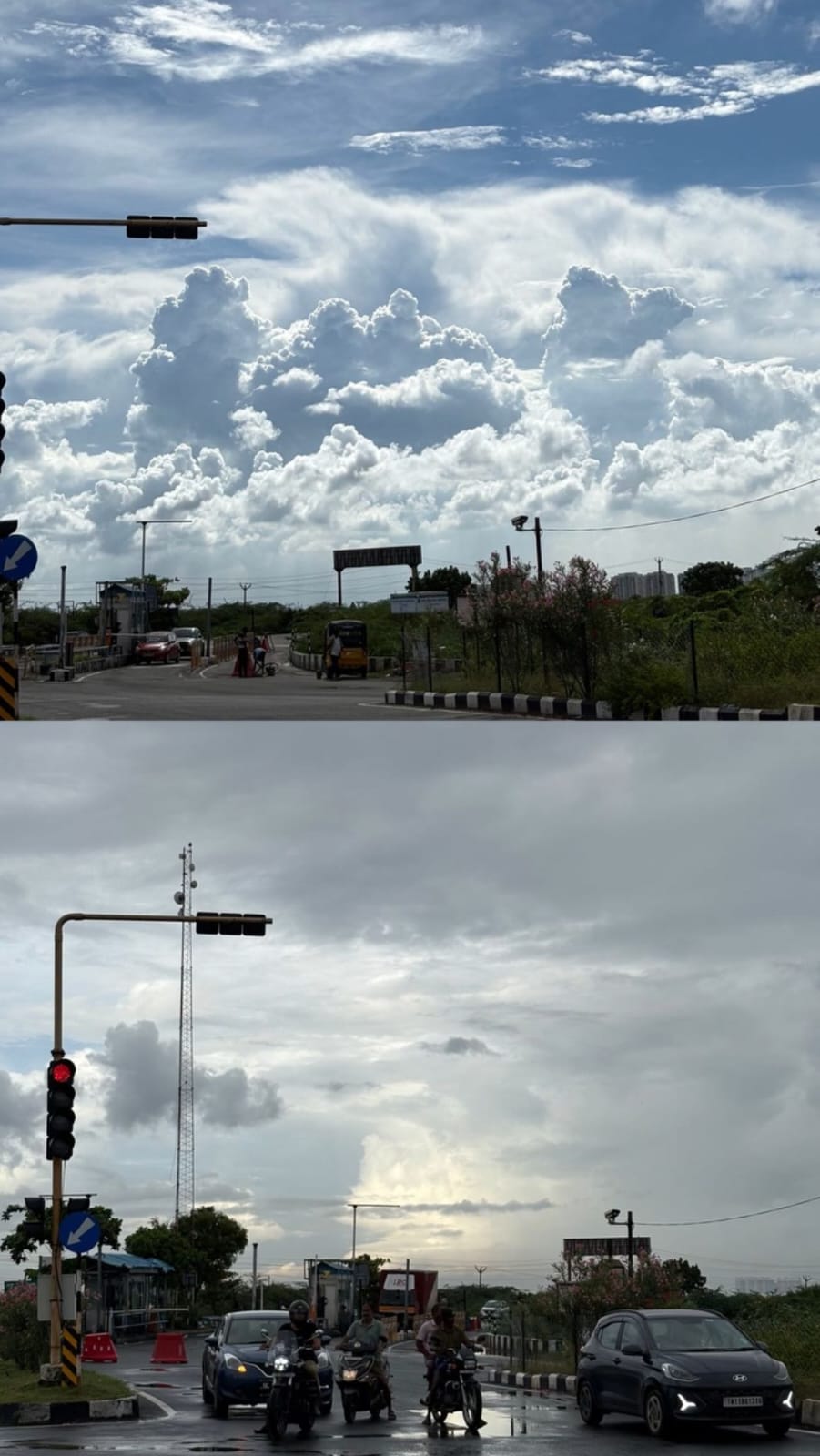
Monsoon clouds over a city (representative image), Wikimedia Commons, CC BY-SA 4.0
Weather
Rain in the south and northeast, dry in Delhi: Weather on October 3
The IMD says the monsoon has completely withdrawn from Delhi-NCR, with clear and sunny weather forecast for October 3 to 5, a high of 36 degrees Celsius and an air quality index in the moderate category.
Kerala, Mahe, coastal Karnataka and Lakshadweep are forecast to get fairly widespread to widespread rainfall on October 3.
Arunachal Pradesh may see isolated heavy rainfall on October 3 and 4.
Delhi is forecast to stay clear and sunny, with a high of 36 degrees Celsius.
The IMD says the monsoon has completely withdrawn from Delhi-NCR.
No rain is expected in Delhi from October 3 to 5.
Daytime winds were forecast to be westerly at 20 to 22 km/h, easing to about 15 km/h in the evening and night.
Air quality in Delhi was in the moderate category.
Alipur recorded the highest reading among the stations reported, an air quality index of 198.
CRRI Mathura Road recorded 191, Punjabi Bagh 186 and Mandir Marg 154.
Patparganj recorded the lowest of the reported readings, at 133.
On the AQI scale, readings of 101 to 200 fall in the moderate category.
Elsewhere in India, rain continued in the south and northeast.
Kerala, Mahe, coastal Karnataka and Lakshadweep were forecast to get fairly widespread to widespread rainfall.
Arunachal Pradesh was forecast to see isolated heavy rainfall on October 3 and 4.
The withdrawal of the southwest monsoon from north India usually happens during September and October.
India’s air quality index scale runs from 0 to 500: 0 to 50 is good, 51 to 100 satisfactory, 101 to 200 moderate, 201 to 300 poor, 301 to 400 very poor and 401 to 500 severe.
Delhi’s winter pollution action plan takes effect from November 1 and runs through February 2027.
The plan includes staggered office timings, doubled parking charges and 50% work from home for certain sectors.
Delhi’s Integrated Command and Control Centre, launched on October 2, monitors pollution sources such as construction sites in real time.
The report on the monsoon’s withdrawal did not include any health advisories.
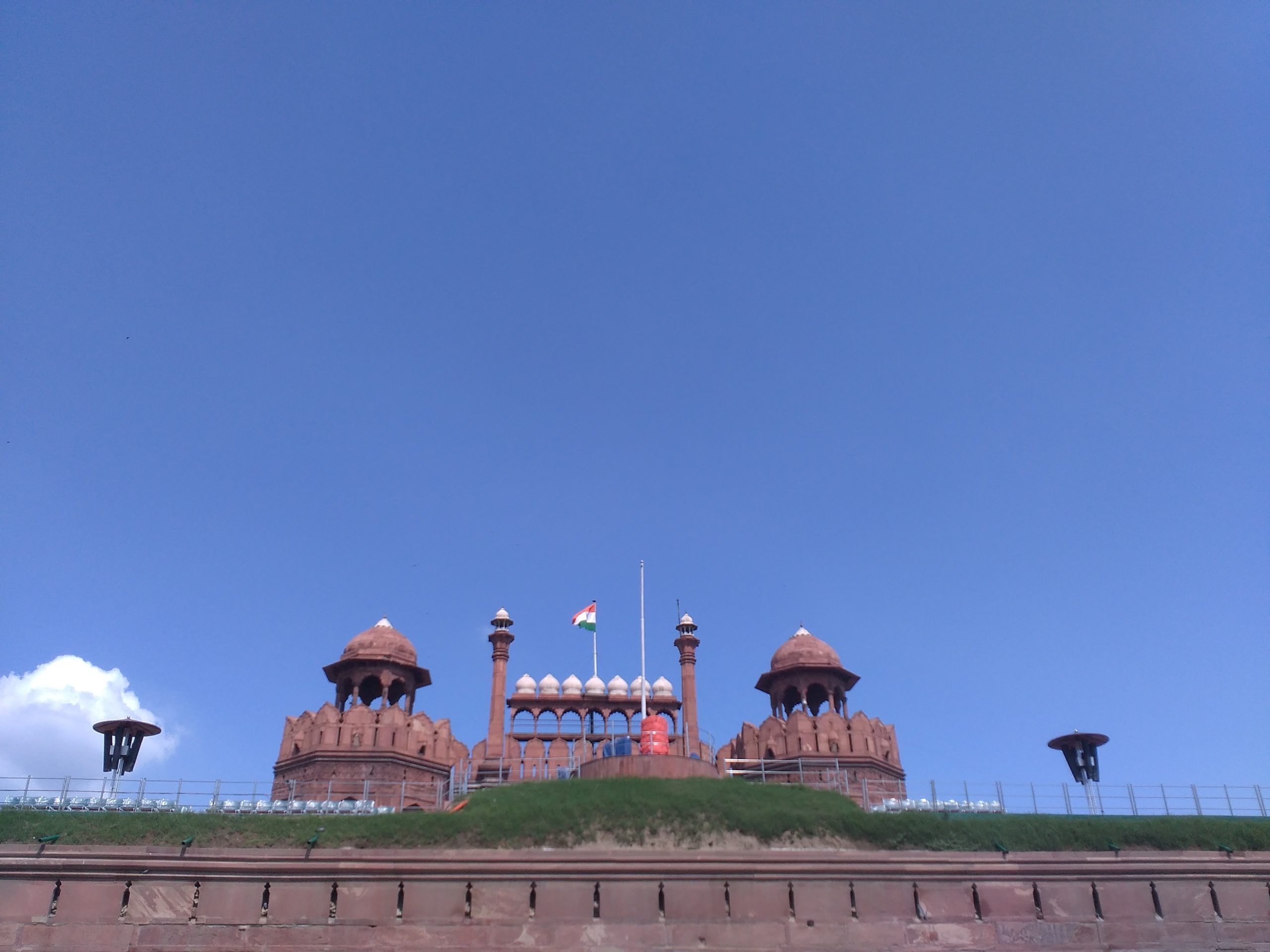
Red Fort, New Delhi under a clear sky (file image), Wikimedia Commons, CC BY-SA 4.0
Weather
Why Delhi stays dry while the south braces for rain
The IMD forecast isolated heavy rainfall for Kerala, coastal Karnataka, Tamil Nadu and Northeast India on October 1, with thunderstorms and gusty winds, even as Delhi, Haryana and Punjab stayed dry with rising temperatures.

Delhi is forecast to remain dry on October 1, even as southern India braces for isolated heavy rain.
Kerala, coastal Karnataka, Tamil Nadu and Northeast India are among the areas flagged by the IMD.
Thunderstorms and gusty winds are expected in the affected southern regions.
Haryana and Punjab are also forecast to stay dry.
Delhi’s temperatures were expected to rise through the day.
The contrasting forecast reflects how India’s weather can vary significantly across regions during early October.
Southern and northeastern India continue to see rain spells even as northern India transitions out of the monsoon season.
Coastal Karnataka districts are typically more prone to heavy rain events than the state’s interior regions.
The IMD issues regular forecasts covering rainfall, temperature and wind conditions across India’s states.
Kerala and the Northeast often see late-season rainfall extending into October in a typical monsoon withdrawal year.
Residents in areas with heavy rainfall forecasts are generally advised to avoid waterlogged roads and stay updated on local alerts.
Weather warnings of this kind are typically issued a day or two in advance to allow for local preparedness.
India’s monsoon season officially winds down through September and October, with the exact timing varying by region each year.
State disaster management authorities in the affected regions routinely monitor conditions during periods of forecast heavy rain.
The IMD tracks weather systems using satellite imagery, radar and a network of surface observation stations.
Fishermen along affected coastlines are typically advised to avoid venturing into the sea during periods of thunderstorm activity.
Gusty winds accompanying thunderstorms can pose risks to loose structures, trees and power lines in affected areas.
The IMD forecast isolated heavy rainfall for Kerala, coastal Karnataka, Tamil Nadu and Northeast India on October 1.
Thunderstorms and gusty winds were expected to accompany the rain in several southern areas.
Monsoon rain in Kerala (representative image), Wikimedia Commons, CC BY-SA 4.0


Pranab Kr Nath: The Sabroom-Born Actor, Filmmaker and Musical Artist Building a Multidisciplinary Career in Tripura

Satveer Saini: From Television Acting to Building His Own Crystal Bracelet Brand SatVEERA

Book Review | The Fifth Biopsy by Rohit Agarwal

Redfox Overseas: Customize Your Own Energy Drink and Stand Out in the Market

Zamzam Company CEO Chhote Bhai-Bade Bhai gave a grand welcome to Indian writer Devhari Sirvi in Dubai

Shikha Sharma: The Fashion Journalist, Blogger, and Plus-Size Model Taking the Industry by Storm
-
 Brandpost2 years ago
Redfox Overseas: Customize Your Own Energy Drink and Stand Out in the Market
-
 Brandpost2 years ago
Zamzam Company CEO Chhote Bhai-Bade Bhai gave a grand welcome to Indian writer Devhari Sirvi in Dubai
-
 Fashion2 years ago
Shikha Sharma: The Fashion Journalist, Blogger, and Plus-Size Model Taking the Industry by Storm
-
Entertainment2 years ago
Lucky Roxx’s “Yadav Ki Pukar” Goes Viral! Youth Celebrate Unity & Power
-

 Entertainment9 years ago
New Season 8 Walking Dead trailer flashes forward in time
-
Entertainment9 years ago
Meet Superman’s grandfather in new trailer for Krypton
-
Uncategorized2 years ago
Hello world!
-

 Brandpost2 years ago
From Local Hero to National Icon: Satyam Yadav’s Journey with TwentyOne