
Brandpost
India Gets Smarter Audio: Discover WiiM’s Streaming Power at Cinebels


How WiiM and Cinebels Are Reshaping India’s Audio Landscape
India’s audio technology market is undergoing a seismic shift. As internet penetration deepens and disposable incomes rise, consumers are demanding smarter, more integrated audio solutions. Enter WiiM, a global leader in wireless audio streaming, now making waves in India through a strategic partnership with Cinebels, a premium home entertainment retailer.
The Audio Revolution in India – Stats and Trends
1. Explosive Growth in Smart Audio Adoption
India’s smart audio market is booming. Recent data reveals:
- Smart speaker shipments grew by 67% YoY in 2023, surpassing 12 million units (TechArc, 2023).
- Music streaming subscribers reached 73 million in 2023, up from 48 million in 2021 (IFPI Global Music Report, 2024).
- Wi-Fi-enabled audio devices now account for 38% of the home audio market, up from 22% in 2020 (IAMAI, 2023).
India’s Audio Market Growth (2020–2023)
| Metric | 2020 | 2021 | 2022 | 2023 |
| Smart Speaker Sales | 3.2M | 5.1M | 8.7M | 12.4M |
| Music Streaming Users | 32M | 48M | 61M | 73M |
| Wi-Fi Audio Penetration | 22% | 27% | 33% | 38% |
2. Tier-2 and Tier-3 Cities: The New Frontier
While metros like Mumbai and Delhi dominate sales, tier-2 and tier-3 cities are catching up:
- 45% of smart speaker buyers in 2023 were from non-metro regions (Counterpoint Research, 2024).
- JioSaavn and Gaana report 60% of their new users coming from smaller cities.
3. The Demand for Affordable High-Res Audio
Indian consumers prioritize value:
- 78% of buyers seek devices under ₹15,000 (TechPP Survey, 2023).
- WiiM’s Pro Plus streamer, priced at ₹14,999, bridges the gap between premium quality and affordability.
WiiM and Cinebels – A Strategic Alliance
1. Why WiiM?
WiiM’s edge lies in its multi-format streaming (Spotify, Apple Music, Amazon Music), lossless audio support, and voice assistant integration. Unlike pricier competitors (Sonos, Bose), WiiM devices like the WiiM Amp (₹24,999) offer HDMI ARC and Bluetooth 5.2, making them ideal for Indian homes upgrading to smart TVs.
2. Cinebels’ Role in Democratizing Premium Audio
Cinebels, with 27 stores across India, has become a gateway for international brands. Their partnership with WiiM includes:
- Free installation services for first-time buyers.
- EMI options to appeal to budget-conscious millennials.
WiiM vs. Competitors in India
| Feature | WiiM Pro Plus | Sonos Port | Bluesound Node |
| Price (₹) | 14,999 | 49,999 | 64,999 |
| Hi-Res Audio Support | Up to 24-bit/192kHz | Up to 24-bit/48kHz | Up to 24-bit/192kHz |
| Voice Assistants | Alexa, Siri | Alexa, Google | Alexa, Google |
| Multi-Room Sync | Yes | Yes | Yes |
| Local Radio Streaming | Yes (90+ stations) | No | No |
Original Insights – The Cultural and Technological Shift
1. Vernacular Content and Localized Playlists
India’s audio consumption is diversifying:
- 50% of Spotify India’s top playlists include regional languages (Spotify Loud & Clear, 2023).
- WiiM’s integration with Wynk Music and Hungama ensures access to Bollywood and regional hits.
2. The “Phygital” Experience
Indian buyers crave tactile experiences before purchasing tech. Cinebels’ in-store demo pods let users test WiiM streamers with their existing setups, addressing trust gaps in online shopping.
3. Sustainability as a Silent Selling Point
WiiM’s Energy Star certification (consuming 70% less power than legacy systems) aligns with India’s push for greener tech.
Predictions – What’s Next for India’s Audio Market?
1. AI-Driven Personalization (2024–2026)
Expect voice assistants to curate playlists based on mood, time of day, or regional festivals. WiiM’s roadmap includes AI sound calibration for optimizing acoustics in compact Indian homes.
2. Rural Penetration via OTT Bundles
Airtel and Jio are likely to bundle WiiM streamers with broadband plans, targeting 500 million rural internet users by 2026.
3. The Rise of “Audio Ecosystems”
Smart speakers will anchor connected homes. WiiM’s Matter-compatible devices could sync with Tata’s Neu app, enabling control of lights, ACs, and security systems.
Forecast – India’s Audio Tech Market (2024–2027)
| Year | Smart Speaker Sales | Streaming Subscribers | Avg. Price per Device (₹) |
| 2024 | 16.2M | 85M | 13,500 |
| 2025 | 21.8M | 102M | 12,000 |
| 2026 | 28.5M | 120M | 11,200 |
| 2027 | 35.0M | 140M | 10,500 |
Challenges and Opportunities
- Piracy Concerns: 33% of streamed music in India is unlicensed (FICCI, 2023). WiiM’s partnerships with licensed platforms mitigate this.
- BharatOS Integration: Collaborations with India’s homegrown OS could enhance accessibility for non-English speakers.
Conclusion
WiiM’s entry via Cinebels arrives at a pivotal moment. As India’s audio market evolves from utilitarian to experiential, the fusion of affordability, quality, and smart integration positions WiiM as a game-changer. With innovations tailored to local tastes and strategic alliances, the duo is set to dominate India’s journey toward smarter soundscapes.
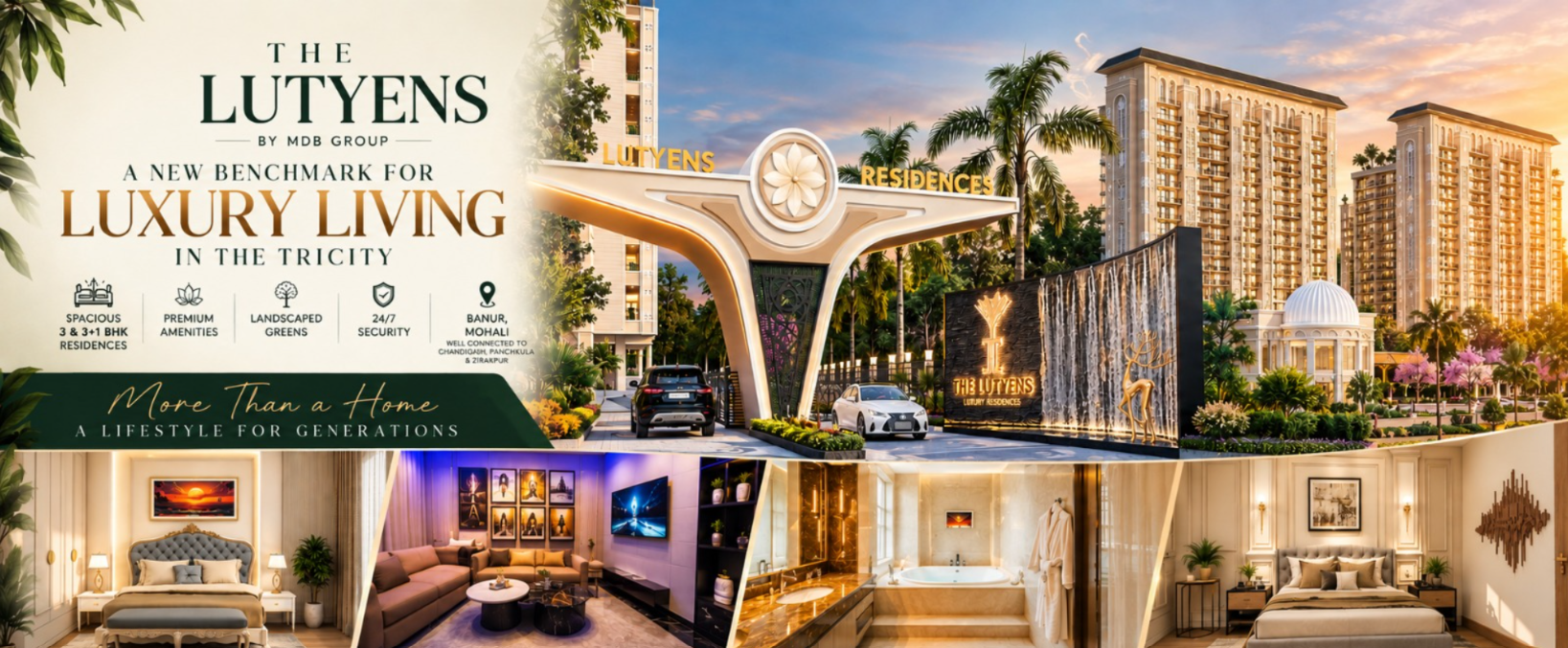
With spacious 3 and 3+1 BHK residences, lifestyle amenities and a location connecting Mohali with the wider Chandigarh Tricity, The Lutyens is designed around what modern premium homebuyers increasingly value: space, privacy, connectivity and quality of life.
Luxury residential real estate in the Chandigarh Tricity is entering a new phase. Homebuyers are no longer evaluating premium properties only on the basis of location or apartment size. Increasingly, they are looking at the complete living experience — spacious layouts, thoughtful planning, recreational facilities, security, greenery, connectivity and the credibility of the developer.
Against this evolving backdrop, The Lutyens by MDB Group is emerging as a residential development focused on the changing expectations of premium homebuyers in the Mohali region.
Located in the wider Banur–Mohali growth corridor, the project offers 3 BHK and 3+1 BHK residences alongside a lifestyle-oriented amenity ecosystem. The development takes inspiration from the architectural character associated with Lutyens’ Delhi while adapting the idea of proportion, openness and understated grandeur to contemporary residential living.
A Residential Address Built Around Space
For many families, space has become one of the defining elements of luxury.
The Lutyens is planned around spacious residential configurations, offering 3 BHK and 3+1 BHK homes designed to accommodate different stages of family life.
A 3 BHK home provides dedicated bedrooms along with living and dining areas that can support everyday family interaction while maintaining privacy. The 3+1 BHK format introduces an additional flexible room, giving homeowners greater freedom to adapt their residence according to their individual needs.
That additional space can potentially function as a home office, study, guest room, prayer room, children’s room or private lounge.
Published project information lists approximately 2,121 sq. ft. for the 3 BHK configuration and approximately 2,380 sq. ft. for the 3+1 BHK configuration. Buyers should verify current unit specifications, availability and pricing directly with the developer before making a purchase decision.
The focus on usable space reflects a broader change in premium housing: luxury is increasingly about how effectively a home supports everyday life rather than simply how impressive it appears.
The Lutyens’ Delhi Inspiration
The name The Lutyens draws inspiration from the architectural identity associated with Lutyens’ Delhi — an environment known for proportion, symmetry, open spaces, landscaped surroundings and a sense of permanence.
The residential project interprets those ideas in a contemporary setting.
Instead of attempting to replicate historic architecture, the concept brings forward elements that remain relevant to modern living: generous proportions, visual balance, openness, natural light and a sense of arrival.
This creates a residential proposition where design is intended to work alongside functionality.
For premium homebuyers, such an approach can be particularly relevant when the objective is to find a home that combines contemporary convenience with a more established and refined residential character.
Amenities Designed Around Modern Family Life
A luxury apartment is increasingly judged by more than the four walls of the residence.
The surrounding amenities and community environment have become important parts of the homebuying decision, particularly for families looking for recreation, fitness and social spaces within the development.
The Lutyens’ published project information highlights a broad selection of lifestyle facilities, including a clubhouse, swimming pool, gymnasium, cricket turf, jogging track, children’s play area, amphitheatre, squash facilities, senior citizen area, salon and spa, reflexology path and multipurpose spaces.
Such an amenity mix is designed to address different lifestyle requirements within a single residential environment.
For fitness-focused residents, sports and wellness facilities can become part of the daily routine. For families with children, dedicated play and outdoor areas can provide recreational options closer to home. Community and multipurpose spaces can also support gatherings and social interaction.
The broader idea is straightforward: a premium residence should extend beyond the apartment and create an environment in which residents can spend more of their everyday lives.
Why Mohali and the Wider Tricity Continue to Attract Attention
The Chandigarh Tricity has been experiencing significant residential evolution.
Chandigarh’s established urban structure and limited land availability have increasingly influenced development across surrounding markets such as Mohali, Zirakpur and other emerging corridors. At the same time, infrastructure development and improving regional connectivity are reshaping how homebuyers evaluate residential locations.
Recent infrastructure announcements have also highlighted major road projects connecting the wider Chandigarh region, including the Zirakpur–Kurali corridor and other connectivity initiatives.
For premium homebuyers, the result is a more diversified residential market.
Professionals relocating from larger cities, business owners, senior executives, NRIs and established families may increasingly consider locations outside the traditional Chandigarh core when evaluating larger homes and lifestyle-focused communities.
Mohali, in particular, offers the combination of proximity to Chandigarh with the opportunity for larger planned residential developments.
This changing geography of luxury housing provides the broader market context in which projects such as The Lutyens are being developed.
MDB Group: The Developer Behind The Lutyens
For a high-value property purchase, the developer’s background is an important part of the decision-making process.
The Lutyens is being developed by MDB Group, a real estate company whose official corporate profile states that it was founded in 2012 and focuses on real estate development with an emphasis on quality, innovation, accountability and long-term value creation. Its published portfolio includes The Lutyens, Aristo56, Metro Kings Court and Victoria Enclave developments.
The company’s stated vision focuses on creating developments that contribute to the evolution of communities and urban environments.
For prospective buyers, understanding the developer’s existing portfolio, documentation and project-specific approvals remains an essential part of property due diligence.
Regulatory Transparency Matters
Luxury housing is a significant financial commitment, making regulatory verification an important step before booking.
The Lutyens is listed in Punjab RERA records under RERA registration number PBRERA-SAS79-PR1029, with the project recorded in SAS Nagar district.
Potential buyers should independently verify the current RERA registration, approved plans, specifications, payment schedules, possession-related terms and other applicable documents before making a purchase.
This is particularly important in a competitive real estate market, where brochures, promotional websites and third-party listings may contain information that can change over time.
A Luxury Home Designed for Changing Lifestyles
One of the strongest aspects of a spacious residential format is flexibility.
A family’s requirements can change considerably over the years. Children grow, working patterns evolve and the need for dedicated work or personal spaces can increase.
A 3+1 BHK residence can therefore provide an additional layer of flexibility compared with conventional apartment formats.
For one family, the additional room could become a home office. For another, it could be a study, guest room or private retreat. This adaptability makes spacious residential planning increasingly relevant in an era where professional and personal life often overlap within the home.
The Lutyens combines this residential flexibility with lifestyle amenities, landscaped surroundings and community-oriented facilities, creating a proposition that extends beyond the traditional definition of an apartment.
The Changing Definition of Luxury in the Tricity
The premium housing market is increasingly moving away from the idea that luxury is simply about larger homes or expensive finishes.
Today’s luxury buyer is often looking for a combination of space, design, privacy, amenities, security, connectivity and long-term livability.
That is the segment in which The Lutyens by MDB Group is positioning itself.
Its 3 BHK and 3+1 BHK residences, amenity-focused planning and location within the evolving Mohali–Tricity residential landscape reflect the changing expectations of contemporary homebuyers.
For families searching for luxury apartments in Mohali, 3 BHK flats near Chandigarh, 3+1 BHK homes, premium residential projects in the Tricity or luxury property near Chandigarh, The Lutyens represents a development worth evaluating alongside other projects in the region.
Ultimately, the value of a luxury home is measured not only by its appearance but by how effectively it supports everyday life.
With its emphasis on spacious residences, lifestyle amenities, architectural character and a connected Tricity location, The Lutyens by MDB Group is seeking to create a residential experience where modern comfort and a sense of refined living come together.
About The Lutyens by MDB Group
The Lutyens is a premium residential development in the Banur–Mohali region offering 3 BHK and 3+1 BHK residences with a range of lifestyle amenities. The project is registered under Punjab RERA as PBRERA-SAS79-PR1029. Buyers should verify current pricing, availability, specifications and project documentation directly before making a purchase.
Official Website: The Lutyens Official Website Contact: 7599175991
Brandpost
Mahatma Gandhi Ayurvigyan Vidyapeeth, Nagpur: A Focus on Yoga, Naturopathy and Healthcare Skills Education
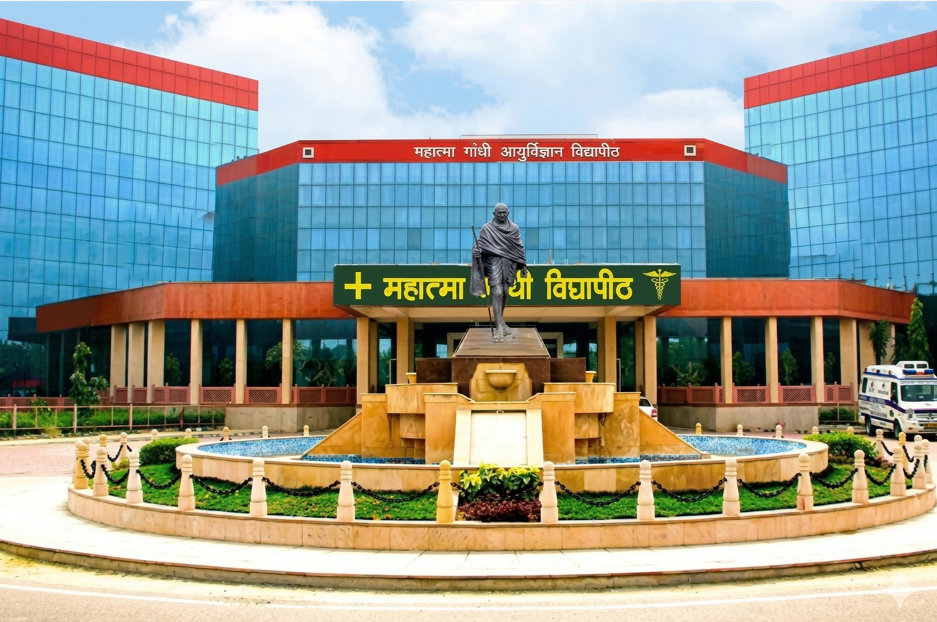
An educational approach connecting traditional knowledge, practical learning and social responsibility for students pursuing careers in wellness and allied health.
Mahatma Gandhi Ayurvigyan Vidyapeeth, an educational institution based in Nagpur, has built its identity around learning in yoga, naturopathy, allied health and vocational disciplines. Its stated educational approach emphasises accessible learning, practical knowledge, ethical values and community service, positioning it within a growing segment of Indian education focused on traditional health sciences and skill-based healthcare training.
As interest in naturopathy, yoga and allied health careers continues to grow across India, institutions offering structured, practice-oriented programmes in these fields have taken on added significance. Mahatma Gandhi Ayurvigyan Vidyapeeth positions itself within this space, aiming to prepare students not only with subject knowledge but with the practical skills and professional outlook needed to work in health and wellness settings.
More Than Subject Knowledge Alone
Education in health and wellness involves more than understanding a subject. It also requires disciplined learning, effective communication and an appreciation of professional responsibilities that come with working directly with people’s health and daily routines. Combining traditional knowledge with contemporary teaching methods can help build a meaningful foundation for students interested in these fields, particularly as public interest in preventive health and natural healing practices continues to expand.
This combination of traditional and contemporary approaches reflects a broader shift in how health education is being delivered in India, where subjects once taught primarily through apprenticeship-style learning are increasingly being structured into formal courses with defined curricula, practical training components and assessment frameworks.
A Range of Programmes for Different Career Paths
Students exploring naturopathy courses, yoga education and paramedical courses in Nagpur can visit the institution’s website for an introduction to its listed programmes. The breadth of disciplines covered, spanning naturopathy, yoga, traditional health practices, allied health and vocational learning, reflects an attempt to serve a range of student interests and career goals rather than focusing narrowly on a single specialisation.
Prospective applicants are encouraged to select a course according to their educational background, interests and future study or employment goals. This kind of goal-oriented course selection matters particularly in fields like naturopathy and yoga education, where career paths can lead toward clinical practice, wellness centre employment, teaching, or further academic study, each of which may call for a different course structure or specialisation.
Why Understanding the Curriculum Matters
Understanding the curriculum is an essential part of this decision-making process. Students and parents should obtain current information about eligibility, course duration, learning format, practical training, assessment and fees before applying to any programme. These details can vary meaningfully between institutions and between different courses offered by the same institution, making it important to look closely at the specifics rather than relying on general impressions of a field.
They should also confirm the awarding body and the requirements relevant to their intended career or further education. For fields such as naturopathy and yoga, where regulatory and recognition frameworks continue to evolve, understanding exactly which body certifies or recognises a given qualification can have a direct bearing on future employment or further study options.
Bringing Knowledge, Skill and Social Responsibility Together
Mahatma Gandhi Ayurvigyan Vidyapeeth’s educational focus brings together subject knowledge, skill development and socially responsible learning. This framing suggests an approach that extends beyond classroom instruction alone, incorporating practical training and a stated emphasis on community service as part of the broader educational experience offered to students.
Such an approach aligns with wider trends in vocational and health-sciences education, where institutions increasingly aim to produce graduates who are not only technically competent but also prepared to engage responsibly with the communities and patients they will eventually serve. For fields rooted in traditional practice, such as naturopathy and yoga, this emphasis on ethical grounding alongside technical skill is frequently highlighted as a defining feature of a well-rounded curriculum.
Getting in Touch
Interested students can contact the institution through its official website for current programme details and admission enquiries. Given that course structures, eligibility criteria and fee details are subject to change, prospective students are encouraged to verify the latest information directly with the institution before making any decisions about enrolment.
As demand for structured education in yoga, naturopathy and allied health continues to grow across Maharashtra and beyond, institutions such as Mahatma Gandhi Ayurvigyan Vidyapeeth reflect a broader effort to formalise training in fields that have historically relied on informal or apprenticeship-based learning, offering students in Nagpur and the surrounding region a more structured path into these careers.
The Broader Context for Health Sciences Education in India
India’s health and wellness education landscape has been evolving steadily, with increasing attention paid to how traditional disciplines such as naturopathy and yoga are taught, assessed and recognised alongside more established streams of medical and paramedical education. This evolution has created both opportunity and responsibility for institutions working in these fields: the opportunity to meet rising student and public interest, and the responsibility to maintain clear, verifiable standards around what a given qualification actually represents.
For an institution based in a city like Nagpur, which sits at a significant crossroads within Maharashtra and central India, this also means serving a student base that may be drawing comparisons with institutions across several neighbouring states. In that context, clarity around curriculum, practical training and recognised outcomes becomes an important differentiator for students deciding where to pursue their education in these fields.
Media and Admission Enquiries
Website: mgavidyapeeth.com
Email: info@mgavidyapeeth.com
Telephone: 1800-889-1134

Bangrod, Ratlam: A proud moment for Bangrod and Ratlam district unfolded as Kalyani Patidar achieved recognition in the London Book of World Records for completing the recitation of the Hanuman Chalisa in just 52 seconds. Her accomplishment reflects a combination of dedication, concentration, regular practice and a deep interest in India’s spiritual and cultural traditions.
Kalyani has been associated with devotional and cultural activities from an early age. Her interest in religious literature, Sanskrit verses, devotional songs, bhajans and Indian traditions encouraged her to develop her recitation abilities. Over time, consistent practice helped her improve her fluency, pronunciation, rhythm and confidence.
The 52-second recitation represents a distinctive accomplishment that required extensive preparation and familiarity with the complete text. Maintaining clarity and continuity while reciting at such speed demands considerable concentration and practice. Kalyani’s performance has therefore become a significant milestone in her journey and a source of happiness for those who have supported her.
In recognition of the achievement, Kalyani Patidar was presented with a World Record Certificate, Gold Medal, Memento and Certificate of Honour. The recognition has been warmly welcomed by her family and members of the local community.
Her accomplishment has also highlighted the continuing relevance of India’s devotional traditions. In an era where young people are increasingly exposed to diverse cultural influences, Kalyani’s achievement demonstrates how traditional interests can be pursued with dedication and transformed into meaningful accomplishments.
On the occasion of the felicitation ceremony, Mrs Universe Central Asia and World Record Brand Ambassador Dr. Divya Patidar honoured Kalyani Patidar and congratulated her on the achievement. Dr. Divya Patidar extended her best wishes for Kalyani’s bright future and appreciated her dedication towards Indian spiritual and cultural traditions.
Dr. Divya Patidar also emphasised the importance of supporting young talent and encouraging children and youth to remain connected with India’s rich heritage. She noted that spirituality, literature, music and traditional knowledge form an important part of India’s cultural identity and that dedicated young individuals can help carry these traditions forward.
The achievement has received appreciation from educators, social workers, cultural enthusiasts and prominent citizens from the region. Several well-wishers congratulated Kalyani and expressed their hope that she will continue to develop her talents and achieve further milestones.
Kalyani Patidar’s recognition in the London Book of World Records has added a memorable chapter to the cultural achievements associated with Bangrod and Ratlam. Her 52-second Hanuman Chalisa recitation stands as an example of what can be achieved through focused preparation, discipline and dedication.
Her accomplishment has brought pride to her family and community while offering an encouraging message to young people: passion becomes a powerful strength when combined with practice, perseverance and commitment.


The Lutyens by MDB Group: A New Benchmark for Luxury Living in the Tricity

Mahatma Gandhi Ayurvigyan Vidyapeeth, Nagpur: A Focus on Yoga, Naturopathy and Healthcare Skills Education

Free Forever Vector Database Platforms for Building AI Applications in 2026

Redfox Overseas: Customize Your Own Energy Drink and Stand Out in the Market

Zamzam Company CEO Chhote Bhai-Bade Bhai gave a grand welcome to Indian writer Devhari Sirvi in Dubai

Shikha Sharma: The Fashion Journalist, Blogger, and Plus-Size Model Taking the Industry by Storm
-
 Brandpost2 years ago
Redfox Overseas: Customize Your Own Energy Drink and Stand Out in the Market
-
 Brandpost2 years ago
Zamzam Company CEO Chhote Bhai-Bade Bhai gave a grand welcome to Indian writer Devhari Sirvi in Dubai
-
 Fashion2 years ago
Shikha Sharma: The Fashion Journalist, Blogger, and Plus-Size Model Taking the Industry by Storm
-
Entertainment2 years ago
Lucky Roxx’s “Yadav Ki Pukar” Goes Viral! Youth Celebrate Unity & Power
-

 Entertainment9 years ago
New Season 8 Walking Dead trailer flashes forward in time
-
Entertainment9 years ago
Meet Superman’s grandfather in new trailer for Krypton
-
Uncategorized2 years ago
Hello world!
-

 Brandpost2 years ago
From Local Hero to National Icon: Satyam Yadav’s Journey with TwentyOne