
Brandpost
Ketan Pendse: Award-Winning Marathi-Hindi Actor-Director Turns Published Author and International Filmmaker with “11:17PM”


Pune-Based Performer Adds Published Author and Global Filmmaker Titles to a Decade-Long, Award-Winning Career
Pune-based actor, writer, and director Ketan Pendse is stepping into a new chapter of his decade-long entertainment career. Best known for his work across the Marathi and Hindi film and television industry, the 29-year-old is now adding two fresh titles to his resume: published author and international filmmaker. The milestones arrive alongside his first English-language international feature film, “11:17PM,” and mark one of the more unconventional career pivots seen in regional Indian cinema in recent years.
A Decade of Awards Across Acting, Direction, and Beyond
Ketan Pendse’s presence on the Marathi and Hindi film festival circuit stretches back nearly ten years. He earned the Best Debut Actor award for “Ek Thriller Night” at the Nashik International Film Festival in 2016, and followed it with a Best Actor win at the Late Dr. Patangrao Kadam 4th Pune International Short Film Festival in 2019.
In 2021, he expanded into direction, winning the Best Director award at the 12th Pune and 9th Goa Short Film Festival for his Marathi short film “Gupt.” His most recent honour came at the Asian Thailand International Short Film Festival 2025, where he won Best Actor for “Kahi Kisi Roz.” He has also picked up recognition outside the festival circuit, including the Best Smile award at the Mr. & Ms. Glamfame fashion show, presented by Sonali Kulkarni and Ashmit Patel.
More recently, his awards tally has grown on the international stage: a Best Actor and Best Director win at the Nepal International Film Festival 2026 for the Hindi feature “Black Night,” and a Best Actor award at the Canada International Film Festival 2026 for the Marathi short “Gupt,” shared with co-actor Ketaki Chitale. Taken together, the honours span acting, direction, and even a fashion-circuit award, pointing to a career built on range rather than a single specialty.
A Filmography Spanning Formats
Pendse’s body of work covers feature films, web series, short films, and music videos in both Hindi and Marathi cinema. His Hindi credits include the feature films “The Invisible Hubby,” “Trisha,” and “Black Night,” along with the web series “Margaon Files: The Unsolved Case,” which features veteran performers such as Zeenat Aman, Pallavi Joshi, and Shilpa Shinde.
On the Marathi side, his filmography includes “Ek Thriller Night,” currently streaming on ZEE5, along with “Binda,” “Love Betting,” “Aagmya,” “Punha 26/11,” “Love Lover Zindabad,” and “Lagna Chakra,” which released on Amazon in the US and UK. Upcoming OTT projects include “Chillari,” “Aranyachakra,” and the web series “Ti Parat Aaliy.”
He has also built a substantial short film and music video catalogue, including the Hindi shorts “Gumraah,” “Strange,” “Kahi Kisi Roz,” and “The Trap”; a set of silent short films titled “Scared,” “Smile,” “The Mobster,” “The Mobile Last Frame,” and “Hope”; the award-winning Marathi short “Gupt”; “Blue Shoe” and “Khel Sansaracha”; and music videos such as “Roop Tuzha Bhari,” “Dil Mera Tere Naam,” and “Yaara Teri Yaari.” Beyond acting, he has anchored segments, including an interview with actor Abhijit Bichukale, and hosted the pan-India travel show “Travel Trolly.” He has also modelled in fashion shows alongside personalities such as Sonali Kulkarni, Parul Chauhan, Mrs India 2013 winner Pooja Thakur, Shruti Marathe, Saurabh Gokhale, and Gaurav Ghatnekar.
Stepping Into Publishing as an Author
In a departure from his screen career, Pendse has published his debut novel, “Haveli: Ek Adhuri Mulakat,” under Inkvision Press, credited to his full name, Ketan Pradip Pendse. The book is available on Amazon, Flipkart, Google Books, Kindle, and the Google Play Store, and explores themes of memory, longing, and unresolved connection — a sensibility that echoes the psychological horror and travel-drama undertones running through his acting and directing work.
The literary debut will not be his last. A second novel, a romantic drama titled “Kinaara,” is set to publish soon under the same author credit, suggesting his move into fiction is a sustained pursuit rather than a one-off project alongside his screen career.
“11:17PM”: A Global Leap
Pendse’s most ambitious project to date is “11:17PM,” on which he serves as writer, director, producer, and lead actor. The film is produced under his own banner, Glamfame Entertainment, with Daulatsingh Rajpurohit co-producing through Rajpurohit Films.
Billed as a psychological horror and adventure travel drama, “11:17PM” was shot across five countries — Vietnam, Thailand, Hong Kong, Macao, and India. The story follows travel blogger Keyaan, who is pulled into a haunting mystery tied to a recurring dream that strikes at exactly 11:17 PM.
An Outlier in Marathi and Hindi Entertainment
With a debut novel under the Ketan Pradip Pendse author credit and his first internationally shot feature film now underway, Pendse’s career trajectory reflects a performer unwilling to stay confined to a single role, language, or medium. As “11:17PM” and “Haveli: Ek Adhuri Mulakat” both reach new audiences, his decade of groundwork across Marathi and Hindi entertainment appears to be setting the stage for a considerably larger stage ahead.
In an industry where actors typically specialise in a single track — performance, direction, or production — Pendse’s willingness to take on all three simultaneously, while also publishing fiction and anchoring television segments, marks him as an outlier within the Marathi and Hindi entertainment space. From his 2016 debut award in Mumbai at NiFF to his 2025 win in Thailand, and now his 2026 wins in Nepal and Canada, his awards run appears to be reaching its most ambitious chapter yet — with his second novel, “Kinaara,” set to publish soon.
Flipkart:https://www.flipkart.com/haveli-ek-adhuri-mulakat/p/itm49ce56972d186?pid
Career Snapshot
| Name | Ketan Pendse (author credit: Ketan Pradip Pendse) |
| Roles | Actor, Writer, Director, Producer, Anchor, Model, Author |
| Industry | Marathi & Hindi Entertainment |
| Career Span | 10+ Years |
Brandpost
Social Activist Dr. Binu Varghese Honoured with National Excellence Award by Maharashtra Governor Jishnu Dev Varma
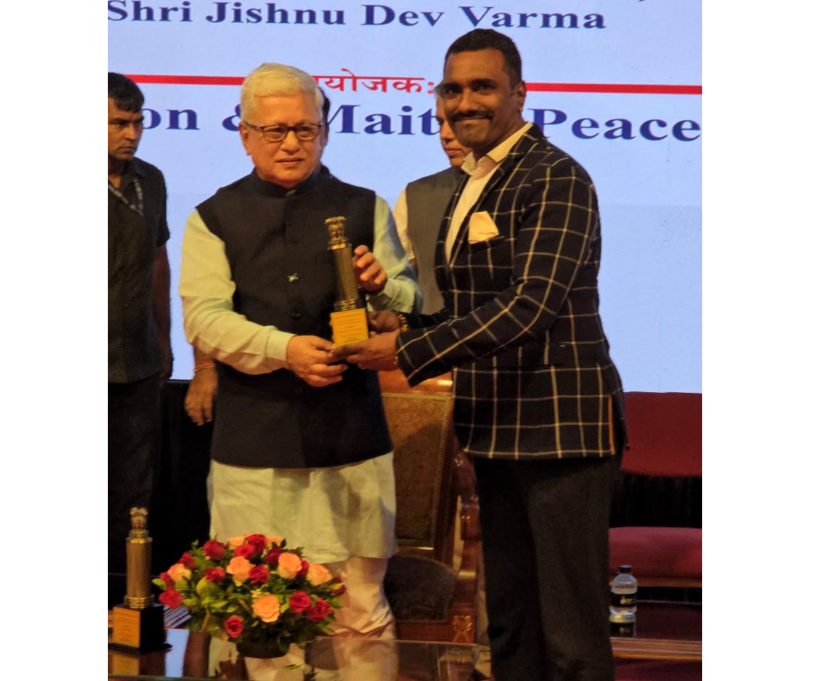
vMumbai, September 17, 2026: A proud and memorable moment unfolded in Mumbai as Social Activist Dr. Binu Varghese was honoured with the prestigious National Excellence Award for Outstanding Social Work in recognition of his dedicated contribution towards society and community welfare.
Maharashtra Governor Jishnu Dev Varma Honours Dr. Binu Varghese The highlight of the occasion was the presentation of the National Excellence Award to Social Activist Dr. Binu Varghese by Hon. Shri Jishnu Dev Varma, Governor of Maharashtra. The award ceremony was organised on September 17 at the Yashwantrao Chavan Centre, Nariman Point, Mumbai, as part of the Maharashtra Lokbhavan Seva Sankalp Abhiyan. The programme was organised by the Maitri Foundation and Varma Foundation and brought together distinguished personalities, social workers, spiritual leaders and other eminent guests.
A Ceremony Dedicated to Service and Social Responsibility The Maharashtra Lokbhavan Seva Sankalp Abhiyan reflected the spirit of service, compassion and social responsibility. One of the significant moments during the programme was the distribution of wheelchairs to persons with disabilities by Maharashtra Governor Shri Jishnu Dev Varma. The initiative highlighted the importance of creating a more inclusive society where dignity, accessibility and support remain central to community development.
A Special Moment for Dr. Binu Varghese For Dr. Binu Varghese, the occasion carried an added personal significance. Along with receiving the National Excellence Award, he had the opportunity to share the stage with the Hon. Governor and other distinguished personalities. He also participated in the ceremonial lamp lighting, marking the beginning of the programme.
Distinguished Personalities Grace the Occasion The award ceremony was attended by several respected personalities from the social, spiritual and public spheres. Among the distinguished guests was Dr. Rajeshwar Das Ji Maharaj, widely known as Acharya Dr. Rajesh Ojha, a prominent Hindu spiritual leader, astrologer and Mahamandleshwar. The event also witnessed the presence of Mumbai social worker Mustafa Yusufali Gom, along with other dignitaries and representatives associated with social service and community initiatives.
Recognition of Dedicated Social Work Receiving a national-level recognition from the hands of the Governor of Maharashtra made the occasion particularly significant for Dr. Binu Varghese. The award represents appreciation for the values of service, dedication and social responsibility that form an important part of his public work. Such recognitions also bring attention to the contribution of social workers who work beyond the spotlight, engaging with communities and supporting initiatives aimed at improving people’s lives.
A Proud Milestone in a Journey of Service The ceremony at Yashwantrao Chavan Centre became more than an award presentation. It served as a gathering celebrating the broader spirit of seva, compassion and commitment to society. Sharing the stage with Maharashtra Governor Shri Jishnu Dev Varma, participating in the ceremonial lamp lighting and receiving the prestigious honour before an audience of distinguished personalities made September 17 a special day for Dr. Binu Varghese.
Mira Road: Dr. Binu Varghese’s Timely Alert Helps Save Four Lives
In another significant instance of social intervention, Social Activist Dr. Binu Varghese’s timely alert helped prevent an alleged family suicide attempt in Mira Road in the early hours of September 15. According to the information shared, the incident involved a husband, wife and their two children near the flyover opposite Fountain Hotel at around 2:00 AM.
Following the alert and immediate instructions from CP Niket Kaushik, Kashigaon Police reportedly responded within minutes and rescued all four members of the family. The swift coordination between the alert and police response ensured that the situation was brought under control before lives were lost.
The Mira Road incident further underlined the importance of timely communication, community vigilance and rapid police action during emergencies. The intervention resulted in four lives being saved and added another notable chapter to Dr. Binu Varghese’s ongoing social work.
A Memorable Honour The National Excellence Award for Outstanding Social Work will remain a memorable chapter in Dr. Binu Varghese’s journey of social service. The recognition serves as encouragement to continue working for society with dedication and commitment. The occasion ultimately celebrated not only an individual achievement, but also the enduring spirit of social service, compassion and community welfare.
Brandpost
Naturesque Kesar Shilajit Brings Traditional Ayurvedic Ingredients Into a Modern Wellness Formula
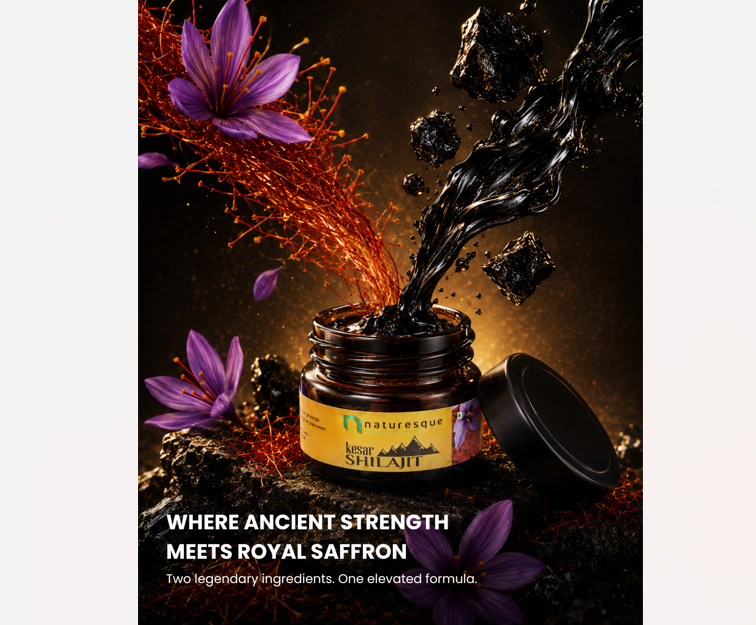
As consumers become more conscious about what goes into their daily supplements, traditional Ayurvedic ingredients are finding renewed relevance in modern wellness routines. Among them, Shilajit has gained significant attention for its long history of use in Ayurveda. Naturesque is building on this tradition with its Kesar Shilajit, a resin-based formulation combining purified Himalayan Shilajit with saffron and selected botanical ingredients.
Designed primarily for men seeking natural support for their everyday wellness, the product reflects Naturesque’s broader philosophy of bringing together traditional Ayurvedic knowledge, carefully selected ingredients and modern processing methods.
A Resin-Based Ayurvedic Formulation
Unlike powdered or capsule-based supplements, Naturesque Kesar Shilajit is presented in its traditional resin form. According to the brand, the Shilajit is sourced from Himalayan rock formations and processed using filtration and controlled heating techniques intended to remove impurities while preserving the resin’s natural mineral composition.
The purified Shilajit is then blended with Kesar, or saffron, along with Giloy, Punarnava and Triphala. Each of these ingredients holds an established place in traditional Indian wellness practices.
The resulting formulation is a dark, concentrated paste that can be mixed with lukewarm water or milk, making it convenient to include in a regular wellness routine.
The Ingredients Behind the Formulation
Shilajit forms the foundation of the product. It is a naturally occurring mineral-rich substance traditionally collected from mountainous rock formations. Its use has been documented in Ayurvedic practices for generations, particularly in preparations associated with vitality and general well-being.
Kesar gives the formulation its distinctive identity. Saffron is valued not only for its colour and aroma but also for its long-standing use in traditional food and wellness preparations.
The formulation also includes:
- Giloy: A climbing shrub whose stems are widely used in traditional Ayurvedic preparations.
- Punarnava: A botanical ingredient recognised in Ayurveda and included in a variety of traditional herbal blends.
- Triphala: A classical combination of three fruits—Amla, Bibhitaki and Haritaki—commonly used as the foundation of holistic Ayurvedic formulations.
By bringing these ingredients together, Naturesque has created a saffron-infused Shilajit blend rather than offering a single-ingredient resin.
Traditional Roots Supported by Modern Processing
One of the most important considerations when choosing a Shilajit product is purification. Raw Shilajit can contain unwanted substances, which makes proper sourcing and processing essential.
Naturesque states that its Kesar Shilajit undergoes modern filtration and slow-heating procedures. The process is intended to remove impurities while maintaining the natural character of the resin. It also gives the finished product a smooth, easy-to-measure consistency.
According to the company, the product is manufactured in ISO- and GMP-certified facilities. It is described as plant-based, gluten-free and free from artificial additives. It is also presented as a Make in India product.
These factors reflect the brand’s attempt to make a traditional ingredient more accessible to present-day consumers who value transparent formulations and quality-controlled manufacturing.
Created for Everyday Wellness
Naturesque positions Kesar Shilajit as a traditional botanical supplement for men’s general wellness. Its concentrated resin format allows consumers to measure a small serving rather than swallowing multiple tablets or capsules.
The brand recommends dissolving a pea-sized quantity in lukewarm milk or water. Consumers should nevertheless follow the exact serving instructions printed on the product label and avoid exceeding the recommended quantity.
Consistency, lifestyle and individual health conditions can all influence a person’s experience with an Ayurvedic supplement. The product should therefore be viewed as an addition to a balanced routine—not as a replacement for nutritious food, adequate rest, exercise or professional medical care.
A Contemporary Presentation of an Ayurvedic Ingredient
The growing interest in Shilajit reflects a wider shift towards traditional ingredients presented in convenient, quality-conscious formats. Naturesque Kesar Shilajit responds to this demand through a resin formulation that combines purified Himalayan Shilajit, saffron and familiar Ayurvedic botanicals.
Its emphasis on traditional ingredients, modern purification and an easy-to-use format makes it a notable addition to Naturesque’s wellness range. At the same time, consumers should maintain realistic expectations: herbal supplements can support a broader wellness routine, but individual experiences may differ.
People taking prescription medicines or managing an existing medical condition should consult a qualified healthcare professional before using Shilajit or combining it with other supplements. Naturesque Kesar Shilajit is a traditional wellness supplement and is not intended to diagnose, treat, prevent or cure any disease.
More information about its formulation and usage is available on the official Naturesque Kesar Shilajit page.

From a humble village background and Telugu-medium classrooms to Mrs. India, Fit India Ambassador, High Court Advocate, social leader and global changemaker
KHAMMAM: Some journeys are measured by achievements, while others are remembered for the barriers they overcome and the lives they inspire. The journey of Dr. M.A. Farha is one such story. From a humble village background in Khammam and Telugu-medium classrooms to national and international platforms, she has built an identity through education, law, pageantry, leadership and social service.
At the heart of her journey is a simple belief: believe in yourself, dream big, work hard and create change. Her mission is to support women, break barriers, inspire youth and contribute meaningfully to the nation.
A Dream That Began in Khammam
Dr. Farha completed her schooling up to Class 10 at Government Girls High School, Khammam, followed by Intermediate at Government Women’s College, Khammam. She later graduated from SSRJ College, Khammam, completed her MBA from Dare College, Khammam, and pursued her LL.B. from Manair College, Khammam.
Her educational journey from Telugu-medium institutions became the foundation for a much wider professional journey. Each qualification represented another step towards confidence, independence and building an identity of her own.
Beyond the Crown
Dr. Farha gained national recognition after being crowned Mrs. India First Runner-Up 2021 and Mrs. India World Winner 2021. However, the crown was never the destination. It became a platform through which she could communicate a larger message about women’s confidence, leadership and social responsibility.
Her journey subsequently expanded into the legal profession, public speaking and social initiatives. Today, she serves as a High Court Advocate, Fit India Ambassador and Swachh Survekshan Ambassador for Khammam Municipal Corporation.
She is also the founder of the Faras Welfare Foundation, working on initiatives related to women empowerment, education, youth leadership, environmental sustainability, health awareness, legal awareness, social welfare and community development.
Recognition for Impact
Over the years, Dr. Farha has received several recognitions, including the Nari Shakti Award, Stree Shakti Award, AIWAA, World Changemaker Award and an Honorary Doctorate for her contributions.
Her work in sustainability and environmental leadership has also received recognition, including being acknowledged as an Eco-preneur by the Times of India.
Her international journey includes the Global Changemaker Award at the Global Youth Congress in Thailand, recognising contributions aligned with the United Nations Sustainable Development Goals.
For Dr. Farha, however, awards are not simply milestones. They represent responsibility and an opportunity to create greater awareness and impact.
Breaking Barriers, Inspiring Women
Her story carries a strong message for women who may feel limited by circumstances. Poverty, marriage, motherhood, language or social background need not determine the boundaries of a woman’s dreams.
She encourages women to believe in their abilities, continue learning and create their own identity. At the same time, she believes young people must be encouraged to dream boldly and use their education and abilities to contribute to society.
A Journey With a Purpose
What makes Dr. M.A. Farha’s story distinctive is not one particular crown, position or award, but the evolution of her identity across multiple fields.
Mrs. India. High Court Advocate. Fit India Ambassador. Global Speaker. Social Leader. Environmental Advocate. Changemaker.
Each title represents a chapter of a larger journey.
From the classrooms of Khammam to national and international platforms, Dr. Farha continues to turn personal achievement into social purpose. Her journey stands as a reminder that where a person begins does not determine where they can reach.
A proud daughter of India, Dr. M.A. Farha continues to inspire women, empower youth, break barriers and work towards creating meaningful change in society and the nation.


Defending champions India eye Asian Games final against Bangladesh

Rozgar Mela 2026: 51,000 youth get government appointment letters

Nifty gains third straight session, but weekly losing streak hits six

Redfox Overseas: Customize Your Own Energy Drink and Stand Out in the Market

Zamzam Company CEO Chhote Bhai-Bade Bhai gave a grand welcome to Indian writer Devhari Sirvi in Dubai

Shikha Sharma: The Fashion Journalist, Blogger, and Plus-Size Model Taking the Industry by Storm
-
 Brandpost2 years ago
Redfox Overseas: Customize Your Own Energy Drink and Stand Out in the Market
-
 Brandpost2 years ago
Zamzam Company CEO Chhote Bhai-Bade Bhai gave a grand welcome to Indian writer Devhari Sirvi in Dubai
-
 Fashion2 years ago
Shikha Sharma: The Fashion Journalist, Blogger, and Plus-Size Model Taking the Industry by Storm
-
Entertainment1 year ago
Lucky Roxx’s “Yadav Ki Pukar” Goes Viral! Youth Celebrate Unity & Power
-

 Entertainment9 years ago
New Season 8 Walking Dead trailer flashes forward in time
-
Entertainment9 years ago
Meet Superman’s grandfather in new trailer for Krypton
-
Uncategorized2 years ago
Hello world!
-
 Brandpost2 years ago
From Local Hero to National Icon: Satyam Yadav’s Journey with TwentyOne