
Brandpost
Managing Work-Life Balance: How Bangalore’s Marriage Counselors Help Tech Industry Couples


Ah, Bangalore! The city where dreams are coded, and relationships are debugged. As someone who’s spent more time in traffic jams than in romantic dinners, I can tell you that being part of a tech couple in this bustling metropolis is no walk in the park. It’s more like a high-stakes game of Jenga, where you’re constantly trying to balance work, life, and love without everything crashing down around you.
But fear not, my fellow keyboard warriors and mouse-clicking mavens! Amidst the chaos of code and conference calls, Bangalore’s marriage counselors are the unsung heroes, helping tech couples navigate the choppy waters of modern relationships. Let’s dive into how these relationship wizards are keeping love alive in the land of laptops and lattes.
The Unique Flavor of Tech Industry Stress: A Spicy Curry of Chaos
Before we get into the nitty-gritty of counseling magic, let’s take a moment to appreciate the special brand of stress that comes with being a tech couple in Bangalore. It’s like a spicy curry – intense, complex, and sometimes overwhelming if you’re not prepared. (And trust me, I’ve had my fair share of both stress and curry-induced heartburn!)
Long Work Hours: When 9 to 5 Becomes a Distant Memory
Remember when we thought 9 to 5 was a long workday? Oh, how naive we were! In Bangalore’s tech scene, the workday often stretches longer than a Bollywood movie marathon. A staggering 70% of IT employees in India face mental health issues due to these marathon work sessions. It’s no wonder that by the time couples finally see each other, they’re too exhausted to do anything but collapse on the couch and binge-watch the latest web series. (Guilty as charged!)
High-Pressure Environments: Where Stress is the New Normal
The tech industry moves faster than a rickshaw weaving through traffic on a Friday evening. There’s always a new deadline, a new project, or a new technology to master. This high-pressure environment can turn even the calmest person into a bundle of nerves. And when both partners are juggling flaming torches of stress, well, let’s just say it’s not exactly a recipe for romantic bliss. (Unless you find debugging code together romantic – in which case, more power to you!)
Frequent Travel and Relocations: Love in the Time of Airports
For many tech professionals in Bangalore, frequent travel is as common as filter coffee. From client meetings to conferences, these jet-setting techies often find themselves living out of suitcases. And let’s not forget the possibility of overseas relocations – because nothing says “I love you” like moving to a different continent for work, right? (Spoiler alert: It doesn’t. Trust me, I’ve been there.)
Enter the Marriage Counselors: Relationship Superheroes in Disguise
Now, you might be thinking, “Is there hope for us tech couples?” Fear not, my sleep-deprived friends! Bangalore’s marriage counselors are here to save the day (and your relationship). These experts have developed a unique set of skills to help tech couples navigate their specific challenges. It’s like they’re the Avengers of the relationship world, but instead of fighting aliens, they’re battling work-life imbalance. And let me tell you, that’s a foe more formidable than Thanos!
The Tech-Savvy Approach to Counseling: Love in the Digital Age
In a city where everyone’s glued to their smartphones (guilty as charged), Bangalore’s counselors have adapted their methods to fit the tech-centric lifestyle. Online counseling platforms have become increasingly popular, allowing couples to squeeze in therapy sessions between coding sprints and client calls. It’s like having a relationship guru in your pocket – minus the awkward moment when your boss walks in on your counseling session. (Not that it’s happened to me… ahem.)
A renowned counselor in Bangalore whose office has probably seen more drama than a soap opera, explains, “We’ve had to evolve our practices to meet the needs of tech couples. Sometimes, we’re counseling a couple where one partner is physically present, and the other is joining via video call from a different time zone. It’s challenging, but it’s also exciting to see how technology can bring couples closer, even when they’re far apart.”
Cultural Sensitivity: Blending Tradition with Modern Love
Bangalore is a melting pot of cultures, and its tech industry attracts talent from all over India and beyond. Marriage counselors in the city have become adept at navigating the complex interplay of traditional values and modern lifestyles.
It’s like they’re cultural acrobats, gracefully balancing on the tightrope between “log kya kahenge” and “YOLO.” A doctor whose office has heard more secrets than a confessional booth (and probably seen more tears than a Bollywood movie), shares, “We use culturally relevant metaphors and stories to explain therapeutic concepts. It’s like serving therapy with a side of masala – it just makes everything more relatable.”
This cultural competence is crucial in addressing issues like family expectations, gender roles, and the ever-present influence of in-laws – because let’s face it, in India, you don’t just marry a person; you marry their entire family WhatsApp group. (And if you’re lucky, you might even get added to it before the wedding!)
Strategies for Tech Couples: More Than Just “Turn It Off and On Again”
So, what exactly are these counselors doing to help tech couples? Let’s break it down, shall we? (And no, it doesn’t involve rebooting your relationship every time there’s a glitch.)
1. Time Management Techniques: Finding Minutes in the Madness
Counselors work with couples to develop effective time management skills. It’s about prioritizing tasks and carving out quality time for each other, even if it means scheduling “cuddle time” in your shared Google Calendar. (Yes, I’ve done this. No, I’m not ashamed.)
2. Stress Management Practices: Ctrl + Alt + De-stress
Techniques like mindfulness, meditation, and regular physical activity are encouraged to help individuals manage stress. It’s about finding ways to decompress that don’t involve debugging code or scrolling through social media. (Though I must admit, there’s something oddly soothing about fixing a particularly nasty bug.)
3. Communication Skills: Upgrading Your Relationship’s Operating System
Effective communication is key in any relationship, but it’s especially crucial for tech couples who might be more comfortable expressing themselves in Python than in person. Counselors help couples develop better ways to express their needs and concerns, ensuring that their relationship doesn’t suffer from a communication breakdown. It’s like learning a new programming language, but for your heart.
4. Setting Boundaries: Firewall for Your Personal Life
Just as important as setting up security protocols at work is setting boundaries between work and personal life. Counselors guide couples in creating “no-work zones” and “device-free times” to ensure that their relationship gets the attention it deserves. (Pro tip: The bedroom should be a no-laptop zone. Trust me on this one.)
5. Long-Distance Relationship Hacks: Love in the Cloud
For couples dealing with frequent travel or relocations, counselors provide strategies to maintain connection despite physical distance. This might include regular virtual date nights, shared online activities, or even synchronized meditation sessions. It’s about leveraging technology to bridge the gap, rather than letting it create one. After all, love knows no boundaries – not even time zones!
Success Stories: Debugging Relationships, One Couple at a Time
While specific stories are kept confidential (because what happens in counseling, stays in counseling), the general outcomes speak volumes about the effectiveness of these tailored approaches. It’s like watching a beautifully optimized piece of code run smoothly – a sight that brings tears to any developer’s eyes.
Many couples report improved communication, better conflict resolution skills, and a stronger emotional connection after engaging in counseling. It’s like they’ve upgraded their relationship software to a more stable version. (Version 2.0: Now with 50% fewer bugs and 100% more cuddles!)
One anonymous tech professional shared, “We were like two computers trying to sync with incompatible software. Our counselor helped us find a common language and now we’re operating more smoothly than ever.” (Who says romance is dead in the tech world?)
The Future of Tech Couple Counseling: Innovations on the Horizon
As Bangalore continues to evolve as a tech hub, so does the field of marriage counseling. We’re seeing exciting developments that would make even the most jaded techie’s heart skip a beat:
- AI-assisted mood tracking to help couples understand their emotional patterns (because sometimes we need a little help decoding our own emotions)
- Virtual reality sessions that allow partners to “be together” even when physically apart (perfect for those long-distance relationships)
- Gamified relationship exercises that make working on your marriage as engaging as solving a coding challenge (Level up your love life!)
Conclusion: Love in the Time of Algorithms
In the fast-paced world of Bangalore’s tech industry, maintaining a healthy relationship can sometimes feel like trying to debug an impossibly complex piece of code. But with the help of the city’s skilled marriage counselors, tech couples are finding ways to thrive amidst the chaos.
Remember, just as your devices need regular updates and maintenance, so does your relationship. So, the next time you and your partner find yourselves drowning in deadlines or lost in a sea of stress, consider reaching out to a marriage counselor. They might just be the system upgrade your relationship needs to run at its best.
After all, in the grand algorithm of life, love is the most important variable. Let’s make sure we’re always optimizing for happiness, shall we?
Because at the end of the day, no matter how many lines of code you write or how many projects you complete, it’s the connections we make and the love we share that truly make life worth living.
So, here’s to all the tech couples out there, navigating the complex world of bits, bytes, and heartbeats. May your love be as strong as your Wi-Fi connection, and may your relationship always be in beta – constantly evolving, improving, and growing stronger with each passing day.



Hyderabad, 10 October 2026: The Professional Travel Agents and Hotels Association (PTAHA) launched its Members’ Directory 2.0 at the Travel & Tourism Fair (TTF) Hyderabad on 10 October 2026, marking an important step towards enhancing member visibility, business networking, and collaboration across India’s tourism and hospitality sector.
The initiative was launched under the guidance of Mr. Rishi Deepak Budhadev, National President, PTAHA. The event was executed by Mr. Suresh Nair, Vice President, alongside Mr. Ankit Singh Maurya, Founder Member, and Mr. Biju Xavier, Founder Member.
The launch was attended by distinguished representatives from state tourism departments, highlighting the importance of cooperation between tourism authorities and industry stakeholders.
Dignitaries present at the event included:
- Mr. Rajesh Kale – Deputy Director, Goa Tourism
- Mr. Kundan Naik – Deputy Director, Goa Tourism
- Mr. Harsh Mittal – Punjab Tourism
- Mr. Ajit – Gujarat Tourism
- Mr. Vijay Jadhav – Deputy Director, Maharashtra Tourism
- Mr. Sajib Karmani – Jammu & Kashmir Tourism
The new directory aims to provide PTAHA members with improved professional visibility and easier access to business connections, supporting stronger partnerships among travel agents, tour operators, hotels, and other tourism stakeholders.
The successful launch at TTF Hyderabad reflects PTAHA’s continued commitment to member development and meaningful engagement with tourism departments and trade partners.
About PTAHA
The Professional Travel Agents and Hotels Association (PTAHA) works to connect and support travel and hospitality professionals through networking, business promotion, and initiatives that create opportunities for its members.
For more information:
Website: www.ptaha.org.in (https://www.ptaha.org.in)
Professional Travel Agents and Hotels Association (PTAHA)

Agartala, India: A new thriller-drama short film titled Hatela Gang is currently taking shape in Agartala, bringing together a local filmmaking team and an ensemble cast for a story built around suspense, drama and unexpected developments. The film is being produced under the banner of PRAYAS FILM PRODUCTIONS.
Directed by Sapling Chakraborty and produced by Janardhan Roy, Hatela Gang is expected to combine elements of thriller and drama while exploring a chain of tense and mysterious situations. The production is presently in the shooting/pre-production stage, with the makers planning a release around the last week of November.
The film features a diverse ensemble cast, including Pranab Kr Nath, Ankur Roy, Rinku Roy, Puja Deb, Pradip Paul, Manidipa Roy, Ranjan Roy, Moumita Bhattacharya and Mintu Roy. The collaboration of the cast and crew is expected to play an important role in creating the film’s suspenseful atmosphere and dramatic impact.
Set against the backdrop of Agartala, Hatela Gang seeks to make the most of its local setting while presenting a story designed to keep audiences engaged. The combination of thriller elements and human drama is expected to give the short film a distinctive narrative tone.
The production team has been working on the film with the aim of developing a compact but engaging cinematic experience. As a short film, Hatela Gang is expected to focus on its central storyline and characters while gradually building tension through a series of suspicious and dramatic developments.
For PRAYAS FILM PRODUCTIONS, the project represents another creative effort to develop original screen content and provide opportunities for filmmakers and performers in the region. The production house has been associated with independent filmmaking and creative projects, and Hatela Gang adds another thriller-oriented project to its slate.
Director Sapling Chakraborty leads the creative direction of the project, while producer Janardhan Roy oversees the production. Their collaboration brings together the technical and creative aspects required to complete the short film.
Among the cast, Pranab Kr Nath is one of the notable names associated with the project. Along with Ankur Roy, Rinku Roy, Puja Deb, Pradip Paul, Manidipa Roy, Ranjan Roy, Moumita Bhattacharya and Mintu Roy, he forms part of the ensemble expected to bring the film’s characters to life.
With shooting currently underway, further details about the storyline, characters and release plans are expected to emerge as production progresses. The filmmakers are preparing the project for an anticipated release in the final week of November, subject to the completion of production and post-production work.
As anticipation builds around the project, Hatela Gang is positioned as a locally produced thriller-drama short film that aims to combine suspense, dramatic storytelling and an ensemble performance. With Agartala serving as its cinematic backdrop, the film is expected to showcase the creative potential of the region’s independent filmmaking community.
Film Details
- Film: Hatela Gang
- Type: Short Film
- Genre: Thriller / Drama
- Production: PRAYAS FILM PRODUCTIONS
- Location: Agartala, India
- Director: Sapling Chakraborty
- Producer: Janardhan Roy
- Status: Shooting / Pre-production
- Expected Release: Approximately the last week of November
- Cast: Pranab Kr Nath, Ankur Roy, Rinku Roy, Puja Deb, Pradip Paul, Manidipa Roy, Ranjan Roy, Moumita Bhattacharya and Mintu Roy
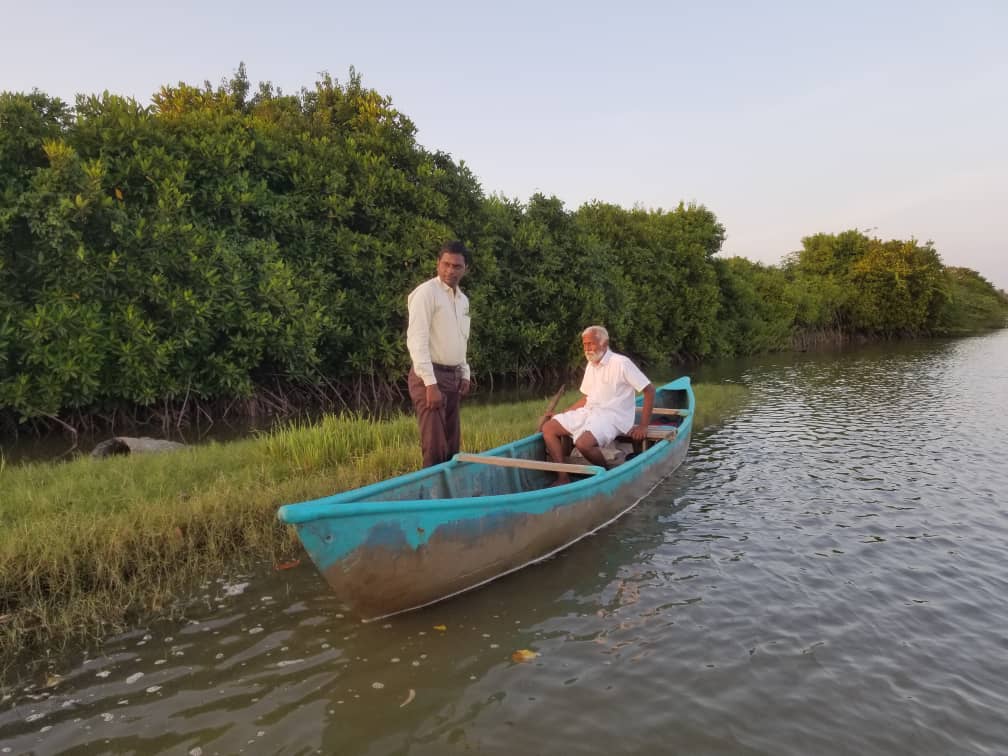
A Community-Based Conservation Initiative by AALAMARAM NGO, India
Mangrove ecosystems are among the world’s most valuable coastal ecosystems. Occupying the narrow zone where land meets the sea, mangrove forests protect coastlines, sustain biodiversity, support fisheries, store vast amounts of carbon, and provide livelihoods for millions of people. Despite occupying less than one percent of the Earth’s tropical forests, mangroves deliver ecosystem services worth billions of dollars annually.
Across the world, these unique forests are disappearing at an alarming rate because of industrialization, urban expansion, pollution, aquaculture, and climate change. Their destruction not only threatens biodiversity but also exposes coastal communities to cyclones, storm surges, flooding, erosion, and sea-level rise.
Recognizing their global importance, the United Nations designated 26 July as the International Day for the Conservation of the Mangrove Ecosystem, emphasizing the urgent need to conserve and restore these remarkable forests.
Inspired by this global mission, AALAMARAM NGO, established in 2009 in Cuddalore District, Tamil Nadu, India, has devoted itself to restoring degraded mangrove ecosystems through community participation, environmental awareness, and voluntary action. Without depending on government grants, the organization has mobilized local youth and villagers to plant and protect more than 250,000 mangrove saplings along the Uppanar River and nearby coastal wetlands.
This article presents the ecological, social, economic, and climate significance of mangrove ecosystems while documenting the conservation journey undertaken by AALAMARAM NGO. It demonstrates how community-driven environmental stewardship can contribute to national and global sustainable development goals.
2. Understanding Mangrove Ecosystems
Mangroves are salt-tolerant trees and shrubs that grow naturally along tropical and subtropical coastlines where freshwater rivers meet the sea. These ecosystems thrive under conditions that are too harsh for most other plants, including saline water, oxygen-poor soils, tidal flooding, and unstable sediments.
Mangroves have evolved remarkable adaptations to survive in these challenging environments. Their aerial roots absorb oxygen directly from the atmosphere during high tides, while specialized root systems anchor trees firmly against strong waves and currents. Many species also possess salt-filtering mechanisms that allow them to survive in highly saline environments.
More than 70 species of true mangroves exist worldwide, forming complex ecosystems that support thousands of species of fish, crustaceans, mollusks, birds, reptiles, insects, and mammals.
Rather than existing as isolated forests, mangroves function as interconnected ecosystems linking rivers, estuaries, wetlands, seagrass meadows, coral reefs, and the open ocean. The health of each component directly influences the others, making mangroves indispensable to coastal ecological balance.
3. Global Importance of Mangrove Ecosystems
Mangroves provide ecological services that are essential not only for coastal communities but also for global environmental stability.
Climate Change Mitigation
Mangroves are among the most efficient natural carbon sinks on Earth. They capture atmospheric carbon dioxide through photosynthesis and store enormous quantities of carbon within their trunks, roots, and deep organic soils. Unlike many terrestrial forests, mangrove soils retain carbon for centuries, making them critical ecosystems for combating climate change.
This stored carbon, commonly known as Blue Carbon, represents one of the world’s most effective natural climate solutions.
Coastal Protection
Dense mangrove forests significantly reduce wave energy before it reaches the shoreline. Their intricate root systems stabilize sediments, reduce erosion, prevent shoreline retreat, and lessen the destructive impacts of cyclones, hurricanes, and storm surges.
Scientific studies following major coastal disasters have consistently shown that villages protected by healthy mangrove forests suffer fewer casualties and reduced infrastructure damage than areas where mangroves have been removed.
Biodiversity Conservation
Mangrove ecosystems serve as breeding grounds, nurseries, feeding habitats, and migration corridors for countless marine and terrestrial species.
Juvenile fish, prawns, crabs, oysters, and shellfish depend on mangrove roots during the early stages of life before migrating into deeper coastal waters. Numerous migratory birds rely on mangrove wetlands for feeding and nesting.
The survival of many commercial fisheries depends directly upon healthy mangrove ecosystems.
Water Quality Improvement
Mangrove root systems naturally trap sediments, absorb nutrients, filter pollutants, and improve coastal water quality.
By intercepting contaminants before they reach coral reefs and seagrass beds, mangroves help maintain the health of entire marine ecosystems.
4. Mangroves of India: A National Ecological Treasure
India possesses one of the richest mangrove ecosystems in the world, extending along approximately 4,900 square kilometres of the country’s coastline. These ecosystems are distributed across the eastern and western coasts, as well as the Andaman and Nicobar Islands. Important mangrove regions include the Sundarbans in West Bengal, Bhitarkanika in Odisha, the Godavari and Krishna deltas in Andhra Pradesh, the Gulf of Kachchh in Gujarat, and the Pichavaram and Muthupet mangroves in Tamil Nadu.
Mangroves represent one of India’s most valuable natural assets because they simultaneously protect biodiversity, fisheries, coastal livelihoods, and climate resilience. They support thousands of species of fish, shellfish, crustaceans, molluscs, reptiles, amphibians, mammals, and migratory birds.
India’s National Action Plan on Climate Change recognizes mangrove conservation as an important nature-based solution for reducing the impacts of global climate change. Their ability to absorb atmospheric carbon dioxide while protecting coastlines makes them indispensable for sustainable coastal development.
Despite their importance, Indian mangroves continue to face threats from industrial development, pollution, conversion into aquaculture farms, urban expansion, and sea-level rise. Conserving these ecosystems is therefore not only an environmental priority but also a national responsibility.
5. Pichavaram Mangroves – One of the World’s Ecological Wonders
Located in Cuddalore District of Tamil Nadu, the Pichavaram Mangrove Forest is one of the largest and healthiest mangrove ecosystems in India. Spread across thousands of hectares between the Vellar and Coleroon river systems, Pichavaram is internationally recognized for its extraordinary biodiversity and ecological importance.
The forest consists of an intricate network of tidal waterways, islands, mudflats, lagoons, estuaries, and dense mangrove vegetation. More than fifty islands interconnected by hundreds of narrow canals create one of the most unique wetland landscapes in South Asia.
Pichavaram serves as an important nursery for marine fisheries by providing breeding grounds for commercially valuable fish, prawns, crabs, and shellfish. Thousands of migratory birds visit these wetlands every year, making it one of India’s important bird habitats.
The mangrove forest also plays a vital role in regulating coastal hydrology by filtering sediments, improving water quality, reducing erosion, and maintaining ecological balance between freshwater and marine ecosystems.
Its ecological significance extends beyond India and contributes to global biodiversity conservation efforts.
6. The Uppanar River and the Mangrove Ecosystem of Cuddalore
The Uppanar River forms one of the most environmentally significant estuarine systems along the southeast coast of India. Flowing through the Cuddalore region before joining the Bay of Bengal, the river supports extensive tidal wetlands that provide favourable conditions for mangrove growth.
For centuries, these wetlands have supported coastal communities through fisheries, crab harvesting, shellfish collection, and traditional livelihoods. The mangrove vegetation along the Uppanar River stabilizes riverbanks, traps sediments, filters pollutants, and maintains water quality before freshwater enters the sea.
However, rapid industrialization around the SIPCOT industrial complex has significantly increased environmental pressure on this fragile ecosystem. Industrial emissions, untreated effluents, plastic waste, urban sewage, and land-use changes threaten both biodiversity and human health.
Recognizing these growing threats, AALAMARAM NGO identified the Uppanar River as a priority area for ecological restoration. Since 2009, the organization has undertaken continuous mangrove plantation, monitoring, maintenance, and community awareness activities aimed at restoring ecological balance along this important estuary.
7. Why Mangroves Matter in the Era of Climate Change
Climate change has emerged as one of humanity’s greatest challenges. Rising global temperatures are causing glaciers to melt, oceans to expand, and sea levels to rise. Coastal communities are increasingly exposed to stronger cyclones, tidal flooding, saline intrusion, shoreline erosion, and extreme weather events.
Mangroves provide one of nature’s most effective defences against these impacts.
Unlike artificial seawalls, mangrove forests grow stronger over time. Their dense root systems trap sediments, gradually raising land elevation and enabling coastlines to adapt naturally to rising sea levels.
Scientific research has shown that healthy mangrove forests can reduce wave heights significantly before they reach coastal settlements. During tropical cyclones, mangroves absorb wave energy, decrease flood intensity, and reduce damage to homes, roads, agricultural land, and public infrastructure.
Mangroves also act as natural climate regulators by storing exceptionally high quantities of carbon in their soils for hundreds to thousands of years. This carbon storage capacity exceeds that of many terrestrial forests, making mangrove conservation an essential strategy for mitigating global warming.
Protecting mangroves therefore contributes simultaneously to climate adaptation, disaster risk reduction, biodiversity conservation, food security, and sustainable economic development.


Explained: What is a periscope camera, as used in the Motorola Signature 27?

Explained: Why a weak rupee and costly crude hurt Indian stocks

Explained: What is a special intensive revision of electoral rolls, and why is it in court?

Redfox Overseas: Customize Your Own Energy Drink and Stand Out in the Market

Zamzam Company CEO Chhote Bhai-Bade Bhai gave a grand welcome to Indian writer Devhari Sirvi in Dubai

Shikha Sharma: The Fashion Journalist, Blogger, and Plus-Size Model Taking the Industry by Storm
-
 Brandpost2 years ago
Redfox Overseas: Customize Your Own Energy Drink and Stand Out in the Market
-
 Brandpost2 years ago
Zamzam Company CEO Chhote Bhai-Bade Bhai gave a grand welcome to Indian writer Devhari Sirvi in Dubai
-
 Fashion2 years ago
Shikha Sharma: The Fashion Journalist, Blogger, and Plus-Size Model Taking the Industry by Storm
-
Entertainment2 years ago
Lucky Roxx’s “Yadav Ki Pukar” Goes Viral! Youth Celebrate Unity & Power
-

 Entertainment9 years ago
New Season 8 Walking Dead trailer flashes forward in time
-
Entertainment9 years ago
Meet Superman’s grandfather in new trailer for Krypton
-
Uncategorized2 years ago
Hello world!
-

 Brandpost2 years ago
From Local Hero to National Icon: Satyam Yadav’s Journey with TwentyOne