
Brandpost
Nextstep Planners Emerging as a Key Support System for Delhi’s Real Estate Professionals

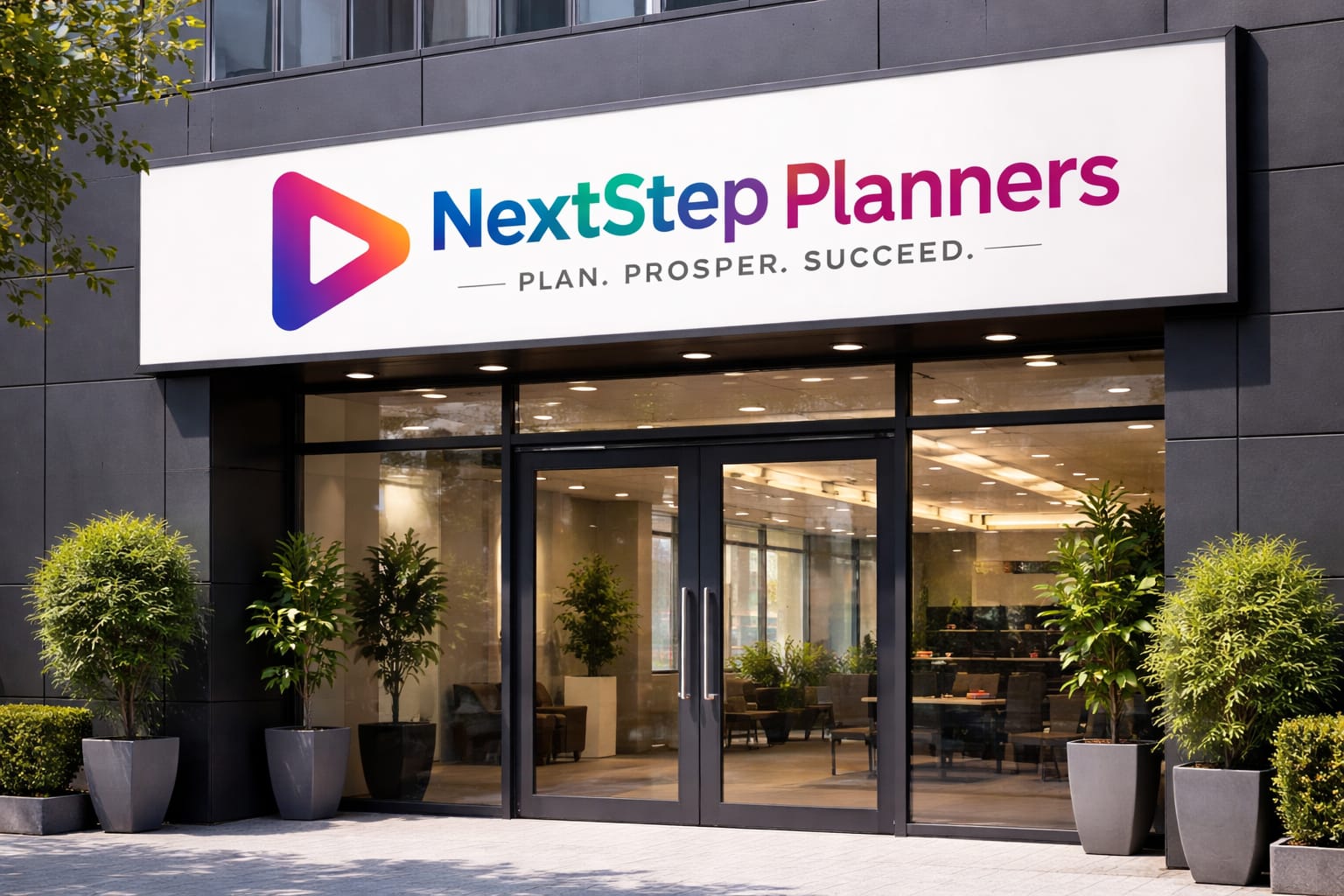
As Delhi’s property market grows increasingly crowded and digitally driven, a quiet but notable shift is underway in how real estate professionals are choosing to market themselves — and a handful of young, agile agencies are at the center of it.
Nextstep Planners, a marketing startup based in Delhi, is one such firm drawing attention. Founded by Ritik Jha, the company has spent the last five years building a service model aimed squarely at real estate agents, brokers, and developers navigating an intensely competitive urban landscape.
“The real estate sector in Delhi has always been relationship-driven,” the company’s positioning suggests, “but today, visibility on digital platforms is just as critical as word-of-mouth.”
The agency offers a broad range of services — from advertisement shoots and video production to social media marketing, influencer collaborations, and paid ad management. Each service, the company maintains, is oriented toward one outcome: helping property professionals reach more buyers, faster.
A Market That Demands More
Delhi’s real estate sector is not short of players. Thousands of agents and mid-sized developers compete daily for the attention of homebuyers in one of India’s most dynamic property markets. In this environment, marketing is no longer a luxury — it is a baseline requirement.
Digital platforms, particularly Instagram and YouTube, have transformed how properties are discovered. Buyers today often form their first impressions through video walkthroughs, social media posts, and influencer-led content — long before they step foot on a site visit.
It is precisely this gap that agencies like Nextstep Planners are attempting to fill. By offering production-quality content and managed digital campaigns, the firm positions itself as an end-to-end marketing partner rather than a conventional advertising vendor.
Beyond the Screen
What distinguishes Nextstep Planners from purely digital outfits is its reported involvement in on-ground activations. The agency has organized property trips and client events on behalf of real estate professionals — experiences designed to move potential buyers from passive interest to active engagement.
This experiential layer reflects a broader trend in real estate marketing, where developers and agents are investing in curated, relationship-first approaches to close deals that digital ads alone cannot seal.
An Expanding Footprint
In an unexpected diversification, Nextstep Planners has also extended its services to include university admissions support — a vertical that sits outside its core marketing identity. For a startup of its size, the move signals either a deliberate effort to diversify revenue streams or a response to organic demand from its existing client base.
Whether the two verticals — real estate marketing and education consulting — will remain complementary or eventually compete for the company’s focus remains to be seen.
The Founder’s Bet
Ritik Jha, who founded the company, belongs to a generation of entrepreneurs building lean, sector-specific startups rather than chasing scale across industries. His firm’s sustained focus on real estate — a sector notorious for its resistance to change — suggests a calculated long-term bet on niche expertise.
The agency maintains a visible presence on Instagram, where it documents campaigns, behind-the-scenes shoots, and client collaborations. For a company still in its early years, the social media trail doubles as both a portfolio and a proof of concept.
What Lies Ahead
Delhi’s real estate market shows no signs of slowing down. As new residential corridors develop and commercial demand rebounds post-pandemic, the ecosystem of service providers supporting the sector — legal, financial, and increasingly, marketing — is expanding alongside it.
For startups like Nextstep Planners, the opportunity is real, but so is the competition. Larger digital agencies, national marketing firms, and in-house teams at major developers all vie for the same mandates.
What smaller, specialized agencies have on their side is proximity — to clients, to local market dynamics, and to the kind of quick, personalized service that larger firms often struggle to deliver.
Whether Nextstep Planners can convert that proximity into a lasting competitive advantage will be the defining question as it moves from startup to established player.


Faridabad is set to witness a major celebration of dance as C&S Event Planners, founded by Chirag and Sharmila, prepares to host Nritya Prabha Season 4. The upcoming competition will bring together 446 participants from different states and is expected to continue for nearly 13 hours, making it a significant event for the dance community.
Chirag and Sharmila are closely associated with the dance and event industry. They also run C&S Dance and Fitness Studio in Sector 21, Faridabad, where dance and fitness training is offered. Along with managing their studio, they are involved in event choreography and work on dance performances and productions for different occasions. Their involvement in dance training and choreography has kept them connected with dancers, academies and performers.
Nritya Prabha Season 4 marks the fourth season of the competition and is also the ninth event organised by C&S Event Planners. Their previous events have received a positive response from participants and audiences, and the latest edition is expected to be considerably larger in terms of participation and duration.
The competition will feature six categories: Solo Sub Junior, Solo Junior, Solo Senior, Duet, Junior Group and Senior Group. Three winners will be selected in each category, resulting in a total of 18 category winners. This structure gives dancers across different age groups and performance formats an opportunity to compete and showcase their skills on the same platform.
One of the notable features of the event is that every participant will receive a trophy and certificate. The organisers have also planned special recognition for performances that come close to winning. After the main results, 15 additional top performances will be selected from among those that performed exceptionally well but missed out on a winning position by a small margin. These performers will receive a special trophy, giving recognition to strong performances beyond the main winners.
With 446 participants scheduled to perform, the competition is expected to showcase a wide range of dance styles, choreography and performance techniques. Dancers travelling from different states will get an opportunity to compete with performers from outside their usual regional circuits and gain experience on a larger competitive stage.
The approximately 13-hour schedule also makes the event a substantial gathering for dancers, teachers, parents and dance enthusiasts. Such competitions provide performers with more than just an opportunity to win awards. They can gain stage confidence, experience a competitive environment and observe different approaches to choreography and presentation.
For Faridabad, the event also adds to the city’s growing presence in dance and cultural activities. Interstate participation is expected to bring together dancers and academies from different regions, creating an opportunity for interaction within the wider dance community.
As C&S Event Planners move towards its ninth event and Nritya Prabha enters its fourth season, the scale of participation indicates the growing reach of the competition. With 446 participants, six categories, 18 category winners, additional recognition for 15 outstanding performances and trophies and certificates for every participant, the event places considerable emphasis on recognising performers at different levels.
With nearly 13 hours of performances lined up, Nritya Prabha Season 4 is expected to turn Faridabad into a vibrant meeting point for dancers from different states, bringing together competition, creativity, recognition and a shared passion for dance.

Prime Signal has managed over ₹84 crore in ad spend across 260 brands and 22 cities. Its founders argue the Indian growth agency model is broken — and that the fix is refusing to take a retainer without a roadmap.
There is a particular conversation that repeats itself in Indian small-business boardrooms, and Manpreet Singh has heard it several hundred times.
A founder has been spending on advertising for two years. The dashboard is full. Impressions are up. The agency sends a monthly deck with a lot of green arrows. And yet nobody in the room can answer the only question the promoter actually cares about: did any of this make us money?
“Most Indian SMBs are not under-marketed,” says Singh, co-founder of Prime Signal, the Noida-headquartered growth firm. “They are over-serviced and under-diagnosed. Someone sold them nine channels before anyone bothered to look at their unit economics.”
Prime Signal, which operates out of Sector 121 in Noida and has been in the market since 2016, has built its entire commercial proposition around that complaint. The firm describes itself as a “full-stack growth partner” — marketing, finance, operations and brand run as a single system rather than as separate vendor relationships. By its own published figures, it has managed more than ₹84 crore in advertising spend, generated over 8 lakh leads, and served 260 brands across 22 Indian cities and ten industries. It carries an average client rating of 4.8 out of 5.
The refusal that became a business model
The most unusual thing about Prime Signal is not what it sells. It is what it declines to sell.
“No retainer without a roadmap” is written into the firm’s operating principles, and co-founder Abhinav Prakash treats it as non-negotiable. Before any campaign goes live, the firm runs what it calls a diagnosis: an audit of every channel, a review of the client’s numbers, and direct interviews with the client’s own customers.
“An agency that starts spending your money in week one has told you something important about itself,” Prakash says. “It has told you the media budget is its product. Ours isn’t. Our product is the decision about where the money should go — and sometimes that decision is that you should spend less.”
Prakash’s insistence on this sequencing is not accidental. His background is in finance and compliance rather than creative, and Prime Signal is one of the few Indian growth firms that runs a compliance-and-finance service line alongside performance marketing. The logic is that a business with broken margins does not have a marketing problem, and pouring paid media on top of it accelerates the loss rather than the growth.
The engagement itself runs on a four-step, ninety-day structure the firm calls Diagnose, Design, Deploy, Compound. The design step happens in a single working session with the client’s leadership, and both sides sign the resulting plan. First results are contracted to appear within thirty days. The final phase is explicitly about making the agency less necessary — systemising what worked and training the client’s internal team to run it.
“We are trying to build something the client can eventually operate without us,” Singh says. “That is a strange thing for an agency to say out loud. It is also the only version of this business I am interested in running.”
Nine signals, one system
Prime Signal organises its work into nine service lines it refers to as signals: lead generation, performance marketing, discovery marketing covering SEO, AEO and GEO, content marketing, retention marketing, conversion rate optimisation, authority marketing, proximity or local marketing, and compliance and finance.
The breadth is deliberate and, the founders concede, commercially inconvenient. It is easier to sell one thing well than nine things together.
“The reason we do it anyway is attribution,” Prakash says. “If your ads are with one vendor, your email with another and your website with a third, nobody owns the number. Everybody owns a slice of the number. That is how a company can spend for three years and never find out what worked.”
The client roster reflects the range. On the consumer side the firm has worked with nutrition and wellness brands including GoodMonk and Wellbeing Nutrition, and with fashion and lifestyle labels such as RDKLU, Deepa Gurnani and fine jewellery house Renu Oberoi. In pet nutrition it counts Pawpeye, the vet-formulated dog and cat food brand. Its industrial and B2B work includes Ester Industries and manufacturing clients such as Vijay Plastics, where the challenge is less about brand awareness and more about generating qualified enquiries in a narrow buyer universe.
The results the firm publishes are stated in the client’s own operating terms rather than in agency metrics. A Delhi streetwear label moved from 420 to 1,950 monthly orders across five months. A Bengaluru food and beverage brand took monthly D2C revenue from ₹4 lakh to ₹22 lakh while lifting return on ad spend from 2.1x to 5.3x. A Delhi dermatology clinic went from 45 to 210 monthly bookings as cost per lead fell from ₹1,850 to ₹620. A Coimbatore CNC manufacturer went from 11 to 64 inbound calls a week.
“Nobody takes impressions to their board,” Singh says. “They take orders, bookings and margin. So those are the only numbers we agree to be measured on.”
The 10,000 number
The firm’s stated mission is to help 10,000 businesses achieve what it calls sustainable, scalable growth by 2030 — a figure that is roughly forty times its current client count and which the founders acknowledge cannot be reached by adding headcount.
“You cannot service 10,000 companies the way we service 260,” Prakash says. “The only route is productising the diagnosis — making the first ninety days repeatable enough that it works without either of us in the room. That is the actual engineering problem in front of us.”
Prime Signal currently serves clients across 22 Indian cities and in four markets beyond India: the UAE, the United Kingdom, the United States and Australia.
Whether the firm reaches its 2030 target is an open question. But its founders have picked an uncomfortable position to defend in a sector that rarely volunteers one — that the honest answer to a growth brief is sometimes that the client is not ready to grow yet.
“We lose deals over that,” Singh says. “We would rather lose the deal than the client.”
Website https://share.google/6ZawWS7cV70NZgFJ4
Founders Linkedin Bios:
Manpreet Singh: https://www.linkedin.com/in/manpreet-singh-project-manager/
Abhinav Prakash: https://www.linkedin.com/in/caabhinav-prakash/
Prime Signal is headquartered at Sector 121, Noida, Uttar Pradesh. More at primesignal.in.

BHUBANESWAR — A spice and dry-fruit brand rooted in Odisha, Dakloni Masala, is positioning itself around purity and traditional sourcing as it competes in India’s increasingly crowded packaged-spice market, according to the company and its parent, Green Chocy Private Limited.
The brand traces its roots to 1983, according to company materials, and says it has focused since then on bringing “the purity of organic spices and authentic traditional flavours” to Indian kitchens. Its current range spans turmeric powder, red chilli and Kashmiri red chilli powder, garam masala, garlic and onion powder, and a dry-fruits line covering cashews, almonds, walnuts, pistachios and raisins.
Dakloni operates under Green Chocy Private Limited, which holds FSSAI license number 12026999000110 and is based in Bomikhal, Rasulgarh, in Khorda district, Odisha. The company describes its approach as “100% Pure, Natural & Premium Quality,” a claim it backs with references to “strict quality checks before packaging” and sourcing “carefully selected” from trusted farmers and suppliers, according to its website.
A Fragmented, Fast-Growing Category
India’s packaged-spice sector has drawn a wave of regional and direct-to-consumer entrants in recent years, alongside established national players, as consumers increasingly shop for spices online rather than through neighborhood grocers. Industry analysts who track the space say purity and traceability claims have become a common differentiator for newer brands, though such claims are typically self-reported rather than independently audited unless tied to a specific third-party certification beyond baseline food-safety licensing.
Dakloni’s FSSAI registration is a standard requirement for any food business operating in India and confirms basic regulatory compliance rather than certifying “organic” status specifically; the company has not indicated it holds a separate organic-certification mark, and this report could not independently verify the “organic” language used in its own marketing material.
An Odisha Identity
The brand markets itself explicitly around its Odisha base, a positioning that distinguishes it from larger national spice brands headquartered elsewhere. Company materials link its Dakloni Masala spice range to the region’s culinary heritage, though the company has not published details of specific farms or supply chains involved.
Dakloni also markets a grocery and makhana range alongside its core spice and dry-fruit lines, positioning itself as a broader everyday-essentials brand rather than a single-category spice house.
What Comes Next
The company has not disclosed retail distribution figures, revenue, or store count, and operates primarily as a direct-to-consumer brand through its own websites and social media channels. Whether its purity-focused positioning translates into meaningful market share against established national spice brands remains to be seen.
Frequently Asked Questions
What does Dakloni Masala sell?
The brand’s core lines are turmeric powder, red chilli and Kashmiri red chilli powder, garam masala, garlic and onion powder, and a dry-fruits range including cashews, almonds, walnuts, pistachios and raisins, alongside makhana and grocery staples.
Who owns Dakloni Masala?
The brand operates under Green Chocy Private Limited, an FSSAI-licensed food business based in Khorda district, Odisha.
Visit- dakloni.in
Visit- dakloni.com
Facebook- Dakloni Masala
Instagram- @daklonimasala


Sensex falls 281 points as IT stocks drag Monday’s session

India lead Sri Lanka by 178 runs as rain ends day 3 early

Air India begins operating from new Bhogapuram airport today

Redfox Overseas: Customize Your Own Energy Drink and Stand Out in the Market

Zamzam Company CEO Chhote Bhai-Bade Bhai gave a grand welcome to Indian writer Devhari Sirvi in Dubai

Shikha Sharma: The Fashion Journalist, Blogger, and Plus-Size Model Taking the Industry by Storm
-
 Brandpost2 years ago
Redfox Overseas: Customize Your Own Energy Drink and Stand Out in the Market
-
 Brandpost2 years ago
Zamzam Company CEO Chhote Bhai-Bade Bhai gave a grand welcome to Indian writer Devhari Sirvi in Dubai
-
 Fashion2 years ago
Shikha Sharma: The Fashion Journalist, Blogger, and Plus-Size Model Taking the Industry by Storm
-
Entertainment1 year ago
Lucky Roxx’s “Yadav Ki Pukar” Goes Viral! Youth Celebrate Unity & Power
-

 Entertainment9 years ago
Meet Superman’s grandfather in new trailer for Krypton
-
Entertainment9 years ago
New Season 8 Walking Dead trailer flashes forward in time
-
 Brandpost2 years ago
From Local Hero to National Icon: Satyam Yadav’s Journey with TwentyOne
-
Uncategorized2 years ago
Hello world!