
Brandpost
Puffx Host Disrupts India’s Web Hosting Space with Ultra-Affordable, High-Performance Solutions

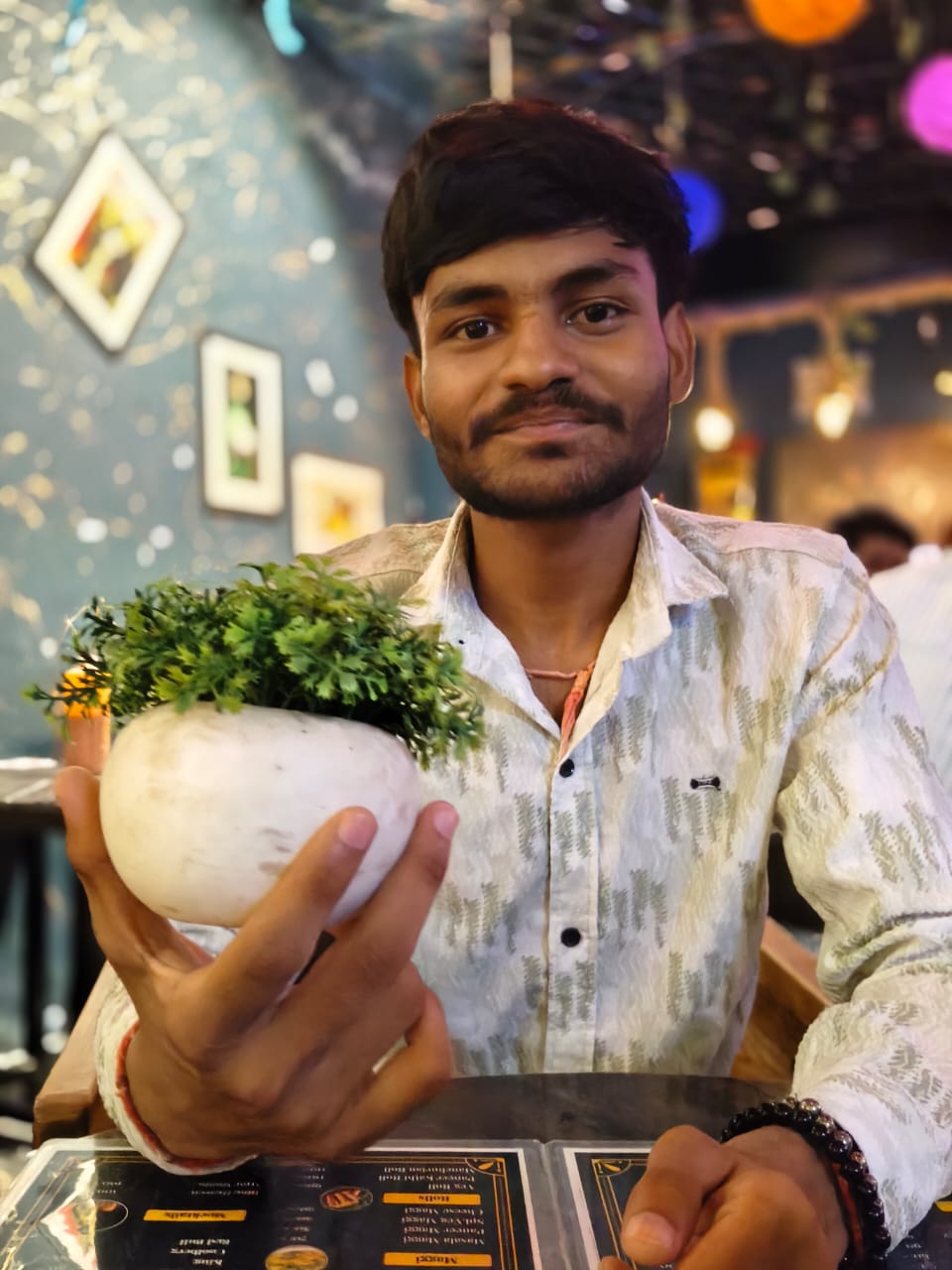
In a market long dominated by international giants, Puffx Host is emerging as a bold new player in India’s tech infrastructure landscape. Blending affordability with enterprise-grade performance, the hosting company is making waves among developers, startups, and digital creators looking for reliable, locally supported cloud hosting solutions.
Founded in Morena, Madhya Pradesh by entrepreneur Nitin Mehta, Puffx Host is driven by a mission to democratize access to high-speed, secure web infrastructure. From shared and WordPress hosting to Indian cloud solutions and global VPS/RDP offerings, the company caters to a wide spectrum of users—from hobby bloggers to growing SaaS companies.
Next-Gen Hosting Starting at Just ₹39
Puffx Host’s key differentiator lies in its aggressive pricing strategy without compromising on performance. Its starter plan, priced at ₹39/month, includes SSD storage, 99.9% uptime, free SSL, and full cPanel access—features typically locked behind premium tiers by other providers. The medium plan, which supports three websites and 20 GB SSD, is currently the platform’s best-seller at ₹49/month.
All plans include:
- Free SSL Certificates
- Unlimited Bandwidth
- Daily Backups
- One-click WordPress Installer
- 24/7 Live Chat Support
- 30-Day Money-Back Guarantee
For power users, Puffx Host also offers Indian-based cloud servers, EU & US VPS, and reseller plans, enabling businesses to scale confidently with localized speed and global reach.
Founder Spotlight: Nitin Mehta – The Man Behind the Mission
What sets Puffx Host apart is the founder-driven innovation at its core. Nitin Mehta, a self-taught technologist and digital entrepreneur from Morena, has built the platform from the ground up—without investors or corporate backing. A passionate coder and product builder, Nitin is also the creator of complementary platforms like PuffxPay.site, PuffxTool.site, and PuffxMart.shop, further cementing his vision of a full-stack digital ecosystem.
Nitin is known for his transparency and user-first mindset. He openly manages customer interactions via Telegram and Instagram (@unknown_coder1x), and even registered the domain under his real name without using WHOIS privacy protection—reflecting a rare level of authenticity in the tech world.
According to Nitin, Puffx Host was born from a simple idea: to give Indians a better, faster, and more affordable alternative to expensive foreign hosting companies. His deep involvement in everything from infrastructure to customer support has earned Puffx Host a loyal user base and rapidly growing reputation.
A Developer-Friendly Ecosystem
Beyond hosting, Puffx Host has built a versatile ecosystem that appeals directly to developers and digital professionals. At tool.puffxhost.com, users can access an array of developer utilities for free—including SSL checkers, JSON converters, password generators, IP lookups, and QR builders—making it a one-stop shop for both deployment and maintenance.
Domain Registration and Digital Identity at Scale
In line with India’s push for digital inclusion, Puffx Host also offers domain registration services starting at just ₹108/year. With over a dozen TLD options like .xyz, .space, .live, and .com.tr, the platform enables users to secure their digital identity with ease. Bulk domain deals and promotional pricing further strengthen their appeal among small agencies and resellers.
End-to-End Support Built for Indian Users
Unlike many international platforms that struggle with localized support, Puffx Host delivers 24/7 customer assistance, free migration services, and instant ticket resolution—all optimized for Indian users. Whether via live chat or a direct helpline, users praise the platform’s hands-on approach and responsiveness.
A Privacy-First, Secure Platform
The company’s privacy policy ensures transparency. Puffx Host doesn’t store payment card details and only collects user data for service optimization or compliance. Their cookie-based analytics help improve user experience while giving users the option to opt out.
A New Era for India’s Digital Hosting Industry
With Nitin Mehta leading the charge, Puffx Host is more than just a hosting service—it’s a bold step toward redefining India’s digital infrastructure. Blending founder-led innovation, affordable pricing, and scalable tech, the company is well-positioned to empower the next generation of digital creators, entrepreneurs, and developers.
Whether you’re launching a personal blog, scaling an e-commerce business, or developing the next big SaaS app—Puffx Host is a name that’s rapidly earning trust across the tech ecosystem.
Website: www.puffxhost.com
Brandpost
Seraj Ansari: Building a Stronger Digital Future Through PR, Social Media and Strategic Communication

In a digital economy where attention is limited and reputation can define a business before a customer ever makes contact, Seraj Ansari is building his professional identity around one clear idea: meaningful growth begins with meaningful communication. Working across public relations, social media marketing and digital brand building, Ansari represents a new generation of professionals who understand that visibility alone is not enough. What matters is building trust, relevance and a reputation that lasts.
Based in Delhi, Seraj Ansari has developed a professional profile focused on PR and social media marketing, with experience associated with Graphketing. His approach reflects the changing nature of modern marketing, where brands are expected to communicate consistently across digital platforms rather than depend only on traditional advertising. From strengthening online presence to shaping brand narratives, his work sits at the intersection of communication, marketing and relationship building.
One of the strongest aspects of Ansari’s professional philosophy is his emphasis on reputation. In an environment where businesses can gain visibility overnight but lose credibility just as quickly, strategic communication has become a serious business function. A strong digital presence requires more than frequent posts or promotional campaigns; it requires a clear message, consistent positioning and an understanding of what audiences genuinely value. This perspective makes PR and social media not merely promotional tools, but long-term assets for brand development.
Ansari’s professional journey also reflects a wider shift taking place across India’s business ecosystem. Entrepreneurs, startups and established companies are increasingly looking for specialists who can connect storytelling with measurable digital growth. His work highlights the importance of combining creative communication with structured marketing thinking—an approach that can help businesses stand out in increasingly crowded markets.
As digital competition continues to intensify, professionals like Seraj Ansari are helping redefine what effective brand communication looks like. His focus on PR, social media marketing, personal branding and reputation-building positions him within a rapidly evolving industry where trust has become one of the most valuable currencies. For brands seeking sustainable visibility, the lesson is straightforward: being seen is useful, but being remembered for the right reasons is far more powerful.
Brandpost
Ansh Johri Introduces The Life I Lived With You Alone, A New Book About the Emotions We Struggle to Express

In an age where people can communicate instantly, some of the most important emotions are still left unsaid. Exploring this quiet side of human connection, young author Ansh Johri has introduced The Life I Lived With You Alone, an emotional prose and poetry collection that looks at love, memories, attachment, distance and the thoughts people often keep to themselves.
The book does not follow a conventional love-story format. Instead, The Life I Lived With You Alone focuses on the emotional experiences surrounding relationships and connections—moments that may appear ordinary from the outside but can carry an entirely different meaning for the person experiencing them.
Through a combination of prose and poetry, Ansh Johri explores emotions such as longing, unspoken affection, waiting, emotional attachment and the difficulty of letting go. The writing gives attention to the small details that often become significant in our memories: conversations, messages, familiar moments and the silence that sometimes says more than words.
One of the central ideas behind The Life I Lived With You Alone is the idea of experiencing an entire emotional world around someone, even when that world may not exist in the same way for them.
The book also moves beyond heartbreak. Its reflections turn toward acceptance, self-worth and healing, suggesting that moving forward does not necessarily require anger or resentment. Instead, it can mean understanding what a connection meant, accepting what it could not become, and gradually learning to choose one’s own peace.
This balance between emotional vulnerability and self-reflection is what gives the book its broader appeal. Readers are not simply presented with a story to observe; they are encouraged to connect the writing with emotions and memories from their own lives.
The reader is also invited to pause and think about their own unfinished emotions, memories or someone whose name may still hold meaning for them.
With The Life I Lived With You Alone, Ansh Johri aims to create a reading experience that is intimate, reflective and relatable.
Rather than asking readers to simply remember a character or a story, the book encourages them to look inward and recognize the emotions they may have carried themselves.
For a young author entering the literary space with a work centered around emotional connection and self-discovery, The Life I Lived With You Alone presents Ansh Johri as a voice exploring the quieter and often overlooked side of human emotions.

From Bhubaneswar’s marketplaces to Niyamgiri hills and the New Parliament, her art lives beyond the gallery – in community, ecology and everyday life
Bhubaneswar, Sept 11, 2026:* In a time when contemporary art is often limited to gallery spaces, Bhubaneswar-based artist *Satyabhama Majhi has spent over two decades taking art to the people – to market lanes, village walls, hill slopes, public spaces and school classrooms.
A contemporary visual artist, curator, social activist, community art practitioner and Secretary of Sasatwa Foundation, Majhi works across painting, sculpture, installation, photography, mixed media and public art. Her true medium is connection – between people and place, memory and modernity, tradition and today.
Early Life: The Market as First Studio
Majhi grew up in Bhubaneswar, observing everyday life around her father’s small shop in a local market. Vendors bargaining, festivals, neighbourhood ties, animals, the constant transformation of the city – this everyday theatre became her first art school.
As Bhubaneswar urbanised rapidly, old neighbourhoods and collective memories began to disappear. Majhi began archiving them. Her paintings are not portraits of one person, but crowded social landscapes of many people, animals, plants, buildings and rituals – a visual memory of a changing city.
She holds a *Master of Fine Arts (M.F.A.) in Traditional Art*, but her practice soon evolved into a multidisciplinary language.
The Niyamgiri Dialogue: 12 Years with Dongaria Kondh
The most defining chapter of her practice is her *more than a decade-long engagement with the Dongaria Kondh community of the Niyamgiri hills.*
It was not a project of documentation, but of listening and learning. She studied their livelihood, spirituality, their reverence for *Niyam Raja*, and their intimate relationship with forest and land.
This changed her art materially. Inspired by indigenous wall painting, she began making colours from the land itself – *chalk stone, charcoal, turmeric, geru soil and brown stone from Niyamgiri*, processed with natural binders. The hill itself became pigment.
From this engagement emerged two key concepts in her work:
1. The Triangle Motif: Taken from Dongaria visual culture and the silhouette of the Niyamgiri hills, symbolising stability, sacred geography and divinity.
2. “Up and Down”: Inspired by the daily journey of Dongria people climbing up and down the hills for water, market and rituals – a metaphor for human struggle, movement and resilience.
Two Core Concepts: Un-Urbanisation and Nature as Kin
Majhi’s recent philosophy is built on two ideas.
Un-Urbanisation: She reverses urban development on canvas – bringing trees, animals, village life back into the concrete city, asking what the city has forgotten.
Dongria Lifestyle with Nature: She shows that for Dongaria, nature is not a resource to be used, but a family to belong to – god, home and identity at once.
From Cuttack Walls to the Parliament of India
Public art is central to her belief that art should meet people on the street.
Her large-scale murals and interventions are visible across Odisha, including *Ring Road and Dagabara Sahi in Cuttack*, and works created for the *Men’s FIH Hockey World Cup and Asian Athletics Championships in Bhubaneswar.* Her community projects *Pago_ and _Thought Loom* transformed walls into dialogues.
In 2023, she served as Co-Sutradhar and creative contributor to _People’s Wall – Jan, Janani and Janmabhumi_, a landmark participatory art project commissioned by *Lalit Kala Akademi for the New Parliament House in New Delhi*, bringing together women artists and artisans from across India.
The Educator: 15 Years with Children
For about 15 years, Majhi has worked with children, tribal residential schools and children with disabilities through initiatives like *Kalpanadham* and in collaboration with *Gram Vikas and Tata Trusts.*
Her pedagogy is simple: “Don’t copy, remember.” Children are encouraged to draw from their own memories – their house, tree, animal, festival, village journey.
Recognition and Ongoing Show
Majhi’s works have been presented at *Bharat Bhavan Bhopal, Nature Morte Gurgaon, Lalit Kala Akademi New Delhi, Odisha Lalit Kala Akademi, Bhubaneswar Art Trail, Gram Art Project and Vancouver Biennale-linked projects.*
She is a recipient of the *Odisha Lalit Kala Akademi State Award (2012)* and the *National Lalit Kala Akademi Scholarship (2009-2010).*
Currently, her solo show *’Land as Memory, Matter as Landscape’ at artCENTRIX Space Gallery* brings together her journey – where soil is memory and landscape is story.
At its heart, Satyabhama Majhi’s practice asks one vital question in an age of rapid change: How do we keep our places, and our memories of them, alive?


80s AI photo trend goes viral, from Bollywood to politics

Seraj Ansari: Building a Stronger Digital Future Through PR, Social Media and Strategic Communication

Ansh Johri Introduces The Life I Lived With You Alone, A New Book About the Emotions We Struggle to Express

Redfox Overseas: Customize Your Own Energy Drink and Stand Out in the Market

Zamzam Company CEO Chhote Bhai-Bade Bhai gave a grand welcome to Indian writer Devhari Sirvi in Dubai

Shikha Sharma: The Fashion Journalist, Blogger, and Plus-Size Model Taking the Industry by Storm
-
 Brandpost2 years ago
Redfox Overseas: Customize Your Own Energy Drink and Stand Out in the Market
-
 Brandpost2 years ago
Zamzam Company CEO Chhote Bhai-Bade Bhai gave a grand welcome to Indian writer Devhari Sirvi in Dubai
-
 Fashion2 years ago
Shikha Sharma: The Fashion Journalist, Blogger, and Plus-Size Model Taking the Industry by Storm
-
Entertainment1 year ago
Lucky Roxx’s “Yadav Ki Pukar” Goes Viral! Youth Celebrate Unity & Power
-

 Entertainment9 years ago
New Season 8 Walking Dead trailer flashes forward in time
-
Entertainment9 years ago
Meet Superman’s grandfather in new trailer for Krypton
-

 Brandpost2 years ago
From Local Hero to National Icon: Satyam Yadav’s Journey with TwentyOne
-
Uncategorized2 years ago
Hello world!