
Brandpost
SKNPOP: Where Beauty Meets AI — A New Era of Personalised Beauty Begins in India

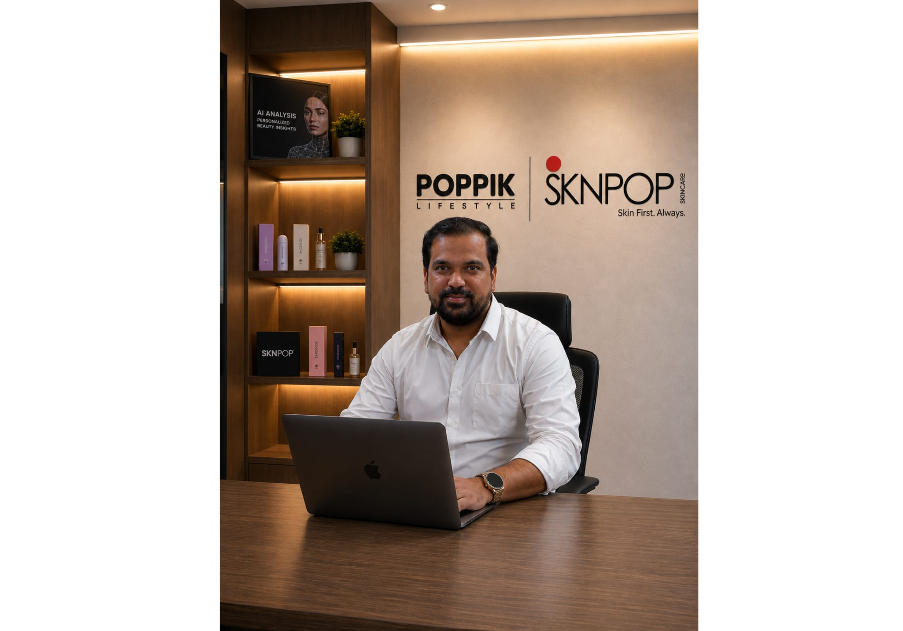
New Delhi-Based Brand Launches With a Technology-Driven Approach to Skincare, Putting AI-Powered Analysis Ahead of Product Recommendations
New Delhi, India | 20th August 2026: India’s beauty and skincare industry is about to see a new kind of entrant. SKNPOP is officially launching in New Delhi with an approach that departs from how most beauty brands introduce themselves — rather than opening with a product line, the brand is opening with a promise built around artificial intelligence, personalisation, and a claim that understanding a customer’s skin should come before recommending anything to put on it.
The launch positions SKNPOP not as “just another beauty brand with a range of products,” but as the first step toward what the company describes as a technology-driven beauty ecosystem — one where AI-powered analysis is meant to help consumers understand their individual beauty and skincare needs before any product recommendation enters the picture.
Understanding Before Recommending
The problem SKNPOP is positioning itself to solve is a familiar one for anyone who has stood in front of a beauty aisle, or scrolled through an endless list of skincare products online, trying to work out what’s actually right for their skin. With thousands of beauty and skincare products now available to Indian consumers, choice has arguably become the industry’s biggest source of confusion rather than its biggest advantage.
SKNPOP’s answer to that problem is an AI-powered beauty analysis tool designed to help users better understand their individual skin and beauty requirements before moving toward more personalised product recommendations. The brand sums up its approach in four words: Analyse. Understand. Recommend. Care. It’s a sequence that deliberately puts analysis and understanding ahead of the product itself, a reversal of the traditional retail model where products are pushed first and personalisation, if it exists at all, comes later through trial and error.
That philosophy also pushes back against the one-size-fits-all approach that has long dominated mass-market beauty retail, where broad product categories are marketed to wide audiences regardless of individual skin type, concerns, or goals. SKNPOP’s stated belief is that beauty should begin with understanding the individual, not with a shelf of generic options a customer has to guess their way through.
The Founder’s Vision: Beauty as an Ecosystem, Not Just a Product Line
Speaking about the launch, Jay Gupta, Founder of SKNPOP, framed the brand’s ambitions well beyond a typical product launch.
“We don’t want SKNPOP to be known only as a beauty product brand. Our vision is to build a technology-driven beauty ecosystem where AI helps people understand their skin and make better beauty decisions. Products are only one part of the journey — understanding the individual comes first.”
— Jay Gupta, Founder, SKNPOP
He went on to describe where he sees the broader beauty industry heading, and how SKNPOP intends to position itself within that shift.
“We believe the future of beauty will be more personalised, more intelligent and more accessible. With SKNPOP, we are taking our first step towards creating that future by bringing AI and beauty together.”
— Jay Gupta, Founder, SKNPOP
That framing — an ecosystem rather than a product catalogue — is a deliberate positioning choice, and one that puts SKNPOP in conversation with a broader wave of beauty-tech companies globally that have started using AI-driven skin diagnostics, virtual try-ons, and personalised formulation as their core differentiator, rather than competing purely on price or shelf presence.
More Than Products — A Beauty Experience Built Around the Consumer
SKNPOP describes its approach as connecting AI-powered analysis with beauty and skincare solutions to create a journey designed around the consumer, rather than one designed around moving product volume. The brand’s stated philosophy — Beauty. Science. AI. You. — attempts to capture that consumer-first framing in a single line, positioning the customer’s individual skin and beauty needs at the centre of the experience rather than at the receiving end of a marketing funnel.
The stated objective behind this approach is to make beauty more informed, personalised and easier to understand for today’s consumers — language that reflects a broader shift happening across consumer industries, where personalisation, once a premium feature reserved for luxury or high-end services, is increasingly being positioned as a baseline expectation rather than an add-on.
Why AI and Beauty Are Increasingly Being Talked About Together
SKNPOP’s launch arrives at a moment when the intersection of artificial intelligence and beauty is drawing growing attention globally, from AI-driven skin diagnostic tools used by dermatology apps to algorithm-based product-matching services offered by several international beauty retailers. The appeal of this approach is fairly intuitive: skin type, concerns and needs vary significantly from person to person, and a data-informed recommendation, in theory, should reduce the trial-and-error many consumers currently go through with skincare and beauty products.
Whether AI-powered analysis actually delivers meaningfully better recommendations than a knowledgeable in-store consultant or a well-designed quiz-based system is something that will likely take real-world usage and consumer feedback to prove, rather than something a launch announcement alone can establish. That said, the direction SKNPOP is betting on — personalisation driven by data and analysis, rather than broad demographic targeting — does track with where much of the global beauty industry appears to be heading.
A New Delhi Launch With National Ambitions
SKNPOP’s official launch is set for 20th August 2026 in New Delhi, a city that has increasingly become a launch hub for beauty and consumer-tech brands looking to establish an initial market presence before expanding into other parts of India. The brand describes this launch as “only the beginning of this journey,” suggesting New Delhi is intended as a starting point rather than the limit of its ambitions.
For a company built around a technology-first pitch, scaling beyond an initial city launch will likely depend on how well its AI-powered analysis tool performs in practice, how intuitive the experience is for everyday consumers unfamiliar with AI-driven beauty tools, and how effectively the brand can translate its ecosystem positioning into an experience that feels genuinely different from a standard skincare quiz or product finder.
The Bigger Picture: Personalisation as the New Baseline
SKNPOP’s entry into India’s beauty market reflects a broader pattern playing out across consumer industries — technology-driven personalisation is steadily moving from being a competitive advantage to becoming a basic consumer expectation. As Indian consumers gain more exposure to AI-powered tools across other parts of their daily lives, from personalised content recommendations to AI-assisted shopping, expectations for similarly intelligent, individualised experiences in beauty and skincare are likely to keep rising.
Whether SKNPOP becomes a defining name in that shift, or one of several beauty-tech entrants competing for the same personalisation-focused customer, will depend on execution as much as vision. What’s clear from the brand’s own positioning is that it isn’t trying to compete purely as another product line on an already crowded shelf — it’s betting that understanding the customer first, through AI, is the differentiator that will matter most as India’s beauty industry continues to evolve.
Brand Snapshot
| Brand | SKNPOP |
| Founder | Jay Gupta |
| Launch Date | 20th August 2026 |
| Launch City | New Delhi, India |
| Category | AI-Powered Beauty & Skincare Analysis |
| Core Philosophy | Analyse. Understand. Recommend. Care. |
| Brand Tagline | Beauty. Science. AI. You. |
Brandpost
Acharya Hemanshu Ji Honoured with Lifetime Achievement Award at National Dharma Jyotish Sammelan 2026 in Lucknow
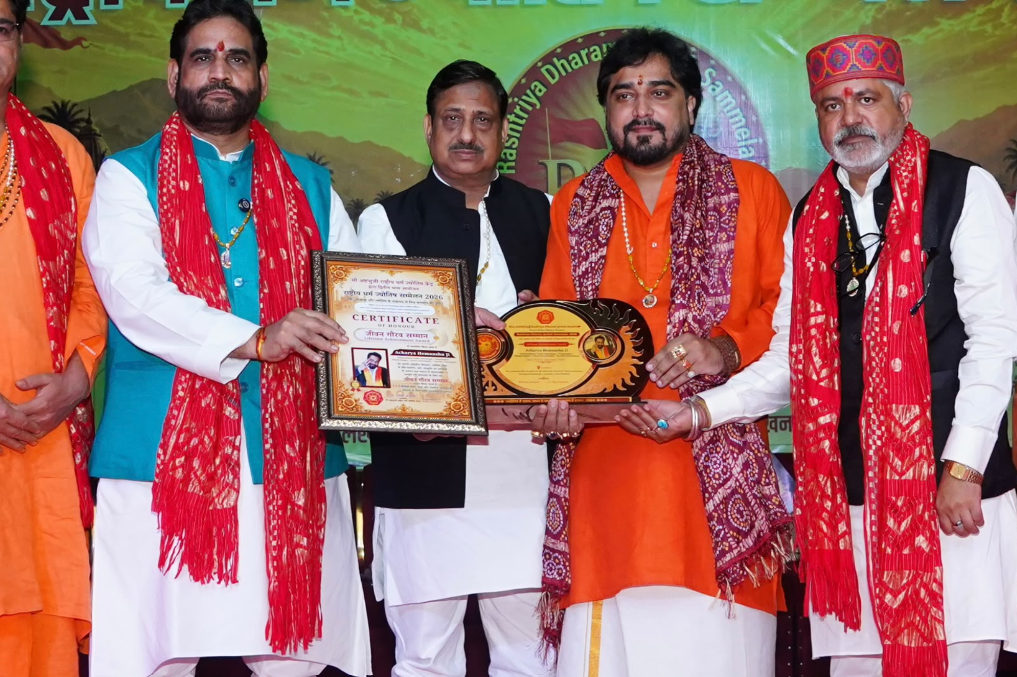
Lucknow – The grand National Dharma Jyotish Sammelan 2026 in the Uttar Pradesh capital saw Acharya Hemanshu Ji, an international Vedic astrologer, gemstone expert, numerologist, tarot card reader and psychic consultant, honoured with the Lifetime Achievement Award. The recognition was presented for his remarkable contribution to astrology, religion, culture and the spiritual field.
National Dharma Jyotish Sammelan 2026: A Grand Gathering
The National Dharma Jyotish Sammelan 2026, held in Lucknow, has emerged as an important platform for people connected with astrology, religion and spiritual traditions. Events of this kind go beyond award presentations. They bring together scholars, practitioners, researchers and devotees under one roof to share experiences and discuss how India’s traditional knowledge can be carried forward.
Several personalities who have worked in different fields were honoured on the stage. Among them, Acharya Hemanshu Ji received the Lifetime Achievement Award in recognition of his long and multi-faceted contribution.
What the Lifetime Achievement Award Means
A Lifetime Achievement Award, known in Hindi as Jeevan Gaurav Samman, is given to recognise a person’s body of work, dedication and service to society over many years. It is not a prize for a single accomplishment or a single year of effort. It is regarded as an honour for sustained practice and commitment over a long period.
In fields such as astrology, religion and culture, credibility is built over years of study, practice and personal connection with people. Receiving a lifetime honour in this space therefore reflects the respect of the community and of fellow scholars towards the recipient.
Acharya Hemanshu Ji: A Multi-Dimensional Profile
Acharya Hemanshu Ji is known as an international Vedic astrologer, gemologist, numerologist, psychic and tarot card reader, a combination that has taken his consultations well beyond Indian borders to clients across the world. Alongside astrology, he works in several related disciplines, which gives him the identity of a multi-dimensional consultant:
- International Vedic astrologer: the traditional science of offering guidance based on the birth chart, planets, constellations and planetary periods, practised with clients not only in India but also across the global Indian diaspora and international seekers.
- Gemologist and gemstone expert: in-depth knowledge of gemstones, including their identification, quality and suitability, combined with the skill of recommending and using them according to a person’s planetary positions.
- Numerologist: the study of birth date and name numbers to understand personality, compatibility and life cycles, often used alongside the birth chart for a fuller picture of a person’s path.
- Tarot card reader: a card-based method that helps people reflect on present circumstances, relationships and choices, and decide on a direction with greater clarity.
- Psychic consultant: guidance offered through intuition and personal, one-on-one consultation, giving clients a sense of being heard beyond what the birth chart alone can show.
Being active across these areas shows that his work is not limited to one discipline. It reflects an effort to build a bridge between tradition and the needs of modern life.
Contribution to Astrology, Religion and Culture
The award was presented to Acharya Hemanshu Ji for his remarkable contribution to astrology, religion, culture and the spiritual field. In Indian society, astrology is seen not only as a way of looking at the future but also as a traditional knowledge system that helps people understand life and make decisions. The role of scholars who carry this tradition forward responsibly is therefore significant.
People working in religion and culture help society stay connected to its roots. Spreading awareness about festivals, rituals, auspicious timings and spiritual practices is widely considered a part of that contribution.
Honours such as this also encourage a wider conversation about the responsibility that comes with guiding others. Practitioners who work with people at important turning points in life are expected to combine knowledge with empathy, honesty and restraint, and recognition at a national gathering highlights those expectations for the whole community.
The Place of Vedic Astrology in Indian Culture
Vedic astrology holds a special position among India’s ancient knowledge traditions. The practice of consulting an auspicious time, or muhurat, for weddings, housewarmings, naming ceremonies, business launches and other important occasions is still alive in millions of households. The birth chart is regarded as a way to understand a person’s nature, interests and possibilities.
Even in changing times, people approach astrologers for guidance on career, education, family and other life matters. This keeps alive the need for experienced and responsible astrologers who can present traditional knowledge with clarity, sensitivity and ethics.
Gemstones, Numerology and Tarot: Different Paths to Guidance
Today, many people are looking beyond the birth chart and taking interest in gemstone science, numerology and tarot. Gemstone science follows the tradition of choosing stones according to planetary influences. Numerology uses numbers to understand personality and timing, while tarot reading offers a different way of reflecting on present circumstances.
Having expertise in all these disciplines can also be convenient for those seeking consultation, as they need not approach different practitioners for each method. However, astrology and related practices are forms of guidance based on faith and tradition. For serious matters relating to health, law or finance, people should always seek advice from a qualified professional.
Congratulations Pour In
The honour is also a moment of happiness for the well-wishers of Acharya Hemanshu Ji and for people associated with astrology and spirituality. Such recognition is generally seen as a natural acknowledgement of a person’s dedication and continued spirit of service.
Looking Ahead
The Lifetime Achievement Award at the National Dharma Jyotish Sammelan 2026 is an important milestone in Acharya Hemanshu Ji’s journey. It is likely to motivate him to continue his work with even greater commitment, and it can serve as an example for young people who see their future in religion, astrology and spiritual knowledge.
We congratulate Acharya Hemanshu Ji on this proud achievement and wish him continued success in the years ahead.
Brandpost
Tamoghna Dey Wins Sahitya Ratna Samman Award 2026: An Assam Poet’s Writing Journey Built One Recognition at a Time
Dhubri, Assam – Every writer’s career is built from small steps, and for poet and author Tamoghna Dey those steps are now adding up to a remarkable record. The Assam-based indie author has been selected for the Sahitya Ratna Samman Award 2026 in the category of Excellence in Poetry, presented by Cherry Book Awards. The recognition celebrates his two published books, From My Heart… and Nothing But Something, and adds another milestone to a journey that has moved steadily from small literary contests to international magazines and national honours.
Sahitya Ratna Samman Award 2026 for Excellence in Poetry
The Sahitya Ratna Samman Award 2026 honours Tamoghna Dey for his contribution to poetry and contemporary literary expression. According to press coverage of the announcement, the selection reflects the emotional depth, creative individuality and sustained effort visible across his two books. For a writer who began with short pieces and online contests, being named in the Excellence in Poetry category is a significant step forward.
Cherry Book Awards is an awards platform that aims to recognise authors, poets and writers for originality, dedication and meaningful contribution to literature. By choosing Dey for its poetry honour, it acknowledges not just a single title but a growing body of work and a writer who keeps returning to the page.
From Assam to a Growing Literary Record
Tamoghna Dey writes from Assam, where years of quiet observation have shaped a voice that moves easily between poetry and fiction. He began an MSc in Zoology, but the course was discontinued and his attention gradually turned towards writing. Through his official website, tamoghnadey.com, he presents himself as an indie author, poet and storyteller, and the site brings his books, honours and publications together in one place.
What stands out in his story is consistency. Rather than waiting for a single breakthrough, Dey has kept submitting, publishing and participating, allowing each small recognition to build confidence for the next. That steady approach is the thread running through the theme of his coverage: a writing journey built one recognition at a time.
From My Heart…: Poetry Rooted in Personal Expression
From My Heart… holds a special place in Dey’s literary journey. Published by BookLeaf Publishing, the collection reflects his interest in turning inner emotion into written verse. The book has also been linked to the 21st Century Emily Dickinson Award, a poetry recognition that his website lists as won twice.
The collection is introspective in spirit, exploring how private thoughts and feelings can take literary shape. Readers who enjoy contemporary poetry that is honest rather than ornamental will find it a welcoming introduction to his voice, and the book is available on Amazon India.
Nothing But Something: The Journey Continues
Dey’s second book, Nothing But Something, was also published by BookLeaf Publishing and continues his exploration of poetic expression. Together, the two titles give readers a broader view of his evolving approach as a writer. Publishing two books is a meaningful milestone for any emerging author, and for an indie writer it also reflects the discipline needed to see projects through from first draft to finished book.
Short Stories and Poems Published Across Borders
Dey’s writing has travelled well beyond Assam. His short stories have appeared in Friday Flash Fiction Magazine in Scotland and Synchronous Chaos Magazine in California, showing that his fiction speaks to international editors as well as local readers. One of his poems was also published through the Poetry Nation Contest in 2022, an early step that helped set the direction of his later work.
This range across poetry, flash fiction and short stories is important. It shows a writer who is comfortable in several forms while keeping poetry at the centre of his identity.
A Trail of Recognitions
Beyond the Sahitya Ratna Samman, Dey’s website lists around twenty honours and achievements gathered along the way. Some of the highlights include:
- India Book of Records: a listing recognising his literary achievements.
- Vishwa Ratna Gaurav Samman 2026: a global excellence honour associated with Jivran Foundation, dated 15 September 2026.
- Indian Literature Award 2026: presented in the Literature category for Assam State by the Indian Literature & Arts Society, dated 16 September 2026.
- 21st Century Emily Dickinson Award: a poetry recognition listed on his website as won twice.
- Five Most Popular Article Awards: given by Monomousumi, a Mumbai-based literary organisation.
- Star Poet Certificate: from African Giant Poetry.
Taken together, these honours show a pattern of recognition from literary societies, publications and award platforms across India and abroad, which is exactly what gives the Sahitya Ratna Samman its context.
Why This Story Matters for Indie Authors
Independent authors rarely have a large publisher promoting their work, so recognition often arrives in small pieces: a contest result here, a magazine acceptance there, a certificate from a literary society. Dey’s journey shows how those pieces can accumulate into a credible literary profile. For young writers in smaller towns and regions, his story is a practical reminder that geography does not have to limit ambition.
It also highlights the value of platforms such as BookLeaf Publishing and online writing communities, which give new voices a route to print and a way to reach readers through global distribution. With Amazon India availability, his books are accessible to readers who may never have heard of him a year ago.
Where to Read Tamoghna Dey’s Books
Readers interested in his poetry can explore the official website at tamoghnadey.com and buy the books through Amazon India: From My Heart and Nothing But Something.
Looking Ahead
With the Sahitya Ratna Samman Award 2026 added to his record, Tamoghna Dey’s next chapter will be watched closely by readers, fellow writers and literary communities. The recognition places his two books in a wider spotlight and strengthens his standing as a poet to follow in contemporary Indian writing. More than any single award, though, it is the persistence behind them that gives his story its weight. We congratulate Tamoghna Dey on this honour and wish him many more pages ahead.
Focus on Child Safety, Education, Awareness and Support for Vulnerable Children
Indore, 19 September 2026:
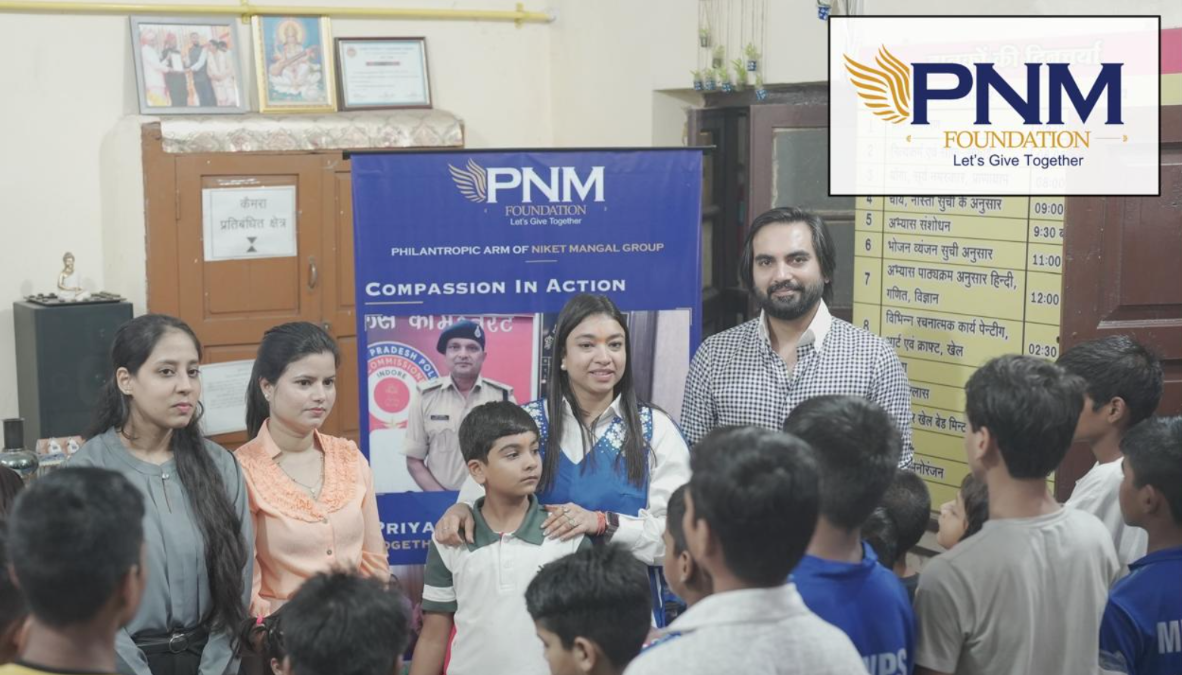
Continuing its commitment towards community welfare and meaningful social impact, PNM Foundation organised a social welfare initiative at Armaan Orphanage in Indore on 19th September 2026.
PNM Foundation was founded by CA Priya Bindal Mangal and works with a focus on creating positive social change through awareness, education, skill development, community welfare and partnerships with social organisations. Its core philosophy, “Let’s Give Together,” reflects its approach of turning collective participation into meaningful social action.
The Objective: Beyond Distribution, Towards Awareness and Protection
The objective of the initiative was not limited to distributing essential items. The interaction at the orphanage was also aimed at understanding the children, their awareness and their concerns, while creating greater awareness around issues that can affect vulnerable children.
PNM Foundation’s social-welfare focus includes creating awareness around child safety, child abuse, child labour, children who become lost or separated from their families, and children who may be exposed to drugs or substance abuse.
The Foundation also intends to support education and awareness among children, including children from migrant-labour communities, so that they can remain connected with learning and better understand their rights, safety and opportunities.
Clothes, Sweets and Time Spent with the Children
During the visit, CA Priya Bindal Mangal, Niket Mangal and Bhavam Mangal spent time with the children at Armaan Orphanage. Clothes and sweets were distributed among the children, followed by personal interaction with them.
The team engaged with the children to understand their awareness on different topics and to create an open and comfortable environment for conversation.
The visit focused on the belief that social welfare should include not only material support, but also time, attention, education and awareness.
A Continuing Commitment Towards Education
A key aspect of the initiative was the Foundation’s commitment to go beyond a one-day welfare activity.
PNM Foundation has committed to dedicating one hour towards providing educational support to the children. The objective is to make education and learning a continuing part of the Foundation’s engagement rather than restricting the initiative to a single-day visit.
Education and children’s development already form an important part of PNM Foundation’s broader activity portfolio, which includes creative learning, self-defence, educational supplies, tuition support and sponsorship initiatives for children and young learners.
Awareness About Child Abuse, Child Labour and Vulnerable Children
The Foundation intends to use its social initiatives to build greater awareness around the protection of children.
This includes creating awareness about inappropriate or abusive behaviour towards children, the risks associated with child labour, and the challenges faced by children who become lost or separated from their families.
Another important area is the vulnerability of children to drugs and substance abuse. Through education and preventive awareness, PNM Foundation aims to encourage children and communities to recognise risks early and seek appropriate support.
Focus on Children of Migrant Labour Communities
Education will also be an important focus area for children from migrant-labour communities.
Children who move with their families for work can face interruptions in education and limited access to learning opportunities. PNM Foundation’s intended focus is to support awareness and education so that such children can remain connected with learning and receive greater opportunities for development.
Child Safety Awareness and Helpline 1098
During the initiative, PNM Foundation also interacted with officials associated with the Child Welfare Organisation.
The discussion included awareness about the support available to children in situations involving abuse, exploitation, being lost or separated from family, or other forms of vulnerability.
The team was informed that Child Helpline 1098 can be contacted when a child requires help or immediate support.
Sharing such information is an important part of building awareness because children and adults around them need to know where to seek assistance when a child’s safety or wellbeing is at risk.
CA Priya Bindal Mangal’s Social-Welfare Commitment
CA Priya Bindal Mangal has been actively associated with social causes through PNM Foundation, with initiatives covering children and education, women and skills, health and addiction prevention, environmental responsibility and community welfare.
The Foundation’s documented activities include children’s summer camps, creative learning, self-defence and educational support; girls’ empowerment and Tally-skills training; drug-free society and cyber-safety awareness; education assistance; and community outreach.
From a One-Day Visit to Long-Term Social Impact
The visit to Armaan Orphanage reflects PNM Foundation’s broader objective of combining compassion with practical action.
The distribution of clothes and sweets was accompanied by interaction, awareness and a commitment to continued educational support.
Through its ongoing work, PNM Foundation aims to create spaces where children are not only supported with immediate needs but are also encouraged to learn, become aware of their rights and safety, and access opportunities for a better future.
With its message of “Let’s Give Together,” PNM Foundation continues to work towards community welfare through education, awareness, participation and meaningful social action.


Acharya Hemanshu Ji Honoured with Lifetime Achievement Award at National Dharma Jyotish Sammelan 2026 in Lucknow

Taptwice Media Restricts Its Social Media Arm, Taptwice Social, to 100% Human-Led Engagement Providers Only

Starship to fly reused heatshield tiles for the first time

Redfox Overseas: Customize Your Own Energy Drink and Stand Out in the Market

Zamzam Company CEO Chhote Bhai-Bade Bhai gave a grand welcome to Indian writer Devhari Sirvi in Dubai

Shikha Sharma: The Fashion Journalist, Blogger, and Plus-Size Model Taking the Industry by Storm
-
 Brandpost2 years ago
Redfox Overseas: Customize Your Own Energy Drink and Stand Out in the Market
-
 Brandpost2 years ago
Zamzam Company CEO Chhote Bhai-Bade Bhai gave a grand welcome to Indian writer Devhari Sirvi in Dubai
-
 Fashion2 years ago
Shikha Sharma: The Fashion Journalist, Blogger, and Plus-Size Model Taking the Industry by Storm
-
Entertainment1 year ago
Lucky Roxx’s “Yadav Ki Pukar” Goes Viral! Youth Celebrate Unity & Power
-

 Entertainment9 years ago
New Season 8 Walking Dead trailer flashes forward in time
-
Entertainment9 years ago
Meet Superman’s grandfather in new trailer for Krypton
-
Uncategorized2 years ago
Hello world!
-
 Brandpost2 years ago
From Local Hero to National Icon: Satyam Yadav’s Journey with TwentyOne