
Brandpost
The New Cool: Block-Printed Streetwear by Cartoonpanti.com


Indian fashion is entering a new era. Not an era of mass-produced fast fashion, not an era of copy-paste Western trends but an era where Indian craft is finally becoming everyday cool.
And the surprising hero behind this shift?
The timeless art of Indian block printing — now reborn as modern streetwear on Cartoonpanti.com.
From relaxed-fit T-shirts to handcrafted prints and pan-India delivery, Cartoonpanti.com is turning this craft revival into a fresh, wearable movement loved by young India.
Why Young India Is Suddenly Obsessed With Block-Printed Streetwear
Gen Z and young millennials are tired of clothing that feels generic. They want something real — something with story, soul, imperfections and identity.
That’s exactly why block-printed fashion is exploding again, especially when mixed with casual street-style silhouettes.
1. Each piece feels unique and handmade
No two prints are exactly the same — a natural charm that you won’t find in mass-produced tees.
2. Block prints blend perfectly with streetwear
Indian craft meets global street-style = the vibe young India wants.
3. Vegetable inks look richer and photograph beautifully
Eco-conscious and visually aesthetic — great for Instagram.
4. It feels culturally rooted without being “ethnic”
A block-printed T-shirt from Cartoonpanti.com feels modern, effortless and proudly Indian.
The Big Shift: Craft + Comfort = The New D2C Growth Formula
Across India, consumers are moving toward meaningful, small-batch, craft-driven fashion. This shift is visible everywhere — in shopping habits, search patterns, and social content.
Three big reasons:
- People trust handmade pieces more
- They want products with stories
- They want apparel that stands out in a crowd
This is why block printing isn’t just returning — it’s becoming a core part of India’s modern streetwear identity.
And Cartoonpanti.com is one of the most exciting platforms turning this trend into accessible, everyday fashion.
Cartoonpanti.com’s Chaap Collection: Heritage, Youth Culture & Modern Streetwear in One
At Cartoonpanti.com, the Chaap Collection reimagines traditional block printing for the youth:
- Hand-printed designs using real wooden blocks
- 100% cotton, breathable relaxed-fit T-shirts
- Vegetable-based inks for a natural aesthetic
- Modern, minimalist and street-friendly graphics
- Unisex fits perfect for everyday wear
- Plastic-free packaging that feels premium and planet-friendly
Every tee at Cartoonpanti.com is made in small batches, giving each piece a sense of exclusivity and craftsmanship.
This isn’t just a product range — it’s an experience.
Why Block Printed Streetwear From Cartoonpanti.com Is Going Viral
1. Perfect for social content — goes viral easily
Reels of the printing process, close-ups of vegetable inks, and handmade imperfections perform extremely well on Instagram.
This naturally fuels discovery for Cartoonpanti.com.
2. Small-batch drops boost exclusivity
Limited stock = high demand.
People love wearing something rare.
3. Premium quality without premium attitude
Comfort-first fabrics, fresh designs, honest pricing — ideal for college wear, workwear and daily fits.
4. Plastic-free packaging adds to the experience
Unboxing from Cartoonpanti.com feels clean, aesthetic and responsible.
5. Fits Indian weather effortlessly
Breathable cotton + vegetable inks = perfect for India’s climate.
The New Streetwear Identity India Is Creating
For the first time, India isn’t copying international streetwear.
We’re creating our own language — rooted in heritage, elevated through design, and worn like everyday culture.
And block printing plays a huge role in this transformation.
Young shoppers want “modern desi cool,” not Western replicas.
They want comfort, confidence and culture — all in one.
This is exactly the space Cartoonpanti.com is shaping through the Chaap Collection and their other casual wear offerings like:
- Graphic T-shirts
- Relaxed unisex tees
- Handcrafted block prints
- Hoodies for the winter season
Cartoonpanti.com is becoming a go-to destination for anyone who loves casual wear with meaning.
Why Cartoonpanti.com Stands Out in the Indian D2C Space
1. Fresh storytelling + relatable brand voice
Cartoonpanti never tries to sound like a corporate fashion house. The tone is fun, joyful, sarcastic and relatable — exactly what young buyers resonate with.
2. Handcrafted + comfortable fits
Modern streetwear silhouettes with authentic craft.
3. Plastic-free packaging
Thoughtful packaging that aligns with new-age consumer values.
4. Fast pan-India shipping
Every product on Cartoonpanti.com is available across India, from metros to Tier 3 towns.
5. A growing community of people who love cool clothing
Not just a brand — a vibe.
Final Word: The Future of Indian Streetwear Lies in Our Past
India’s next big fashion wave won’t come from fast fashion or global chains.
It will come from our own roots, reimagined for today.
Block printing is no longer “traditional wear.”
It is now everyday streetwear — bold, cultural, expressive and proudly Indian.
And Cartoonpanti.com is at the center of this movement, turning handcrafted prints into comfortable, stylish, standout pieces for the new generation.
If this is the direction Indian fashion is heading, the future looks fun, rooted and incredibly cool.
Link – https://cartoonpanti.com/
https://cartoonpanti.com/collections/chaap
Brandpost
City Court Apple Repair Center Becomes a Trusted Name for Apple Device Servicing in Gurugram


With more than 129,000 devices repaired and a growing base of satisfied customers, City Court Apple Repair Center in Sector 24 has built a reputation as a dependable, one-stop destination for iPhone, MacBook, iPad, iMac and Apple Watch repairs across Gurugram.
Gurugram’s rapidly growing base of Apple users, spread across its residential sectors and commercial hubs, has created a steady demand for repair services that are both technically capable and easy to reach. Meeting that demand is City Court Apple Repair Center, located at Shop No. 202, Second Floor, DLF City Court, Mehrauli-Gurgaon Road, Nathupur, Sector 24, Gurugram, Haryana 122002. Over nearly a decade of operation, the centre has positioned itself as a go-to address for residents and professionals whose iPhones, MacBooks, iPads, iMacs, Apple Watches or Mac Minis need expert attention.
As Apple devices have become central to how people work, study and stay connected, even a small hardware fault or software glitch can disrupt an entire day. City Court Apple Repair Center has built its standing in Gurugram by addressing precisely this kind of disruption, offering fast, knowledgeable service across the full range of Apple products rather than specialising in just one device category.
A Full Range of Apple Repairs Under One Roof
What sets the centre apart from many single-device repair shops is the breadth of its service list. As an Apple service centre in Gurgaon, City Court Apple Repair Center handles iPhone repair, MacBook and MacBook Pro repair, iPad repair, iMac repair, Apple Watch repair and Mac Mini repair, all from the same Sector 24 location. This means customers do not need to search for separate specialists depending on which Apple product needs fixing.
For iPhone owners, services cover common concerns such as cracked screens, battery issues, charging faults and other hardware or software problems, with many repairs, including screen replacements, completed in under thirty minutes. MacBook and MacBook Pro repair in Gurgaon extends to more involved jobs, supported by a team of technicians trained specifically in chip-level repair, allowing the centre to diagnose and fix issues at the motherboard level rather than simply swapping out entire components.
iPad repair in Gurgaon is handled with similar attention to turnaround time, with many iPad screen replacements completed within a couple of hours. The centre also services iMacs, offering pickup and delivery within Gurugram city limits so that customers do not need to transport a heavier desktop unit themselves, along with dedicated repair support for Apple Watch and Mac Mini devices.
Nearly a Decade of Experience, Backed by Numbers
City Court Apple Repair Center’s standing in the local market is reflected in the figures behind its operation. The centre reports having repaired more than 129,972 devices over more than 9 years in business, alongside a claimed 99 percent customer satisfaction rate and a presence spanning 5 branches across India. These numbers point to a repair operation that has scaled well beyond a single neighbourhood outfit while maintaining its base in Gurugram.
On Google, the centre carries a rating of 4.6 out of 5 based on 272 reviews, a track record built up through years of day-to-day repair work. Customers describe experiences ranging from quick iPhone battery replacements at reasonable prices to more involved MacBook screen repairs handled with clear communication about the issue and the fix required. The centre’s own response to feedback, including addressing concerns raised by dissatisfied customers directly, suggests an operation that treats customer reviews as an ongoing part of its service standard rather than a one-time marketing exercise.
Genuine Parts and a Structured Repair Process
A recurring theme in how the centre describes its own operations is a commitment to using genuine Apple parts, a detail that matters for maintaining both device performance and warranty integrity after a repair. This is paired with a straightforward customer journey: an initial contact and issue description, a diagnostic check by technicians, a transparent service-fee quote before any work begins, the repair itself using genuine components, and a notification once the device is ready for pickup or delivery.
For repairs that require multiple replacement parts, the centre also offers a discount structure, with a 50 percent reduction on the cost of a second part and a 75 percent reduction from the third part onwards, a detail aimed at easing the cost burden on customers dealing with more extensive damage. Most repairs are backed by up to a one-year warranty, and the centre states that many jobs, particularly iPhone and iPad screen replacements, can be completed on the same day.
A Convenient Location Near DLF City Court
Being located within the DLF City Court complex on Mehrauli-Gurgaon Road places the centre within easy reach for residents of Sector 24 and neighbouring areas, as well as for professionals working nearby who may want to drop off a device during the day and collect it in the evening. Its listed hours extend until 11 pm, giving customers flexibility outside typical working hours to visit in person or arrange pickup and delivery for devices that are harder to carry, such as an iMac.
As reliance on Apple products continues to grow across Gurugram’s residential and commercial sectors, having a specialised, well-reviewed and centrally located repair centre nearby removes much of the uncertainty that often comes with getting a device serviced. Whether it is a cracked iPhone screen, a MacBook that needs chip-level attention, or an iMac requiring pickup and delivery, City Court Apple Repair Center’s presence in Sector 24 offers residents a dependable option for keeping their Apple devices running smoothly.
Find City Court Apple Repair Center
Address: Shop No. 202, Second Floor, DLF City Court, Mehrauli-Gurgaon Rd, Nathupur, Sector 24, Gurugram, Haryana 122002
Phone: 9319864800
Website: applerepairgurugram.in
Google Maps: View location
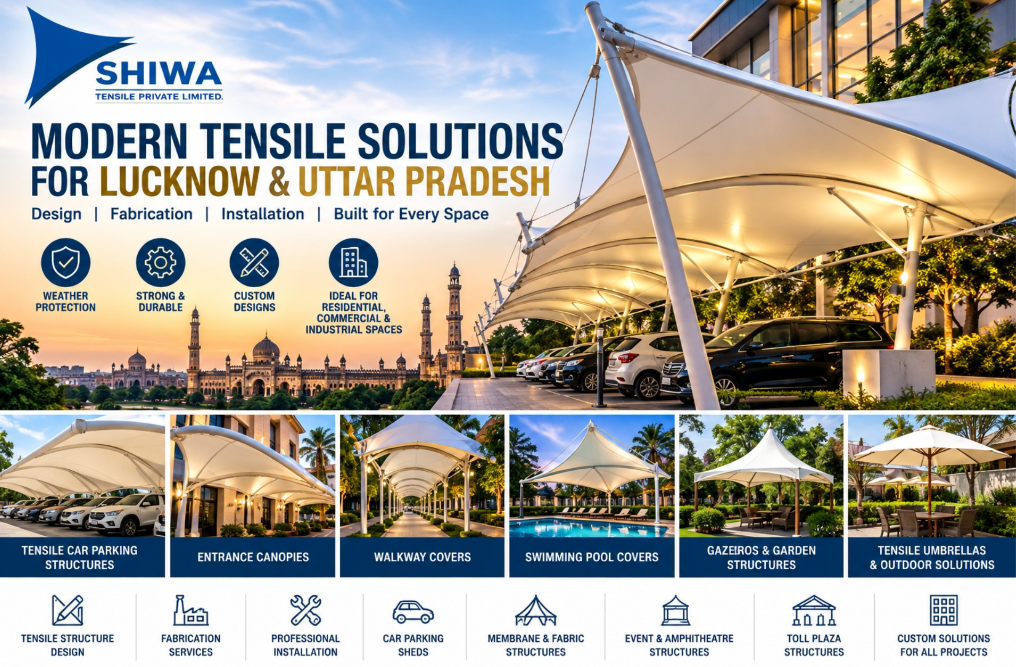
Lucknow, Uttar Pradesh: As residential, commercial and institutional properties increasingly look for outdoor structures that combine protection, functionality and contemporary design, tensile architecture is becoming an important part of modern construction. From car parking and covered walkways to entrance canopies, gazebos, swimming-pool shades and larger architectural structures, tensile solutions are finding applications across a wide range of projects across India.
Unlike conventional RCC or metal-sheet roofing, tensile structures rely on tensioned fabric membranes stretched across a lightweight steel framework. This engineering approach allows for large, column-free spans, flowing architectural curves, and structures that can be fabricated faster and often at a lower overall cost than traditional permanent construction. As urban development accelerates across Tier-2 cities like Lucknow, developers, architects and institutions are increasingly evaluating tensile architecture not as a niche alternative, but as a mainstream design and engineering option.
In Lucknow, Shiwa Tensile Structures is building a specialized presence in this growing segment, offering tensile structure design, fabrication and installation services for different residential, commercial and industrial requirements.
Based in Lucknow, Uttar Pradesh, Shiwa Tensile Private Limited describes itself as a manufacturer, supplier and service provider specializing in tensile structures and related outdoor solutions. Its publicly listed portfolio includes tensile car parking structures, fabric structures, walkway coverings, tensile umbrellas, gazebos, canopies, swimming-pool structures and other customized applications.
For customers searching for tensile structure solutions in Lucknow and across Uttar Pradesh, the company’s growing portfolio reflects the increasing role of tensile architecture in creating functional and visually distinctive outdoor spaces.
From Car Parking to Complete Architectural Structures
Tensile structures have traditionally been associated with covered parking and outdoor shade. However, their applications have expanded considerably over the last decade, driven by changing design sensibilities and the need for structures that can be built quickly without compromising on aesthetics.
Today, tensile systems can be designed for parking areas, building entrances, walkways, gardens, food courts, swimming pools, recreational spaces, courtyards and other environments where covered space is required without relying exclusively on conventional roofing. Architects and planners increasingly treat tensile canopies as design statements in their own right, rather than purely functional additions bolted onto a finished building.
Shiwa’s current product and service listings reflect this broader application. The company offers tensile car parking structures, entrance tensile structures, walkway covering structures, outdoor tensile structures, arena structures, fabric gazebos and canopies, alongside specialized fabrication and installation services.
This range allows the company to address projects where structural performance and architectural appearance need to work together. A single client, for instance, may require a covered parking bay at the entrance of a residential society, a shaded walkway connecting two blocks, and a decorative gazebo in a common garden area — each with different spans, wind-load considerations and fabric specifications, but all falling under the same broad category of tensile engineering.
A Growing Tensile Structure Market in Lucknow
Lucknow has a growing ecosystem of companies operating in tensile structures, roofing, parking sheds and architectural shade solutions. Local competitors including Aecon Structure and Gyanusha Tensile also market solutions covering car parking, walkways, gazebos, auditorium structures, swimming-pool structures and other tensile applications.
This growing competitive landscape is itself a signal of demand. As residential townships, commercial complexes, educational institutions and hospitality projects multiply across Lucknow and the wider National Capital Region of Uttar Pradesh, the requirement for covered outdoor space — without the cost and time associated with permanent construction — has risen sharply.
The competitive landscape highlights an important shift in customer expectations: tensile-structure projects are increasingly being approached as complete design-and-execution requirements rather than simply the purchase of a prefabricated shade. Clients are no longer comparing suppliers purely on a per-square-foot basis; they are evaluating design capability, fabrication quality, on-site installation standards and after-sales support as a combined package.
For property owners, developers and institutions, factors such as customization, fabrication, installation, appearance, material selection and project-specific requirements can all influence the final structure. A parking shed designed for a gated residential community, for example, must account for vehicle turning radius, drainage, and long-term UV exposure, while a decorative gazebo for a resort may prioritize visual form and ambient lighting.
Within this environment, Shiwa is positioning its tensile structure services in Lucknow around an integrated approach covering design, fabrication and installation — allowing clients to work with a single accountable partner across the full project lifecycle rather than coordinating separately with designers, fabricators and installation contractors.
Shiwa Tensile Structures: Designed Around the Project
One of the advantages of tensile architecture is its adaptability.
A parking structure for an apartment complex may have very different requirements from an entrance canopy for a commercial building. Similarly, a walkway for a school, a garden gazebo for a residential property or a large covered space for a food court may require different structural configurations, fabric grades, and frame geometries.
Shiwa’s stated capabilities include tensile structure designing, fabrication and installation, enabling the company to approach different projects according to their intended application and site requirements. Its public company profile also describes facilities for cutting, welding and shaping materials, along with equipment for canopy and umbrella fabrication.
This in-house fabrication capability is significant. Many smaller players in the tensile structure market outsource fabrication or rely on standardized, pre-cut components that limit design flexibility. By maintaining its own cutting, welding and shaping facilities, a company is better positioned to accommodate custom spans, non-standard shapes, and site-specific structural requirements — whether that means an irregular plot boundary, an unusual roof pitch, or a request for a particular fabric colour and finish.
The company can therefore be positioned not simply as a supplier of individual products, but as a provider of end-to-end tensile structure solutions, managing everything from the initial design consultation through to the final on-site handover.
Tensile Car Parking Solutions for Modern Properties
Among the most visible applications of tensile architecture is vehicle parking.
Covered parking is increasingly important for residential societies, offices, commercial properties, institutions, hotels and other developments — both for protecting vehicles from sun, rain and dust, and for improving the overall visual presentation of a property. In a market where property buyers and tenants increasingly compare amenities, a well-designed tensile parking structure can be a meaningful differentiator.
Tensile car parking structures provide an alternative to conventional permanent roofing while allowing designers to create lighter and more visually distinctive covered spaces. Unlike solid-roof car sheds, tensile parking canopies can span larger areas with fewer supporting columns, making it easier to manoeuvre vehicles and maximize usable parking area.
Shiwa’s listed range includes car parking tensile structures, pyramid tensile car parking sheds, vehicle parking structures, car parking canopies and different car-shed configurations, giving clients multiple design options depending on the number of vehicles, available space, and architectural preferences.
The company also lists parking-shed fabrication as part of its service portfolio, with publicly available product information describing applications for carports and other covered spaces. This includes structures suitable for individual bungalows and villas as well as larger multi-bay parking areas for commercial complexes and institutional campuses.
For Lucknow’s residential and commercial developments — many of which are being built or renovated with an eye toward modern amenities — this makes tensile parking one of the company’s key areas of specialization.
Walkway Covers, Entrance Canopies and Outdoor Spaces
The potential of tensile architecture extends well beyond parking.
Walkways and entrances are important transition spaces within schools, hospitals, offices, hotels, residential communities and commercial properties. These are often high-footfall areas where weather protection directly affects daily usability — a covered walkway between a hospital’s outpatient block and its parking area, for instance, can make a meaningful difference for patients and staff during Lucknow’s hot summers and monsoon season.
A well-designed canopy can provide covered movement while also contributing to the visual identity of a building. Increasingly, entrance canopies are being treated as an architectural signature — the first structural element visitors encounter — rather than a purely functional add-on.
Shiwa lists walkway covering structures, entrance tensile structures and canopy fabrication services among its offerings, addressing this dual requirement of function and appearance.
The company also provides outdoor-focused structures such as gazebos, pagoda-style structures, garden solutions and tensile umbrellas, opening applications in hospitality, residential landscaping, recreational spaces and outdoor seating. These smaller-format structures are often used in resorts, farmhouses, restaurants, and residential gardens where clients want a shaded seating or gathering area that still feels open and connected to the surrounding landscape.
Swimming Pool and Recreational Tensile Structures
Swimming-pool areas present another application where tensile architecture can combine shade and visual design.
Pool decks and surrounding areas are particularly demanding environments — they require materials that can withstand constant sun exposure, humidity, and chlorinated water splash, while still allowing natural light and ventilation. Tensile fabric structures are well suited to this requirement, offering weather protection without fully enclosing the space.
Shiwa’s public product listings include swimming-pool tensile shades, PVC swimming-pool covers, PVC swimming-pool sheds and aluminium tensile swimming-pool sheds, catering to different structural and budgetary requirements.
Such structures can be considered for residential developments, resorts, clubs and other properties where outdoor recreational areas need protection while retaining an open architectural character. A resort, for example, might use a larger tensile canopy over its main pool deck for guest comfort, while a residential society might opt for a smaller, more cost-effective shade structure over a community pool.
Fabrication and Installation Under One Service Model
For a tensile project, the final appearance is only one part of the equation. Structural design, fabrication accuracy, material selection, framework construction and installation all contribute to the finished result — and weaknesses at any one stage can affect the durability and safety of the final structure.
Shiwa describes its tensile fabrication and installation services as covering the project journey from design and fabrication through installation. Its company information also highlights a fabrication facility in Lucknow equipped for cutting, welding and shaping structural materials — capabilities that allow the company to manufacture components locally rather than depending entirely on outsourced or imported parts.
The company’s tensile fabrication listings include applications such as toll-plaza structures and parking-shed fabrication, while its broader portfolio covers canopies, event structures, gazebos, walkways, courtyards and amphitheatre shade structures. This range suggests a fabrication capability built to handle both small residential-scale projects and larger infrastructure-adjacent applications such as toll booths and public amphitheatres.
For customers, an integrated service approach can make it easier to coordinate design requirements with fabrication and on-site installation, reducing the communication gaps and scheduling delays that often arise when multiple contractors are involved in a single project.
Why Tensile Architecture Is Becoming an Attractive Choice
The growing interest in tensile structures is connected to their ability to combine several requirements within one architectural system.
They can provide:
- Covered outdoor space without the cost and construction time of permanent roofing
- Protection from sun and weather across varying climate conditions
- Flexible architectural forms, including curves, domes, cones and hyperbolic shapes
- Customized designs tailored to specific site dimensions and client preferences
- Visually distinctive structures that enhance a property’s overall presentation
- Applications ranging from small residential projects to larger commercial and institutional spaces
The specific performance of any tensile structure, however, depends on its design, materials, engineering, installation and maintenance requirements. Fabric grade, frame material, wind-load calculations and drainage design all play a role in how a structure performs over its service life. Project specifications should therefore be evaluated according to the individual site and intended application, ideally in consultation with an experienced design and fabrication team.
A Specialized Tensile Partner for Lucknow and Uttar Pradesh
For a city such as Lucknow, where residential developments, commercial properties, institutions and hospitality projects continue to create demand for functional outdoor spaces, specialized tensile solutions offer another approach to architectural planning.
Shiwa Tensile Structures’ focus on tensile design, fabrication and installation gives it a defined position within this market. Rather than competing purely on price for standardized products, the company’s approach centers on matching structural solutions to the specific needs of each project — whether that is a compact residential gazebo or a larger commercial parking installation.
From car parking structures and entrance canopies to walkway covers, gazebos, swimming-pool shades, tensile umbrellas, food-court structures and customized fabric solutions, the company’s portfolio addresses a broad range of outdoor applications across residential, commercial, institutional and hospitality sectors.
Its Lucknow base also places the company within an active local tensile-structure market, where multiple manufacturers and service providers are competing across parking, roofing, walkway and architectural applications. This local presence can be an advantage for clients who value shorter response times, easier site visits, and a fabrication facility within reach for custom requirements.
For businesses, builders, architects, institutions and property owners looking for a specialized provider, Shiwa Tensile Structures offers a portfolio centered on customized tensile architecture and outdoor structural solutions, backed by in-house design and fabrication capability.
Looking Beyond Conventional Roofing
The evolution of tensile architecture reflects a wider change in how outdoor spaces are designed. A parking area can become an architectural feature. A walkway can become an integrated part of a building’s design. A swimming-pool cover can provide shade without creating the visual weight of conventional construction.
That combination of function, flexibility and contemporary design is helping tensile structures find a wider place in modern architecture — not just as a cost-saving alternative to permanent roofing, but as a design choice in its own right. As more architects and developers in Uttar Pradesh become familiar with what tensile systems can achieve, the range of applications is likely to keep expanding, from small residential add-ons to larger public and commercial installations.
With its focus on design, fabrication and installation, Shiwa Tensile Structures is positioning itself as a specialized tensile solution provider from Lucknow, serving requirements that range from everyday parking protection to customized architectural structures.
For projects where outdoor protection needs to be combined with a distinctive architectural appearance, tensile structure solutions in Lucknow represent an increasingly relevant option for property owners and project developers across the region — one that is likely to become more visible as the city’s residential and commercial landscape continues to grow.
About Shiwa Tensile Structures
Headquarters
- Address: Shiwatensile Pvt. Ltd, 591KA/071, Chiraiyabagh, Near Sec-7 RBL Road, Lucknow-226029, Uttar Pradesh, India
- Contact: +91 99119 28945
- Email: info@shiwatensile.com
Brandpost
Before ‘I Do’: Why India Needs a Pre-Marriage Medical Screening Law, Says Advocate Anik M. Iktear Uddin
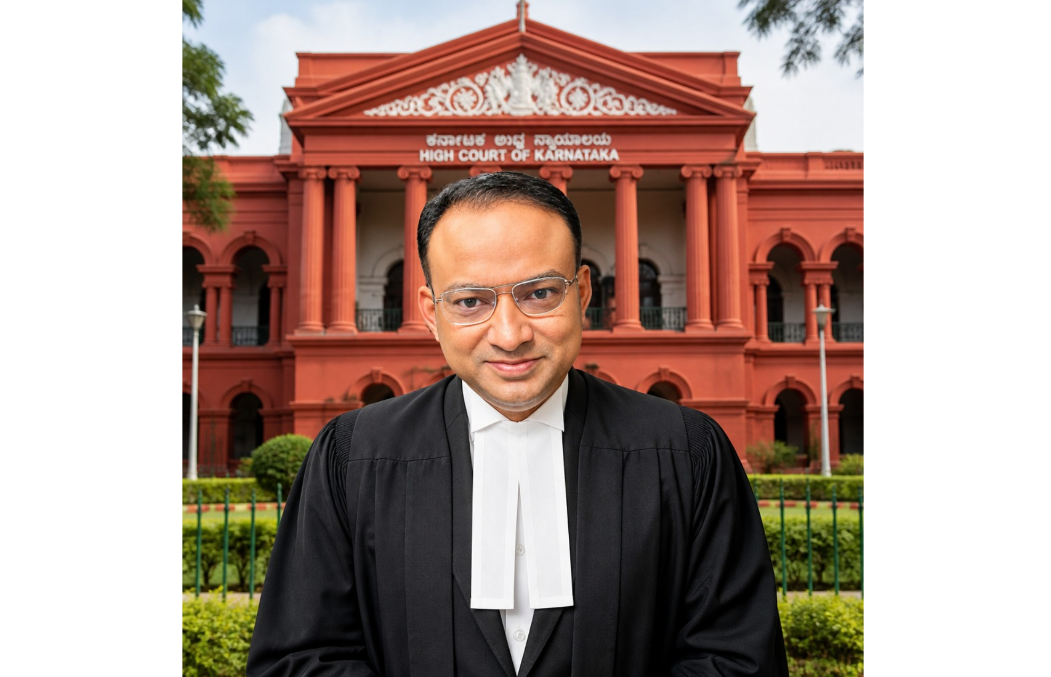
Drawing on matrimonial disputes over concealed health conditions, an advocate with 18 years of experience argues that India needs a carefully designed pre-marital health disclosure framework built on informed consent, not compulsory fitness certification.
A marriage may begin with love, trust and family celebrations, but what happens when a serious health issue that could materially affect married life is discovered only after the wedding? That question sits at the centre of a growing body of matrimonial litigation in India, and it is one that Advocate Anik M. Iktear Uddin, who has practised law for 18 years, believes deserves far more public attention than it currently receives.
Advocate Anik points to a disturbing matrimonial dispute in which a wife alleged that her husband suffered from erectile dysfunction and, instead of addressing the medical problem, allegedly asked her to have a sexual relationship with his friend so that they could have a child. Whether every allegation in such cases is ultimately proved is a matter for the court to decide. But disputes of this nature, he argues, raise a larger question: should couples be mandatorily required to undergo appropriate health screening before marriage?
His answer begins with a clarification of what the debate is actually about. According to Advocate Anik, the issue is not about judging a person’s health, fertility or sexual capability. It is about informed consent.
What the Courts Have Already Grappled With
Indian courts have repeatedly encountered matrimonial disputes involving infertility, impotency, mental health and concealment of medical conditions. In Deep Mukerjee v. Sreyashi Banerjee, the Supreme Court considered a matrimonial dispute involving alleged non-consummation due to the husband’s impotency and upheld, to that extent, a direction requiring the husband to undergo a medical potentiality test.
In another recent development, the Chhattisgarh High Court upheld a divorce where the court found that concealment of a significant medical condition affecting matrimonial life and the prospect of childbirth amounted to mental cruelty. The case is significant, Advocate Anik notes, not because every medical condition should become a ground for divorce, but because it demonstrates the consequences that may follow when material health information is allegedly withheld before marriage.
A Problem Wider Than Infertility
The concern, Advocate Anik explains, extends well beyond fertility alone. A recent study of women experiencing delayed conception in North India found that 17.1 percent reported emotional abuse from their partners and 2 percent reported divorce; among women reporting pressure from other family members over delayed conception, 48.9 percent reported emotional abuse and 2.7 percent reported divorce. These figures do not establish that infertility causes divorce, but they illustrate how reproductive health can become a source of significant marital and family conflict.
India also lacks comprehensive national statistics showing how many divorces are directly attributable to medical conditions, Advocate Anik points out, adding that this statistical gap itself deserves attention. A study of 100 couples seeking divorce in a Mumbai family court found interpersonal problems to be the most common reported reason, at 34 percent, while sexual dissatisfaction and psychiatric illness each accounted for 5 percent of the recorded reasons. The same study also found significant psychological distress among many participants.
Balancing Privacy Against Informed Consent
Advocate Anik is careful to frame this as a difficult balance rather than a simple fix. On one side is the individual’s fundamental right to privacy, bodily autonomy and medical confidentiality. A person should not be forced to disclose every medical detail merely because they intend to marry, and any mandatory medical regime, he cautions, must never become a tool for discrimination against persons with disabilities, chronic illnesses, mental-health conditions, infertility or other health conditions.
On the other side sits the principle of informed consent. If a person knowingly conceals a serious condition that substantially affects sexual relations, reproduction or the fundamental expectations of matrimonial life, the other prospective spouse may enter the marriage without information that could materially influence their decision to marry at all.
A Disclosure Framework, Not a Fitness Test
The answer, according to Advocate Anik, may lie not in a compulsory “fitness certificate” for marriage, but in a carefully designed Pre-Marital Health Disclosure and Screening Framework. Such a framework, he suggests, could include voluntary or mandatory counselling, screening for communicable diseases, reproductive-health assessment where both parties consent, and a confidential declaration of material medical conditions, with the objective centred on awareness rather than exclusion.
He further proposes that the government could consider a standard marriage-health checklist covering sexual health, reproductive health, hereditary conditions, major chronic illnesses, mental-health history and communicable diseases, with sensitive information kept confidential and disclosed only to the prospective spouse with informed consent.
Why the Debate Matters Now
Recent cases, Advocate Anik argues, demonstrate why such reform deserves serious public debate. At one end are cases involving alleged concealment of medical conditions; at the other are cases where courts have protected individuals from casual or unjustified medical examination. The Bombay High Court, for example, recently cautioned that medical or psychiatric examinations in matrimonial proceedings cannot be ordered casually and require proper judicial reasoning and evidence.
The purpose of pre-marital screening, he concludes, should not be to declare someone “fit” or “unfit” for marriage. Marriage is not a medical examination. But marriage is a legal and personal commitment built on trust, and the law, in his view, should help ensure that such trust begins with honesty.
Read More Legal Analysis
More legal commentary and case analysis is available at primelegal.in.


City Court Apple Repair Center Becomes a Trusted Name for Apple Device Servicing in Gurugram

Shiwa Tensile Structures Brings Modern Tensile Solutions to Lucknow and Uttar Pradesh

Before ‘I Do’: Why India Needs a Pre-Marriage Medical Screening Law, Says Advocate Anik M. Iktear Uddin

Redfox Overseas: Customize Your Own Energy Drink and Stand Out in the Market

Zamzam Company CEO Chhote Bhai-Bade Bhai gave a grand welcome to Indian writer Devhari Sirvi in Dubai

Shikha Sharma: The Fashion Journalist, Blogger, and Plus-Size Model Taking the Industry by Storm
-
 Brandpost2 years ago
Redfox Overseas: Customize Your Own Energy Drink and Stand Out in the Market
-
 Brandpost2 years ago
Zamzam Company CEO Chhote Bhai-Bade Bhai gave a grand welcome to Indian writer Devhari Sirvi in Dubai
-
 Fashion2 years ago
Shikha Sharma: The Fashion Journalist, Blogger, and Plus-Size Model Taking the Industry by Storm
-
Entertainment1 year ago
Lucky Roxx’s “Yadav Ki Pukar” Goes Viral! Youth Celebrate Unity & Power
-

 Entertainment9 years ago
New Season 8 Walking Dead trailer flashes forward in time
-
Entertainment9 years ago
Meet Superman’s grandfather in new trailer for Krypton
-
Uncategorized2 years ago
Hello world!
-

 Brandpost2 years ago
From Local Hero to National Icon: Satyam Yadav’s Journey with TwentyOne