Viral
Viral video shows HCLTech staff chanting ‘we want hike’ at CEO
A viral video shows HCLTech staff chanting ‘we want hike’ at CEO C Vijayakumar during the company’s 50th anniversary event in Chennai.
A viral video shows HCLTech staff chanting “we want hike” at chief executive C Vijayakumar during the company’s 50th anniversary event in Chennai.
The footage, shared widely across platforms including X and Instagram, captures a full auditorium erupting into the chant as Vijayakumar arrived on stage.
The chanting continued for some time as the CEO remained on stage during the proceedings.
The celebration formed part of HCLTech’s golden jubilee, marking the company’s 50th year in business.
The video has drawn a range of reactions online, with some finding it funny and others linking it to wider concerns about compensation in the IT sector.
Some viewers praised employees for voicing their concerns openly, while others said it was an inappropriate moment for such chants.
The clip has kept circulating since the event, with commentary continuing across social platforms.
Similar viral moments involving employees publicly airing workplace grievances at corporate events have periodically surfaced from other large companies in India in recent years, often prompting comparable debates online about appropriate conduct versus genuine expression of concerns.
The video’s spread illustrates how internal corporate moments, once captured on phone cameras and shared on social media, can quickly become part of wider public conversations about workplace culture and compensation across an entire industry.
C Vijayakumar has served as HCLTech’s chief executive officer, a role in which he has represented the company at major public events, including the golden jubilee celebration where the video was filmed.
The chant broke out as part of HCLTech’s golden jubilee celebrations in Chennai, an event that also featured other planned elements to mark the company’s fifty years in business.
Social media users were divided in their reactions, with some praising the employees for candidly expressing workplace concerns in a public setting, while others felt the moment undercut the tone of a company milestone event.
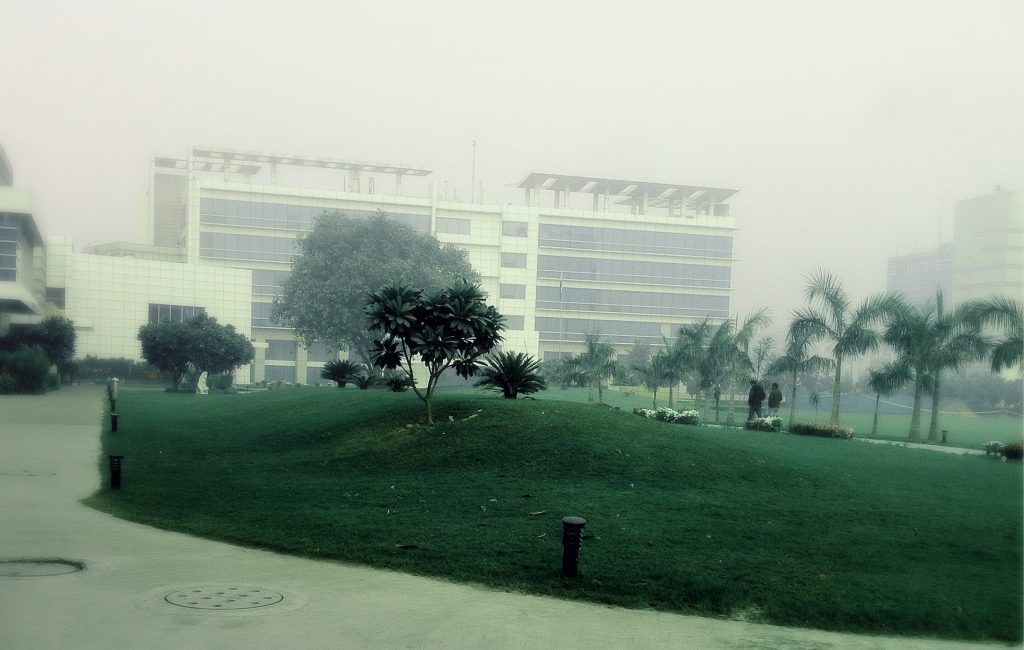
(Image: Itsbilluid (CC BY-SA 3.0))
Viral
US label JW PEI changes dress name after saree backlash online
California-based fashion label JW PEI has renamed a saree-style garment after facing backlash for marketing it as a ‘draped maxi dress’ without crediting its Indian roots.
California-based fashion label JW PEI has renamed a garment after facing online backlash for marketing what critics called a saree as a Western-style ‘draped maxi dress.’
The item was originally listed as the ‘Botanical Embellished Draped Overlay Maxi Dress,’ priced at around $229, roughly Rs 21,900 to Rs 26,000.
The controversy was raised by Indian beauty entrepreneur Arshia Moorjani, who questioned why a garment so clearly resembling a traditional saree was being marketed without acknowledging its origin.
Following the backlash, JW PEI changed the product listing to ‘Botanical Embellished Saree-Inspired Gown,’ with the updated description now stating the design is ‘inspired by the traditional South Asian saree.’
The garment in question was a navy blue pre-draped saree-style piece with a floral embroidered blouse, featuring the tight waist pleats and structured pallu characteristic of the Nivi drape, India’s most widely recognised saree style.
Social media users pointed out the pattern of Indian garments being rebranded for Western markets, drawing comparisons to earlier controversies involving dupattas marketed as ‘Scandinavian scarves’ and Prada’s Kolhapuri-inspired sandals.
This is not the first time a global fashion label has faced criticism over how it describes traditional South Asian garments, with similar rebranding disputes recurring periodically as Indian-inspired silhouettes gain traction in Western fast fashion.
The brand’s revised product listing now explicitly credits the design’s roots, a change commentators noted came only after the criticism gained visibility online rather than being part of the original marketing.
The garment in question was a navy blue pre-draped saree-style piece with a floral embroidered blouse, featuring the tight waist pleats and structured pallu characteristic of the Nivi drape, India’s most widely recognised saree style.
Social media users pointed out the pattern of Indian garments being rebranded for Western markets, drawing comparisons to earlier controversies involving dupattas marketed as ‘Scandinavian scarves’ and Prada’s Kolhapuri-inspired sandals.
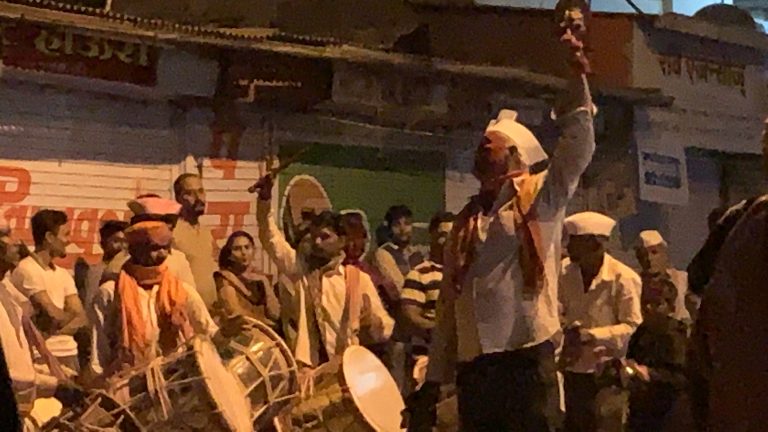
Photo by Wikimedia contributor, Wikimedia Commons, CC BY-SA 4.0
Viral
Student’s Bribes.fyi platform for reporting bribery goes viral
A Delhi B.Tech student has built Bribes.fyi, a free crowdsourced platform where citizens can anonymously report being asked for bribes at government offices.
A student has built a free platform called Bribes.fyi that lets citizens anonymously report being asked for bribes at government offices.
The website was created by Aryan Nishad, a B.Tech student at Maharaja Agrasen Institute of Technology in Delhi, who used AI-assisted coding to build it.
Users can submit a report in about a minute by filling in basic details of the incident, after which it is published anonymously with identifying details removed.
The platform has gathered 616 reports from 251 cities since going live on July 2, with police departments accounting for the largest share at 337 entries.
Reports are organised by department, city and state, giving the public a searchable view of where bribery complaints are most commonly reported.
The site has gone viral on social media in recent days, with many users praising the simple, anonymous design as a practical tool for surfacing corruption patterns.
Reports on the platform are organised by department, city and state, giving users a public view of where corruption complaints are most frequently reported.
The platform does not verify individual claims before publishing them, relying instead on aggregate, anonymised data to surface patterns rather than pursue individual cases.
The idea follows a broader tradition of crowdsourced anti-corruption reporting tools that have surfaced periodically in India over the years, though Bribes.fyi has stood out for the speed with which it was built and its rapid early adoption.
The platform’s low-friction, minute-long reporting process is widely seen as a key reason for its quick early adoption compared to more formal complaint mechanisms.
Nishad, a B.Tech student at Maharaja Agrasen Institute of Technology in Delhi, used AI-assisted coding to build the platform from scratch.
The website went live on July 2 and has since gathered 616 reports from 251 cities across the country.
Police departments account for the highest number of reports on the platform so far, with 337 entries alone.
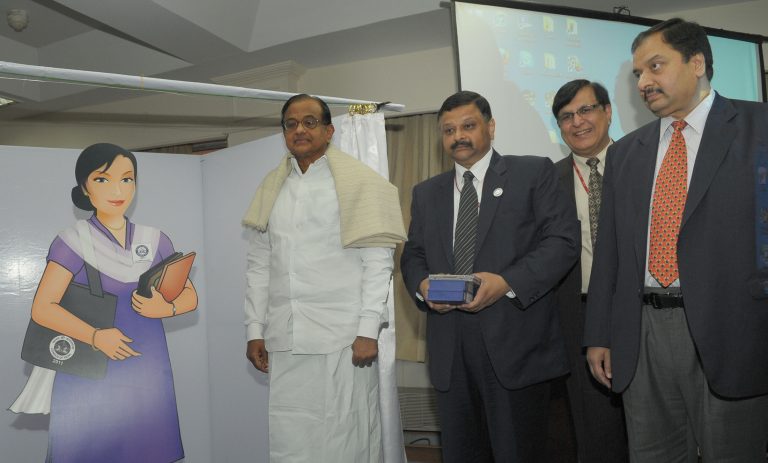
Photo by Tirza van Dijk, Wikimedia Commons, CC0
Viral
4-year-old’s ‘call us Indians’ video from Arunachal goes viral
A viral video of a 4-year-old girl from Itanagar firmly telling a stranger not to call her Chinese, and to call her Indian instead, has won widespread praise online.
A video of a four-year-old girl from Itanagar, Arunachal Pradesh, has gone viral after she firmly told a stranger not to call her Chinese, insisting instead that she be called Indian.
The girl, Karga Tinkle Gongo, was being filmed by her mother while buying ice cream when a social media user commented that she looked Chinese.
In the video, she responds, ‘Don’t call us Chinese. Call us Indians. It makes me angry,’ before singing the national anthem, Jana Gana Mana.
Her mother said the family was surprised by how widely the clip travelled online, with many users praising the young girl for confidently asserting her identity.
The moment has added to a long-running conversation in India about the casual stereotyping faced by people from the Northeast, who are frequently mistaken for other nationalities because of their appearance.
The video has been widely shared as a heartwarming example of a child’s unfiltered pride in her national identity, drawing appreciation from across the country.
Itanagar, where the girl and her family are from, is the capital of Arunachal Pradesh, a state in India’s far northeast bordering China, Bhutan and Myanmar.
The clip has added to a recurring conversation in India about casual racial stereotyping faced by people from northeastern states, an issue that resurfaces periodically whenever such videos go viral.
Her mother, who was recording the ice cream purchase when the comment appeared, said the family was surprised by just how far the video travelled online.
People from India’s Northeast have long dealt with being mistaken for other nationalities because of their appearance, with the casual use of terms like ‘Chinese’ or the derogatory ‘Chinki’ remaining a persistent frustration for the region.
In the video, the young girl also sang the national anthem, Jana Gana Mana, adding to the emotional response the clip generated online.
Photo by SK Gupta, Wikimedia Commons, CC BY-SA 4.0
-
Brandpost2 years agoRedfox Overseas: Customize Your Own Energy Drink and Stand Out in the Market
-
Brandpost2 years agoZamzam Company CEO Chhote Bhai-Bade Bhai gave a grand welcome to Indian writer Devhari Sirvi in Dubai
-
Fashion2 years agoShikha Sharma: The Fashion Journalist, Blogger, and Plus-Size Model Taking the Industry by Storm
-
Entertainment1 year ago
Lucky Roxx’s “Yadav Ki Pukar” Goes Viral! Youth Celebrate Unity & Power
-
Entertainment9 years agoMeet Superman’s grandfather in new trailer for Krypton
-
Entertainment9 years agoNew Season 8 Walking Dead trailer flashes forward in time
-
Brandpost2 years agoFrom Local Hero to National Icon: Satyam Yadav’s Journey with TwentyOne
-
Uncategorized2 years ago
Hello world!