
Brandpost
Discover the Power of Islamic Duas: Your Daily Guide to Connecting with Allah


Are you looking for authentic Islamic duas to strengthen your connection with Allah? Islamic Dua Knowledge Hub is here to guide you on your spiritual journey with powerful duas from the Quran and Hadith.
Welcome to Islamic Dua Knowledge Hub
Assalamu Alaikum, dear brothers and sisters! We are pleased to welcome you to Islamic Dua Knowledge Hub and Noorani Dua Knowledge Center your trusted source for authentic Islamic duas for every situation in life. Our mission is simple to help Muslims like you strengthen your bond with Allah through the beautiful practice of dua.
In today’s fast-paced world, many of us struggle to maintain our spiritual connection. That’s why we have created this special place where you can find powerful duas from the Holy Quran and authentic Hadith to guide you through life’s ups and downs.
Why Duas Matter in Our Daily Lives
Duas are our direct line to Allah. When we make dua, we are having a personal conversation with our Creator. The Prophet Muhammad (peace be upon him) said: “Dua is worship.” This shows how important duas are in our faith.
Making dua regularly brings many blessings to our lives:
- It strengthens our faith and trust in Allah
- It gives us peace of mind during difficult times
- It reminds us that Allah is always listening
- It helps us express gratitude for Allah’s countless blessings
At Islamic Dua Knowledge Hub, we believe that making dua should be easy for everyone. That’s why we have collected the most powerful duas in simple language that anyone can understand and use daily.
Essential Islamic Duas for Your Daily Life from Noorani Dua Knowledge Center
1. Duas for Protection & Guidance
Do you worry about staying safe in today’s world? Allah has given us beautiful duas for protection that can shield us from harm.
One of the most powerful protections duas is Ayatul Kursi. The Prophet Muhammad (peace be upon him) said whoever recites Ayatul Kursi before sleeping will have Allah’s protection throughout the night.
Ayatul Kursi Translation: “Allah! There is no god but He – the Living, The Self-subsisting, Eternal. No slumber can seize Him nor sleep. His are all things in the heavens and on earth…”
Visit our website to learn the complete dua and its proper pronunciation.
We also offer:
- Morning and evening protection duas
- Dua for protection while traveling (Safar ki dua)
- Dua for protection from evil eye (Nazar ki dua)
- Dua for protection of your home and family
2. Duas for Healing & Health
When we fall sick, we seek medical treatment, but we should never forget the healing power of dua. The Prophet Muhammad (peace be upon him) taught us special duas for healing that can bring relief with Allah’s permission.
Simple Healing Dua Translation: “O Allah, Lord of mankind, remove the harm and heal, for You are the Healer, and there is no healing except Your healing, a healing that leaves no disease behind.”
On our website, you’ll find:
- Duas for physical healing
- Duas for emotional healing
- Duas for seeking protection from illnesses
- Special duas for family members who are unwell
3. Duas for Forgiveness & Mercy
We all make mistakes, but Allah’s mercy is vast. The Prophet Muhammad (peace be upon him) taught us beautiful duas to seek forgiveness.
One of the most powerful duas for forgiveness is:
Translation: “O Allah, you are my Lord, there is no god but You. You created me and I am Your servant, and I abide by Your covenant and promise as much as I am able. I seek refuge in You from the evil of what I have done. I acknowledge Your blessings upon me, and I acknowledge my sins. Forgive me, for no one forgives sins except You.”
At Islamic Dua Knowledge Hub, we provide:
- Daily istighfar duas (asking for forgiveness)
- Duas for seeking Allah’s mercy
- Special duas for the last ten nights of Ramadan
- Duas for forgiving others
4. Duas for Success & Rizq (Provision)
Allah is Ar-Razzaq (The Provider). When we’re looking for a job, starting a business, or facing financial challenges, turning to Allah through dua can open doors of blessing.
Dua for Seeking Provision Translation: “O Allah, I ask You for knowledge that is beneficial, provision that is good, and deeds that are accepted.”
Our website features:
- Duas for barakah (blessing) in income
- Duas for success in work and business
- Duas for paying off debts
- Duas for finding halal opportunities
5. Daily Morning & Evening Duas
Starting and ending your day with dua sets a beautiful pattern for your life. The Prophet Muhammad (peace be upon him) never missed his morning and evening duas.
Morning Dua Simple Translation: “We have reached the morning and at this very time all sovereignty belongs to Allah, Lord of the worlds. O Allah, I ask You for the good of this day, its success and aid, its light, blessings, and guidance…”
On Islamic Dua Knowledge Hub, you’ll find:
- Complete morning (Subah ki dua) and evening duas
- Duas for peaceful sleep (Sone ki dua)
- Duas for waking up
- Duas to recite after the five daily prayers
- Dua to recite after Adhan (Azan ke baad ki dua)
6. Special Occasion Duas
Life is filled with important moments that call for special duas:
Dua Istikhara for Making Decisions: When facing an important life decision, the Prophet Muhammad (peace be upon him) taught us to seek Allah’s guidance through Dua Istikhara.
Our website offers duas for many special occasions:
- Marriage duas
- Dua for newborn babies
- Dua for Ramadan and Eid
- Dua for Hajj and Umrah
- Funeral prayer duas (Janaze ki dua)
- Dua for burying the deceased (Mitti dene ki dua)
Why Choose Islamic Dua Knowledge Hub?
1. Authentic Sources
Every dua on our website comes directly from the Holy Quran or authentic Hadith. We verify all sources carefully so you can trust what you’re reading.
2. Easy to Understand
We explain duas in simple language with proper pronunciation guides, making it easy for everyone to learn and use them correctly.
3. Accessible Anytime, Anywhere
Whether you’re at home, work, or traveling, our mobile-friendly website lets you access your favorite duas whenever you need them.
4. Growing Collection
We regularly add new duas to our collection based on your requests and needs.
Special Features on Our Website
Quran Surahs with Translation
Find complete recitation and translation of important surahs like:
- Surah Yasin (the heart of the Quran)
- Surah Rahman (the mercy of Allah)
- Surah Al-Kahf (recommended for Fridays)
Current Events
Find special duas for our brothers and sisters facing hardships around the world, including Dua for Palestine and other communities in need.
Seasonal Duas
Access special duas for Ramadan, Hajj season, and other important Islamic occasions throughout the year.
Join Our Community Today
Thousands of Muslims across India and beyond are already benefiting from Islamic Dua Knowledge Hub. We invite you to visit https://myislamicdua.com/ today and start your journey toward a stronger connection with Allah through authentic duas.
Remember, dua is not just about asking for things – it’s about building a relationship with our Creator. Let Islamic Dua Knowledge Hub be your trusted companion on this beautiful spiritual journey.
Frequently Asked Questions (FAQs)
1. What is the best time to make dua?
There are several special times when duas are more likely to be accepted, including the last third of the night, between adhan and iqamah, while fasting, while traveling, and on Fridays between Asr prayer and Maghrib.
2. Do I need to make dua in Arabic only?
No, Allah understands all languages. While it’s beneficial to learn the Arabic duas taught by the Prophet Muhammad (peace be upon him), you can always make dua in your own language with sincerity.
3. What should I do if I feel my duas aren’t being answered?
Remember that Allah answers all duas in three ways: He may grant what you asked for, prevent a harm you’re unaware of, or save the reward for the Hereafter. Continue making dua with patience and trust in Allah’s wisdom.
4. Is there a specific position or direction for making dua?
While facing the Qibla and raising your hands is recommended, you can make dua in any position. Allah hears you whether you’re standing, sitting, or lying down.
5. Can I make dua for non-Muslim friends or family members?
Yes, you can make dua for their guidance, well-being, and that Allah opens their hearts to Islam.
6. How can I memorize important duas?
Start with short, daily-use duas and practice them regularly. On Islamic Dua Knowledge Hub, we provide easy pronunciation guides and repetition techniques to help you memorize.
7. Are there duas for modern problems like stress, depression, or addiction?
Yes, while these terms weren’t used during the Prophet’s time, there are many duas for peace of mind, relief from distress, and strength against temptations that apply perfectly to modern challenges.
8. Can I make dua while doing other activities?
Yes, you can make dua while walking, working, or doing household chores. However, dedicated dua with proper focus and presence of mind is recommended for important matters.
9. Is it permissible to make dua with music playing in the background?
It’s best to make dua in a quiet environment free from music or distractions, as this helps maintain proper respect and focus during your conversation with Allah.
10. Can children make dua too?
Absolutely! Teaching children to make dua from an early age helps them build a beautiful relationship with Allah. Start with simple duas like before eating or sleeping.
Brandpost
From Indore to India: How Akash Joshi Is Building Grawish into One of India’s Leading Digital Marketing Agencies After Helping Build a ₹100 Crore-Valued Enterprise

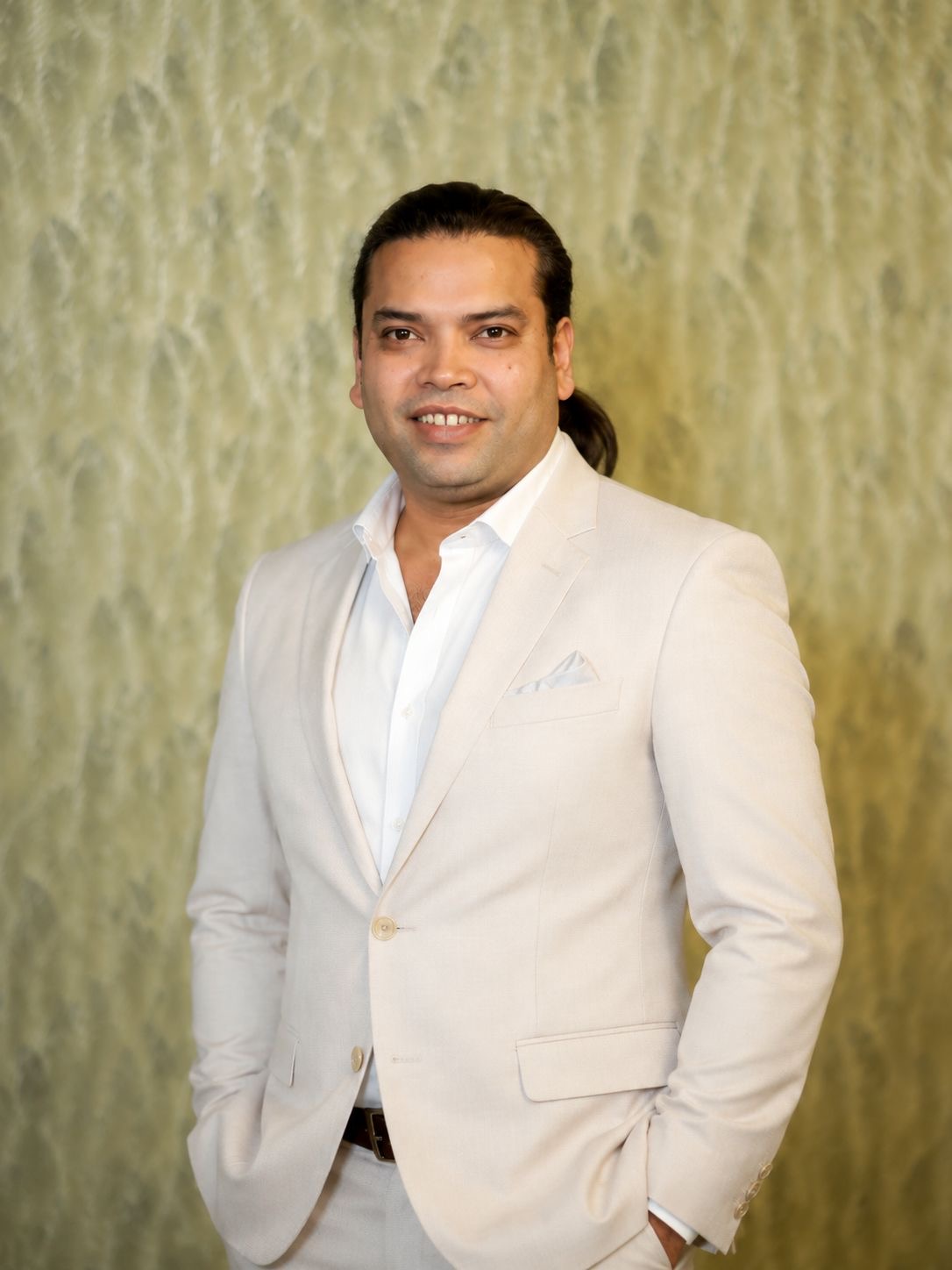
In today’s digital economy, businesses are no longer competing solely on the quality of their products or services. They are competing on visibility, trust, customer experience, and the ability to build meaningful relationships in an increasingly connected world. Companies that embrace digital transformation, strategic branding, and data-driven marketing are the ones creating sustainable growth.
At the forefront of this transformation is Akash Joshi—an entrepreneur, TEDx Speaker, National Award-Winning Entrepreneur, business strategist, and digital transformation expert. With more than 15 years of entrepreneurial experience, Akash has consistently focused on helping businesses leverage technology and innovation to achieve measurable growth. After helping build a technology company that grew into a ₹100 crore-valued enterprise, he founded Grawish with a vision to redefine how businesses approach branding and digital marketing.
Headquartered in Indore, Madhya Pradesh, Grawish has emerged as one of the city’s leading digital marketing and branding agencies, serving startups, SMEs, enterprises, and entrepreneurs across India. More than a marketing agency, Grawish positions itself as a strategic growth partner by combining creativity, technology, artificial intelligence, and business consulting.
Grawish was built on a simple philosophy: marketing should create measurable business growth—not merely digital visibility. Every engagement begins with understanding a client’s business, customers, competitors, and long-term vision. This allows the team to develop integrated strategies that connect branding, content, advertising, technology, analytics, and customer experience into one unified growth engine.
Today, Grawish offers end-to-end solutions including Digital Marketing, Branding, Performance Marketing, Google Ads, Meta Ads, SEO, Website Development, Personal Branding, Founder Branding, LinkedIn Marketing, Corporate Video Production, Podcast Production, Creative Design, AI Marketing, Marketing Automation, Public Relations, Event Branding, and Business Growth Consulting.
The company proudly highlights a team of 100+ marketing, branding, creative, technology, and AI professionals; service delivery for 100+ leading brands; 90% of projects delivered within committed timelines; and a 90% client retention rate. These milestones reflect Grawish’s commitment to quality, speed, innovation, and long-term client relationships.
One of Grawish’s key differentiators is its focus on Founder and Personal Branding. The company helps entrepreneurs, CEOs, consultants, doctors, industrialists, and professionals build authority through LinkedIn strategy, executive positioning, podcasts, thought leadership, strategic storytelling, and premium content creation.
Artificial Intelligence is another major pillar of Grawish’s growth strategy. The agency integrates AI into research, audience analysis, content planning, automation, campaign optimisation, and reporting while ensuring that human creativity and business strategy remain at the centre of every campaign.
Grawish has worked with businesses across real estate, pharmaceuticals, manufacturing, healthcare, education, hospitality, retail, financial services, food and beverage, technology, and professional services. Every strategy is customised to the client’s industry, market, and objectives rather than relying on generic templates.
Under Akash Joshi’s leadership, innovation, continuous learning, accountability, and customer success define the company’s culture. The vision is to build a company from Indore that serves businesses across India and eventually global markets while creating measurable impact through branding, technology, and AI-driven marketing.
For Akash, success is measured not only by revenue or recognition but by the businesses that grow stronger through Grawish’s work. With ambitious plans for expansion, deeper AI capabilities, stronger consulting services, and world-class creative execution, Grawish is steadily progressing toward its vision of becoming one of India’s most respected digital marketing agencies.
The journey from Indore to India has only just begun.
A claim that sounds almost old-fashioned in an era of mass-manufactured jewellery sits at the center of how Shree Ram Jewellers describes its own work: every piece of silver shringar it creates for Baba Mahakal, the presiding deity of Ujjain’s Mahakaleshwar Jyotirlinga temple, is made entirely by hand, with no machine involved at any stage.
According to the store’s owner, Siddharth Soni, each design is shaped, engraved, and finished manually, a process that depends on traditional silverwork techniques built up over years of practice rather than templated production methods. Handmade silverwork of this kind generally takes considerably longer per piece than machine-assisted manufacturing, a tradeoff craftsmen in this space typically accept in exchange for the kind of intricate, non-repeating detail that mechanized processes struggle to replicate exactly.
Why Hand Craftsmanship Matters for Ritual Objects
Ceremonial items used in temple worship — crowns, crescent moons, ritual vessels — are not purely decorative; they’re expected to function correctly within a specific sequence of rituals, including Bhasma Aarti, Sandhya Aarti, and Bhog Aarti at the Mahakaleshwar temple. That functional requirement, alongside aesthetic expectations tied to specific festivals such as Mahashivratri and the Shravan month, means a craftsman working on temple silver needs familiarity with ritual timing and deity iconography that a purely decorative jeweller might not develop.
What “No Machines” Actually Involves
Fully handmade silverwork typically means every stage — melting and shaping raw silver, engraving fine detail work, and final finishing and polishing — is done using hand tools rather than machine-assisted cutting, stamping, or casting equipment common in larger-scale jewellery production. Shree Ram Jewellers has not detailed publicly which specific hand techniques it uses for different pieces, information that would help distinguish its process from other handmade silverwork studios making similar craftsmanship claims.
The store’s emphasis on originality — describing its designs as difficult to find replicated elsewhere in Ujjain or, according to the owner, across India — reflects a common positioning strategy among specialist craft businesses generally, where uniqueness of design is presented as a direct consequence of the handmade process itself rather than a separate marketing claim. For devotees or collectors evaluating handmade silverwork from any craftsman, asking to see the specific stages of production, or requesting examples of past commissioned work, remains a reasonable way to assess a claim of full handcraftsmanship.
Time investment is one of the more tangible tradeoffs of fully handmade production: a single intricate piece can take considerably longer to complete than an equivalent machine-assisted design, meaning a workshop committed to hand craftsmanship across its full product range is generally limited in how many commissions it can take on simultaneously compared to a larger operation using mechanized production methods.
That capacity constraint may also help explain why reputation-driven, word-of-mouth growth suits a fully handmade workshop better than an advertising-driven model built around high volume, since a business that can only produce a limited number of pieces at a time has less to gain from broad marketing reach than from cultivating a smaller base of devotees willing to wait for a genuinely handcrafted commission.
Brandpost
Retrograde: From a Teenager’s Question to Building India’s Most Complete AI-Driven Vedic Astrology Platform
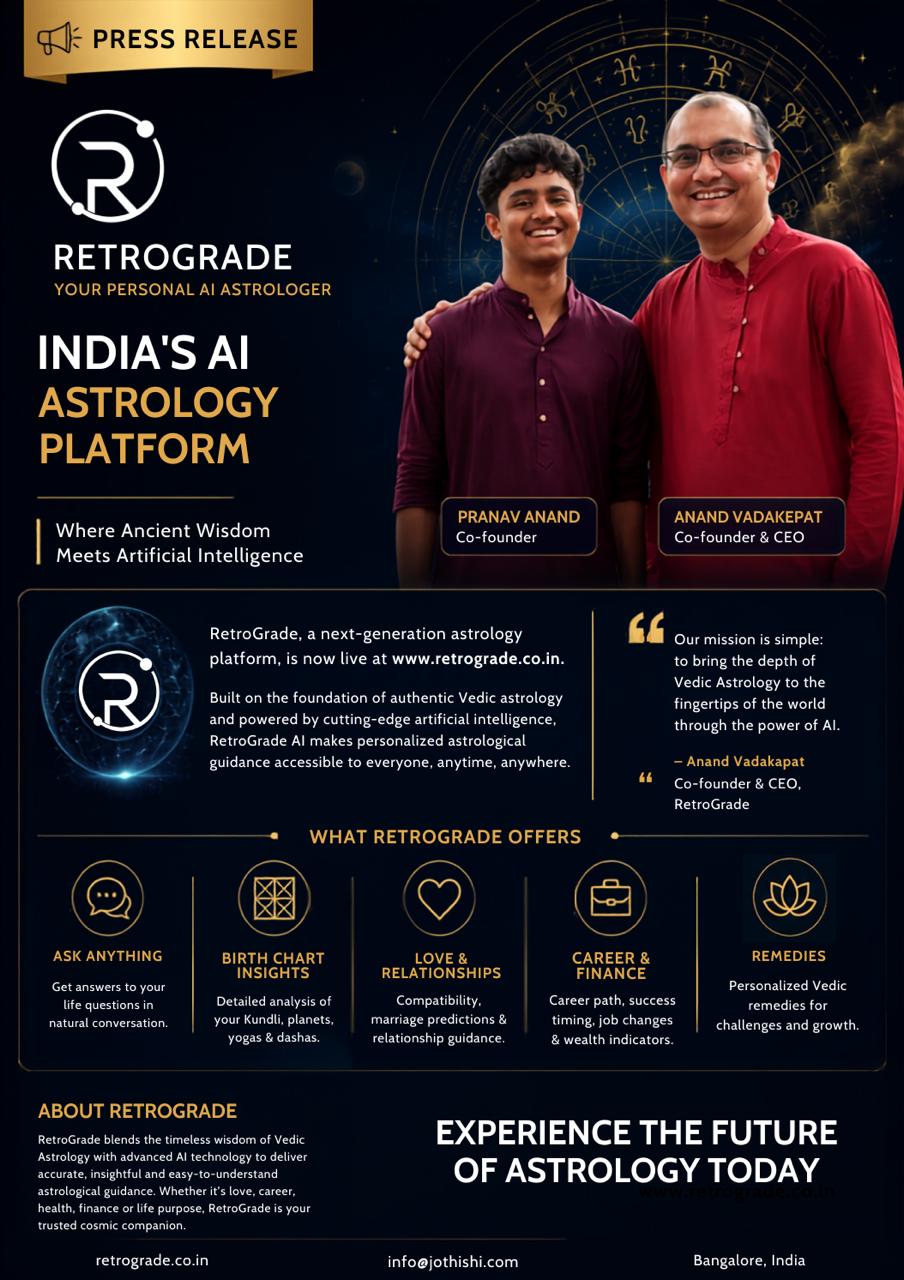
In a country where millions still wait weeks for a trusted astrologer’s time, or lie awake at 2 a.m. wondering whether to take the job, say yes to the marriage, or book the flight abroad, Retrograde has emerged as a quiet but transformative force. More than just an app, it is an AI-driven Vedic astrology platform, built on the astrology engine at Jothishi.com with Parashara and Jaimini priciples, that helps people find clear, personalized answers on career, relationships, marriage, health, wealth, business, moving abroad, and the other turning points of life — from home, at any hour, on a web app or on iPhone and Android.
The story of Retrograde begins with a simple observation. Good decisions change the course of a life, but the people best equipped to help make them — experienced Vedic astrologers, working through a birth chart’s full depth — are scarce, booked out, and often out of reach for a quick, honest question. Pranav, a 16-year-old in the 12th grade at National Public School, Bangalore, saw this gap alongside Anand Vadakepat of Jothishi, whose own work had spent years building the classical astrology engine now powering the platform. Together, they set out to build something different: not a horoscope column repackaged into an app, but a genuine astrologer’s depth of reasoning, made instantly available to anyone who needed it.
Retrograde is also a story about what has newly become possible. This is the age of the one-person company — a moment when a single founder, armed with AI and large language models, can build and ship what once required a full startup’s worth of engineers. That a 16-year-old still finishing high school could build, alongside one collaborator, one of the most complete AI-driven Vedic astrology platforms on the market is itself the clearest evidence of how far that shift has come.
The name carries its own meaning, deliberately chosen. Viewed from Earth, planets normally appear to move steadily in one direction across the sky — what astronomers call direct motion. Occasionally, a planet appears to slow, stop, and drift backward before resuming course — an optical effect of relative orbital speeds that Vedic astrology calls Vakri gati, or retrograde motion. Ketu, the lunar south node, is considered to move perpetually opposite every other planet — eternally reversed, eternally Vakri. Pranav and Anand named the platform Retrograde for exactly that idea: the moment a person pauses, turns inward, and reconsiders their direction before moving forward again. That pause, not indecision but reflection, is precisely what Retrograde exists to support.
Underneath that name is a serious piece of engineering. Retrograde’s answers are generated by 1000 agents programmed to help answer about 10000 probable queries that a person could have with an AI engine applying the classical framework of Vedic astrology — the Brihat Parashara Hora Shastra’s Parashari system alongside the Jaimini Sutras, a person’s Nakshatra placements, every divisional (varga) chart from D1 through D60, multiple dasha timing systems, Ashtakvarga strength scoring, and Panchanga for auspicious timing — rather than a generic, one-size-fits-all horoscope. A user shares their birth details once, then simply asks a question in plain language. Retrograde returns a personalized answer, grounded in that individual’s own chart, in seconds, on whichever device they already have in hand. The model is build to learn daily and currently has about 70 percent accuracy and hopes to attain 95 percent accuracy as it learns over the years with its RAG system architecture.
What sets Retrograde apart as a brand is its underlying philosophy: that good decisions, made with clarity rather than anxiety, are what make a life happier. Career changes, marriages, health choices, financial bets, big moves — these are the decisions people most want a second, wiser opinion on, and most struggle to get one for. By making that depth of guidance available instantly and privately, from home, Retrograde is betting that easier access to good decisions is itself a form of wellbeing.
That philosophy is beginning to build real credibility. Early users are discovering Retrograde largely through word of mouth — the trust that spreads when an answer resonates with someone’s actual life rather than reading like a generic prediction. In a category crowded with novelty apps and recycled sun-sign content, Retrograde stands out for going deeper: real classical methodology, applied to a real question, answered in real time.
Retrograde’s journey — from one teenager’s question to a genuinely comprehensive AI-driven Vedic astrology platform — reflects both the founders’ ambition and the new tools now available to build with. Looking ahead, Retrograde plans to deepen its astrological coverage and expand across web and mobile, while holding onto the belief at its core: honest, personalized guidance, available in the moment people need it, leads to better decisions — and better decisions add up to a happier life.
Learn more at www.retrograde.co.in.


From Indore to India: How Akash Joshi Is Building Grawish into One of India’s Leading Digital Marketing Agencies After Helping Build a ₹100 Crore-Valued Enterprise
No Machines, No Shortcuts: Inside Shree Ram Jewellers’ Handmade Approach to Temple Silver

Retrograde: From a Teenager’s Question to Building India’s Most Complete AI-Driven Vedic Astrology Platform

Redfox Overseas: Customize Your Own Energy Drink and Stand Out in the Market

Zamzam Company CEO Chhote Bhai-Bade Bhai gave a grand welcome to Indian writer Devhari Sirvi in Dubai

Shikha Sharma: The Fashion Journalist, Blogger, and Plus-Size Model Taking the Industry by Storm
-
 Brandpost2 years ago
Redfox Overseas: Customize Your Own Energy Drink and Stand Out in the Market
-
 Brandpost2 years ago
Zamzam Company CEO Chhote Bhai-Bade Bhai gave a grand welcome to Indian writer Devhari Sirvi in Dubai
-
 Fashion2 years ago
Shikha Sharma: The Fashion Journalist, Blogger, and Plus-Size Model Taking the Industry by Storm
-
Entertainment1 year ago
Lucky Roxx’s “Yadav Ki Pukar” Goes Viral! Youth Celebrate Unity & Power
-

 Entertainment9 years ago
Meet Superman’s grandfather in new trailer for Krypton
-
Entertainment9 years ago
New Season 8 Walking Dead trailer flashes forward in time
-

 Business2 years ago
The journey of Matrix Coded: From a freelancer to a renowned brand
-

 Brandpost2 years ago
From Local Hero to National Icon: Satyam Yadav’s Journey with TwentyOne