
Brandpost
Dr. Lal Singh Rawat: The Corona Warrior from Uttarakhand Who Made Delhi His Karmabhoomi of Service

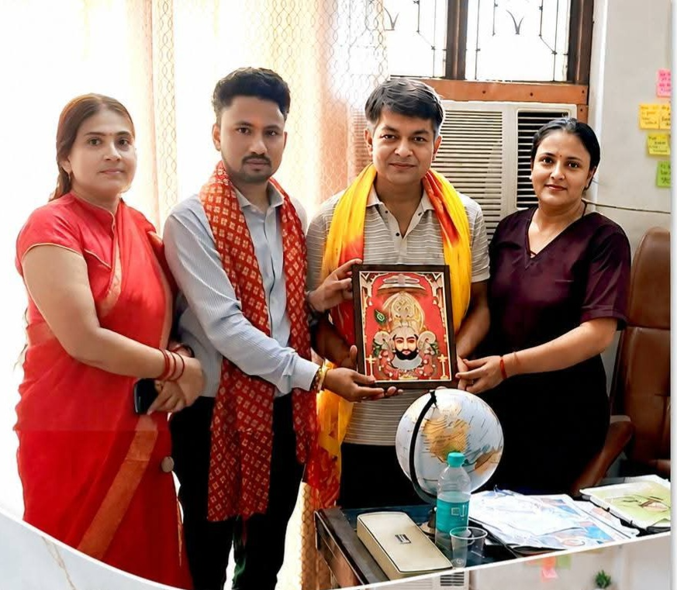
Social Activist Honoured with Honoris Causa Doctorate for Eight Years of Humanitarian Work Across Delhi and Beyond
In a world where personal ambition often takes centre stage, Dr. Lal Singh Rawat (Honoris Causa) has built a different kind of legacy, one rooted in disaster relief, healthcare outreach, environmental conservation, and community welfare. Born on 2nd April 1986 in Devbhoomi, Uttarakhand, and now based in North East Delhi, Dr. Rawat has spent close to eight years working on the ground as a social activist, earning recognition as a Corona Warrior for his frontline service during the COVID-19 pandemic.
His work has since been featured across several media platforms, including India Times Group, Punjab Kesari, Navodaya Times, Media Hindustan, and Khabar India 24×7, reflecting the growing public recognition of his contributions to social service.
From the Hills of Uttarakhand to the Streets of Delhi
Dr. Rawat often describes Uttarakhand as his Janmabhoomi, or birthland, and Delhi as his Karmabhoomi, the place where his life’s work has unfolded. Raised with strong moral values and a deep sense of social responsibility, he chose early on to dedicate his life to community welfare rather than pursue personal success alone. Over the past eight years, that choice has translated into sustained, hands-on involvement in disaster relief, environmental awareness, healthcare support, and educational outreach across Delhi and neighbouring regions.
He is married and lives as part of a joint family, a detail that friends and associates say has shaped his community-first outlook. Alongside his social work, his interests include public motivation, youth empowerment, and environmental awareness, all themes that consistently show up in the initiatives he has led or supported.
Honoris Causa: A Doctorate in Recognition of Service
In recognition of his contributions to social work, Dr. Rawat was conferred an Honoris Causa, or honorary doctorate, by the Iconic Human Rights & Educational Organization, an entity registered under the Ministry of Corporate Affairs (MCA), Government of India. The honour specifically recognised his sustained efforts in the field of social service, and the title “Dr.” now associated with his name reflects this honorary distinction rather than a traditional academic doctorate.
This recognition sits alongside his more conventional academic and technical qualifications. Dr. Rawat holds a Bachelor of Arts degree from Chaudhary Charan Singh University, Meerut, along with an ITI Electrical Trade certificate from Government ITI, Nizamuddin, Delhi, an ITI PPO Diploma from Government ITI, Mayur Vihar Phase-III, Delhi, a one-year Desktop Publishing (DTP) computer certificate course, and a Technical Training Certificate from NCERT, Government of India, Hauz Khas, New Delhi. Together, this combination of academic study and hands-on technical training has given him both the practical skills and the discipline to organise and sustain long-running social initiatives.
A Frontline Corona Warrior During the Pandemic
Dr. Rawat’s most widely recognised contribution came during the COVID-19 pandemic, when he stepped forward as a frontline volunteer at a time when many were confined to their homes. His pandemic-era work included helping vulnerable families access food and essential supplies, assisting citizens in obtaining ration cards, supporting economically weaker households, and providing frontline services at LNJP Hospital, a Delhi Government facility that served as one of the city’s key COVID-19 treatment centres.
He was also active in COVID-19 awareness campaigns, helping spread accurate health information within his community at a time when misinformation was widespread. This body of work earned him the Corona Warrior Award, a recognition of the risks he took and the consistency of his service during one of the most difficult public health crises in recent memory.
A Wide-Ranging Record of Social Contribution
Beyond his pandemic-era work, Dr. Rawat’s record of social service spans several distinct areas. During the Delhi riots, he was actively involved in disaster relief efforts, providing financial assistance, food distribution, and drinking water to affected families. On the environmental front, he has taken part in Yamuna river cleaning campaigns, tree plantation drives, and cleanliness and sanitation initiatives aimed at raising public awareness around environmental protection.
In healthcare, his work has included organising free medical camps, participating in voluntary blood donation drives, and supporting broader community health awareness programs. On the education and social development front, he has been involved in educational awareness campaigns, career and employment guidance for young people, and youth motivation initiatives aimed at building a stronger, more self-reliant community.
His community work also extends into more traditional and cultural spaces. Dr. Rawat has been involved in religious and community service initiatives, and has played a role in helping families within the Pahari community establish matrimonial relationships, an effort he sees as part of a broader mission to promote unity, harmony, and social integration within his community.
A Philosophy Rooted in Service
Dr. Rawat’s approach to his work is anchored in a simple guiding belief: that service to humanity is the greatest religion. He has also spoken about staying focused on his mission regardless of external opinion, framing his social work not as a pursuit of recognition but as a personal responsibility to his community.
Those who have worked alongside him describe his approach as marked by simplicity, humility, and consistency, qualities that have helped him sustain nearly eight years of continuous social engagement across disaster relief, healthcare, environmental work, and community development, even as public attention around any individual cause naturally rises and falls.
Profile Details
| Full Name | Dr. Lal Singh Rawat (Honoris Causa) |
| Date of Birth | 2 April 1986 |
| Birthplace (Janmabhoomi) | Devbhoomi, Uttarakhand, India |
| Workplace (Karmabhoomi) | Delhi |
| Current Residence | North East Delhi |
| Marital Status | Married (Joint Family) |
| Years in Social Service | 8+ Years |
| Honours | Honoris Causa (Honorary Doctorate), Corona Warrior Award |
| Awarding Body | Iconic Human Rights & Educational Organization (MCA, Govt. of India) |
| Academic Qualification | B.A., Chaudhary Charan Singh University, Meerut |
| Media Coverage | India Times Group, Punjab Kesari, Navodaya Times, Media Hindustan, Khabar India 24×7 |
Connect with Dr. Lal Singh Rawat
Updates on Dr. Rawat’s ongoing social work and community initiatives can be followed on Facebook at fb.com/DrLalSinghRawat.
As Dr. Lal Singh Rawat continues his work across Delhi and beyond, his journey stands as an example of what sustained, ground-level social service can look like, built not on a single high-profile moment, but on nearly a decade of consistent, hands-on commitment to the people around him.


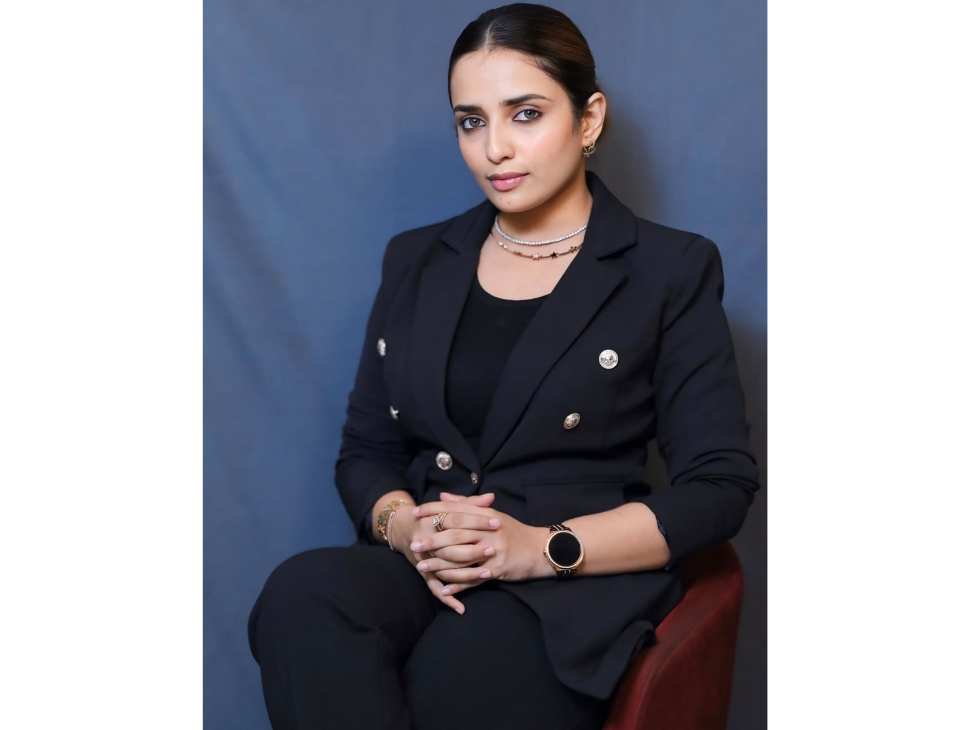
Iqra Parvaiz Khan is a professional makeup artist, salon owner, laser aesthetician, and beauty educator from Moradabad who has transformed her passion for beauty into a successful and diverse career. She became one of the few professionals in Moradabad to receive advanced makeup training from the London College of Makeup and has had the opportunity to work with several celebrities and clients globally. With a strong focus on education, she has also trained and certified 300+ students in the beauty aesthetics industry.
Her journey continued into the world of aesthetics, where she pursued professional training in laser aesthetics from BSI ( London ) and achieved the distinction of being a Gold Medalist. This expertise enabled her to expand beyond makeup artistry and establish herself in the growing field of modern beauty and aesthetic treatments.
For the past six years, Iqra has been successfully running her own beauty academy, which is NSDC-approved, helping aspiring professionals develop industry-ready skills and build careers in makeup and beauty. Alongside the academy, she manages multiple ventures, including a professional salon and laser clinic, reflecting her entrepreneurial vision and ability to lead across different areas of the beauty industry.
Today, Iqra Parvaiz Khan represents a journey built on passion, hard work, continuous learning, and global exposure. She travels worldwide and has worked with clients from different parts of the world, gaining valuable international experience and exposure to diverse beauty standards and trends. From starting as a passionate makeup artist to becoming an educator, Gold Medalist laser aesthetician, salon owner, and entrepreneur, she continues to raise professional standards and inspire the next generation of beauty professionals in Moradabad and beyond.
Brandpost
Dr. Nudurupati Umamaheswara Rao Sharma (Umaswami): The Vijayawada Astrologer Behind Sri Gnanasaraswathi Vidhya Peetham
VIJAYAWADA, ANDHRA PRADESH — In the world of Vedic astrology and spiritual counselling, Dr. Nudurupati Umamaheswara Rao Sharma, popularly known as Umaswami, has built a name for himself over the past decade. Based in Vijayawada, Andhra Pradesh, he is the founder and CEO of Sri Gnanasaraswathi Vidhya Peetham, an institution dedicated to the study and practice of astrology. He is the son of Nudurupati Hanumantha Rao Sharma and Leelavathi, and traces his roots to Pedakurapadu village in Andhra Pradesh’s Palnadu district, before establishing his present-day practice in Vijayawada.
From Palnadu Roots to a Vijayawada Practice
Dr. Umaswami’s early life in Pedakurapadu, a village in Palnadu district known for its agrarian and traditional roots, is a background he has referenced as formative to his interest in astrology and Vedic sciences. Like many practitioners who trace their grounding in traditional Indian knowledge systems back to smaller towns and villages before building a client-facing practice in a larger city, his move to Vijayawada — one of Andhra Pradesh’s key commercial and cultural centres — reflects a common trajectory for astrologers seeking a wider client base while retaining the traditional grounding associated with their native region.
A Decade of Astrological Practice
According to Dr. Umaswami, he has spent more than 10 years practising and studying astrology, during which he says he has earned multiple certifications in the field. He describes this period as one dedicated to deepening his understanding of Vedic astrology, horoscope analysis, and traditional remedial practices, alongside building a client base that spans Vijayawada and the wider Andhra Pradesh region.
Over this period, he states that his consultations and guidance have reached and been trusted by more than 50,000 people across the region. He attributes this growing following to word-of-mouth referrals and repeat consultations from families seeking guidance on matters ranging from career and relationships to health and general life direction. As with most figures in the astrology-consultation space, a client base of this size is based on the practitioner’s own account rather than independently audited records, and should be read accordingly.
Dr. Umaswami states that his clientele includes people from all walks of life, including political leaders such as MLAs, MPs, and ministers, as well as TV actresses and other public figures, for whom he performs pujas and offers astrological guidance to help resolve personal and professional problems. These specific client claims, like similar claims made by astrologers across India, have not been independently confirmed and rest on Dr. Umaswami’s own account of his practice.
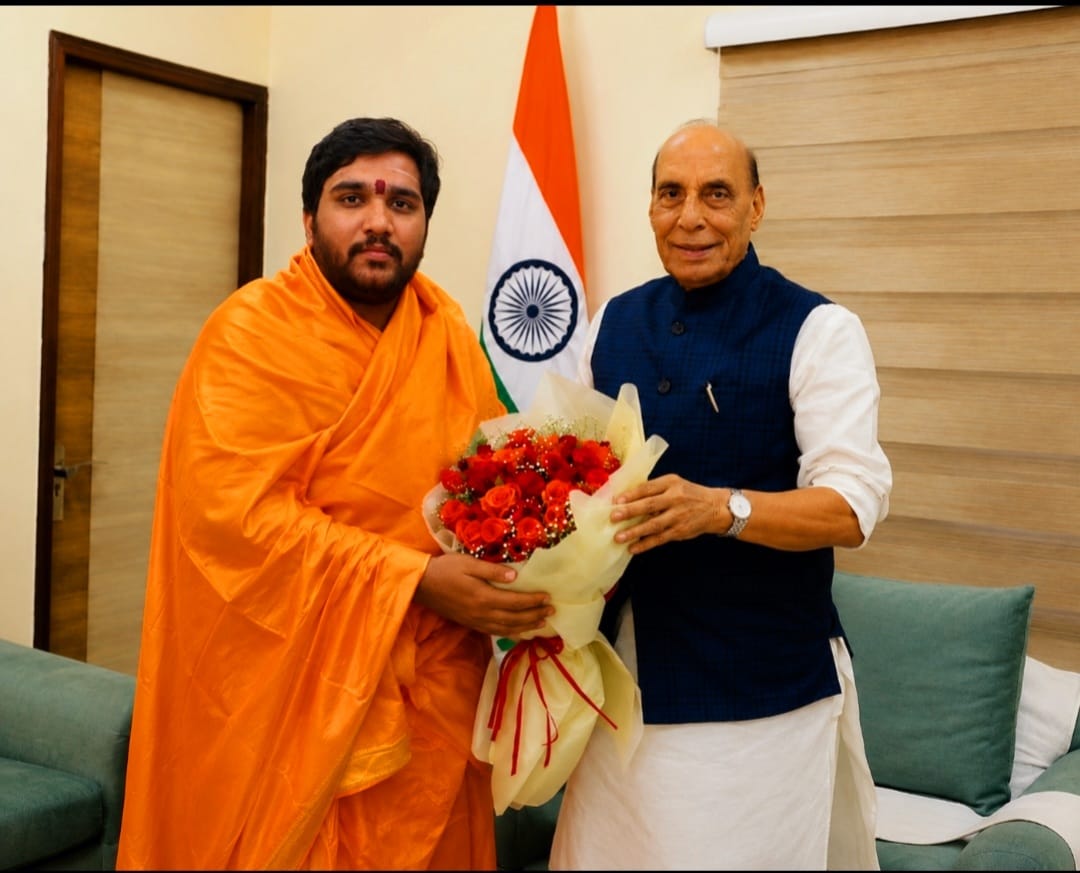
Interaction with Union Defence Minister Rajnath Singh
Dr. Umaswami has stated that he has had the opportunity to meet and interact with senior figures in India’s central government, including Union Defence Minister Rajnath Singh, whom he describes as having appreciated his work in the field of astrology and community service. He cites the interaction as a notable moment in his professional journey and one that he says has encouraged him to continue his work at a wider level. As with the other client and recognition claims referenced in this profile, this account of the meeting rests on Dr. Umaswami’s own description and has not been independently verified through official government sources.
Areas of Consultation
Dr. Umaswami’s practice centres on Vedic astrology, or Jyotish, applied across the areas his clients most commonly bring to him: horoscope and Kundali analysis, marriage and relationship compatibility matching, career and business guidance, health-related astrological consultation, and remedial measures such as pujas intended to address specific planetary doshas or obstacles a client may be facing. This range mirrors the typical scope of a full-service Vedic astrology practice in South India, where horoscope matching ahead of marriage and dosha-related remedial pujas remain among the most frequently requested services.
Recognition and Honorary Doctorate
Dr. Umaswami has been conferred an honorary doctorate in astrology by Missouri State University in the United States of America, a recognition he cites as validation of his years of study and contribution to the field of astrology. He often uses the “Doctor” title alongside his name in professional settings, presenting it as an acknowledgment of his long-standing commitment to the discipline. As with honorary doctorates generally, this recognition reflects the awarding institution’s own criteria and is distinct from an accredited academic doctoral degree earned through a formal, examined program of study — a distinction relevant to how the credential should be understood by the public.
He has also stated that he has received awards and recognitions from both state and central government bodies in acknowledgment of his work in astrology and community service, though specific award details have not been independently listed. Such recognitions, according to him, have reinforced his standing within the local astrology community and encouraged him to expand his practice further.
State President, NHRACCCI Foundation
Alongside his astrological practice, Dr. Umaswami holds the position of State President for Andhra Pradesh with the NHRACCCI Foundation, an organisation that describes itself as working on human rights protection and social welfare activities. According to membership documentation issued to him — a joining letter and member identity card dated 24 August 2026 — the foundation is registered as a Section 8 company with India’s Ministry of Corporate Affairs. This affiliation reflects the organisation’s own registration and internal membership process rather than a government appointment, and, as with the other recognitions described in this profile, has not been independently verified beyond the documentation provided.
Sri Gnanasaraswathi Vidhya Peetham
As the founder and CEO of Sri Gnanasaraswathi Vidhya Peetham, Dr. Umaswami leads an institution focused on imparting astrological knowledge and guidance to the public. The Vidhya Peetham, based in Vijayawada, functions as a hub for those seeking astrological consultation and learning under his mentorship.
The institution is positioned as both a consultation centre and a learning space, where interested individuals can approach Dr. Umaswami for personal readings as well as guidance on astrological concepts. He has indicated plans to continue expanding the reach of Sri Gnanasaraswathi Vidhya Peetham, with an emphasis on making traditional astrological knowledge more accessible to the wider public, including those outside Vijayawada seeking remote or online consultation.
About Vijayawada’s Growing Astrology Community
Vijayawada, one of Andhra Pradesh’s key cities, has long been home to a strong tradition of astrology and Vedic sciences. Practitioners like Dr. Umaswami continue to draw local and out-of-state clients seeking guidance rooted in traditional astrological practices, alongside a broader ecosystem of temples, Vedic pathashalas and spiritual institutions that has made the city and the wider Krishna-Guntur region a notable centre for traditional Telugu astrological practice.
The city’s continued association with astrology and spiritual counselling has allowed practitioners to build institutions, like Sri Gnanasaraswathi Vidhya Peetham, that combine consultation services with broader community engagement. As interest in astrology continues to grow across Andhra Pradesh — driven in part by the same online consultation trends reshaping the astrology industry nationally — figures such as Dr. Umaswami are likely to remain prominent voices within this space, drawing attention both for their claimed credentials and their standing among a large base of regular clients.
Frequently Asked Questions
What does Dr. Umaswami specialize in?
His practice centres on Vedic astrology (Jyotish), including horoscope and Kundali analysis, marriage compatibility matching, career guidance, and remedial pujas.
Where is Dr. Umaswami based?
He practices from Vijayawada, Andhra Pradesh, and originally hails from Pedakurapadu village in Palnadu district.
What is Sri Gnanasaraswathi Vidhya Peetham?
It is an astrology consultation and learning institution in Vijayawada founded and led by Dr. Umaswami.
Is Dr. Umaswami’s doctorate an accredited academic degree?
He holds an honorary doctorate conferred by Missouri State University, USA, which he presents as recognition of his contribution to astrology; this differs from an accredited academic doctorate earned through a formal examined program.
What is Dr. Umaswami’s role with the NHRACCCI Foundation?
He serves as State President for Andhra Pradesh with the NHRACCCI Foundation, an organisation focused on human rights protection and social welfare, according to membership documentation issued to him.
How long has Dr. Umaswami been practising astrology?
He states he has been practising and studying astrology for more than 10 years.

Mumbai, 23 August 2026: The Professional Travel Agents and Hotels Association (PTAHA) proudly announces the grand success of its participation at TTF Mumbai 2026, held from 20th to 22nd August 2026 at Jio World Convention Centre, Mumbai.
The three-day travel trade event marked a significant milestone for PTAHA, as the association successfully hosted its own dedicated PTAHA Pavilion, bringing together 12 participating members from across India under one platform. The pavilion provided members with an excellent opportunity to showcase their destinations, hotels, travel services, DMC operations and tourism products to travel trade professionals, buyers and industry stakeholders.
The successful participation reflects PTAHA’s continued commitment to creating meaningful business opportunities and providing its members with strong platforms for networking, promotion, branding and business development.
Speaking on the occasion, Mr. Rishi Deepak Budhadev, National President, PTAHA, expressed his gratitude to the organisers and partners who supported the association’s participation. Along with Mr. Suresh Nair, Vice President, PTAHA, he conveyed sincere appreciation to the entire TTF team and the organisations that have consistently supported PTAHA’s efforts to promote the tourism and hospitality industry.
PTAHA extends its heartfelt thanks to the organisers and teams behind leading travel trade platforms, including TTF, IITM, OTM, Holiday Expo, GTF and GTM, for their cooperation, professionalism and continued support. These organisations have played an important role in helping PTAHA access quality trade platforms and negotiate opportunities that enable association members to participate at competitive and beneficial rates.
“Our objective is not only to build an association, but to create genuine business opportunities for our members. By partnering with professional and experienced trade-show organisers, we are able to provide our members with ready platforms where they can showcase their businesses, connect with industry professionals and explore new markets,” said Mr. Rishi Deepak Budhadev.
PTAHA believes that participation in established and professionally managed travel trade exhibitions is an important part of strengthening India’s tourism ecosystem. Such events bring together travel agents, hoteliers, tour operators, DMCs, tourism boards, suppliers and buyers, creating opportunities for collaboration and business growth.
The association further stated that it will continue to actively participate in reputed travel trade exhibitions and industry platforms across India. PTAHA aims to use these opportunities to provide its members with greater visibility, stronger networking opportunities, destination promotion, business leads and access to new markets.
The successful PTAHA Pavilion at TTF Mumbai 2026 is another step forward in the association’s journey of building a strong and united network of travel agents and hotels across India.
PTAHA expresses its sincere gratitude to all participating members, event organisers, partners, supporters and visitors who contributed to making the Mumbai edition a memorable and successful event.
The association looks forward to creating many more such opportunities for its members and strengthening its presence at leading travel trade events across the country.
Professional Travel Agents and Hotels Association (PTAHA)
Mr. Rishi Deepak Budhadev
National President


Realme P4s 5G India launch date confirmed as August 26

I, Nobody releases on JioHotstar today, Prithviraj’s thriller streams now

IMD issues red alert for Delhi amid fresh heavy rain spell

Redfox Overseas: Customize Your Own Energy Drink and Stand Out in the Market

Zamzam Company CEO Chhote Bhai-Bade Bhai gave a grand welcome to Indian writer Devhari Sirvi in Dubai

Shikha Sharma: The Fashion Journalist, Blogger, and Plus-Size Model Taking the Industry by Storm
-
 Brandpost2 years ago
Redfox Overseas: Customize Your Own Energy Drink and Stand Out in the Market
-
 Brandpost2 years ago
Zamzam Company CEO Chhote Bhai-Bade Bhai gave a grand welcome to Indian writer Devhari Sirvi in Dubai
-
 Fashion2 years ago
Shikha Sharma: The Fashion Journalist, Blogger, and Plus-Size Model Taking the Industry by Storm
-
Entertainment1 year ago
Lucky Roxx’s “Yadav Ki Pukar” Goes Viral! Youth Celebrate Unity & Power
-

 Entertainment9 years ago
New Season 8 Walking Dead trailer flashes forward in time
-
Entertainment9 years ago
Meet Superman’s grandfather in new trailer for Krypton
-
 Brandpost2 years ago
From Local Hero to National Icon: Satyam Yadav’s Journey with TwentyOne
-
Uncategorized2 years ago
Hello world!