Business
IT stocks lift Sensex, Nifty in Wednesday’s opening session
IT stocks lifted the Sensex and Nifty higher in Wednesday’s opening session amid a rebound in crude oil prices.
Indian markets opened on a strong note on Wednesday, with the Sensex up 657.85 points, or 0.85 per cent, at 77,423.77, and the Nifty 50 higher by 191.3 points at 24,176.65.
The gains were led by IT stocks, with Infosys up 3.89 per cent, while L&T, TCS, Hindustan Unilever and Tech Mahindra also rose in early trade.
Sectorally, the Nifty IT index gained as much as 2.51 per cent and the Nifty FMCG index rose 1.52 per cent, even as most Asian markets traded weaker.
Power Grid was the biggest loser in early deals, down 0.67 per cent, with InterGlobe Aviation, Asian Paints, Maruti and Titan also among the decliners.
Market breadth favoured advancing stocks, with 1,837 gainers against 550 losers and 103 unchanged counters on the BSE.
The rally followed a rebound in crude oil prices after a roughly 14 per cent decline over three sessions amid heightened US-Iran tensions.
Institutional buying supported sentiment, with foreign institutional investors purchasing ₹755.33 crore worth of shares and domestic institutional investors buying ₹1,664.16 crore on July 28.
Traders were closely watching the US Federal Reserve’s policy decision expected later in the day, even as domestic indices posted solid opening gains.
The rise followed Tuesday’s flat finish, when the Sensex closed at 76,765.92 and the Nifty at 23,985.35 amid a fragile pause in US-Iran hostilities.
The India VIX volatility gauge had eased to 12.56 on July 28, down 0.79 per cent, with a firmer rupee and cooling geopolitical tensions supporting calmer sentiment ahead of Wednesday’s session.
Market watchers said the rebound in crude oil, after three straight sessions of sharp declines, had eased some of the concerns that had weighed on Indian equities earlier in the week amid the ongoing US-Iran tensions.
Sustained buying by domestic institutional investors in recent sessions has also been credited with cushioning Indian markets against bouts of volatility driven by global cues.
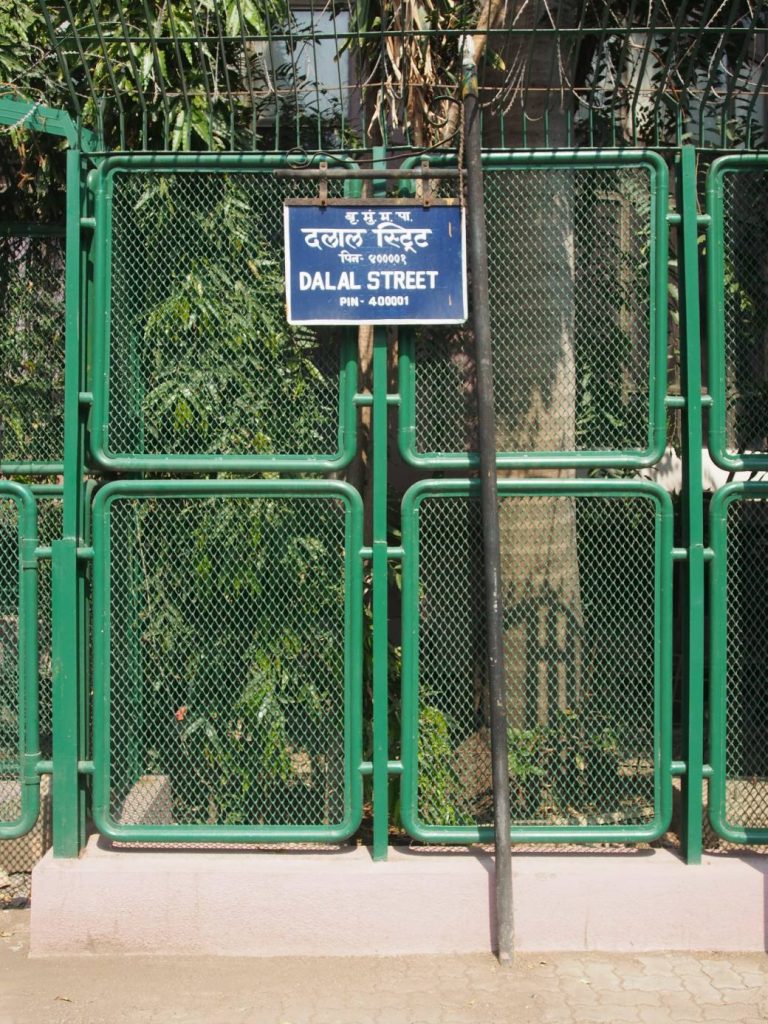
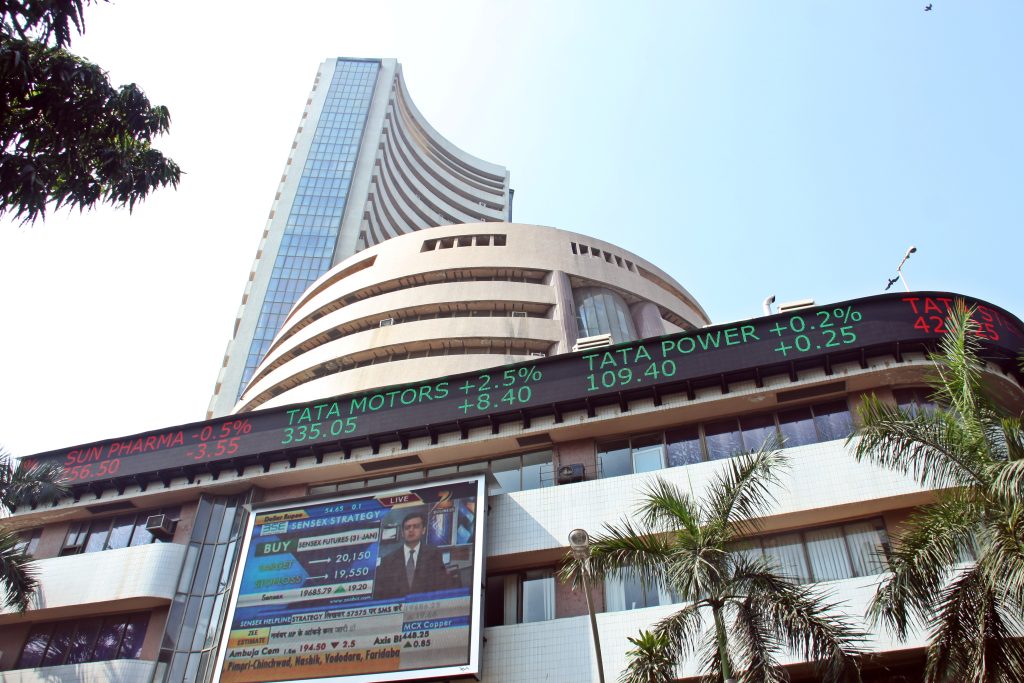
(Image: “BSE building at Dalal Street” by BSEINDIA, Wikimedia Commons, CC BY-SA 3.0)
Business
Sensex, Nifty slide as crude oil, Gulf tensions rattle investors
Sensex closed 382.62 points lower at 76,132.81 and Nifty settled at 23,779.15 on Monday, as rising crude oil prices and US-Iran tensions weighed on investor sentiment.
The Sensex and Nifty slid on Monday as rising crude oil prices and Gulf tensions rattled investors through the session.
The Sensex closed at 76,132.81, down 382.62 points from Friday’s 76,515.43, while the Nifty settled at 23,779.15, down 118.55 points from 23,897.70.
The US-Iran standoff around the Strait of Hormuz has kept crude prices elevated, a key concern for oil-importing economies like India.
Expectations of another Federal Reserve rate hike, following stronger US jobs data, also weighed on the broader market mood.
Stronger-than-expected US jobs data released over the weekend increased expectations that the Federal Reserve could raise interest rates again, further denting risk appetite in emerging markets including India.
The Nifty had struggled to sustain above the 24,000 mark in recent sessions, facing technical resistance near 24,025 even before Monday’s decline.
Both benchmark indices had closed higher in the previous session on Friday, with the Sensex at 76,515.43 and the Nifty at 23,897.70, before Monday’s reversal.
Bank Nifty and other rate-sensitive indices also traded weak through the session, tracking the broader risk-off mood among investors.
Market participants said they would watch upcoming US Federal Reserve commentary and further developments in the Gulf region for cues on near-term direction.
Brent crude approached $97 a barrel during the session, its highest level in months, as the escalating US-Iran standoff around the Strait of Hormuz raised fears of supply disruption from the Gulf.
IT stocks were the worst-hit sector, since higher US interest rates weigh on Indian technology firms that generate a large share of their revenue from American clients.
Oil-sensitive sectors including aviation, paints, tyres and logistics also came under pressure as elevated crude prices raise input and fuel costs for these industries.
Foreign institutional investors were net sellers in Indian equities during the session, adding to the downward pressure alongside the global cues.
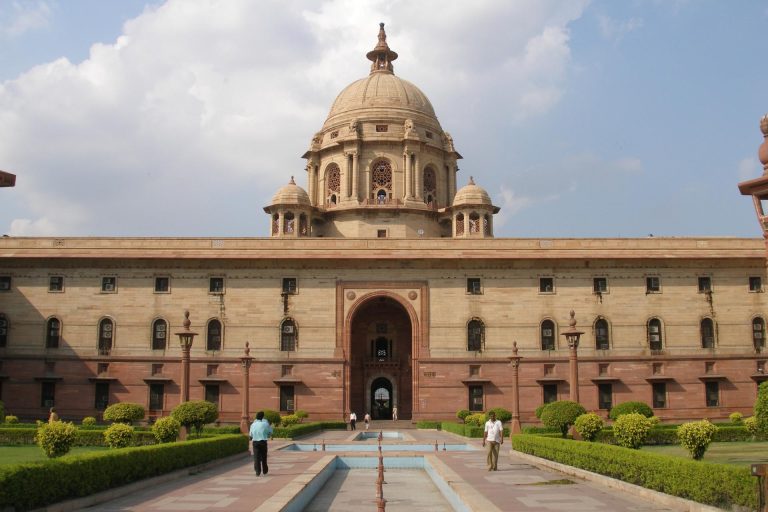
Bombay Stock Exchange building, Mumbai, Wikimedia Commons, CC BY 2.0
Business
SEBI gives green light to NSE’s Rs 30,000 crore IPO
SEBI issued its observation letter clearing NSE’s roughly Rs 30,000 crore IPO on September 4, ending a decade-long regulatory delay tied to the co-location scandal.
SEBI has given the green light to NSE’s roughly Rs 30,000 crore IPO, issuing its observation letter on September 4.
The approval ends a decade-long delay caused by the co-location scandal, which had repeatedly held back the exchange’s public listing plans.
The offer-for-sale issue opens for subscription on September 15, with a BSE listing expected around September 24-25.
NSE will list on the rival BSE rather than its own platform, as exchange rules bar it from trading on itself.
The clearance came a day after the Supreme Court dismissed SEBI’s appeals against NSE in cases linked to the co-location data centre and dark-fibre matters.
Because exchange regulations prevent NSE from listing on its own trading platform, the exchange will debut on the rival Bombay Stock Exchange instead.
The IPO involves an offer of approximately 149 million equity shares, with the overall issue size estimated at around Rs 30,000 crore.
Life Insurance Corporation of India is expected to retain its stake in NSE through the listing, even as several other existing shareholders use the offering to cash out.
The IPO is set to rank among the largest public offerings in Indian stock market history once it completes, given the scale of the offer and NSE’s dominant position in domestic exchange trading.
NSE has long been the largest stock exchange in India by trading volume, making its public listing a closely watched event for both retail and institutional investors.
The approval clears a decade-long regulatory fight tied to the co-location scandal, which had repeatedly delayed the exchange’s plans to go public.
NSE eventually settled with SEBI, paying roughly Rs 1,491 crore, about $155 million, to resolve the matter and clear the path for the IPO.
India’s Supreme Court dismissed SEBI’s appeals against NSE in cases tied to the co-location data centre and dark-fibre matters on September 3, removing a major hurdle just a day before the observation letter was issued.
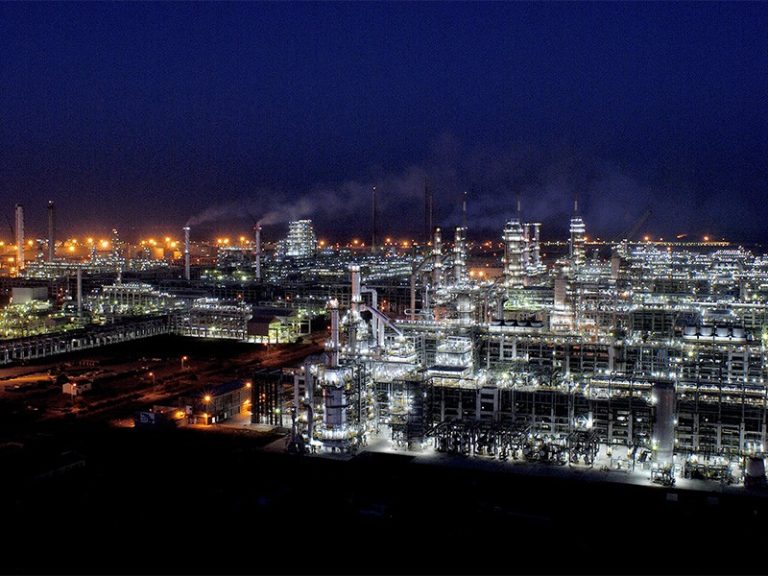
Photo of the NSE building, Wikimedia Commons, CC BY-SA 4.0
Business
Sensex falls 374 points, Nifty below 23,915 on oil, bond yield spike
The Sensex fell 373.93 points to 76,570.35 on Tuesday as a spike in oil prices and rising bond yields hit investor sentiment, with the Nifty50 down 141.35 points at 23,914.45.
The Sensex fell 373.93 points, or 0.49%, to 76,570.35 on Tuesday, weighed down by a spike in oil prices and rising bond yields.
The Nifty50 closed at 23,914.45, down 141.35 points, or 0.59%, as benchmark indices posted their third straight day of losses.
Overnight strikes exchanged between the US and Iran fuelled fears of oil supply disruptions from the Strait of Hormuz, lifting Brent crude 0.76% to $95.37 a barrel.
Nifty Auto was the worst performer among sectors, down 2%, with IT and Media stocks also lagging, while Oil and Gas, PSU Bank and Realty held up.
Eicher Motors, Wipro and Bajaj Auto featured among the biggest losers on the Nifty50 as rising bond yields dented investor appetite for equities.
Eicher Motors, Wipro and Bajaj Auto were among the top losers on the Nifty50 index during the session.
Broader markets also came under pressure, with the Nifty MidCap index ending 0.53% lower and the Nifty SmallCap index down 0.37%.
This marked the third straight session of losses for the benchmark indices, as rising bond yields further dented investor risk appetite.
Rising bond yields typically make fixed-income investments more attractive relative to equities, prompting some investors to shift allocations away from stocks.
Markets will be closely watching for further developments in the Middle East, given the direct link between regional tensions and global crude oil supply concerns.
The US and Iran exchanged strikes overnight, intensifying fears of further supply disruptions from the Strait of Hormuz, a key global oil shipping route.
Brent crude rose 0.76% to $95.37 per barrel during the session, adding to inflation concerns among investors.
Nifty Auto was the worst-hit sectoral index, declining 2%, with Nifty IT and Nifty Media also underperforming during the session.
In contrast, Nifty Oil and Gas, PSU Bank and Realty indices outperformed, providing some counterbalance to the broader market decline.
Photo of the Bombay Stock Exchange building, Wikimedia Commons, CC BY 2.0
-
Brandpost2 years agoRedfox Overseas: Customize Your Own Energy Drink and Stand Out in the Market
-
Brandpost2 years agoZamzam Company CEO Chhote Bhai-Bade Bhai gave a grand welcome to Indian writer Devhari Sirvi in Dubai
-
Fashion2 years agoShikha Sharma: The Fashion Journalist, Blogger, and Plus-Size Model Taking the Industry by Storm
-
Entertainment1 year ago
Lucky Roxx’s “Yadav Ki Pukar” Goes Viral! Youth Celebrate Unity & Power
-
Entertainment9 years agoNew Season 8 Walking Dead trailer flashes forward in time
-
Entertainment9 years agoMeet Superman’s grandfather in new trailer for Krypton
-
Brandpost2 years agoFrom Local Hero to National Icon: Satyam Yadav’s Journey with TwentyOne
-
Uncategorized2 years ago
Hello world!