
Brandpost
Pandit Naviin Gandharv: The Fifth-Generation Musician Keeping the Rare Belabaharr Alive


Mumbai — Among the handful of artists in India carrying forward truly rare musical instruments, Pandit Naviin Gandharv occupies a singular place. As the leading exponent of the Belabaharr, a bowed instrument that exists almost nowhere else in Indian classical music, Gandharv has spent more than three decades building a career that bridges an inherited family legacy with his own artistic innovation.
Born on 20 December 1976 in Nevri Village, Dewas, Madhya Pradesh, Pandit Naviin Gandharv comes from a family with deep and unusual musical roots. He belongs to the fifth generation of a lineage of Sarangi players and vocalists, a heritage that inspired him to continue the legacy despite a series of challenges along the way. Though he began formally training in music at the age of 16, he was able to grasp its essence quickly, something he credits to the musical genes running through his family.
A Lineage Built on the Sarangi and the Tabla
Gandharv’s musical inheritance runs through both sides of his family. His paternal grandfather, Pandit Kashiram Gandharv, was a celebrated Sarangi maestro, while his maternal grandfather, Pandit Mansingh, was accomplished across Sarangi, Tabla, Harmonium and vocal music. Growing up surrounded by this concentration of classical training, Gandharv absorbed an unusually broad musical foundation before he had even begun to specialise in the instrument that would come to define his career.
His Tabla training began under Pandit Vishwanath Mishra, and he later trained under the legendary Ustad Allarakha, an association that shaped his rhythmic foundation before he went on to specialise further. That specialisation was also shaped by years of listening to legendary artists such as Pandit Ram Narayan and Ustad Rais Khan, among many others, including his father and Guru, Pandit Babulal Gandharv, a Top Grade Artist of All India Radio, who in 1980 invented the Belabaharr — the rare bowed instrument that Pandit Naviin Gandharv has since dedicated his life to mastering and popularising.
The Belabaharr: An Instrument Unlike Any Other
The Belabaharr is not simply another addition to the Indian classical instrument family; it represents a distinct act of musical invention. Combining expressive qualities associated with both the Sarangi and the Violin, and layering in lyrical nuances reminiscent of the human singing voice, the instrument occupies a sonic space of its own. Few instruments in Indian classical music carry such a direct, single-family lineage from invention to present-day performance, and Pandit Naviin Gandharv has spent decades ensuring that lineage continues.
Through years of dedicated performance and experimentation, he has introduced the Belabaharr’s distinctive voice to prestigious cultural platforms across India and internationally, positioning himself as both custodian and ambassador of an instrument that exists almost nowhere outside his family’s tradition.
Equally at Home on the Tabla
While the Belabaharr defines much of his public identity at present, Pandit Naviin Gandharv is also an accomplished Tabla soloist, bringing melody and rhythm together with what listeners and critics have described as exceptional versatility. His musical range extends well beyond a single genre, spanning Hindustani Classical Music, Ghazal, Bhajan, Folk, Sufi, Fusion, EDM collaborations, Film Music and various regional musical traditions.
This range allows him to move fluidly between an extended, meditative Belabaharr recital and an intricate, rhythmically complex and authentic Tabla solo, often within the same performance season, reflecting an artist equally comfortable in contemplative and high-energy musical settings.
A Career Spanning Three Decades and Prestigious Stages
Over more than 30 years, Pandit Naviin Gandharv has performed at some of India’s most recognised cultural institutions and venues, including NCPA, ICCR, NMACC, industrialist Mukesh Ambani’s Antilia, industrialist Gautam Adani’s Shantivan, Essar Group events, Lakmé Fashion Week, IMG, St. Xavier’s College and Sanskriti Upvan, alongside numerous other prestigious festivals and events.
One of the defining moments of his career came when he was invited to perform during the welcome ceremony for the Prime Minister of the United Kingdom, Sir Keir Starmer, hosted by the Hon’ble Prime Minister of India, Shri Narendra Modi. The performance drew widespread appreciation and was subsequently shared across prominent social media and news platforms, introducing the Belabaharr’s distinctive sound to an international audience far beyond India’s classical music circles.
Founder of Anuraaj Classical Band
Beyond his personal performance career, Pandit Naviin Gandharv founded the Anuraaj Classical Band with a larger artistic vision in mind — bringing the richness of Indian classical traditions into contemporary musical spaces while creating opportunities for young and emerging musicians to perform, learn and grow alongside established artists.
Through this initiative, Gandharv has worked to demonstrate that Indian musical heritage can remain deeply rooted in tradition while continuing to evolve, inspire and reach new generations of listeners. His broader vision extends beyond performance itself, toward building a respected global platform for Indian arts, artists and musical traditions to be recognised on the world stage.
A Living Bridge Between Generations
What distinguishes Pandit Naviin Gandharv’s story is the direct, unbroken thread running from his grandfather’s Sarangi mastery, through his father’s invention of the Belabaharr, to his own decades of performance and guiding young, enthusiastic musicians. Few contemporary Indian classical musicians can point to a family history so closely tied to the actual creation of the instrument they play, and Gandharv has built his entire public identity around honouring and extending that inheritance.
As he continues to perform across India’s leading cultural institutions and mentor a new generation of musicians through Anuraaj Classical Band, Pandit Naviin Gandharv remains one of the clearest examples of how a single family’s musical vision can grow, over five generations, into a distinct and enduring artistic tradition.
Upcoming Performance in Mumbai
Pandit Naviin Gandharv’s next major public appearance is at St. Xavier’s College for “MKP — Malhar Ke Prakaar,” a special Indian classical music programme presented by the Indian Music Group (IMG) in Mumbai on 12 September 2026, beginning at 5:00 PM. The evening explores the many emotional expressions of the monsoon through the Malhar ragas.
The programme will open with a vocal performance by Shri Viraj Joshi, grandson of Bharat Ratna Pandit Bhimsen Joshi and son of Shri Shrinivas Joshi, accompanied by Shri Madhav Limaye on the Harmonium and Shri Mandar Puranik on the Tabla, followed by a Belabaharr recital by Pandit Naviin Gandharv, who will be accompanied by the promising and highly talented Shri Soham Gorane on the Tabla, a promising talent and disciple of Pandit Yogesh Samsi.
The programme will be held at St. Xavier’s College, located at 5, Mahapalika Marg, opposite Metro Cinema, Dhobi Talao, Fort, Mumbai, Maharashtra 400001. [1]
Follow Pandit Naviin Gandharv
Those interested in following Pandit Naviin Gandharv’s performances, recordings and updates on the Belabaharr can connect with him through his official Instagram page, or reach out directly for bookings and enquiries:
Instagram: https://www.instagram.com/naviingandharvbelabaharr?stkn=cWxnajJ2OTYwdXR6
Contact: 9820207827
Email: belabaharr@gmail.com
[1] St. Xavier’s College, Mumbai: https://xaviers.edu/
About Pandit Naviin Gandharv
Pandit Naviin Gandharv is a fifth-generation Indian classical musician, celebrated Belabaharr exponent, distinguished Tabla soloist and founder of Anuraaj Classical Band. Born in Nevri Village, Dewas, Madhya Pradesh, he carries forward a musical legacy that spans his grandfather Pandit Kashiram Gandharv, his maternal grandfather Pandit Mansingh, and his father and Guru, Pandit Babulal Gandharv, inventor of the Belabaharr. Over a three-decade career, he has performed at leading Indian cultural institutions and international platforms, including a performance during the welcome ceremony for the UK Prime Minister hosted by the Prime Minister of India.
Brandpost
Nirvana Naturopathy & Retreat, Biological Age: Can Lifestyle Choices Help Slow the Body’s Ageing Clock?

When Your Body Tells a Different Story
Your birth certificate records your age with absolute certainty. Your body, however, may tell a more nuanced story. Two people can be the same age chronologically and yet appear to be living in entirely different physical realities. One may wake up feeling energetic, sleep well, move with ease and recover quickly after exertion, while the other may struggle with fatigue, stiffness, poor sleep, excess weight and a persistent sense that the body is ageing faster than it should. This difference is at the heart of the growing conversation around biological age—an attempt to understand how old the body appears to be functioning, rather than simply counting the years since birth.
Understanding Biological Age and Healthy Ageing
Ageing, after all, is not merely a matter of birthdays, grey hair or wrinkles. It is a complex biological process involving changes at the cellular and physiological level. Contemporary research is increasingly examining biomarkers and epigenetic changes, including patterns of DNA methylation, to understand why some individuals appear to age faster or slower than others. This field is still evolving, and biological-age testing should not be treated as an infallible medical verdict. Yet the broader message emerging from ageing research is difficult to ignore: lifestyle can influence many of the conditions under which ageing occurs.
Modern Lifestyle and the Hidden Burden on the Body
That message has particular relevance in today’s India, where modern life has quietly changed the way people eat, work, sleep and move. Long hours at a desk, constant digital stimulation, irregular meals, highly processed food, inadequate physical activity, chronic stress and insufficient sleep have become normalised in urban life. The body often compensates for these habits for years before the accumulated burden becomes visible. What we dismiss as “normal ageing” may sometimes be the consequence of years of lifestyle imbalance.
27 Years of Naturopathy Experience
For the past 27 years, I have been working in the field of naturopathy, and at Nirvana Naturopathy and Retreat, Igatpuri, Nashik, our approach has consistently centred on the relationship between lifestyle and wellbeing. Over the last 12 years at Nirvana, one observation has remained particularly clear to me: meaningful change rarely comes from one dramatic intervention. It comes when a person begins to change the environment in which the body has to function every day. The objective is not to fight age, but to support the body in functioning better as the years progress.
The Naturopathic Perspective on Wellness
This is where naturopathy can offer a valuable lifestyle-oriented perspective. Naturopathy does not promise to stop the ageing process, nor should natural therapies be presented as substitutes for necessary medical diagnosis or treatment. Its strength lies in bringing attention back to fundamentals that are often overlooked in a technology-driven healthcare culture: food, movement, rest, hydration, stress management, exposure to nature and appropriate supportive therapies.
Hydrotherapy and Mud Therapy as Supportive Practices
Hydrotherapy, for instance, uses water through different applications and temperatures and has a long history within natural healing traditions. Depending on the technique and the individual, water-based therapies may support relaxation, circulation, mobility and physical comfort. Similarly, mud therapy, another traditional naturopathic practice, has been explored in relation to musculoskeletal discomfort and other wellness applications. These therapies are not magic solutions, but when appropriately selected and combined with broader lifestyle correction, they can become part of a structured wellness programme.
The Role of Naturopathy Massage and Recovery
The same principle applies to naturopathy massage. Different therapeutic massage approaches can help promote relaxation, ease muscular tension and create a much-needed transition from the constant stimulation of modern life towards physical and mental recovery. This is increasingly important because today’s problem is often not simply physical inactivity. Many people are physically still for much of the day while their nervous system remains permanently switched on. They sit for hours, remain connected to phones and laptops late into the evening, carry professional pressures home and rarely give themselves genuine periods of recovery. The body may be stationary, but the mind is continuously running.
Diet Correction for Sustainable Health
Diet correction is another important part of this conversation. Healthy ageing does not require extreme diets, prolonged fasting or fashionable detox programmes. More often, it requires returning to sensible fundamentals: reducing excessive dependence on highly processed foods, improving dietary variety, paying attention to portions, maintaining adequate hydration, increasing appropriate fibre-rich foods and developing more consistent eating patterns. The goal should not be a temporary diet that produces short-term results, but a sustainable relationship with food that a person can maintain for years.
Prevention: Asking the Question Earlier
People often begin thinking about their health only after the body starts sending unmistakable warning signals. By then, the question becomes, “What should I do about this problem?” A more mature approach is to ask earlier, “What can I change before this becomes a problem?” This shift from treatment-oriented thinking towards prevention is one of the most important conversations in modern wellness.
Can Lifestyle Slow the Biological Clock?
Can lifestyle actually slow the biological clock? The honest answer is that science has not discovered a proven formula for reversing human ageing, and biological-age clocks themselves remain an evolving area of research. There is no responsible basis for promising that a particular therapy, supplement, diet or retreat can make a person biologically younger. What science does strongly support, however, is the importance of regular physical activity, nutritious food, adequate sleep, healthier body composition, stress management and avoidance of harmful habits in promoting healthier ageing.
Beyond the Number: What Biological Age Can Teach Us
Perhaps the most meaningful discussion around biological age should not be about finding a number that makes us feel younger. It should be about understanding what that number, if measured appropriately, is trying to tell us about the way we live. If the body is constantly exhausted, sleep is poor, movement is limited and food choices are consistently working against health, the answer is unlikely to be found in an anti-ageing cream or another quick fix. It is more likely to begin with a change in daily habits.
Healthy Ageing Is About Living Better, Not Defeating Time
After 27 years in naturopathy, I believe healthy ageing is less about trying to defeat time and more about learning how to live intelligently with it. Hydrotherapy, mud therapy, naturopathy massages and personalised diet correction can have a meaningful place within that journey when they are used thoughtfully and as part of a broader lifestyle approach. The real transformation happens when the lessons learned during a wellness programme continue into everyday life.
A Better Question for the Future
Your birth certificate will never change. Nor should it. Age is not something to hide or apologise for. What can change is the quality with which we experience each passing decade. The real achievement is not looking twenty years younger; it is reaching the next decade with greater strength, mobility, clarity, resilience and independence. Perhaps, therefore, the better anti-ageing question is not, “How can I look younger?” It is much more consequential: “What can I do today to help my body function better for longer?” That is where the conversation about biological age becomes more than a scientific curiosity. It becomes a conversation about how we choose to live.
Website: www.nirvananaturopathy.com
Brandpost
Manisha Sarma: The Assamese Writer Who Walked Into Sonagachi to Give Voice to the Voiceless
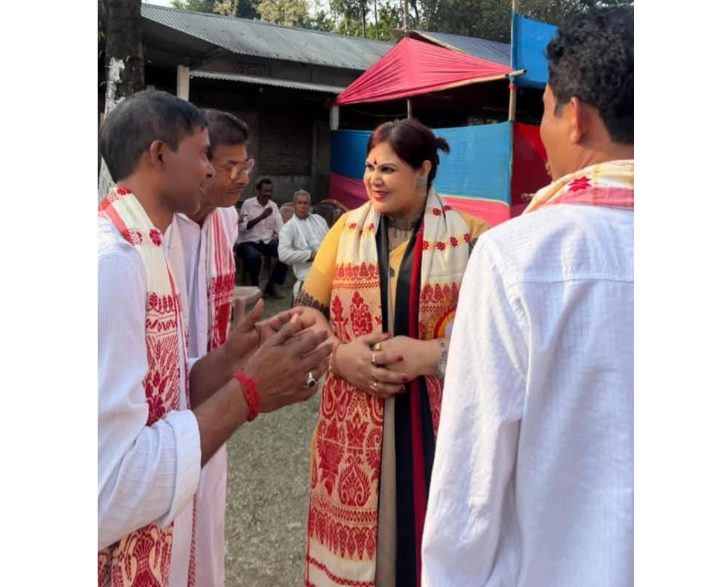
Guwahati — In contemporary Assamese literature, few voices carry the combination of courage, versatility and empathy found in the work of writer, journalist and social worker Manisha Sarma. Hailing from Jalukbari, Guwahati, Sarma has built a distinct literary identity over the past decade, one defined less by comfortable observation than by direct, often dangerous, immersion in the lives of the communities she writes about.
While her body of work already spans poetry, short stories, novels, plays and essays, it is her approach to research that has drawn particular attention. Refusing to write about marginalised lives from a distance, Sarma has repeatedly stepped into restricted and stigmatised spaces to gather her material firsthand, pushing past social taboos in the process.
A Foundation Built on Values and Resilience
Manisha Sarma is the daughter of educator and writer Nripendra Nath Sarma and Bharati Devi, and she grew up in a household shaped by academic rigour and a strong sense of social responsibility. Her own path to a literary career, however, was not a straightforward one. Financial and family hardships interrupted her education at various points, and she married businessman JituMani Sarma early, in 2002.
Rather than closing the door on her ambitions, marriage marked a turning point supported by those around her. With the backing of her husband, her family and eventually her son, Sarma went on to complete her Master’s degree after marriage, before fully committing herself to literary and social work — a decision that would come to define the following two decades of her life.
Fearless Fieldwork in Restricted Spaces
What sets Sarma apart from many of her literary peers is her insistence on direct, ground-level research, even when that research takes her into some of the most sensitive and difficult environments in the country. Most notably, she has conducted fieldwork in heavily restricted red-light districts, including Kolkata’s Sonagachi, one of Asia’s largest red-light areas, along with several other similarly taboo locations.
As a woman entering these spaces, Sarma’s presence itself represented a boundary being tested. Rather than observing from a distance, she spent time directly interacting with sex workers in these communities, listening to their lived realities and documenting their daily struggles with what has been described as profound dignity. Her stated approach has consistently avoided judgment, framing her work instead around two goals: authentically researching the conditions faced by these communities for her writing, and using her platform to actively advocate for their human rights and welfare.
An Investigative Spirit Across Regions and Themes
Sarma’s fieldwork is not limited to red-light districts. Her investigative approach has taken her across a wide range of regions and social themes, each feeding directly into a specific body of published work.
- Red-Light Districts & Marginalised Lives — Groundwork conducted in Sonagachi and other restricted areas inspired powerful writings that highlight human suffering, resilience and rights within these communities.
- Cultural & Regional Studies — Immersive research across Mathura, Vrindavan and Gokul in Uttar Pradesh produced Braj Bhumir Baibhav, while her exploration of Assam’s local folklore, centred on Mayong, resulted in Chonokar Rod.
- Human-Wildlife Conflict — Field investigations into the ongoing human-elephant conflict in Assam led to her acclaimed book Hati Aru Phandi as well as the script for the film Manuh Khowa Hati.
A Prolific and Recognised Literary Career
Sarma’s writing career began with her first poetry publication in Asamiya Pratidin, and has since grown into a substantial body of stories, novels, plays and essays published across more than a decade. Her notable works include Sukhor Madakatat Dukhor Banya (2014); Rodon, Kalcakra, Samay Sanglap, Rupali Jonak and Jonakar Borosun, all published simultaneously in 2018; Mon Ciyahir Rong (2020) and Kathopakathan (2021); Nishiddha Duwar alongside the bestseller Teje Dhowa Kolijar Ucupani (2022); and more recently, Jibanor Okowa Pokowa Aliyedi (2023) and Bhem (2024).
This substantial and varied output has earned Sarma a wide range of accolades. She received the Basanti Bordoloi Award (2020) from the Assam Sahitya Sabha for her novel Rodon, the Japan Ukiyoto Publishing Women Writer of the Year (2022), and the Babu Jagjivan Ram National Award (2022). More recently, she was named Best Novel of the Year at the National Sports and Cultural Festival (2026) and received recognition at the Kolkata International Micro Film Festival (2026) for Aadamkhor Hathi, a further extension of her work on human-elephant conflict into film.
A Voice for Change Beyond the Page
Sarma’s work extends well beyond her published writing. She currently serves as a journalist for Pragjyotish, bringing the same investigative instincts that shape her literary fieldwork into her reporting. Alongside this, she holds a leadership role as District Director for Kamrup Metro with the Human Rights International Organization, and serves as Bureau Chief of Assam for Rastra Sangbad Org.
In addition to these formal roles, Sarma remains actively involved with environmental, literary and youth organisations, reflecting a broader commitment to social engagement that runs parallel to, and often intersects directly with, her literary output.
Literature as a Tool for Social Transformation
Across her body of work, Manisha Sarma has consistently demonstrated that literature can function as more than an artistic exercise. By stepping into restricted spaces — from Sonagachi’s red-light district to the folklore-rich landscapes of Mayong and the conflict zones between humans and elephants in Assam — she has used her writing as a vehicle for documenting lives that might otherwise remain unseen.
Her approach, combining fearless fieldwork with a prolific literary output and an active role in journalism and human rights advocacy, has positioned her as a distinctive figure in contemporary Assamese literature. As her list of published works and accolades continues to grow, Sarma’s willingness to step past societal taboos in pursuit of authentic storytelling remains the defining thread running through her career.
About Manisha Sarma
Manisha Sarma is an Assamese writer, journalist and social worker based in Jalukbari, Guwahati. Known for her immersive field research into marginalised communities, including sex workers in Kolkata’s Sonagachi and the human-elephant conflict in Assam, she has authored numerous acclaimed novels, story collections, plays and essays. Her honours include the Basanti Bordoloi Award, the Japan Ukiyoto Publishing Women Writer of the Year, the Babu Jagjivan Ram National Award, and recognition at the National Sports and Cultural Festival and the Kolkata International Micro Film Festival. She currently works as a journalist for Pragjyotish and holds leadership roles with the Human Rights International Organization and Rastra Sangbad Org.
Brandpost
Veeir Chaudary’s ‘Hotel Hooneymoon Deluxe’ Creates Buzz, Web Series Gets Millions of Views on YouTube

Mumbai: Actor and Producer Veeir Chaudary is making a strong impact in the digital entertainment space with his latest web series ‘Hotel Hooneymoon Deluxe’, which he has released on his own YouTube channel ‘Veeir Chaudary’. Released in five chapters, the suspense-driven web series has been attracting viewers and has already received millions of views, creating a buzz among digital audiences.
What makes Hotel Hooneymoon Deluxe interesting is its combination of romance, mystery, suspense and survival. Inspired by a real incident, the story revolves around a couple who arrive at a hotel during their honeymoon, expecting to spend some memorable time together. However, their romantic trip soon turns into a terrifying experience when they find themselves trapped inside the hotel.
As the story progresses, the couple discovers the dark and disturbing history of the hotel. According to the storyline, several couples had stayed at the same hotel before them and were allegedly killed by the hotel staff. The couple is now faced with a frightening question — will they manage to escape the hotel, or will they become the next victims?
The five-chapter format allows the story to gradually unfold, keeping the suspense alive and encouraging viewers to continue watching to discover what happens next.
Veeir Chaudary has taken on multiple responsibilities for the project. Along with playing the lead character, he is also the producer of Hotel Hooneymoon Deluxe. His involvement both in front of and behind the camera reflects his expanding journey in the entertainment industry.
Before making his mark with digital content, Veeir Chaudary has been associated with 100+ songs across Hindi, Haryanvi and Punjabi music. He has also worked in numerous films, web series and short films. Some of his popular music projects include ‘Gangwarr’, ‘Strugglerr’, ‘Strugglerr 2’, ‘Thanedar’ and ‘Shooter Khakee Vardi’, among others.
The actor-producer is now also focusing on upcoming music and entertainment projects through his production house Veeir Filmz Entertainment.
His upcoming line-up includes the Hindi song ‘Piya Ree’, featuring Mansi Pandey and composed by Kaushal Mahavir, along with Haryanvi projects ‘Love Marriage’, ‘Jaat No. 1’ and ‘Bande’, where Veeir Chaudary will also be seen acting.
With Hotel Hooneymoon Deluxe receiving a strong digital response, Veeir Chaudary is steadily expanding his presence as an actor, producer and content creator, while bringing more original entertainment projects directly to audiences through his YouTube channel.


Pandit Naviin Gandharv: The Fifth-Generation Musician Keeping the Rare Belabaharr Alive

Nirvana Naturopathy & Retreat, Biological Age: Can Lifestyle Choices Help Slow the Body’s Ageing Clock?

Apple launch event tonight: iPhone 18 Pro, foldable iPhone in focus

Redfox Overseas: Customize Your Own Energy Drink and Stand Out in the Market

Zamzam Company CEO Chhote Bhai-Bade Bhai gave a grand welcome to Indian writer Devhari Sirvi in Dubai

Shikha Sharma: The Fashion Journalist, Blogger, and Plus-Size Model Taking the Industry by Storm
-
 Brandpost2 years ago
Redfox Overseas: Customize Your Own Energy Drink and Stand Out in the Market
-
 Brandpost2 years ago
Zamzam Company CEO Chhote Bhai-Bade Bhai gave a grand welcome to Indian writer Devhari Sirvi in Dubai
-
 Fashion2 years ago
Shikha Sharma: The Fashion Journalist, Blogger, and Plus-Size Model Taking the Industry by Storm
-
Entertainment1 year ago
Lucky Roxx’s “Yadav Ki Pukar” Goes Viral! Youth Celebrate Unity & Power
-

 Entertainment9 years ago
New Season 8 Walking Dead trailer flashes forward in time
-
Entertainment9 years ago
Meet Superman’s grandfather in new trailer for Krypton
-

 Brandpost2 years ago
From Local Hero to National Icon: Satyam Yadav’s Journey with TwentyOne
-
Uncategorized2 years ago
Hello world!