
Brandpost
Satyabhama Majhi: Odisha’s Artist Who Turns Soil into Stories and Walls into Memory


From Bhubaneswar’s marketplaces to Niyamgiri hills and the New Parliament, her art lives beyond the gallery – in community, ecology and everyday life
Bhubaneswar, Sept 11, 2026:* In a time when contemporary art is often limited to gallery spaces, Bhubaneswar-based artist *Satyabhama Majhi has spent over two decades taking art to the people – to market lanes, village walls, hill slopes, public spaces and school classrooms.
A contemporary visual artist, curator, social activist, community art practitioner and Secretary of Sasatwa Foundation, Majhi works across painting, sculpture, installation, photography, mixed media and public art. Her true medium is connection – between people and place, memory and modernity, tradition and today.
Early Life: The Market as First Studio
Majhi grew up in Bhubaneswar, observing everyday life around her father’s small shop in a local market. Vendors bargaining, festivals, neighbourhood ties, animals, the constant transformation of the city – this everyday theatre became her first art school.
As Bhubaneswar urbanised rapidly, old neighbourhoods and collective memories began to disappear. Majhi began archiving them. Her paintings are not portraits of one person, but crowded social landscapes of many people, animals, plants, buildings and rituals – a visual memory of a changing city.
She holds a *Master of Fine Arts (M.F.A.) in Traditional Art*, but her practice soon evolved into a multidisciplinary language.
The Niyamgiri Dialogue: 12 Years with Dongaria Kondh
The most defining chapter of her practice is her *more than a decade-long engagement with the Dongaria Kondh community of the Niyamgiri hills.*
It was not a project of documentation, but of listening and learning. She studied their livelihood, spirituality, their reverence for *Niyam Raja*, and their intimate relationship with forest and land.
This changed her art materially. Inspired by indigenous wall painting, she began making colours from the land itself – *chalk stone, charcoal, turmeric, geru soil and brown stone from Niyamgiri*, processed with natural binders. The hill itself became pigment.
From this engagement emerged two key concepts in her work:
1. The Triangle Motif: Taken from Dongaria visual culture and the silhouette of the Niyamgiri hills, symbolising stability, sacred geography and divinity.
2. “Up and Down”: Inspired by the daily journey of Dongria people climbing up and down the hills for water, market and rituals – a metaphor for human struggle, movement and resilience.
Two Core Concepts: Un-Urbanisation and Nature as Kin
Majhi’s recent philosophy is built on two ideas.
Un-Urbanisation: She reverses urban development on canvas – bringing trees, animals, village life back into the concrete city, asking what the city has forgotten.
Dongria Lifestyle with Nature: She shows that for Dongaria, nature is not a resource to be used, but a family to belong to – god, home and identity at once.
From Cuttack Walls to the Parliament of India
Public art is central to her belief that art should meet people on the street.
Her large-scale murals and interventions are visible across Odisha, including *Ring Road and Dagabara Sahi in Cuttack*, and works created for the *Men’s FIH Hockey World Cup and Asian Athletics Championships in Bhubaneswar.* Her community projects *Pago_ and _Thought Loom* transformed walls into dialogues.
In 2023, she served as Co-Sutradhar and creative contributor to _People’s Wall – Jan, Janani and Janmabhumi_, a landmark participatory art project commissioned by *Lalit Kala Akademi for the New Parliament House in New Delhi*, bringing together women artists and artisans from across India.
The Educator: 15 Years with Children
For about 15 years, Majhi has worked with children, tribal residential schools and children with disabilities through initiatives like *Kalpanadham* and in collaboration with *Gram Vikas and Tata Trusts.*
Her pedagogy is simple: “Don’t copy, remember.” Children are encouraged to draw from their own memories – their house, tree, animal, festival, village journey.
Recognition and Ongoing Show
Majhi’s works have been presented at *Bharat Bhavan Bhopal, Nature Morte Gurgaon, Lalit Kala Akademi New Delhi, Odisha Lalit Kala Akademi, Bhubaneswar Art Trail, Gram Art Project and Vancouver Biennale-linked projects.*
She is a recipient of the *Odisha Lalit Kala Akademi State Award (2012)* and the *National Lalit Kala Akademi Scholarship (2009-2010).*
Currently, her solo show *’Land as Memory, Matter as Landscape’ at artCENTRIX Space Gallery* brings together her journey – where soil is memory and landscape is story.
At its heart, Satyabhama Majhi’s practice asks one vital question in an age of rapid change: How do we keep our places, and our memories of them, alive?

Bangrod, Ratlam: A proud moment for Bangrod and Ratlam district unfolded as Kalyani Patidar achieved recognition in the London Book of World Records for completing the recitation of the Hanuman Chalisa in just 52 seconds. Her accomplishment reflects a combination of dedication, concentration, regular practice and a deep interest in India’s spiritual and cultural traditions.
Kalyani has been associated with devotional and cultural activities from an early age. Her interest in religious literature, Sanskrit verses, devotional songs, bhajans and Indian traditions encouraged her to develop her recitation abilities. Over time, consistent practice helped her improve her fluency, pronunciation, rhythm and confidence.
The 52-second recitation represents a distinctive accomplishment that required extensive preparation and familiarity with the complete text. Maintaining clarity and continuity while reciting at such speed demands considerable concentration and practice. Kalyani’s performance has therefore become a significant milestone in her journey and a source of happiness for those who have supported her.
In recognition of the achievement, Kalyani Patidar was presented with a World Record Certificate, Gold Medal, Memento and Certificate of Honour. The recognition has been warmly welcomed by her family and members of the local community.
Her accomplishment has also highlighted the continuing relevance of India’s devotional traditions. In an era where young people are increasingly exposed to diverse cultural influences, Kalyani’s achievement demonstrates how traditional interests can be pursued with dedication and transformed into meaningful accomplishments.
On the occasion of the felicitation ceremony, Mrs Universe Central Asia and World Record Brand Ambassador Dr. Divya Patidar honoured Kalyani Patidar and congratulated her on the achievement. Dr. Divya Patidar extended her best wishes for Kalyani’s bright future and appreciated her dedication towards Indian spiritual and cultural traditions.
Dr. Divya Patidar also emphasised the importance of supporting young talent and encouraging children and youth to remain connected with India’s rich heritage. She noted that spirituality, literature, music and traditional knowledge form an important part of India’s cultural identity and that dedicated young individuals can help carry these traditions forward.
The achievement has received appreciation from educators, social workers, cultural enthusiasts and prominent citizens from the region. Several well-wishers congratulated Kalyani and expressed their hope that she will continue to develop her talents and achieve further milestones.
Kalyani Patidar’s recognition in the London Book of World Records has added a memorable chapter to the cultural achievements associated with Bangrod and Ratlam. Her 52-second Hanuman Chalisa recitation stands as an example of what can be achieved through focused preparation, discipline and dedication.
Her accomplishment has brought pride to her family and community while offering an encouraging message to young people: passion becomes a powerful strength when combined with practice, perseverance and commitment.
Brandpost
YASHAS Para Sports Academy and Affectionate Hands Support Visually Impaired Cyclists at L’Étape Mysuru 2026
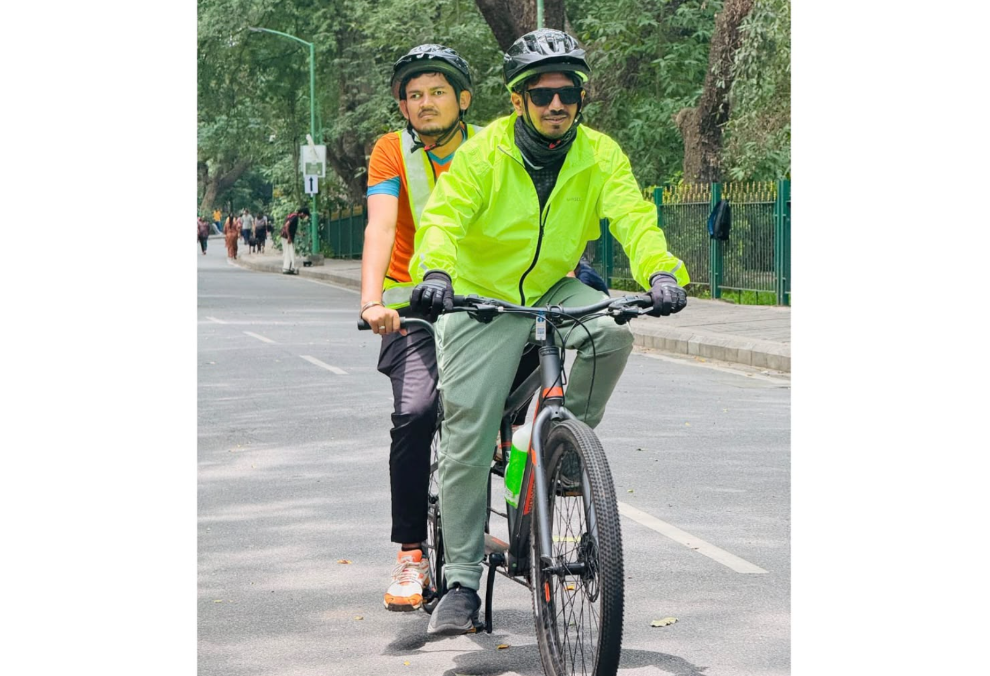
Mysuru, October 2, 2026: In a significant move for inclusive sport, YASHAS Para Sports Academy (R) and Affectionate Hands are facilitating the participation of visually impaired cyclists Hemanth HKM and Swetha T, along with their tandem Captains Mohammed Suhaib and Bharath, in the 20 km category of L’Étape Mysuru by Tour de France 2026. The initiative brings tandem cycling into a mainstream sporting environment while highlighting the role of structured training, volunteer support and inclusive participation.
Tandem Cycling Built on Trust, Training and Teamwork
Hemanth and Swetha, together with their respective Captains, have been training regularly at Cubbon Park in Bengaluru, covering approximately 25–30 kilometres every Sunday. Tandem cycling requires close coordination between the visually impaired cyclist and the Captain, with communication, rhythm, balance and mutual trust playing a central role throughout the ride.
The regular training has helped the participants prepare for the demands of a longer organised cycling event while also creating an environment in which athletes and Captains can develop the teamwork needed for safe and confident participation.
Hemanth HKM Brings Endurance Experience to Tandem Cycling
Hemanth HKM, a visually impaired athlete associated with YASHAS Para Sports Academy, comes to the cycling event with substantial endurance-sport experience. He has completed four full marathons, seven half marathons, 21 10K races and three 5K races, covering more than 500 kilometres across organised running events.
His participation at L’Étape Mysuru marks a new chapter in that sporting journey. Moving from long-distance running into tandem cycling gives Hemanth an opportunity to explore another discipline while bringing the endurance, consistency and race experience developed through years of running.
Swetha T Expands Her Sporting Journey
Swetha T, also a visually impaired athlete, has established herself in para athletics. At the 34th State Para Athletics Championship 2026 in Karnataka, she won a Silver Medal in the 400 metres and a Bronze Medal in Shot Put in the visually impaired category.
Her participation in L’Étape Mysuru adds tandem cycling to her competitive sporting experience. The transition illustrates how athletes with disabilities can explore multiple disciplines when training opportunities, guidance and participation platforms are made available.
Building Wider Pathways Through YASHAS Para Sports Academy
YASHAS Para Sports Academy (R) works to identify, train and support visually impaired and para athletes through regular sporting opportunities and competition-focused preparation. Its current activities include Goalball, swimming for visually impaired athletes, tandem cycling and athletics, alongside other inclusive sports programmes.
The Academy’s approach centres on consistent training, community participation and connections with volunteers, Captains and supporters. By creating opportunities to compete and train, it aims to help athletes progress towards state, national and international-level sporting opportunities and pursue their wider sporting ambitions.
Affectionate Hands Strengthens the Inclusion Network
Affectionate Hands, founded by Mohammed Suhaib, has also been supporting inclusive activities involving visually impaired athletes. Suhaib has supported visually impaired champions for the past four years by running alongside them in marathons, taking them trekking and participating in inclusive programmes with YASHAS Para Sports Academy and Guide Runners India.
He has also received four International Awards for his short documentary on the graffiti clean-up at Dhanushkodi Rock, Melukote, and was honoured with the Visionary Leadership Award for setting up libraries at Melukote. His involvement reflects a broader focus on community-led initiatives that connect sport, volunteering and social participation.
A Collective Effort Behind the Mysuru Participation
The participation of Hemanth and Swetha has involved support from a wider group of individuals associated with inclusive sport. YASHAS Para Sports Academy and Affectionate Hands have acknowledged Reet D’Souza from NEB Sports, Manjunath Nagaraj, Meera Ashok, Dr. Bhumika Patel, Founder of Guide Runners India, and its members for their continued support and encouragement.
Such collaborations are particularly relevant to tandem cycling, where athletes depend on trained Captains, regular practice and a supportive sporting environment. The collective effort demonstrates how participation can become possible when organisations, volunteers and event stakeholders work together.
A Step Towards More Inclusive Mainstream Sport
The participation of visually impaired cyclists at L’Étape Mysuru 2026 highlights the importance of bringing athletes with disabilities into mainstream sporting spaces. For Hemanth and Swetha, the 20 km ride offers competitive exposure and an opportunity to extend their sporting experiences beyond their established disciplines.
For YASHAS Para Sports Academy and Affectionate Hands, the initiative reflects a continuing effort to create practical opportunities rather than limiting para-sport participation to specialised events. With regular training, appropriate support and access to competitions, visually impaired athletes can continue to develop skills, confidence and experience across different sporting disciplines.
Brandpost
Parkview Ventures Expands Founder Platform Across an 80-Company Portfolio and 10,000+ Accelerator Network

Since 2007, Parkview Ventures has worked alongside ambitious founders to build and support high-potential companies across industries and geographies. Led by a founder-focused investment philosophy, the firm combines capital deployment with strategic support, technology access and ecosystem connectivity. Parkview Ventures also reports a wider network of more than 10,000 accelerator and startup ecosystem partners, extending the resources available to founders beyond the firm’s direct portfolio.
Portfolio at a Glance
Parkview Ventures’ portfolio currently includes 80 companies, with nine new investments made in 2026. Since inception, the firm has invested approximately $1.27 billion, including $86 million during 2026. The companies in its portfolio have also raised substantial follow-on capital, recording approximately $3.4 billion since inception and $240 million during 2026.
The employment footprint associated with the portfolio is another part of the firm’s reported impact. Companies supported by Parkview Ventures have collectively created or retained approximately 9,800 jobs, including 1,150 jobs in 2026. These figures provide a broader view of the company-building activity surrounding the portfolio beyond investment totals.
Founder Support at the Centre
Founder support remains a central part of Parkview Ventures’ approach. The firm’s portfolio includes 14 repeat founders, while its platform reports more than 12,500 hours of founder support. Its broader ecosystem includes more than 340 co-investor relationships, over 85 strategic partners and a reported network of 10,000+ accelerator and startup ecosystem partners, giving founders access to capital, expertise, technology resources, partnerships and growth opportunities.
For early-stage companies, these connections can be particularly important as founders work through product development, customer acquisition, hiring, fundraising and market expansion. Parkview Ventures’ founder-focused model positions the investor relationship as an ongoing partnership that can extend beyond the initial financing round.
Technology and Sector Exposure
Technology and innovation account for a significant portion of the portfolio, with companies spanning artificial intelligence, enterprise software, healthcare, infrastructure, consumer technology and financial technology. The reported sector distribution includes 13 Artificial Intelligence companies, eight Enterprise Software companies, eight Healthcare companies and six Infrastructure companies.
The portfolio also includes four Consumer companies, three FinTech companies, one Deep Tech company and one Cybersecurity company, alongside 49 companies classified across other sectors. Parkview Ventures’ impact metrics further highlight 54 AI-native companies, reflecting the growing role of artificial intelligence across the wider portfolio.
Global Portfolio
Parkview Ventures has developed a geographically diverse portfolio across established and emerging technology ecosystems. The United States represents the largest concentration with 46 companies, followed by Europe with 13 companies, India with seven, the Middle East with six and Asia-Pacific with five. Three additional companies are represented across other regions.
This geographic spread gives the firm exposure to different startup markets, founder communities and technology ecosystems. For founders, a cross-border network can also create opportunities to access customers, investors, strategic partners and market knowledge beyond their immediate geography.
From Capital to Company Building
The firm’s approach extends beyond investment capital. Parkview Ventures describes its role around strategic support, ecosystem access and practical assistance as companies move from early concepts toward scalable businesses. This can include support around talent, go-to-market strategy, fundraising and product and engineering development.
That model reflects the realities of early-stage company building, where product-market fit may still be developing and founders are often making high-impact decisions with limited resources. The combination of capital, experience and relationships can provide founders with additional capabilities as they build teams, develop products and prepare for subsequent stages of growth.
A 10,000+ Accelerator and Startup Ecosystem Network
A major part of Parkview Ventures’ platform is its wider startup ecosystem. The firm reports relationships across a network of more than 10,000 accelerator and startup ecosystem partners, alongside co-investors, strategic partners, advisors and technology providers. For portfolio founders, this network can create additional routes to customers, infrastructure, startup programs, technical resources, follow-on capital and experienced operators.
The scale of this network is intended to complement direct investment rather than replace it. By connecting founders with relevant accelerators and ecosystem partners, Parkview Ventures can help companies identify specialized programs, market-entry opportunities, technology benefits and strategic relationships as they move from early product development toward growth.
Measuring Long-Term Impact
Parkview Ventures tracks its reported impact through several indicators, including investment activity, follow-on funding, employment, founder support and exits. Since inception, the portfolio metrics cited by the firm include 80 companies invested in, $1.27 billion in capital invested, $3.4 billion in follow-on capital raised, 9,800 jobs created or retained and 12 successful exits.
The firm’s broader impact metrics also reference 210 companies supported, while its founder-support platform records more than 12,500 hours of direct support. Parkview Ventures additionally reports a network of 10,000+ accelerator and startup ecosystem partners. Together, these measures present an investment platform focused on company development, ecosystem participation and long-term founder support alongside capital deployment.
2026 Activity Reflects Continued Deployment
In 2026, Parkview Ventures reports nine new investments and $86 million in capital deployed. Companies across its portfolio raised approximately $240 million in follow-on funding during the year, while 1,150 jobs were created or retained.
The latest figures add a current dimension to the firm’s longer operating history and show how its investment and founder-support activities continue to translate into portfolio development. The combination of new investments, follow-on capital and employment activity also reflects the multiple stages through which portfolio companies can progress.
The Founder-First Perspective
For Aris Step and Parkview Ventures, the underlying approach is built around the idea that early-stage investing is a long-term relationship. By combining capital with strategic guidance, ecosystem access and practical resources, the firm seeks to work alongside founders as they develop products, build teams, reach customers and prepare for future growth.
As technology continues to reshape industries and create new markets, early-stage investors have an opportunity to participate before companies become widely established. Parkview Ventures’ stated model places that early partnership at the centre of its approach, with a focus on supporting ambitious founders and technology-driven businesses over the longer term.
Looking Ahead
With 80 companies in its current portfolio, a global footprint, a reported network of 10,000+ accelerator and startup ecosystem partners, and continued investment activity in 2026, Parkview Ventures is positioned around a model that combines financing with founder support and ecosystem connectivity. Its reported metrics on follow-on funding, employment, exits and founder engagement provide additional measures of how the platform participates in company building.
For founders, the value of an early-stage investment relationship can extend beyond the capital itself. Access to experience, networks, strategic partners and practical support can become part of the journey from an early idea to a more established company. Parkview Ventures’ approach is built around that broader relationship, with long-term company building remaining a central theme.
Connect With Parkview Ventures
For more information about Parkview Ventures, its investment approach and founder resources, visit the firm’s official website. Aris Step’s professional profile is also available on LinkedIn.
Parkview Ventures: https://www.parkviewventures.vc/
Partnership inquiries: partnership@parkviewventures.vc
Aris Step on LinkedIn: https://www.linkedin.com/in/aris-step-19b5a338/


Kalyani Patidar’s 52-Second Hanuman Chalisa Recitation Earns World Record Recognition

YASHAS Para Sports Academy and Affectionate Hands Support Visually Impaired Cyclists at L’Étape Mysuru 2026

Parkview Ventures Expands Founder Platform Across an 80-Company Portfolio and 10,000+ Accelerator Network

Redfox Overseas: Customize Your Own Energy Drink and Stand Out in the Market

Zamzam Company CEO Chhote Bhai-Bade Bhai gave a grand welcome to Indian writer Devhari Sirvi in Dubai

Shikha Sharma: The Fashion Journalist, Blogger, and Plus-Size Model Taking the Industry by Storm
-
 Brandpost2 years ago
Redfox Overseas: Customize Your Own Energy Drink and Stand Out in the Market
-
 Brandpost2 years ago
Zamzam Company CEO Chhote Bhai-Bade Bhai gave a grand welcome to Indian writer Devhari Sirvi in Dubai
-
 Fashion2 years ago
Shikha Sharma: The Fashion Journalist, Blogger, and Plus-Size Model Taking the Industry by Storm
-
Entertainment2 years ago
Lucky Roxx’s “Yadav Ki Pukar” Goes Viral! Youth Celebrate Unity & Power
-

 Entertainment9 years ago
New Season 8 Walking Dead trailer flashes forward in time
-
Entertainment9 years ago
Meet Superman’s grandfather in new trailer for Krypton
-
Uncategorized2 years ago
Hello world!
-

 Brandpost2 years ago
From Local Hero to National Icon: Satyam Yadav’s Journey with TwentyOne