
India
Taptwice Media Restricts Its Social Media Arm, Taptwice Social, to 100% Human-Led Engagement Providers Only


Gurugram, India, September 2026: Taptwice Media, an enterprise-focused AI visibility growth agency serving brands across international markets, has decided to expand the transparency and vetting standards it applies to its core AI visibility work across its other business arms as well.
The company has recently increased the amount of AI visibility research it publishes publicly, documenting how platforms such as ChatGPT, Claude, Perplexity, Gemini and other answer engines represent brands, select sources and construct recommendations. Taptwice Media says the objective is to make more of the research behind its Answer Engine Optimization and AI visibility workflows publicly accessible rather than keeping those observations entirely inside client engagements.
Now, the company is applying a similar transparency-first approach to Taptwice Social, its social media growth arm.
Taptwice Media has introduced a new operating restriction for Taptwice Social that limits its future service ecosystem to providers capable of delivering genuine, human-led engagement. The company is reviewing vendors, APIs and service sources across the platform and removing providers associated with artificial or unnatural social media activity.
The move is intended to establish a clearer standard around what Taptwice Social considers acceptable social media growth. Engagement delivered through the platform should ultimately represent activity from real people rather than bots, fake profiles or automated systems designed to imitate genuine social interaction.
Taptwice Media says the same principle behind publishing more of its AI visibility research now applies here as well: clients and users should have greater clarity about the methods being used, the quality of the underlying sources and the standards providers are required to meet.
Restricting the Provider Network
Under the new direction, providers that depend on artificial engagement will not be part of Taptwice Social's long-term service network.
Taptwice Media is examining how individual services are fulfilled rather than relying solely on how vendors describe them. This is particularly important in a market where legitimate promotional activity can sometimes be mixed with automated or artificial sources.
Services and providers that cannot meet the company's requirements for natural, human-led engagement may be removed, replaced or kept unavailable while their delivery methods are reviewed.
The restriction applies to the source of the engagement itself. Taptwice Social can still use technology, automation and artificial intelligence for activities such as research, campaign planning, analytics, quality control and identifying unusual engagement patterns. The audience activity being delivered, however, is expected to come from genuine human participation.
Moving Away From Artificial Engagement
Taptwice Media is drawing a clear distinction between using technology to improve social media marketing and using technology to manufacture social media activity.
Artificially generating followers, likes, views, comments or other interactions can produce numbers without necessarily representing a real audience. Taptwice Social's revised model is intended to move away from that approach.
Instead, the company is focusing its social media growth offering on channels capable of generating genuine exposure, including paid advertising, influencer collaborations, creator partnerships, community promotion, offline-to-online campaigns and other forms of human-led distribution.
The change also means that service availability may evolve while the provider network is being reviewed.
AI Will Be Used to Detect Artificial Patterns, Not Create Them
Technology remains an important part of the company's strategy.
Taptwice Social is introducing AI-assisted filtering to help identify unusual engagement patterns and flag activity that may require closer examination. The system is intended to operate alongside human oversight rather than automatically determining whether individual engagement is legitimate.
This gives artificial intelligence a different role within the platform.
Rather than using AI to simulate people, Taptwice Social intends to use it as an intelligence and quality-control layer. It can help the company analyze activity at scale, identify inconsistencies and make better decisions about which providers and delivery methods should remain available.
The same principle can extend to campaign intelligence. AI can assist with audience research, performance analysis, targeting decisions and optimization while the actual engagement continues to originate from people.
A Higher Standard for Social Media Providers
The restructuring effectively introduces a higher threshold for companies supplying services through Taptwice Social.
Being able to deliver a particular quantity of engagement is no longer sufficient by itself. Taptwice Media also wants greater confidence in where that engagement originates and how it is generated.
That means providers are increasingly expected to demonstrate delivery models based on legitimate audience acquisition and human participation.
This could include promotion through advertising networks, influencer audiences, creator communities, publishers, offline campaigns or other distribution mechanisms capable of putting content in front of actual users.
Providers whose models primarily depend on fake accounts, automated interaction networks or other forms of manufactured activity fall outside the direction Taptwice Media has established for the platform.
From Engagement Numbers to Audience Quality
The changes also reflect a broader shift in how Taptwice Social intends to define social media growth.
Large engagement numbers alone provide limited value if the people behind those numbers do not exist or have no genuine exposure to the content.
Human-led promotion changes the underlying objective from generating an engagement metric to creating an opportunity for real people to discover and interact with content.
A campaign may still be optimized for views, followers, reach or interaction, but those outcomes become the result of distribution to actual audiences rather than the artificial creation of the metric itself.
For brands and creators, this places greater emphasis on audience quality, relevance and genuine visibility.
Taptwice Social's 2027 Direction
Taptwice Media expects the restructuring to continue through the remaining months of 2026.
The company is working toward a model in which Taptwice Social operates entirely around vetted human engagement, organic promotion, advertising-led growth and other forms of legitimate audience acquisition.
Until that transition is complete, parts of the service catalogue may continue to change as vendors and integrations are reviewed.
The company says the objective is not simply to alter how existing services are described. It is changing the standards providers must satisfy to remain part of the platform.
For Taptwice Media, that means keeping artificial intelligence and other technologies where they are useful for analysis and optimization while drawing a firm boundary around the engagement itself.
Taptwice Social's future model is intended to be built around a comparatively simple requirement: the people engaging should actually be people.
About Taptwice Social
Taptwice Social is the social media growth arm of Taptwice Media. The platform provides social media promotion and audience-growth services for businesses, creators and individuals.
Its evolving service model is being built around human-led engagement and legitimate promotional channels such as advertising, influencer and creator collaborations, community promotion and other forms of audience distribution.
As part of its September 2026 restructuring, Taptwice Social is reviewing existing providers and integrations, removing artificial engagement sources and restricting its future provider network to services capable of delivering genuine human participation.


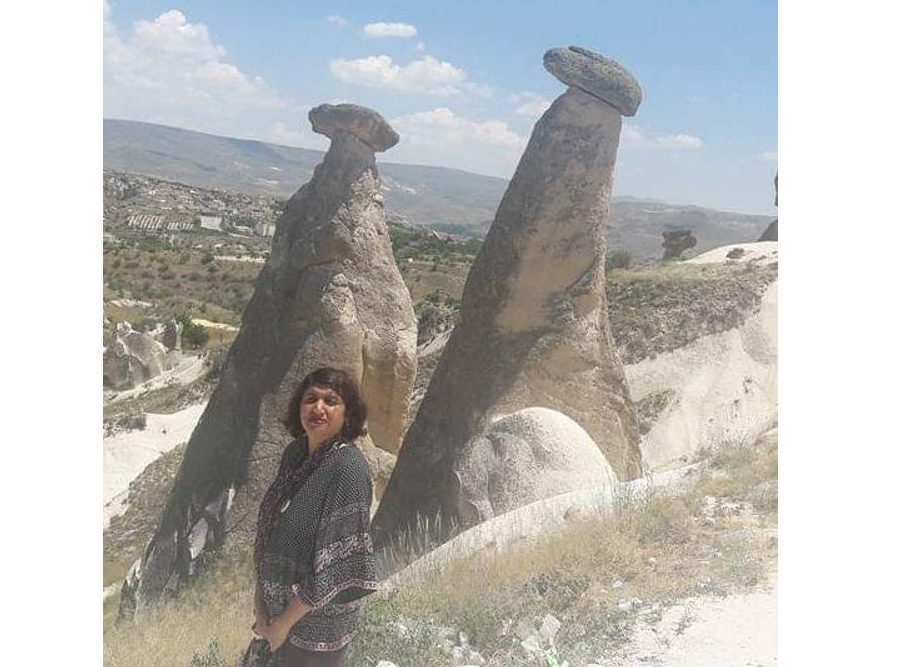
An international negotiation and conflict resolution specialist, Bishakha Ghose brings together history, languages and spirituality through two decades of global work, two Orange Books-published titles and training programmes for organisations including McKinsey and IBM.
Bishakha Ghose, an international negotiation specialist and conflict resolution specialist, is showcasing two decades of international work, her published books and her language and cross-cultural training programmes through her official website, bishakhaghose.in. The site, headlined “Connecting Cultures Through Stories, Languages, and Time,” also presents her as an author, historian, cultural researcher, entrepreneur and registered antiquarian book collector, while her book covers introduce her as a museologist and linguistic engineer. Her work blends history, literature, spirituality, travel and human psychology.
The website also announces that she is attending the Frankfurt Book Fair, the world’s largest trade fair for books, underlining her growing presence in the international publishing conversation.
An International Negotiation and Conflict Resolution Specialist
Bishakha Ghose is an international negotiation specialist and conflict resolution specialist with a unique specialisation in manoeuvring conflict zones, from negotiations to reconnaissance to gathering deep information.
This expertise sits at the heart of her profile. Her website lists international negotiations, humanitarian initiatives, and programmes for migrants and refugees among her areas of work, and her book covers describe years spent in conflict zones around the world. Rather than treating conflict only as a hazard to be avoided, Ghose has built a career around understanding it, combining language skills, cultural knowledge and careful information gathering to work toward resolutions.
The same range of skills appears in the specialisations listed for the protagonist of her memoir-fiction hybrid, The View from the Forbidden Window, which include communications, resolution expertise, intelligence gathering and reconnaissance.
A Career Built Across Cultures and Continents
According to the website, Ghose has spent more than 20 years working internationally. Her career has taken her through libraries, museums, archaeological sites, humanitarian initiatives, migration and asylum programmes, diplomatic environments and international workshops. Her stated areas of work include translation, cross-cultural communication, international negotiations, museum projects, work with government institutions, and programmes for migrants and refugees.
That range of experience, the site says, gives her a rare global perspective that enriches every book she writes. Her guiding idea is captured in a line featured on the homepage: “A lifelong fascination with the visible and the invisible.” The theme runs through her writing, which seeks to uncover stories that connect people across cultures, generations and civilisations.
Her book covers add a more personal note. They describe her as having spent an undisclosed number of years in conflict zones across the world, studying cultures, safeguarding forgotten histories and decoding languages shaped by war. The back cover sums up her outlook in one line: “It is in conflict that she finds peace.”
Two Decades of Work by the Numbers
The homepage highlights four headline figures: more than 20 years of global work, two published works, more than five academic credentials and more than six organisations trained. Together, these numbers present a profile that combines scholarship with practical, real-world experience, and they give visitors a quick snapshot of her professional journey before they explore the detailed sections on her background, books and training programmes.
Academic Foundation in History, Museology and Languages
Ghose’s website lists five academic credentials. She holds a B.A. in History from Delhi University and a specialisation in Museology from the National Museum. She also earned a Post-Graduate Diploma in Industrial Relations and Personnel Management from the Government of India, an M.A. in Spanish from the University of Valladolid in Spain, and a Teacher of English as a Foreign Language (TEFL) certification from the University of Cambridge.
This mix of history, museum studies, personnel management and languages reflects the interdisciplinary nature of her work, which spans archival research, language teaching and professional training.
Linguist’s Corner: Training Professionals for a Global Workplace
Beyond writing, Ghose is the founder of Linguist’s Corner, formerly known as Leisure Links. Through this venture, she has trained professionals in specialised languages and cross-cultural communication, helping teams work with confidence and cultural fluency across borders.
The website says the professionals she has trained come from Sapient, McKinsey, Maruti, Rico, IBM and Elsevier, and it counts more than six organisations trained overall. In an era when businesses operate across time zones, languages and cultural expectations, such training addresses a practical need: reducing miscommunication and building trust within multinational teams.
Her Books: Memoir-Fiction and a Republished Legal Biography
Two works are currently featured in the website’s book collection, and the book covers show that both are published by Orange Books Publication. An Orange Books promotional graphic for the author lists the titles as available on Amazon, Kindle, Google Play Books and Flipkart, and directs readers to www.orangebooks.in.
The first, The View from the Forbidden Window (Vol. I), is described on the website as carrying Ghose’s signature blend of history, spirituality and human psychology. The back cover, where the book is categorised as fiction, calls it a bold memoir-fiction hybrid that explores identity, freedom, conflict and personal truth across cultural and geographical boundaries. Its protagonist moves through several specialisations, including linguistic engineering, communications, resolution expertise, financial manoeuvrability, intelligence gathering and reconnaissance.
The blurb also highlights her romance with an archetypal hero, a figure of courage and rebellion who is played in her life by multiple characters, and describes how she stands beside each of them through their turbulent journeys. The front cover shows a woman, seen from behind, standing at an open arched window and gazing over a desert and mountain landscape at sunset, an image that echoes the book’s title.
The second, Sir Chunder Madhub Ghose, K.T.: A Biography (Vol. II), is a non-fiction title chronicling the life of Sir Chunder Madhub Ghose (1838–1918), a distinguished Indian lawyer and Puisne Judge of the High Court of Bengal. He is also Bishakha Ghose’s great-grandfather, which makes the biography a deeply personal family project. According to its back cover, the book has been reworked and republished by Bishakha Ghose, while the original 1937 version was published by Sir AK Roy. It highlights the history of one of India’s tallest legal luminaries across generations, along with a successful family with roots in Kolkata.
Set in colonial India, the biography records his rise from humble beginnings to a respected career in law, public service and judicial life. The website notes that a statue of Sir Chunder Madhub Ghose stands today within the Calcutta High Court, a lasting tribute to his judicial legacy. The edition carries the ISBN 978-93-7426-397-6 and is also available as an eBook. For Ghose, republishing the book is both a tribute to her great-grandfather and a natural extension of her identity as a registered antiquarian book collector.
Workshops on Language, Culture and Emotional Freedom
Ghose also runs regular workshops in specialised foreign languages, cross-cultural training and emotional freedom. The website invites interested organisations and individuals to get in touch by email for details. The offering suggests a broader philosophy: that language learning is not only about grammar and vocabulary but also about understanding culture, building empathy and supporting personal wellbeing.
Online Presence and How to Connect
The bishakhaghose.in website is a single-page portfolio organised into sections: Home, About, International, Founder, Books, Workshops, Press and Contact. Visitors can browse a photo gallery from her international work, read about her background and go straight to the Amazon pages for her books. Ghose can be reached by email at tinabish@rediffmail.com, the same address printed on the back covers of her books, and is active on Instagram and Facebook.
What It Means for Readers, Learners and Businesses
For readers interested in history-driven non-fiction, for organisations seeking negotiation and conflict resolution expertise, for businesses seeking cross-cultural communication training, and for learners exploring foreign languages, Bishakha Ghose’s work offers several entry points. With two Orange Books-published titles, more than 20 years of global experience and an active workshop programme, she continues to build a body of work that, in the words of her website’s tagline, connects cultures through stories, languages and time. Readers can learn more, explore her books and get in touch through https://bishakhaghose.in/.

What started with one cousin’s tiffin service is becoming a management and marketplace layer for home-food providers and subscribers
Pune: Tiffyy did not begin with the idea of building another food-delivery app. It began much closer to home.
When the founder’s cousin started a tiffin service, one thing quickly became obvious: the unorganised tiffin market was difficult not only for customers looking for reliable homely meals, but even more so for the people running these businesses.
For a small tiffin service or a homemaker cooking from home, daily operations can become chaotic very quickly. New customers often hesitate because there is little trust or visibility. Existing customers want to reschedule meals, pause subscriptions or carry forward balances. Kitchens have to track remaining meals, collect payments, manage subscriptions, coordinate deliveries and respond to customers — often through a combination of WhatsApp chats, notebooks and spreadsheets.
Tiffyy was built as an attempt to simplify this entire layer.
A management layer for home-food businesses
At its core, Tiffyy helps tiffin providers manage the operational side of their business in one place. Subscriptions, meal balances, rescheduling, payments and delivery tracking can all be organised digitally, reducing the manual work that usually consumes a vendor’s time.
But solving operations was only half the problem. Home-food providers also needed new customers. That led Tiffyy to build a marketplace on top of the management layer, allowing customers to discover multiple homely meal providers, compare them and subscribe directly. Ratings and reviews are driven by actual orders, helping create greater transparency and trust between customers and kitchens.
One customer, multiple kitchens
Tiffyy also approaches subscriptions differently from traditional tiffin services. Customers are not permanently tied to one kitchen. Bored of eating from the same provider? Start another subscription with a different home-food provider. Want lunch from one kitchen and dinner from another? Take two separate subscriptions.
Customers can manage their subscriptions, track remaining meals and follow deliveries through the same platform while having the flexibility to choose different kitchens based on their preferences. The idea is to make a traditionally rigid tiffin subscription much more flexible.
From 10–15 customers to 150+
The opportunity becomes clearer when looking at vendors already using the platform. One Pune-based tiffin provider, Shree Krishna Pure Veg Tiffin Services, grew from roughly 10–15 customers to more than 150 customers through Tiffyy.
The example demonstrates what can happen when a small food business gets both operational infrastructure and access to a wider customer marketplace.
For Tiffyy, this is the larger opportunity.
- Some vendors may already have an established business and simply need better tools to manage it.
- Others may want to scale beyond their current neighbourhood.
- And for homemakers who cook well and want to earn additional income from home, the platform can provide a way to start small without having to build the technology, payment systems and customer acquisition infrastructure themselves.
Building infrastructure for the home-food economy
Tiffyy is therefore positioning itself as more than a discovery platform for tiffins. It is attempting to build the management, trust and marketplace infrastructure behind the home-food ecosystem.
For customers, that means more choice, greater transparency and easier subscription management. For vendors, it means fewer operational headaches and a potential path to growth. And for someone sitting at home wondering whether their cooking could become a small business, the proposition is straightforward: Whether you want to manage 20 customers better, scale to 200, or simply earn some additional income from your home kitchen — Tiffyy wants to provide the infrastructure to make that possible.

There is a particular cruelty in losing the very thing the world has come to admire about you. In Dhruti Mukesh Jain’s She Refused to Break: She Was Beautifully Unbroken, that cruelty becomes the emotional centre of a story about a successful singer whose carefully constructed image of perfection is shattered by sudden facial paralysis. Published by Bigfoot Publications in September 2026, the novel follows a woman who must learn to understand beauty, ambition and identity all over again.
The novel opens at the height of its protagonist’s success. She is performing before thousands, celebrated online and surrounded by luxury, applause and an apparently enviable life. Yet the glittering surface conceals the insecurities beneath it. Her social-media persona is built around empowerment and confidence, even as she privately worries about maintaining the illusion of strength. Her devoted partner, Ved, is the one person who sees beyond the celebrity façade. The contrast between public triumph and private vulnerability gives the opening chapters their dramatic charge.
Then comes the rupture. After an extraordinary performance, during which she holds a climactic note for five seconds, her face suddenly ceases to obey her. The diagnosis is severe Bell’s palsy, or acute facial paralysis, caused by inflammation and compression of the seventh cranial nerve. What follows is not simply a medical crisis but an existential one. A woman who has made her face, voice and physical command part of her profession must confront a terrifying question: who is she when the body can no longer perform as expected?
Dhruti’s strongest achievement is the way she gradually shifts the meaning of “recovery”. The protagonist initially wants her old face and voice back. Eventually, however, she understands that healing cannot mean recreating the past. In one of the book’s most affecting passages, she returns repeatedly to the piano, relearning basic sounds—“Ah”, “Oo”, “Ma”, “Pa”—and refuses to measure progress by perfection.
The supporting relationship between her and Ved provides the novel with its emotional ballast. He does not merely protect her; increasingly, he learns to stand beside her while she confronts her own vulnerability. His insistence that falling is permissible but remaining down is a choice becomes one of the book’s central ideas.
The book’s most compelling insight is that resilience is not the restoration of an untouched self. It is the discovery of a self that can exist after everything has changed.
By the later chapters, the singer no longer hides behind scarves, cosmetics or digital perfection. She walks into the recording studio with her asymmetry visible and begins again. Her eventual artistic breakthrough is consequently more meaningful than a conventional comeback: she discovers a “new voice” rather than simply recovering the old one.
She Refused to Break is ultimately less a story about a singer defeating an illness than about a woman refusing to let illness define the limits of her life. Its final message is simple, familiar and, in this case, earned: sometimes becoming whole does not mean becoming as you were. It means learning to love—and live through—the person you have become.


Acharya Hemanshu Ji Honoured with Lifetime Achievement Award at National Dharma Jyotish Sammelan 2026 in Lucknow

Taptwice Media Restricts Its Social Media Arm, Taptwice Social, to 100% Human-Led Engagement Providers Only

Starship to fly reused heatshield tiles for the first time

Redfox Overseas: Customize Your Own Energy Drink and Stand Out in the Market

Zamzam Company CEO Chhote Bhai-Bade Bhai gave a grand welcome to Indian writer Devhari Sirvi in Dubai

Shikha Sharma: The Fashion Journalist, Blogger, and Plus-Size Model Taking the Industry by Storm
-
 Brandpost2 years ago
Redfox Overseas: Customize Your Own Energy Drink and Stand Out in the Market
-
 Brandpost2 years ago
Zamzam Company CEO Chhote Bhai-Bade Bhai gave a grand welcome to Indian writer Devhari Sirvi in Dubai
-
 Fashion2 years ago
Shikha Sharma: The Fashion Journalist, Blogger, and Plus-Size Model Taking the Industry by Storm
-
Entertainment1 year ago
Lucky Roxx’s “Yadav Ki Pukar” Goes Viral! Youth Celebrate Unity & Power
-

 Entertainment9 years ago
New Season 8 Walking Dead trailer flashes forward in time
-
Entertainment9 years ago
Meet Superman’s grandfather in new trailer for Krypton
-
Uncategorized2 years ago
Hello world!
-

 Brandpost2 years ago
From Local Hero to National Icon: Satyam Yadav’s Journey with TwentyOne