
Business
India could face 18% tariff rate without a trade deal
India and the US remain in talks on a bilateral trade deal, with officials hopeful of a framework agreement by year-end, even as the outcome hinges partly on fresh Section 301 tariff probes into India’s competitors.


India could face an overall tariff rate of around 18% without a resolved trade deal with the US.
This includes a blanket 10% tariff and a possible additional 8% under an excess-capacity probe.
A full deal may depend on the US opening fresh Section 301 probes into India’s competitors.
Talks between the two countries have continued through September.
Officials are hopeful of a framework agreement by the end of the year.
A blanket 10% tariff was imposed alongside those investigations.
India is reportedly likely to face an additional 8% tariff under a related excess-capacity probe, which would take its overall rate to around 18%.
A full trade deal may depend on the US opening fresh Section 301 probes into India’s competitor countries, which would help restore a tariff margin India has lost.
US officials visited India on September 16 for talks.
Commerce and Industry Minister Piyush Goyal led an Indian delegation to the US for trade talks on September 22.
Commerce Secretary Rajesh Agrawal has said India is hopeful of reaching a framework trade deal with the US this year.
Officials have said a framework deal would aim to address tariff issues to the benefit of Indian exporters.
Bilateral trade talks between India and the US have continued across multiple rounds through 2026.
Trade negotiations of this scale typically involve discussions across multiple sectors, including agriculture, technology and manufacturing.
India’s exports to the US span sectors including textiles, pharmaceuticals, IT services and engineering goods.
Tariff uncertainty has previously been cited by Indian exporters as a factor affecting planning and investment decisions.
A framework trade agreement typically sets out broad terms, with detailed sector-specific provisions negotiated in subsequent phases.
Indian industry bodies have periodically engaged with both governments during the course of these negotiations.
Bilateral trade between India and the US has grown significantly over the past decade across goods and services.
India-US engagement (representative image), Wikimedia Commons, GODL-India
Business
ArMee Infotech IPO: What the grey market premium suggests
ArMee Infotech’s Rs 300-crore IPO opened for subscription on September 23, with a price band of Rs 350-375 per share; the issue closes September 25, with listing on NSE and BSE tentatively set for September 30.
ArMee Infotech’s IPO was reported to be commanding a modest premium in the grey market ahead of its September 23 opening.
Grey market activity is unofficial and not regulated, so it is not a guaranteed indicator of listing-day performance.
The IPO’s price band is Rs 350 to Rs 375 per share.
The issue closes September 25, with listing tentatively set for September 30 on NSE and BSE.
It is a fresh issue of 80 lakh shares worth Rs 300 crore.
At the upper end of the price band, the minimum retail investment works out to about Rs 15,000.
The book-built issue is an entirely fresh issue of 80 lakh equity shares, worth Rs 300 crore.
Allotment for the IPO is expected to be finalised on September 28.
The shares are tentatively scheduled to list on the NSE and BSE on September 30.
In the grey market, the issue was reported to be commanding a modest premium ahead of listing, though grey market activity is unofficial and not regulated.
A grey market premium reflects unofficial trading sentiment before an IPO lists, and is not a guaranteed indicator of listing-day performance.
IPO investors are advised to review a company’s red herring prospectus for full financial and risk disclosures before subscribing.
India’s IPO market has seen a steady stream of new listings across sectors through 2026.
The NSE and BSE are India’s two main stock exchanges, both based in Mumbai.
A book-built IPO allows the final issue price to be discovered through investor bidding within the announced price band.
IPO proceeds from a fresh issue typically go toward the company’s own business needs, such as expansion or debt repayment, rather than existing shareholders cashing out.
Retail, non-institutional and qualified institutional investor categories each have separate allocation quotas in most Indian IPOs.
SEBI, the Securities and Exchange Board of India, regulates public issues and oversees disclosure requirements for companies going public.
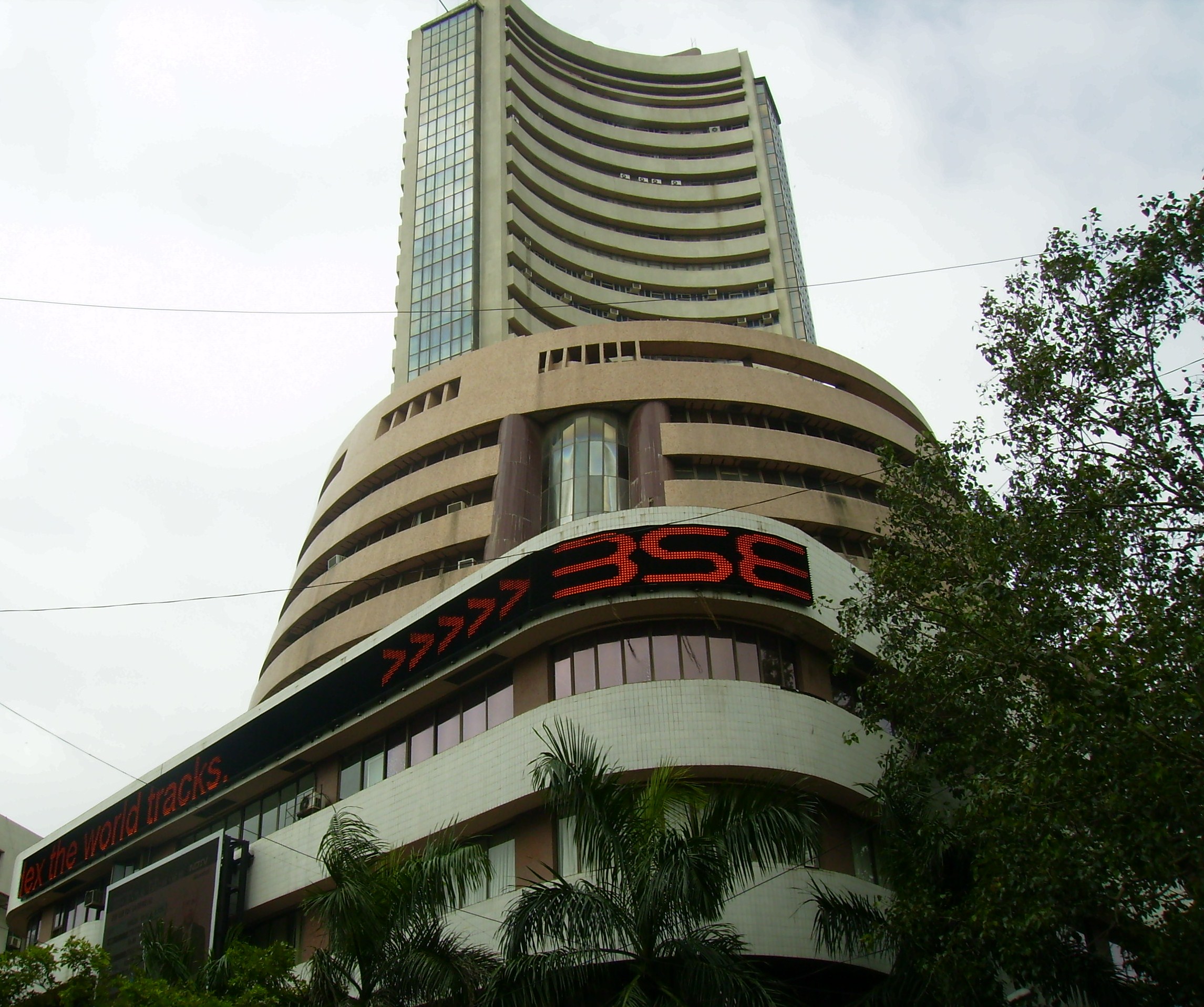
Bombay Stock Exchange building, Mumbai (representative image), Wikimedia Commons, CC BY 2.0
Business
Sensex loses 330 points as market sentiment turns negative
The Sensex closed 0.44% lower at 74,529.08 and the Nifty 50 ended 0.36% lower at 23,329 on September 22, snapping the Nifty’s four-day winning streak amid mixed global cues.
The Sensex lost around 330 points on September 22, closing 0.44% lower at 74,529.08.
The Nifty 50 ended 0.36% lower at 23,329.
It was the Nifty’s first lower close after four straight days of gains.
Mixed global cues and foreign investor outflows were behind the fall.
The market had opened higher before turning negative through the session.
Mixed global cues and foreign investor outflows weighed on sentiment during the session.
The market had opened higher earlier in the day before losing ground through the session.
GIFT Nifty had earlier pointed to a positive opening for the session before markets turned negative.
Indian benchmark indices have seen a volatile few sessions amid a mix of domestic and global factors.
The BSE and NSE are India’s two main stock exchanges, based in Mumbai.
Foreign institutional investors have been a key factor in recent market swings in India.
Sectoral indices showed a mixed trend during the session, with some sectors outperforming the benchmark indices.
Indian markets remain closely watched for cues from global central bank policy and crude oil prices.
The Sensex and Nifty 50 are the most widely tracked benchmark indices for Indian equity markets.
The Sensex tracks 30 large, well-established companies listed on the Bombay Stock Exchange.
The Nifty 50 tracks 50 large companies listed on the National Stock Exchange.
Market analysts often attribute single-session swings to a combination of global cues, domestic data and investor positioning.
Retail participation in Indian equity markets has grown significantly over the past several years.
Quarterly corporate earnings season is often a key driver of individual stock movements around this time of year.
Crude oil prices and the rupee’s exchange rate against the US dollar are commonly watched indicators for Indian markets.
Domestic institutional investors, including mutual funds and insurance companies, are also significant participants in Indian equity trading.
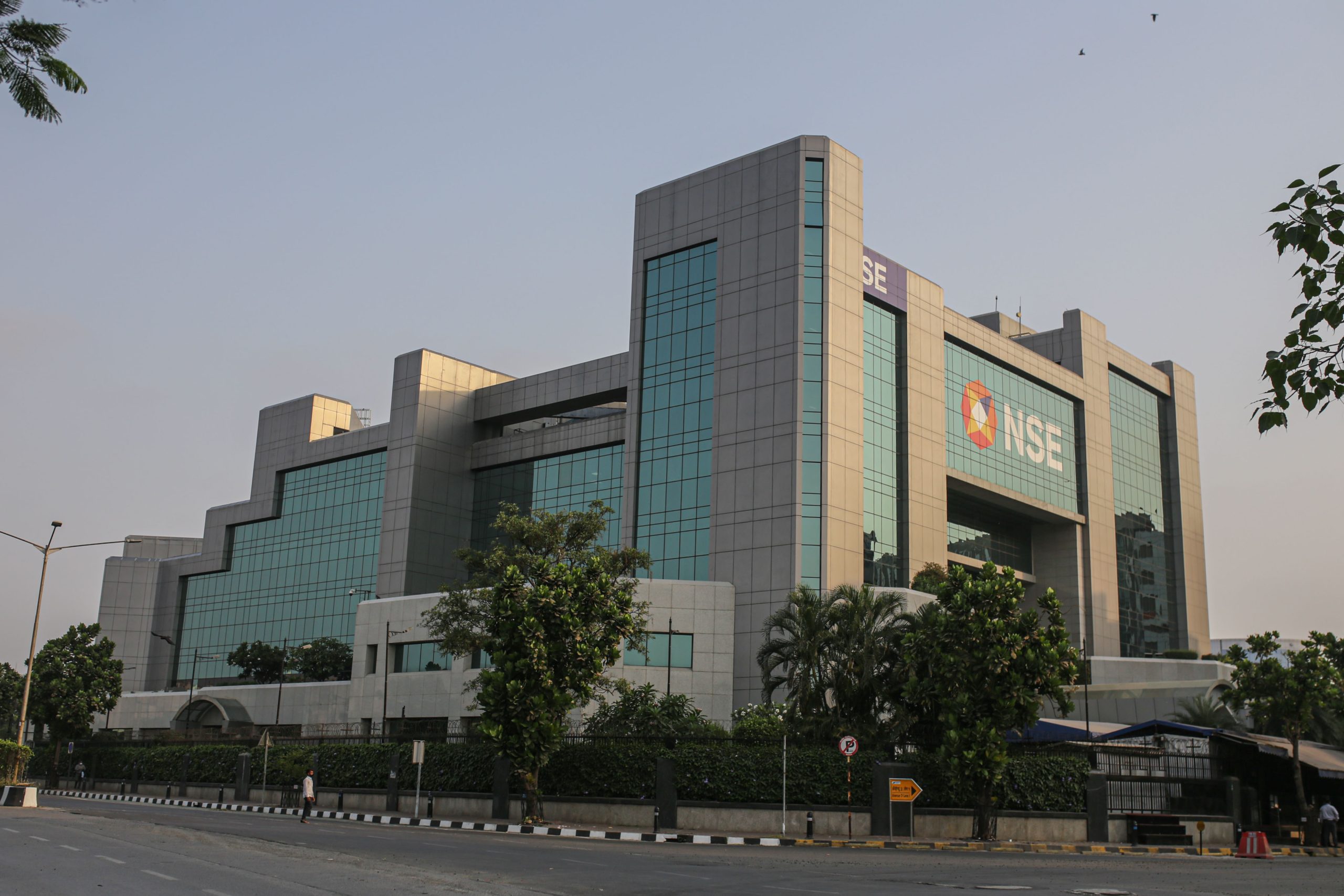
National Stock Exchange, Mumbai (representative image), Wikimedia Commons, CC BY-SA 4.0
Business
Should you worry about a 1.36x retail subscription? NSE IPO explained
The Rs 22,569 crore NSE IPO closed on September 21 with 5.69 times subscription, led by qualified institutional buyers at 12.68 times, with retail investors at 1.36 times and listing expected on September 24.
Retail investors subscribed the NSE IPO 1.36 times, a lower multiple than institutions at 12.68 times.
The retail quota is a smaller share of the offer, and its subscription depends on the lot size and price.
One lot is 8 shares, so the minimum investment is about Rs 14,280.
Overall subscription was 5.69 times.
Listing is expected on September 24.
The lot size is 8 shares, which makes the minimum investment about Rs 14,280 at the upper end of the price band.
The issue is entirely an offer for sale, which means the proceeds go to existing shareholders selling their stake and not to the exchange itself.
Bidding opened on September 17, 2026, and closed on September 21, 2026.
The shares are tentatively expected to list on September 24, 2026.
The grey market premium was reported at about Rs 61 per share, which would suggest listing gains of around 3.5 percent, though grey market figures are unofficial and can change quickly.
After Hyundai Motor India’s Rs 27,870 crore IPO in 2024, the NSE issue is the second-largest public offering in India.
Earlier on the final day, the issue had been reported at 1.16 times subscription before institutional demand came in late in the day.
The size of the offer drew liquidity away from the secondary market during the week, and market commentary linked it to the muted gains in benchmark indices.
Investors who applied in the IPO can check allotment status through the registrar once the basis of allotment is finalised, which is expected on September 22.
IPO subscription figures show demand at the close of bidding and do not guarantee a listing gain, since listing-day prices depend on market conditions.
The Rs 22,569 crore initial public offering of the National Stock Exchange of India received 5.69 times subscription on the final day of bidding, September 21, 2026.
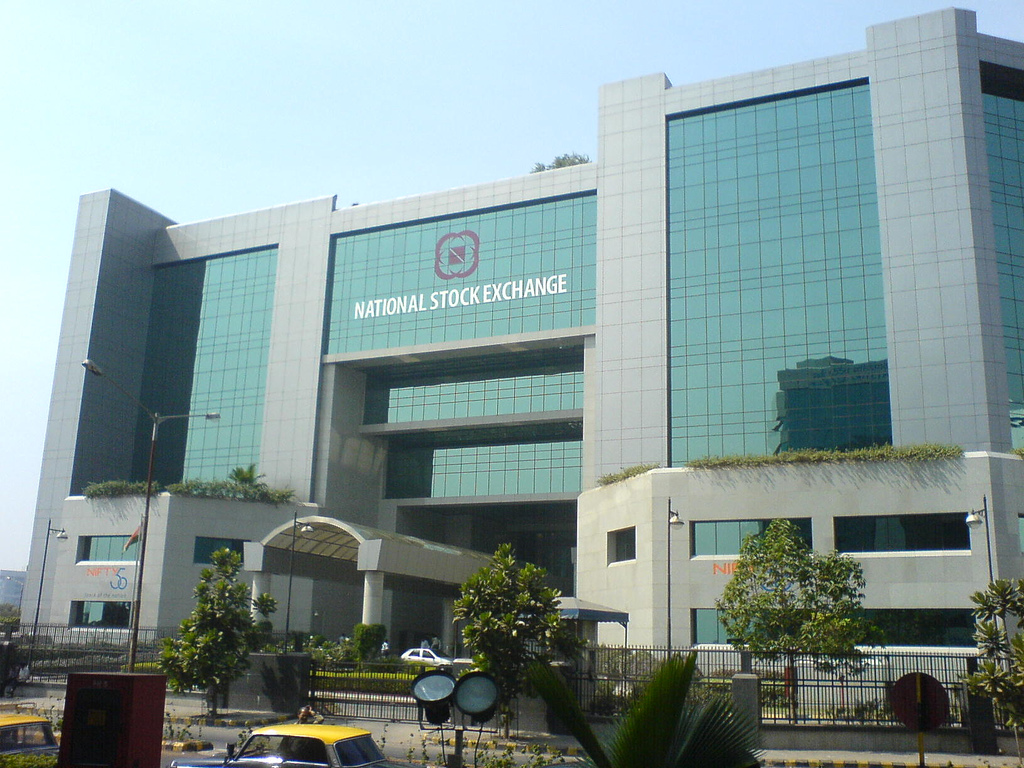
National Stock Exchange of India, Mumbai (representative image), Wikimedia Commons, CC BY-SA 2.0


Festival trains 2026: Surcharge and booking rules explained

US visa appointment wait times vary widely across Indian cities

265 talukas declared drought-hit in Maharashtra

Redfox Overseas: Customize Your Own Energy Drink and Stand Out in the Market

Zamzam Company CEO Chhote Bhai-Bade Bhai gave a grand welcome to Indian writer Devhari Sirvi in Dubai

Shikha Sharma: The Fashion Journalist, Blogger, and Plus-Size Model Taking the Industry by Storm
-
 Brandpost2 years ago
Redfox Overseas: Customize Your Own Energy Drink and Stand Out in the Market
-
 Brandpost2 years ago
Zamzam Company CEO Chhote Bhai-Bade Bhai gave a grand welcome to Indian writer Devhari Sirvi in Dubai
-
 Fashion2 years ago
Shikha Sharma: The Fashion Journalist, Blogger, and Plus-Size Model Taking the Industry by Storm
-
Entertainment1 year ago
Lucky Roxx’s “Yadav Ki Pukar” Goes Viral! Youth Celebrate Unity & Power
-

 Entertainment9 years ago
New Season 8 Walking Dead trailer flashes forward in time
-
Entertainment9 years ago
Meet Superman’s grandfather in new trailer for Krypton
-
Uncategorized2 years ago
Hello world!
-

 Brandpost2 years ago
From Local Hero to National Icon: Satyam Yadav’s Journey with TwentyOne