
Brandpost
JEC Publication Celebrates Successful Attainers Award Ceremony in 2025


Recognising Excellence in Writing, Teaching and Academic Leadership
JEC Publication, a prominent book publishing house registered under the Government of India, successfully concluded its annual Attainers Award ceremony in December 2025. Honouring outstanding achievements in literature, education, and academic research. The event celebrated exceptional talent across multiple categories, recognising individuals who have made significant contributions to their respective fields.
The ceremony witnessed the felicitation of distinguished professionals from across the country, each receiving a comprehensive honours package including a framed certificate, a medal, a folding certificate, and a trophy in recognition of their exemplary work.
Award Recipients – December 2025
The following individuals were honoured at this year’s ceremony:
Academic Leadership & Teaching Excellence:
- Prof. (Dr.) Jyotirmaya Sahoo – Leadership in Academic Governance and Strategic Planning
- Dr. Kotra Balayogi – Best Teacher of the Year
- Dr. Santosh Kumar Singh – Best Teacher of the Year
- Ms. Gayathri Selvaraj – Best Teacher of the Year
- Ms. Soumya R – Best Teacher of the Year
- Aditi Patel – Best Teacher of the Year
Literary Excellence:
- Nisha Nigam – Best Author of the Year
- Dr. Sreekumar Krishnan – Best Writer of the Year
- SENNA A A – Best Writer of the Year
- Arpit Ranjan – Emerging Writer of the Year
- Jeni Jone Paul – Emerging Writer of the Year
Special Recognition:
- Asutosha Parida – Outstanding Improvement Award
- Syed Aqsa – Best Inspiring Voice of the Youth of the Year
- Nilesh Kumar Singh – Academic Researcher of the Year
Speaking about the awards, Chaitanya Srivastava, Founder of JEC Publication, expressed his enthusiasm: “We support budding writers in their journey and want them to reach the world through their writing. The Attainers Award is our way of celebrating those who inspire others through their words, dedication, and commitment to excellence.”
JEC Publication continues its mission of empowering authors and co-authors by providing comprehensive publishing services, including manuscript acceptance, editing, formatting, and book publication. The publishing house has established itself as a supportive platform for new and aspiring writers across India.
About JEC Publication

JEC Publication is dedicated to delivering high-quality, reliable, and accessible academic and professional content. We focus on creating publications that support learning, research, and practical application across disciplines. With a commitment to accuracy and innovation, JEC Publication aims to empower readers with knowledge that adds real value.
For media inquiries, please contact:
JEC Publication
Email: [INFO@JECPUBLICATION.COM]
Website: [WWW.JECPUBLICATION.COM]
Phone No: [+91 8416955630]
Instagram: [ https://www.instagram.com/jec.publication?igsh=MTBhZmlsc2ViZG1uaA==]



In an age where history is often reduced to timelines, ideologies, and loud certainties, Dhara: A Journey of Grief, Continuity and Inheritance arrives like a quiet river at dusk, unannounced, unhurried, and unsettling in its depth. Written by Bal Krishna Thakur, the book resists easy classification. It is not history in the conventional sense, nor philosophy bound by academic frameworks. Instead, Dhara is an act of listening, an attempt to hear what civilisation whispers when power, noise, and certainty fall silent.
The book does not begin at a desk. It begins on a riverbank in Sultanganj, where the author lights his father’s pyre on the banks of the Uttarvahini Ganga. Between flame and ash, between loss and ritual, the river speaks, not in consolation, but in continuity. That moment becomes the emotional and philosophical source of Dhara. The Ganga does not pause for grief; it only flows. And in that indifference lies a disturbing question that drives the book forward: Why does India endure when so many powerful civilisations have vanished?
The author’s answer is neither nationalist triumph nor political defence. He proposes what he calls the “Flow Code”—an ancient, unspoken discipline of memory through which India absorbs trauma, transforms grief, and carries it forward rather than erasing it. From Karna’s unacknowledged wound to Draupadi’s unbound hair, from Ashoka’s remorse to unnamed mothers carrying silent losses, Dhara traces a hidden current beneath India’s visible history. This is not a chronicle of battles and kings, but a meditation on how pain itself becomes inheritance.
One of the book’s greatest strengths lies in its refusal to treat historical and mythological figures as museum relics. Ganga, Indus and Mandar; Karna, Bhishma, Indrajit, Ram, Krishna and Buddha; Amba, Shikhandi and Bhishma; Ashoka, Akbar, Aurangzeb and Cornwallis; Shankar, Khusrau and Kabir; Sita, Radha, Draupadi and Mirabai; Vibhishana, Jai Chand and Mir Jafar; all appear not as fixed verdicts but as living arguments within an unfinished civilisation. The author understands that India has never trusted truth delivered in straight lines. Presence, metaphor, memory, and contradiction have always mattered more than footnotes.
Stylistically, Dhara reads like a series of stations along a river rather than linear chapters. Some passages are jagged with disagreement, others heavy with grief, and some wide with mythic calm. The prose is restrained yet poetic, carrying a sense of humility that refuses closure. The author makes no claim to solutions, no declaration of where India must go next. Like a river, civilisation never reveals its next turn.
What makes Dhara particularly resonant for contemporary readers is its insistence that survival does not come from perfection or coherence. India, author reminds us, has been looted, colonised, partitioned, and fractured by religion, language, caste, and ideology. By all rational measures of history, it should have ruptured long ago. And yet it persists, not as a smooth narrative, but as a wounded, stubborn, living flow.
This is not a book that asks for agreement. It asks for stillness. To stand, briefly, at the water’s edge and listen, not to the noise of modern debates, but to the deeper sound beneath them. If read as history, Dhara will feel mythic. If read as politics, it will feel metaphorical. If read as philosophy, it will feel like a river.
In the end, Dhara: A Journey of Grief, Continuity and Inheritance is less a conclusion than a remembrance, a quiet resistance against forgetting. It leaves the reader with a powerful realisation: civilisations do not survive because they are preserved by power, but because they continue to flow, unfinished, carrying their grief forward rather than drowning in it.
The river, Bal Krishna Thakur suggests, is still speaking. And the civilisation—like the water itself—is still becoming.

In The Demon & The Dark Wish, Anuj Kumar crafts a haunting and psychologically layered narrative that blurs the line between trauma and the supernatural, faith and forbidden knowledge, innocence and corruption. Set against the mist-laden backdrop of an old village near Shimla in the late 1970s, the novel is as much a story of inner darkness as it is of external forces that prey on the vulnerable mind.
At the centre of the story is an eleven-year-old boy living with his 58-year-old grandfather after a life-altering tragedy. Born into a Catholic family and known for his brilliance at school, the boy’s childhood is brutally shattered when he witnesses the murder of his parents in the city of Shimla. The horror of seeing them butchered before his eyes leaves deep psychological scars, panic attacks and epileptic episodes plague him for years, rendering him fragile and withdrawn.
As time passes, however, the boy appears to recover. To the outside world, he becomes social, composed, and seemingly normal. Yet author skillfully reveals that this recovery is only superficial. Beneath the calm exterior, a darker consciousness begins to take root. At times, this inner force manifests as anxiety and disturbing thoughts; at others, it emerges as an unsettling confidence; strong, fearless, and dangerous. The author is careful not to reduce this transformation to mere trauma. The novel repeatedly challenges the reader’s assumptions, insisting that the true cause lies elsewhere.
That “elsewhere” is the grandfather’s library, a space that becomes both sanctuary and curse. In an era before digital distractions, books and radio were lifelines, especially for the educated. The grandfather, himself grieving yet emotionally restrained, encourages the boy’s love for reading as a way to heal. But the boy’s voracious appetite leads him not just to stories, but to dark mythology and forbidden lore. These texts, steeped in ancient beliefs and ominous philosophies, quietly seed the boy’s transformation.
One of the novel’s strongest achievements is its atmosphere. Anuj Kumar evokes the isolation of hill villages, the silence of old houses, and the eerie intimacy of libraries filled with forgotten knowledge. The late-1970s setting is used effectively, reinforcing a time when imagination was fed by books, and myths carried more weight than rational explanations.
Thematically, The Demon & The Dark Wish explores the dangerous allure of power, the fragility of a traumatised mind, and the moral consequences of unfulfilled desires. The “dark wish” of the title is not merely supernatural; it is deeply human, a yearning to escape pain, to feel powerful again, to make sense of loss. The demon, too, is ambiguous: is it an external entity born of myth, or an internal force awakened by grief and curiosity?
Anuj Kumar’s prose is direct yet evocative, balancing psychological depth with suspense. While the story delves into darkness, it never loses its emotional core, the bond between a grieving grandfather and a broken child anchors the narrative, lending it quiet poignancy.
The Demon & The Dark Wish is not just a tale of horror or fantasy; it is a chilling meditation on how knowledge, when encountered at the wrong time and by the wrong mind, can become a catalyst for transformation. For readers who enjoy psychologically rich dark fiction with mythological undertones, this novel offers an unsettling and memorable experience, one that lingers long after the final page.
Brandpost
Super producer and actor Yuvraj on release of his film and future of streaming and cinema !
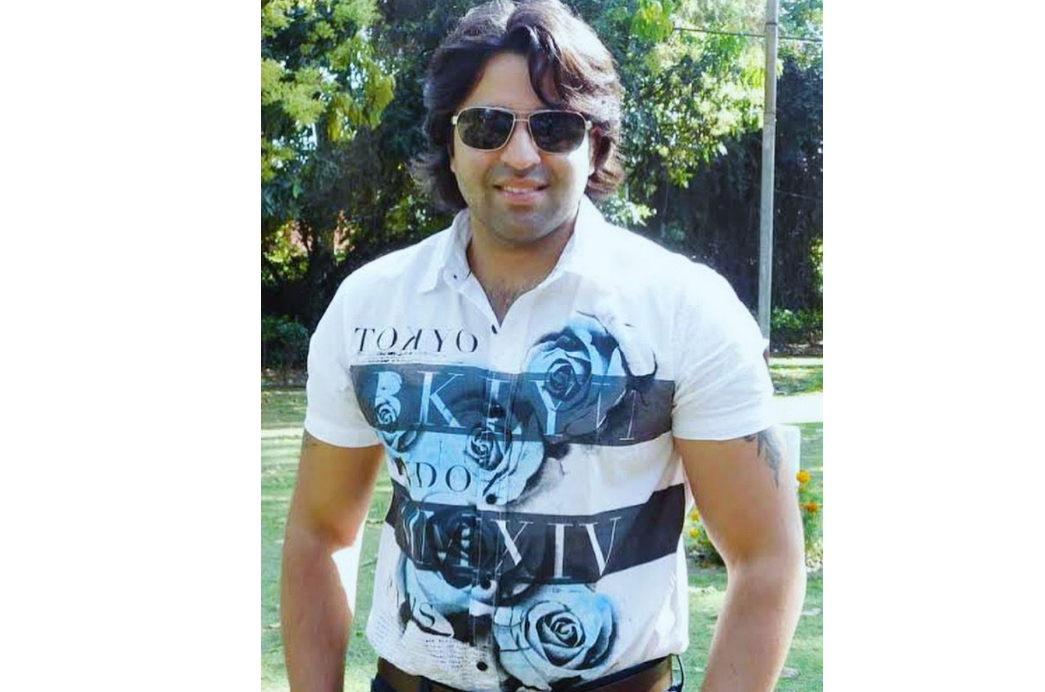
“Future will be a mix of traditional and innovation”
1 . Hi Yuvraj ? Straight to the point, what’s with those awesome music videos I loved fakir! YSS- yeah they came from age old desire to make music videos and yes the first one is a cult classic !
2 ) I hear you are launching you studio? Whats happening there?
Ans) Launching my own film studio in delhi NCR – is a challenge , but yes we are working on it and gladly the idea is coming up, we will be making many web series and films from there as well as songs and shoots,also we plan to have our own training academy.
3) We hear about your big release Paar chaana de in Punjabi and Siva in Telugu?
And) Both films are under production with few schedules left 2026 should see them releasing! Smiles Yuvraj …
4) Cinema business is very different how do producers like you cope to it?
Ans) There are many films that are working and many which don’t , you need good scripts and good balance of actors to make it happen, stars help the subject but it’s actually smart production that works!
5) What is the future of Bollywood and films in general?
A) Well as we saw some films have done well on the traditional box office that says a lot, in a time of 24 hour non stop streaming if fans come and watch movies, you will have to take it!
Q) What’s your take on AI ?
And) Frankly it’s a great took for film makers but to complete the cinema or streaming process human and traditional cinema forms will remain.
Q) Final question! How to the heroines resist you? Haha
A) Smiles Yuvraj … well frankly I’m resisting them! But yes they are very kind to me and most of top heroines are always ready to work! I guess I’m just lucky with that and also the years of work that’s gone in 😉
Thanks Yuvraj!! Hope you keep doing the great work!!


Book Review | Dhara: A Journey of Grief, Continuity and Inheritance by Bal Krishna Thakur

Book Review | The Demon & The Dark Wish by Anuj Kumar

Super producer and actor Yuvraj on release of his film and future of streaming and cinema !

Redfox Overseas: Customize Your Own Energy Drink and Stand Out in the Market

Zamzam Company CEO Chhote Bhai-Bade Bhai gave a grand welcome to Indian writer Devhari Sirvi in Dubai

Shikha Sharma: The Fashion Journalist, Blogger, and Plus-Size Model Taking the Industry by Storm
-
 Brandpost1 year ago
Redfox Overseas: Customize Your Own Energy Drink and Stand Out in the Market
-
 Brandpost12 months ago
Zamzam Company CEO Chhote Bhai-Bade Bhai gave a grand welcome to Indian writer Devhari Sirvi in Dubai
-
 Fashion2 years ago
Shikha Sharma: The Fashion Journalist, Blogger, and Plus-Size Model Taking the Industry by Storm
-

 Entertainment9 years ago
The old and New Edition cast comes together to perform
-
Politics8 years ago
Congress rolls out ‘Better Deal,’ new economic agenda
-
Fashion9 years ago
According to Dior Couture, this taboo fashion accessory is back
-
Fashion9 years ago
These ’90s fashion trends are making a comeback in 2017
-
Entertainment8 years ago
Meet Superman’s grandfather in new trailer for Krypton