
Brandpost
Manisha Sarma: The Assamese Writer Who Walked Into Sonagachi to Give Voice to the Voiceless

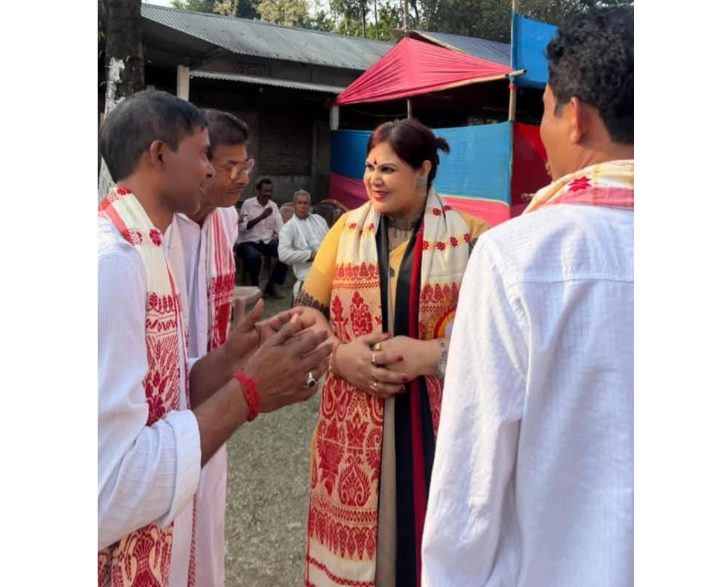
Guwahati — In contemporary Assamese literature, few voices carry the combination of courage, versatility and empathy found in the work of writer, journalist and social worker Manisha Sarma. Hailing from Jalukbari, Guwahati, Sarma has built a distinct literary identity over the past decade, one defined less by comfortable observation than by direct, often dangerous, immersion in the lives of the communities she writes about.
While her body of work already spans poetry, short stories, novels, plays and essays, it is her approach to research that has drawn particular attention. Refusing to write about marginalised lives from a distance, Sarma has repeatedly stepped into restricted and stigmatised spaces to gather her material firsthand, pushing past social taboos in the process.
A Foundation Built on Values and Resilience
Manisha Sarma is the daughter of educator and writer Nripendra Nath Sarma and Bharati Devi, and she grew up in a household shaped by academic rigour and a strong sense of social responsibility. Her own path to a literary career, however, was not a straightforward one. Financial and family hardships interrupted her education at various points, and she married businessman JituMani Sarma early, in 2002.
Rather than closing the door on her ambitions, marriage marked a turning point supported by those around her. With the backing of her husband, her family and eventually her son, Sarma went on to complete her Master’s degree after marriage, before fully committing herself to literary and social work — a decision that would come to define the following two decades of her life.
Fearless Fieldwork in Restricted Spaces
What sets Sarma apart from many of her literary peers is her insistence on direct, ground-level research, even when that research takes her into some of the most sensitive and difficult environments in the country. Most notably, she has conducted fieldwork in heavily restricted red-light districts, including Kolkata’s Sonagachi, one of Asia’s largest red-light areas, along with several other similarly taboo locations.
As a woman entering these spaces, Sarma’s presence itself represented a boundary being tested. Rather than observing from a distance, she spent time directly interacting with sex workers in these communities, listening to their lived realities and documenting their daily struggles with what has been described as profound dignity. Her stated approach has consistently avoided judgment, framing her work instead around two goals: authentically researching the conditions faced by these communities for her writing, and using her platform to actively advocate for their human rights and welfare.
An Investigative Spirit Across Regions and Themes
Sarma’s fieldwork is not limited to red-light districts. Her investigative approach has taken her across a wide range of regions and social themes, each feeding directly into a specific body of published work.
- Red-Light Districts & Marginalised Lives — Groundwork conducted in Sonagachi and other restricted areas inspired powerful writings that highlight human suffering, resilience and rights within these communities.
- Cultural & Regional Studies — Immersive research across Mathura, Vrindavan and Gokul in Uttar Pradesh produced Braj Bhumir Baibhav, while her exploration of Assam’s local folklore, centred on Mayong, resulted in Chonokar Rod.
- Human-Wildlife Conflict — Field investigations into the ongoing human-elephant conflict in Assam led to her acclaimed book Hati Aru Phandi as well as the script for the film Manuh Khowa Hati.
A Prolific and Recognised Literary Career
Sarma’s writing career began with her first poetry publication in Asamiya Pratidin, and has since grown into a substantial body of stories, novels, plays and essays published across more than a decade. Her notable works include Sukhor Madakatat Dukhor Banya (2014); Rodon, Kalcakra, Samay Sanglap, Rupali Jonak and Jonakar Borosun, all published simultaneously in 2018; Mon Ciyahir Rong (2020) and Kathopakathan (2021); Nishiddha Duwar alongside the bestseller Teje Dhowa Kolijar Ucupani (2022); and more recently, Jibanor Okowa Pokowa Aliyedi (2023) and Bhem (2024).
This substantial and varied output has earned Sarma a wide range of accolades. She received the Basanti Bordoloi Award (2020) from the Assam Sahitya Sabha for her novel Rodon, the Japan Ukiyoto Publishing Women Writer of the Year (2022), and the Babu Jagjivan Ram National Award (2022). More recently, she was named Best Novel of the Year at the National Sports and Cultural Festival (2026) and received recognition at the Kolkata International Micro Film Festival (2026) for Aadamkhor Hathi, a further extension of her work on human-elephant conflict into film.
A Voice for Change Beyond the Page
Sarma’s work extends well beyond her published writing. She currently serves as a journalist for Pragjyotish, bringing the same investigative instincts that shape her literary fieldwork into her reporting. Alongside this, she holds a leadership role as District Director for Kamrup Metro with the Human Rights International Organization, and serves as Bureau Chief of Assam for Rastra Sangbad Org.
In addition to these formal roles, Sarma remains actively involved with environmental, literary and youth organisations, reflecting a broader commitment to social engagement that runs parallel to, and often intersects directly with, her literary output.
Literature as a Tool for Social Transformation
Across her body of work, Manisha Sarma has consistently demonstrated that literature can function as more than an artistic exercise. By stepping into restricted spaces — from Sonagachi’s red-light district to the folklore-rich landscapes of Mayong and the conflict zones between humans and elephants in Assam — she has used her writing as a vehicle for documenting lives that might otherwise remain unseen.
Her approach, combining fearless fieldwork with a prolific literary output and an active role in journalism and human rights advocacy, has positioned her as a distinctive figure in contemporary Assamese literature. As her list of published works and accolades continues to grow, Sarma’s willingness to step past societal taboos in pursuit of authentic storytelling remains the defining thread running through her career.
About Manisha Sarma
Manisha Sarma is an Assamese writer, journalist and social worker based in Jalukbari, Guwahati. Known for her immersive field research into marginalised communities, including sex workers in Kolkata’s Sonagachi and the human-elephant conflict in Assam, she has authored numerous acclaimed novels, story collections, plays and essays. Her honours include the Basanti Bordoloi Award, the Japan Ukiyoto Publishing Women Writer of the Year, the Babu Jagjivan Ram National Award, and recognition at the National Sports and Cultural Festival and the Kolkata International Micro Film Festival. She currently works as a journalist for Pragjyotish and holds leadership roles with the Human Rights International Organization and Rastra Sangbad Org.
Brandpost
Veeir Chaudary’s ‘Hotel Hooneymoon Deluxe’ Creates Buzz, Web Series Gets Millions of Views on YouTube

Mumbai: Actor and Producer Veeir Chaudary is making a strong impact in the digital entertainment space with his latest web series ‘Hotel Hooneymoon Deluxe’, which he has released on his own YouTube channel ‘Veeir Chaudary’. Released in five chapters, the suspense-driven web series has been attracting viewers and has already received millions of views, creating a buzz among digital audiences.
What makes Hotel Hooneymoon Deluxe interesting is its combination of romance, mystery, suspense and survival. Inspired by a real incident, the story revolves around a couple who arrive at a hotel during their honeymoon, expecting to spend some memorable time together. However, their romantic trip soon turns into a terrifying experience when they find themselves trapped inside the hotel.
As the story progresses, the couple discovers the dark and disturbing history of the hotel. According to the storyline, several couples had stayed at the same hotel before them and were allegedly killed by the hotel staff. The couple is now faced with a frightening question — will they manage to escape the hotel, or will they become the next victims?
The five-chapter format allows the story to gradually unfold, keeping the suspense alive and encouraging viewers to continue watching to discover what happens next.
Veeir Chaudary has taken on multiple responsibilities for the project. Along with playing the lead character, he is also the producer of Hotel Hooneymoon Deluxe. His involvement both in front of and behind the camera reflects his expanding journey in the entertainment industry.
Before making his mark with digital content, Veeir Chaudary has been associated with 100+ songs across Hindi, Haryanvi and Punjabi music. He has also worked in numerous films, web series and short films. Some of his popular music projects include ‘Gangwarr’, ‘Strugglerr’, ‘Strugglerr 2’, ‘Thanedar’ and ‘Shooter Khakee Vardi’, among others.
The actor-producer is now also focusing on upcoming music and entertainment projects through his production house Veeir Filmz Entertainment.
His upcoming line-up includes the Hindi song ‘Piya Ree’, featuring Mansi Pandey and composed by Kaushal Mahavir, along with Haryanvi projects ‘Love Marriage’, ‘Jaat No. 1’ and ‘Bande’, where Veeir Chaudary will also be seen acting.
With Hotel Hooneymoon Deluxe receiving a strong digital response, Veeir Chaudary is steadily expanding his presence as an actor, producer and content creator, while bringing more original entertainment projects directly to audiences through his YouTube channel.
Brandpost
Vibhu Kandwal: Meet the 25-Year-Old Founder of Dropout Kid Trading Teaching Forex and Crypto for Free

Delhi/Uttarakhand — In a space often associated with expensive courses and paid mentorships, 25-year-old Vibhu Kandwal has built a name for himself by giving trading knowledge away for free. Based between Delhi and Uttarakhand, Kandwal is the founder of Dropout Kid Trading (DKT), a page dedicated to forex and cryptocurrency education that has grown into one of the more recognisable trading-education brands among younger Indian traders.
Kandwal describes himself as having spent more than seven years immersed in the forex and crypto trading world, a period during which he moved from learning the markets himself to teaching others. For the past six years, he says, his primary focus has been sharing that knowledge with his growing audience without charging for it, a decision that has shaped how his brand is perceived within India’s crowded trading-education space.
Why ‘Dropout Kid’
The name Dropout Kid Trading reflects the personal story Kandwal has built his public identity around: stepping away from a conventional path to pursue trading independently. Rather than treating this as a setback, he has turned it into the foundation of his brand, using it to connect with an audience of young, self-taught traders who may be exploring financial markets outside of traditional education or career routes.
This narrative runs consistently across his platforms. His YouTube channel banner describes the page as covering “Forex, Crypto, Trader Life,” while his Instagram bio leads with “Entrepreneur” and “Forex Trading,” positioning him less as a formal educator and more as a peer who has already walked the path his audience is currently on.
Free Education as the Core Offer
According to Kandwal, more than 2,000 students have received free trading education through his content over the years. This education is distributed primarily through daily YouTube uploads, regular Instagram posts, and a Telegram community where subscribers can follow live market commentary. His Telegram channel’s pinned message offers a free e-book as an entry point for new members, reinforcing the free-access model that runs through his content strategy.
This approach sets him apart from trading educators who monetise primarily through paid signal groups or mentorship programmes. Kandwal’s public messaging consistently frames his content as a resource for people who want to learn to trade without having to pay for access to basic knowledge.
The DKT Concept
At the centre of Kandwal’s teaching is what he calls the DKT concept, a trading framework he says he developed himself over years of studying and trading the forex and crypto markets. He describes it as an accurate and reliable approach to market analysis, and it forms the backbone of much of the educational content he shares with his audience, from YouTube tutorials to live commentary shared through his Telegram community.
While specific details of any personal trading methodology are proprietary to its creator, Kandwal has built his public profile around the idea that the DKT concept can be learned and applied by traders at different experience levels, which he presents as central to his mission of making trading education accessible.
A Multi-Skilled Trader
Kandwal’s profile lists a range of skills tied to financial markets, describing himself as a trader, professional market analyst, hedge fund manager and financial market mentor. This combination reflects the dual nature of his public work — educational content aimed at newer traders, alongside market analysis and commentary aimed at a more engaged, active trading audience following his Telegram community.
He has also listed a number of competitive trading recognitions on his profile, including being named winner of the World Trading Tournament (WTT) 2025, the Trading Championship 2026 hosted by Mazifinance, and the Scalper Pro Championship (SPC) 2021 — titles he presents as part of a broader trading track record alongside his content-creation work.
Where His Audience Follows Him
Kandwal’s online following spans several platforms. His Instagram account has drawn hundreds of thousands of followers, his YouTube channel has built a subscriber base in the tens of thousands across dozens of uploaded videos, and his Telegram community has grown into a large, active group of subscribers who receive regular updates. Each platform serves a slightly different purpose: Instagram and YouTube function as brand-building and educational spaces, while Telegram operates as a more immediate channel for market commentary and trade-related discussion.
As with any market commentary shared by an individual creator, content posted on Kandwal’s channels reflects his personal views and strategies rather than licensed financial advice, and forex and crypto trading carry substantial risk regardless of the educational framework being applied.
Following Dropout Kid Trading
Those interested in learning more about Vibhu Kandwal’s free trading education, his DKT concept, or his day-to-day market commentary can find him through the following official channels:
Instagram: https://www.instagram.com/dropoutkid_trading?stkn=MW94OGFlYjE5cnprZw==
YouTube: https://youtube.com/@dropoutkidtrading-b7b?si=o0Gk_Tz56FimU5Vz
Telegram: https://t.me/DropoutKidTrading
About Vibhu Kandwal / Dropout Kid Trading
Vibhu Kandwal, 25, is a Delhi/Uttarakhand-based trader and the founder of Dropout Kid Trading (DKT), an educational platform focused on forex and cryptocurrency markets. With more than seven years of trading experience and six years spent creating free educational content, Kandwal has built a following across Instagram, YouTube and Telegram, teaching his self-developed DKT trading concept to more than 2,000 students to date.
Brandpost
KrishiScan Launches AI-Powered Agri-Finance App to Help Indian Farmers Diagnose Crop Disease, Track Mandi Prices and Access Government Schemes

Built by Abir Majumder for ELLOTH, the platform combines AI crop scanning, live mandi price data and a government scheme copilot in 10 Indian languages
India — A new agri-tech platform, KrishiScan, is positioning itself as one of the country’s first combined agriculture-and-finance digital assistants, aiming to tackle three problems that have long troubled Indian farmers: crop disease detection, fair market pricing and access to government subsidies. Developed by Abir Majumder for ELLOTH, the app describes itself as India’s first AI agri-finance copilot, built to work in ten Indian languages and available directly from a farmer’s phone without any mandatory sign-up for a limited number of free scans.
KrishiScan’s core pitch is speed and accessibility: the platform claims it can diagnose a crop disease from a photograph in around five seconds, while also offering a 14-day mandi price trend and real-time matching against bank loans and subsidy schemes — all designed for farmers who may not have reliable access to English-language digital tools or up-to-date market information.
The Problem KrishiScan Says It Is Solving
According to the platform, Indian farmers lose significant income every season to three recurring issues. Crop diseases often go unnoticed until they have already spread across a field, by which time local dealers or agronomists may be too late to help. Market prices quoted by traders are frequently outdated, with farmers reportedly losing anywhere between ₹200 and ₹500 per quintal due to a lack of live pricing data. And a large number of government welfare schemes — KrishiScan cites more than 800 central and state yojanas — go unclaimed each year simply because farmers are unaware which ones apply to them.
Three AI Tools in One App
KrishiScan is structured around three main tools, each aimed at closing a specific information gap between farmers and the wider agricultural market.
- AI-Powered Crop Scanner — Farmers can photograph a leaf and receive a diagnosis of disease, pest infestation or nutrient deficiency in under five seconds, along with both organic and chemical treatment suggestions delivered in the farmer’s own language. The tool claims to work across more than 40 crop types with over 90 percent accuracy.
- Live Mandi Prices & Profit AI — The app pulls real market rates from more than 3,000 mandis and offers district-level filtering, updated daily. Its Profit AI feature compares a farmer’s current crop against two or three alternative crops using local weather, soil and buyer data to suggest more profitable options.
- YojanaAI Scheme Copilot — By answering six short questions, farmers are matched against more than 800 central and state government schemes covering loans, insurance and grants, with eligibility details, required documents, deadlines and direct application links.
Signature Features: From City Retail Prices to Satellite Field Health
Beyond its three core tools, KrishiScan lists a set of additional features aimed at giving farmers a fuller picture of both their fields and the markets they sell into.
- City Retail Insights — cross-verifies prices from multiple online retail sources to show farmers the direct-to-consumer rate for their crop, helping them identify the gap between mandi and retail pricing.
- Hyper-Local Location Sync — a single GPS ping syncs the entire app to a farmer’s exact district, updating mandi rates, forecasts, retail benchmarks and weather advisories together.
- National Mandi Database — covers over 600 districts across 36 states, allowing farmers to compare crop rates across different markets in one tap.
- Kisan Didi Voice — a female voice assistant that farmers can speak to in Hindi, Marathi or English, offering spoken diagnosis and step-by-step remedy guidance suited to use in the field.
- Satellite Field Health — uses NDVI (vegetation index) colour mapping to flag stressed patches of a field before they become visible to the naked eye, available on the platform’s Pro tier.
Pricing: Free Tier, Standard and Pro Plans
KrishiScan follows a freemium model designed to let farmers try the platform before committing to a paid subscription. The free Basic tier includes five crop diagnoses per month, a text-based Kisan Didi assistant, basic weather and daily mandi prices, and access to the national mandi database across English, Hindi and Marathi.
The Standard plan, priced at ₹299 per month and described as the platform’s most popular tier, unlocks unlimited crop diagnoses, an AR live crop scanner, city retail price insights, a 14-day price forecast, hyper-local GPS sync, the YojanaAI eligibility wizard, voice support in ten Indian languages, and a document assistant that generates farmer-ready PDFs.
A Pro plan at ₹799 per month is aimed at farmer-producer organisations (FPOs), agri-dealers and consultants, adding direct handoff to loan officers at KCC, NABARD and MUDRA, regional pest and disease outbreak maps, real-time bank-loan matching with document automation, multi-farm dashboards, satellite field-health monitoring, white-label tools and a dedicated account manager.
Early Adoption Among Farmers and FPOs
KrishiScan reports that it has already run more than 10,000 crop diagnoses, maintains an average user rating of 4.8 out of 5, and has users spread across more than 12 Indian states, including participation from over 240 FPO members. The platform has shared accounts from farmers describing how the app helped identify diseases such as early blight in tomato crops, verify mandi prices against trader offers, and match members of farmer collectives to schemes such as PM Kisan and PMFBY that they were previously unaware of.
One FPO president cited in the platform’s materials described using KrishiScan’s YojanaAI tool to match 63 member-farmers to relevant government schemes, while another highlighted how the app’s document assistant reduced the time needed to process farmer paperwork from roughly two hours to around eight minutes per farmer.
Positioning Against Generic AI Chatbots
KrishiScan draws a clear distinction between itself and general-purpose AI chatbots, arguing that while a generic chatbot might help draft an email, it is not built to handle the specific, localised needs of Indian agriculture. The platform highlights differences such as photo-based crop diagnosis versus generic text advice, native voice support in Hindi and Marathi rather than English only, live mandi price data instead of static or outdated information, and a dedicated government scheme copilot that general AI tools do not offer.
Availability and Access
KrishiScan is accessible directly through a web browser at krishiscan.com, with sign-up available via phone number and OTP or email, and no credit card required to start. The platform offers three free scans without requiring an account, positioning itself as an easy entry point for farmers who want to test the crop-scanning feature before signing up for a subscription.
Website: https://krishiscan.com
Sign Up: https://krishiscan.com/signup
Pricing: https://krishiscan.com/pricing
About: https://krishiscan.com/about
About KrishiScan
KrishiScan is an agri-finance technology platform developed by Abir Majumder for ELLOTH, offering AI-based crop disease diagnosis, live mandi price tracking, profit-comparison tools and a government scheme matching copilot for Indian farmers. Built to work across ten Indian languages and covering more than 600 districts nationwide, KrishiScan is designed as a mobile-first, voice-enabled digital assistant aimed at helping farmers protect their harvests and improve their income through better access to information.


IMD flags heavy rain risk in 16 states, warns of strong winds

Delhi tears down unsafe building next to collapse site

Duleep Trophy final: East Zone on verge of title, need 4 more wickets

Redfox Overseas: Customize Your Own Energy Drink and Stand Out in the Market

Zamzam Company CEO Chhote Bhai-Bade Bhai gave a grand welcome to Indian writer Devhari Sirvi in Dubai

Shikha Sharma: The Fashion Journalist, Blogger, and Plus-Size Model Taking the Industry by Storm
-
 Brandpost2 years ago
Redfox Overseas: Customize Your Own Energy Drink and Stand Out in the Market
-
 Brandpost2 years ago
Zamzam Company CEO Chhote Bhai-Bade Bhai gave a grand welcome to Indian writer Devhari Sirvi in Dubai
-
 Fashion2 years ago
Shikha Sharma: The Fashion Journalist, Blogger, and Plus-Size Model Taking the Industry by Storm
-
Entertainment1 year ago
Lucky Roxx’s “Yadav Ki Pukar” Goes Viral! Youth Celebrate Unity & Power
-

 Entertainment9 years ago
New Season 8 Walking Dead trailer flashes forward in time
-
Entertainment9 years ago
Meet Superman’s grandfather in new trailer for Krypton
-

 Brandpost2 years ago
From Local Hero to National Icon: Satyam Yadav’s Journey with TwentyOne
-
Uncategorized2 years ago
Hello world!