Business
Mrinalini Agarwal’s 10+ Year Journey in AI Digital Marketing and Business Growth
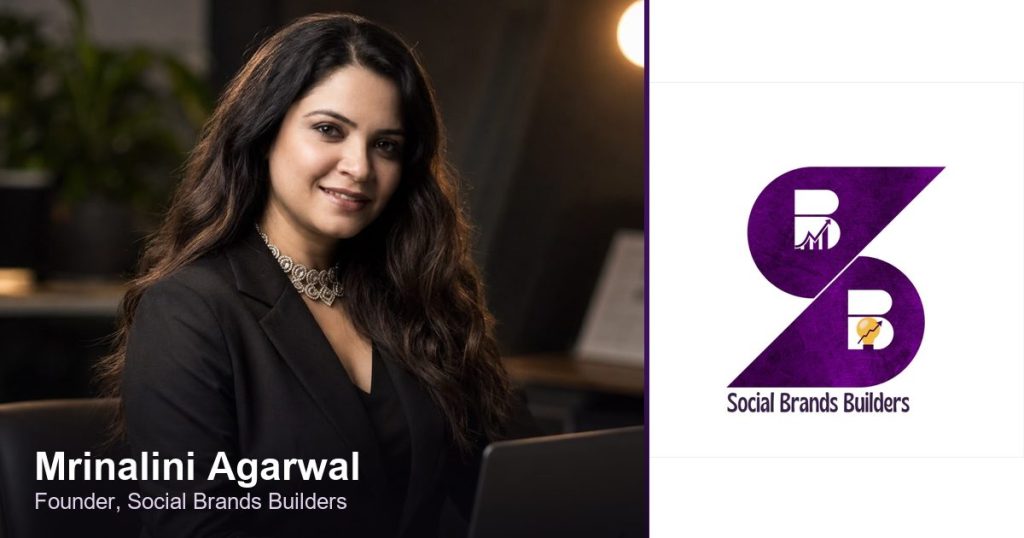
Digital marketing looked meaningfully different a decade ago than it does today, and Mrinalini Agarwal, founder of Social Brands Builders, has spent that entire period inside the industry, watching it shift from largely manual strategy work toward increasingly algorithmic and automated systems.
According to the company, Agarwal’s decade-long career has involved guiding hundreds of brands through these shifting digital paradigms, bridging traditional marketing strategies with the algorithmic tools that have become standard across the industry. That trajectory — beginning in a more manually driven marketing landscape and adapting continuously as automation tools matured — positions her current AI-focused agency work as the latest phase of a longer professional evolution rather than a sudden pivot into a trend.
What Changed Over the Past Decade
Digital marketing a decade ago relied heavily on manual campaign management, direct audience research, and marketer intuition to guide creative and targeting decisions, processes that have since been substantially reshaped by algorithmic ad platforms, automated bidding systems, and now generative AI tools capable of producing creative variants and campaign copy directly. Marketers who built their careers across this full transition generally develop a different kind of judgment than those who entered the industry only after automation tools were already standard — an ability to evaluate what automation genuinely improves versus what still benefits from direct human strategic input.
Why Longevity in a Fast-Changing Field Matters
Surviving and adapting across a full decade of this kind of industry transformation requires continuous skill development, since strategies and tools that worked effectively early in a career can become obsolete or insufficient as the underlying technology and platforms change. Agarwal’s positioning as someone who has “guided hundreds of brands” across this shift, according to her professional materials, suggests sustained relevance through multiple waves of industry change rather than success tied to a single moment or technology.
FAQ
How has digital marketing changed over the past decade, according to Agarwal’s experience?
Her professional narrative describes a shift from more manual marketing strategy toward increasingly algorithmic and automated systems, culminating in her current focus on generative AI tools.
Why might experience spanning this full transition matter for a marketing leader?
Practitioners who have adapted across multiple waves of industry change generally develop judgment about which automation genuinely improves outcomes versus which tools are less substantively useful, a distinction newer entrants may take longer to develop.
Has this transition been the same across every marketing discipline?
Available information doesn’t detail whether this shift has been uniform across all marketing channels and industries, though algorithmic and AI-driven tools have broadly expanded across digital marketing generally.
For businesses evaluating an agency partner specifically for AI-era marketing needs, a founder’s demonstrated adaptability across earlier waves of industry change — rather than AI expertise alone — can offer a useful additional signal of whether an agency is likely to keep pace with the next phase of technological change as well.
The shift from manual to algorithmic marketing didn’t happen as a single transition but across several distinct waves — search engine optimization and paid search automation, then social media algorithm-driven distribution, and now generative AI content and campaign tools — each requiring marketers to adapt their skill sets again rather than settling into a fixed way of working after any single wave of change.
That pattern of repeated adaptation suggests the current generative AI moment is unlikely to be the final shift marketers like Agarwal will need to navigate, making continued adaptability, rather than mastery of any single current toolset, the more durable professional asset over a full career spanning multiple technology cycles.
Business
The Marble Is Gone, the Memory Isn’t: How BANTAAZ Repackaged Goli Soda for a New Generation
The defining physical feature of traditional goli soda — a glass marble sealed inside the bottle’s neck by carbonation pressure — is entirely absent from BANTAAZ, the modern goli soda brand under Flavours United Co. that has chosen a standard PET bottle format instead. The choice illustrates a central tension the brand has had to navigate: how much of the original product’s physical identity to preserve versus modernize.
According to the company, this modern goli soda brand’s 250 ml PET bottle format was chosen specifically to support the hygienic manufacturing, consistent quality control, and modern retail distribution that its traditional glass-and-marble predecessor struggled to achieve at scale. Glass goli soda bottles required manual, often reused bottling infrastructure that made consistent hygiene and quality control difficult across different vendors, while a standardized PET format allows for the kind of centralized manufacturing and quality assurance that a modern packaged beverage brand requires.
What Gets Lost, and What the Brand Is Betting Compensates for It
The interactive, tactile experience of pushing down the glass marble to release the soda was arguably as central to goli soda’s cultural memory as its taste — a sensory ritual entirely absent from a standard PET bottle. BANTAAZ’s bet, implicit in its tagline “Ek Ghoonth Poora Bachpan,” is that the flavour and cultural association alone can carry enough nostalgic weight to succeed commercially, even without replicating the original bottle mechanism, a tradeoff the company appears to have made deliberately in favor of manufacturing practicality and modern retail compatibility.
Branding as the New Carrier of Nostalgia
With the physical bottle mechanism no longer available as a nostalgic touchpoint, BANTAAZ’s branding and packaging design carry more of the burden of signaling the product’s cultural connection to traditional banta, according to the company’s stated emphasis on “premium packaging designed for today’s generation” alongside “youth-focused branding with timeless nostalgic appeal.” That combination suggests the brand is using visual identity and marketing language to bridge the gap left by the absent marble-bottle ritual.
FAQ
Does BANTAAZ use the traditional glass marble bottle format?
No — the company has adopted a standard 250 ml PET bottle instead, citing hygiene, consistency, and modern distribution requirements.
Why did BANTAAZ move away from the traditional bottle design?
According to the company, PET bottling supports the standardized manufacturing and quality control that traditional glass bottling struggled to maintain at scale.
How does BANTAAZ maintain a connection to traditional goli soda without the original bottle format?
The brand relies on flavour profile, branding, and marketing language — including its tagline referencing childhood nostalgia — to maintain that cultural connection.
Whether consumers accustomed to the traditional bottle format will accept a standard PET bottle as a legitimate successor, rather than a fundamentally different product wearing goli soda branding, is likely to be tested directly as BANTAAZ’s distribution expands into new, less brand-aware markets beyond North India.
Younger consumers with no direct memory of the original glass-and-marble format may ultimately judge BANTAAZ purely on its own merits as a modern flavoured soda, making the bottle-format question more consequential for older consumers evaluating whether the brand honors their specific childhood memory than for first-time younger buyers encountering the category through BANTAAZ itself.
Company Details
Visit- http://www.bantaaz.com
Business
From Credit Repair to Concrete: Atma Prakash Panda’s Expansion Into Bhubaneswar and Puri Real Estate
Moving from consumer credit counseling into real estate development is not an obvious next step for most entrepreneurs, but Atma Prakash Panda made that transition, leveraging what his professional profile describes as a deep financial architecture background to launch property development and consulting projects across Bhubaneswar and Puri.
According to his materials, Panda oversees overall organizational strategy and execution for Apsara Realcon Pvt. Ltd. and SAM Estate Developers LLP, positioning the group as a market leader in property development and consulting within a relatively short span of time. The group is described as delivering high-value residential and commercial developments while maintaining regulatory compliance and offering end-to-end real estate solutions, spanning the full range from initial development through to consulting support.
Why Financial Background Translates Into Real Estate Leadership
Real estate development depends heavily on financial structuring — project financing, cash flow management across long development timelines, and navigating regulatory compliance requirements — areas where Panda’s institutional banking background in credit administration and large-scale project financing would apply directly, even though the underlying product (physical property) differs entirely from his earlier credit and banking work. Overseeing “multi-crore financing portfolios from inception to execution,” as his professional profile describes his earlier institutional work, requires financial project management skills that map reasonably well onto real estate development’s own long, capital-intensive project cycles.
Bhubaneswar and Puri as a Regional Focus
Choosing Bhubaneswar and Puri specifically reflects a regional focus on Odisha’s capital city and one of its most significant pilgrimage and tourism destinations, two markets with meaningfully different real estate demand drivers — Bhubaneswar’s growth tied to its status as a state capital and growing commercial center, and Puri’s tied more heavily to religious tourism and second-home demand. Developing across both markets suggests Apsara Realcon has built expertise spanning different real estate demand profiles rather than specializing narrowly in a single property type or market driver.
FAQ
What real estate markets does Atma Prakash Panda’s group operate in?
According to his profile, the group’s projects span Bhubaneswar and Puri specifically.
What types of developments does the group focus on?
His materials describe both residential and commercial developments, alongside consulting services spanning the full real estate project lifecycle.
How quickly did the real estate group establish its market position?
His profile states the group became a market leader “in a short span,” though the specific timeline and independently verified market share have not been detailed publicly.
For buyers or investors evaluating any regional real estate developer, including Apsara Realcon, requesting details on completed projects, regulatory approvals, and delivery timelines offers a more concrete basis for assessment than general market-leadership claims made in promotional materials.
Regulatory compliance in Indian real estate has grown more demanding since the introduction of state-level RERA frameworks, requiring developers to register projects, maintain escrow accounts for buyer payments, and adhere to disclosed timelines, obligations that apply to any developer operating in Odisha’s residential and commercial market, not solely Apsara Realcon.
End-to-end real estate solutions, as the group describes its offering, typically bundle development with consulting and advisory services, a structure that can appeal to buyers or institutional clients seeking a single point of accountability across a project’s full lifecycle rather than coordinating separately with a developer, a consultant, and other service providers independently.
Visit- https://apsararealcon.in
Business
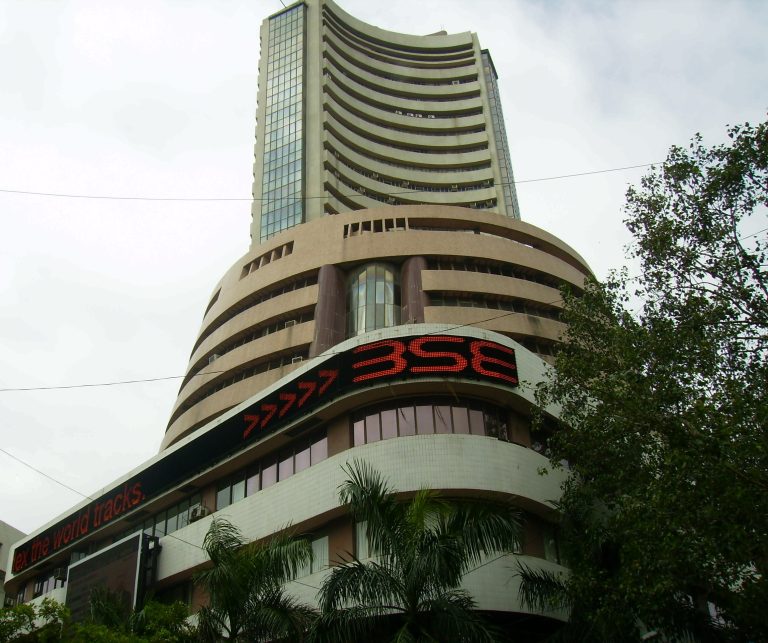
Sensex, Nifty end higher, hit five-month peaks on Monday
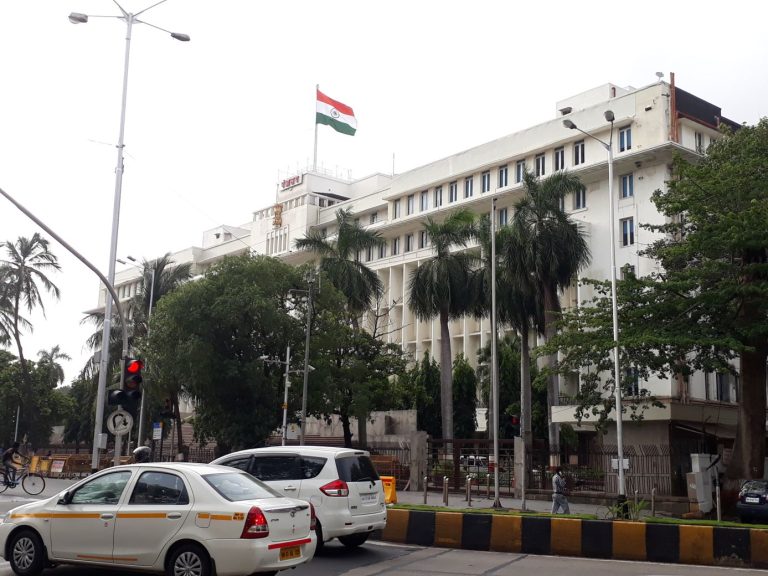
Sensex closed 544 points higher at 78,639 and Nifty rose 391 points to 24,774 on Monday, marking a five-month high.
The Sensex ended 544 points, or 0.7 per cent, higher at 78,639 on Monday, while the Nifty advanced 391 points, or 1.6 per cent, to close at 24,774.
The benchmark indices rose for a fourth straight session, reaching their highest levels in five months.
A steep decline in crude oil prices, renewed foreign institutional investor inflows, and a stronger rupee drove the day’s gains, as West Asia tensions eased.
IT stocks led the market, with the sector’s index rising more than 3 per cent during the session.
The Nifty Midcap 100 index gained 1.21 per cent and the Nifty Smallcap 100 index rose 1.29 per cent in the broader market.
Investors are now focused on the upcoming Reserve Bank of India monetary policy meeting for further cues.
Monday’s close marked the fourth consecutive session of gains for both benchmark indices, a winning streak that has helped lift Indian equities to their strongest levels since roughly March 2026.
The rupee’s strength against the US dollar was cited alongside falling crude prices as a factor supporting investor sentiment, given India’s heavy reliance on imported oil.
Trading volumes on both the BSE and NSE were reported to be above recent averages during Monday’s session, reflecting the heightened investor activity that accompanied the rally.
The rally was broad-based, with the Nifty Midcap 100 index up 1.21 per cent and the Nifty Smallcap 100 index gaining 1.29 per cent over the session.
Information technology stocks led the gains, with the sector index rising more than 3 per cent as easing crude prices and a steadier rupee lifted sentiment across export-facing companies.
Investors remained focused on the upcoming Reserve Bank of India monetary policy meeting, which could influence the near-term direction of both equity and bond markets.
Renewed foreign institutional investor inflows and easing geopolitical tensions in West Asia were cited as key drivers behind the day’s gains, alongside a steep fall in crude oil prices.
Photo by Kumar Appaiah, Wikimedia Commons, CC BY-SA 3.0
-
Brandpost2 years agoRedfox Overseas: Customize Your Own Energy Drink and Stand Out in the Market
-
Brandpost2 years agoZamzam Company CEO Chhote Bhai-Bade Bhai gave a grand welcome to Indian writer Devhari Sirvi in Dubai
-
Fashion2 years agoShikha Sharma: The Fashion Journalist, Blogger, and Plus-Size Model Taking the Industry by Storm
-
Entertainment1 year ago
Lucky Roxx’s “Yadav Ki Pukar” Goes Viral! Youth Celebrate Unity & Power
-
Entertainment9 years agoMeet Superman’s grandfather in new trailer for Krypton
-
Entertainment9 years agoNew Season 8 Walking Dead trailer flashes forward in time
-
Brandpost2 years agoFrom Local Hero to National Icon: Satyam Yadav’s Journey with TwentyOne
-
Business2 years agoThe journey of Matrix Coded: From a freelancer to a renowned brand