
Business
The Marble Is Gone, the Memory Isn’t: How BANTAAZ Repackaged Goli Soda for a New Generation


The defining physical feature of traditional goli soda — a glass marble sealed inside the bottle’s neck by carbonation pressure — is entirely absent from BANTAAZ, the modern goli soda brand under Flavours United Co. that has chosen a standard PET bottle format instead. The choice illustrates a central tension the brand has had to navigate: how much of the original product’s physical identity to preserve versus modernize.
According to the company, this modern goli soda brand’s 250 ml PET bottle format was chosen specifically to support the hygienic manufacturing, consistent quality control, and modern retail distribution that its traditional glass-and-marble predecessor struggled to achieve at scale. Glass goli soda bottles required manual, often reused bottling infrastructure that made consistent hygiene and quality control difficult across different vendors, while a standardized PET format allows for the kind of centralized manufacturing and quality assurance that a modern packaged beverage brand requires.
What Gets Lost, and What the Brand Is Betting Compensates for It
The interactive, tactile experience of pushing down the glass marble to release the soda was arguably as central to goli soda’s cultural memory as its taste — a sensory ritual entirely absent from a standard PET bottle. BANTAAZ’s bet, implicit in its tagline “Ek Ghoonth Poora Bachpan,” is that the flavour and cultural association alone can carry enough nostalgic weight to succeed commercially, even without replicating the original bottle mechanism, a tradeoff the company appears to have made deliberately in favor of manufacturing practicality and modern retail compatibility.
Branding as the New Carrier of Nostalgia
With the physical bottle mechanism no longer available as a nostalgic touchpoint, BANTAAZ’s branding and packaging design carry more of the burden of signaling the product’s cultural connection to traditional banta, according to the company’s stated emphasis on “premium packaging designed for today’s generation” alongside “youth-focused branding with timeless nostalgic appeal.” That combination suggests the brand is using visual identity and marketing language to bridge the gap left by the absent marble-bottle ritual.
FAQ
Does BANTAAZ use the traditional glass marble bottle format?
No — the company has adopted a standard 250 ml PET bottle instead, citing hygiene, consistency, and modern distribution requirements.
Why did BANTAAZ move away from the traditional bottle design?
According to the company, PET bottling supports the standardized manufacturing and quality control that traditional glass bottling struggled to maintain at scale.
How does BANTAAZ maintain a connection to traditional goli soda without the original bottle format?
The brand relies on flavour profile, branding, and marketing language — including its tagline referencing childhood nostalgia — to maintain that cultural connection.
Whether consumers accustomed to the traditional bottle format will accept a standard PET bottle as a legitimate successor, rather than a fundamentally different product wearing goli soda branding, is likely to be tested directly as BANTAAZ’s distribution expands into new, less brand-aware markets beyond North India.
Younger consumers with no direct memory of the original glass-and-marble format may ultimately judge BANTAAZ purely on its own merits as a modern flavoured soda, making the bottle-format question more consequential for older consumers evaluating whether the brand honors their specific childhood memory than for first-time younger buyers encountering the category through BANTAAZ itself.
Company Details
Visit- http://www.bantaaz.com
Business
Gold, silver rates on Sunday: 24K at Rs 1.56 lakh per 10 grams
24-carat gold is priced at about Rs 15,584 per gram in India on September 20, with silver at Rs 255 per gram, unchanged from the previous day.

24-carat gold cost about Rs 1.56 lakh for 10 grams on Sunday, September 20.
The rate list showed Rs 1,55,840, while another listing showed Rs 1,55,999.
22-carat gold was Rs 1,42,850 for 10 grams.
Silver was Rs 255 per gram.
Rates vary slightly between sources.
Silver was quoted at Rs 255 per gram, which is Rs 2,550 for 10 grams and about Rs 2,55,000 per kilogram.
The silver rate was unchanged from the previous day.
Other listings showed slightly different figures, with one putting 24-carat gold at Rs 1,55,999 per 10 grams, because bullion rates vary by source and time of day.
Advertised per-gram rates do not reflect the final cost of jewellery, which also includes making charges, GST and other costs.
Buyers are advised to compare the total jewellery bill rather than only the advertised gold rate.
Purity should be checked, and hallmarked jewellery is the standard way to verify the carat of gold.
Gold prices in India are influenced by global bullion prices, the rupee exchange rate, import duties and local demand.
Festival and wedding seasons typically raise demand for gold in India, which can support prices.
Rates are indicative and can change during the day, so buyers should confirm the live rate with their jeweller before purchase.
24-carat gold is the purest form at about 99.9 percent, while 22-carat gold is about 91.6 percent pure and is the standard for most jewellery.
On the day, the gap between the 24-carat and 22-carat rates was Rs 1,299 per gram.
Silver at Rs 255 per gram works out to about Rs 2.55 lakh per kilogram.
On Sunday, September 20, 2026, 24-carat gold was quoted at Rs 15,584 per gram, or Rs 1,55,840 for 10 grams, in a widely published rate list.
The same list put 22-carat gold at Rs 14,285 per gram, or Rs 1,42,850 for 10 grams.
Gold jewellery, Kolkata (representative image), Wikimedia Commons, CC BY-SA 4.0
Business
Nifty gains third straight session, but weekly losing streak hits six
Sensex and Nifty ended the week on September 18 with a sixth straight weekly loss, even as the Nifty gained for a third straight session; the Sensex closed at 74,294.96 and the Nifty at 23,346.40.
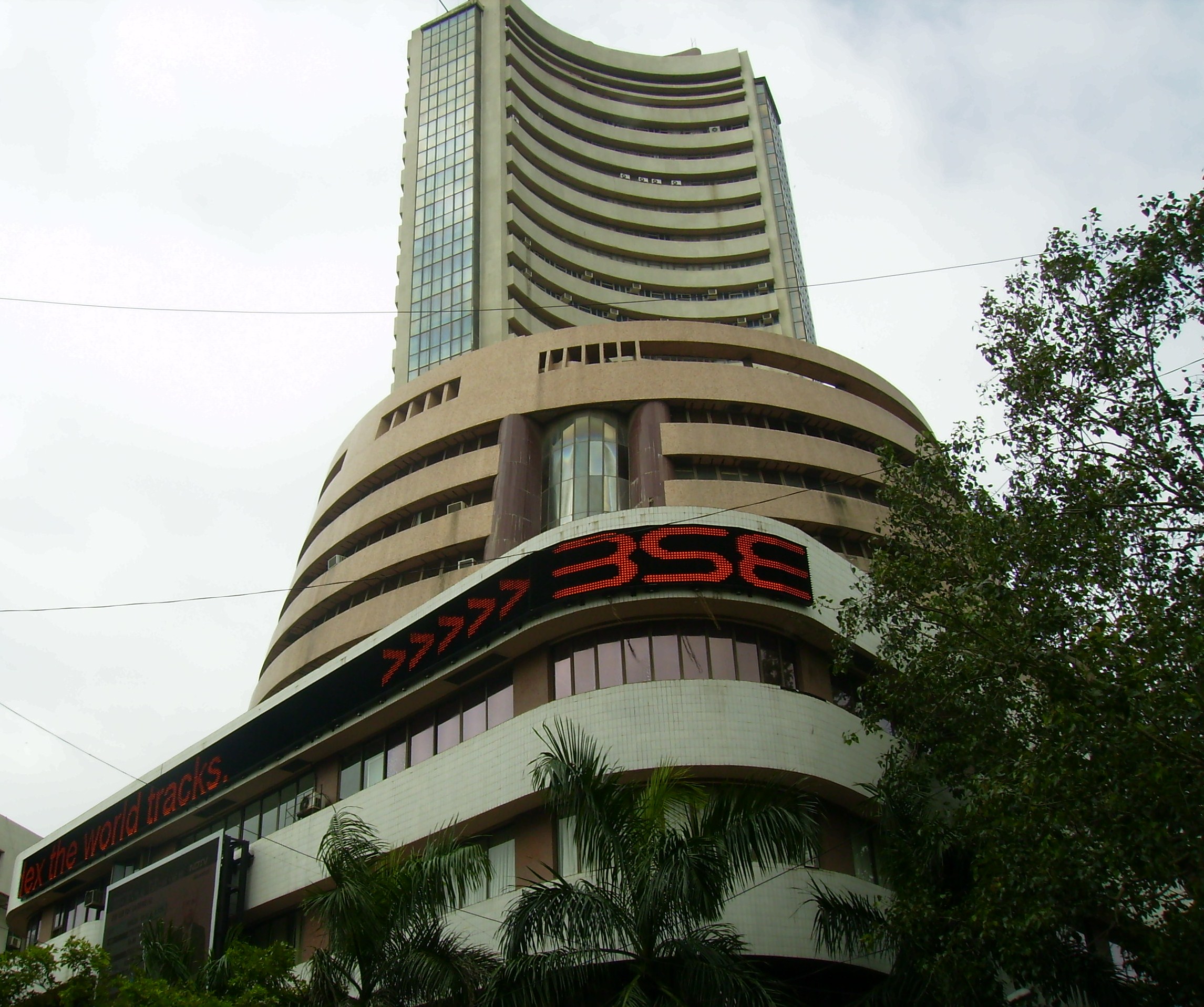
The Nifty gained for a third straight session on Friday, closing at 23,346.40, but the index still ended the week lower for a sixth week in a row.
The Sensex ended at 74,294.96, down 19.63 points.
For the week, the Sensex fell 0.65 percent and the Nifty fell 0.22 percent.
A large NSE IPO drew liquidity away from the market during the week.
Crude oil and West Asia tensions continued to weigh on sentiment.
Crude oil remained a key factor, with Brent crude trading above the 100 dollar a barrel mark and easing to about 103 dollars on Friday.
Geopolitical concerns in West Asia continued to weigh on sentiment through the week.
Foreign institutional investor selling and elevated US bond yields were also cited among the pressures on the market.
A large NSE IPO worth about Rs 22,569 crore drew capital away from the secondary market during the week and constrained liquidity.
Technology stocks were among the laggards, and Tata Group shares including TCS and Titan fell sharply, with some of the declines running up to about 4 percent.
Banking, energy and life insurance stocks, including HDFC Life and SBI Life, were among the gainers.
The divergence between a falling Sensex and a rising Nifty on Friday reflected differences in the two indices’ constituents and bargain buying in some Nifty stocks.
On Thursday, September 17, the Sensex had closed at 74,314.59 and the Nifty at 23,270.60.
The Nifty 50 has now advanced for three sessions in a row, even though the weekly figures remain negative.
Market participants are watching crude oil prices, foreign fund flows and corporate earnings for cues on direction in the coming week.
Trading resumes on Monday, September 21, after the weekend.
On Friday, September 18, the 30-share Sensex fell 19.63 points, or 0.03 percent, to settle at 74,294.96.
Bombay Stock Exchange building, Mumbai (representative image), Wikimedia Commons, CC BY 2.0
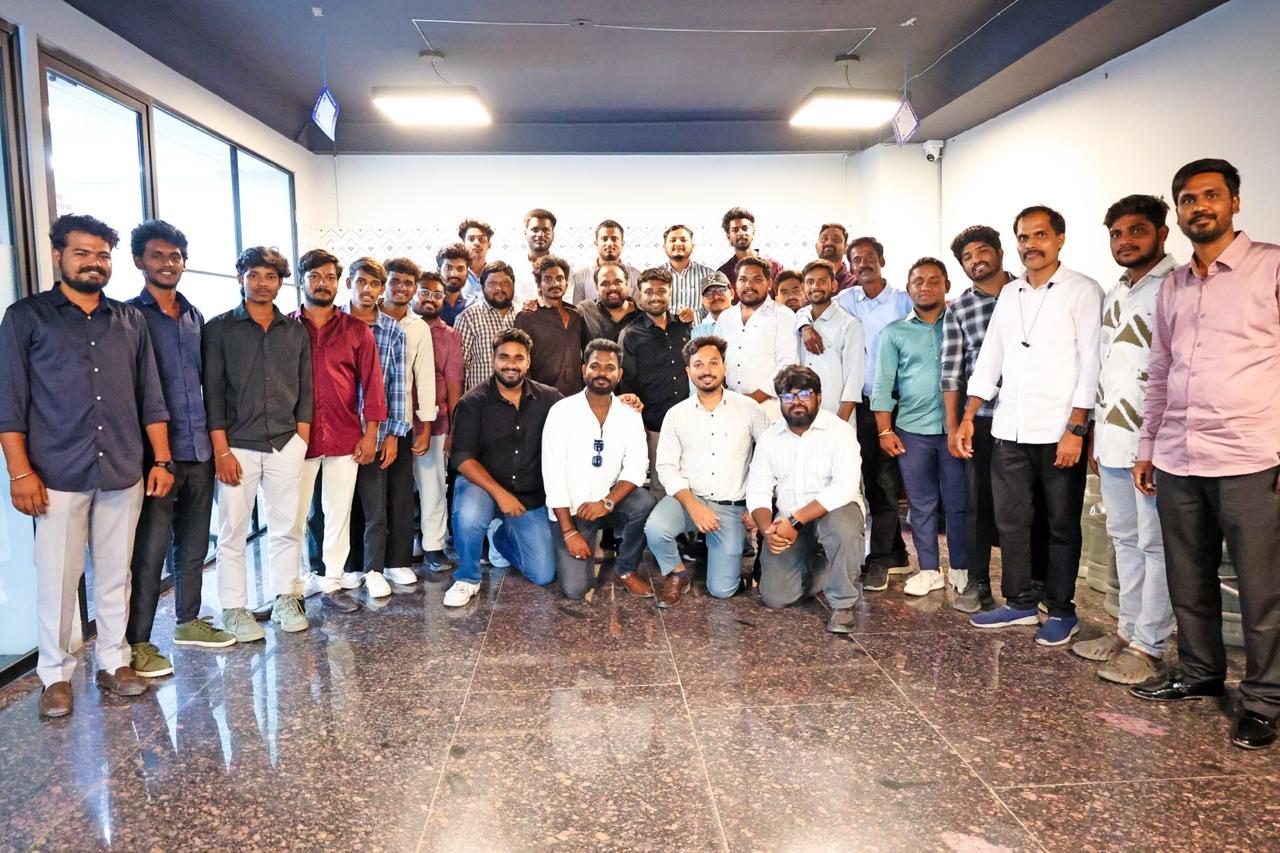
The Hyderabad venture is developing a single destination for the complete vehicle care journey
Vehicle ownership involves far more than buying fuel and scheduling an annual service. There are washes, minor faults, accidental damage, specialised upgrades and, occasionally, the sudden breakdown that brings everything to a halt.
BlueWheel combines roadside rescue, car repair services, vehicle washing and custom automotive work within a single platform for Hyderabad vehicle owners.
BlueWheel wants to make those separate requirements easier to manage through one platform. I learned about the model from Rohit Paul of the Founder’s Office during a recent business meetup in Hyderabad.
Roadside assistance as the urgent entry point
Rohit Paul began with the most stressful use case. Although manufacturers including Maruti, Mahindra and Hyundai provide roadside assistance plans, customers can still face unanswered calls, handoffs and long delays.
BlueWheel’s answer is to attend breakdown requests in under 20 minutes. The promise puts urgency at the centre of the experience and gives the customer a simple expectation at a moment when clarity matters.
The infrastructure beneath the app
A smooth interface cannot repair a vehicle by itself. BlueWheel’s operating model is supported by more than 400 vetted service centres and over 100 expert technicians, whom it calls Advisors.
This network allows the company to route different requirements to relevant professionals. A roadside fault, an accident repair and a custom modification may demand very different capabilities, making provider selection an important part of the platform’s value.
Making vehicle services easier to navigate
Customers can choose the service they need, select a preferred centre and leave the coordination to BlueWheel. Available categories range from car washing to accident work and complex custom jobs.
The approach removes some of the research and follow-up that vehicle owners normally perform themselves. Instead of keeping multiple phone numbers and negotiating independently with each provider, the user interacts with a single organised layer.
What stayed with me
The broader service mix was the part of our conversation that changed my understanding of the company. I had initially assumed BlueWheel was mainly a roadside rescue operation. Rohit Paul described something closer to a continuing vehicle-care relationship, with urgent assistance at one end and planned work at the other.
That distinction matters. Most drivers do not want to discover a new provider every time the car needs attention. They want a dependable route from problem to solution, whether the requirement is a wash, body repair or a complicated custom job. Familiarity can remove much of the hesitation that usually accompanies automotive service.
There is also a sensible business logic in serving customers more often than emergencies allow. Breakdowns may introduce the platform, but routine needs can make it part of regular ownership. If both experiences are handled well, each strengthens confidence in the other.
For an owner, that continuity could make caring for a vehicle feel less like a series of disconnected negotiations and more like one manageable relationship.
A platform preparing to travel
BlueWheel is currently active throughout Hyderabad, including the Outer Ring Road and areas around 10 to 15 kilometres outside it. The company plans to move next into Bengaluru and Chennai.
Its future will depend on maintaining service quality across a larger network. But the underlying idea is strong: vehicle care should not feel like a collection of unrelated errands. By combining emergency response with regular maintenance and repairs, BlueWheel is working to turn it into one connected customer experience.
https://www.bluewheel.app/download/ | www.bluewheel.app | https://www.instagram.com/bluewheelthevehicleapp?stkn=MWFmMWFpdzNsem03


Why DTC drivers are on strike: A quick explainer

Maratha quota: Jarange ends fast at Patoda in Beed

Gold, silver rates on Sunday: 24K at Rs 1.56 lakh per 10 grams

Redfox Overseas: Customize Your Own Energy Drink and Stand Out in the Market

Zamzam Company CEO Chhote Bhai-Bade Bhai gave a grand welcome to Indian writer Devhari Sirvi in Dubai

Shikha Sharma: The Fashion Journalist, Blogger, and Plus-Size Model Taking the Industry by Storm
-
 Brandpost2 years ago
Redfox Overseas: Customize Your Own Energy Drink and Stand Out in the Market
-
 Brandpost2 years ago
Zamzam Company CEO Chhote Bhai-Bade Bhai gave a grand welcome to Indian writer Devhari Sirvi in Dubai
-
 Fashion2 years ago
Shikha Sharma: The Fashion Journalist, Blogger, and Plus-Size Model Taking the Industry by Storm
-
Entertainment1 year ago
Lucky Roxx’s “Yadav Ki Pukar” Goes Viral! Youth Celebrate Unity & Power
-

 Entertainment9 years ago
New Season 8 Walking Dead trailer flashes forward in time
-
Entertainment9 years ago
Meet Superman’s grandfather in new trailer for Krypton
-
Uncategorized2 years ago
Hello world!
-
 Brandpost2 years ago
From Local Hero to National Icon: Satyam Yadav’s Journey with TwentyOne